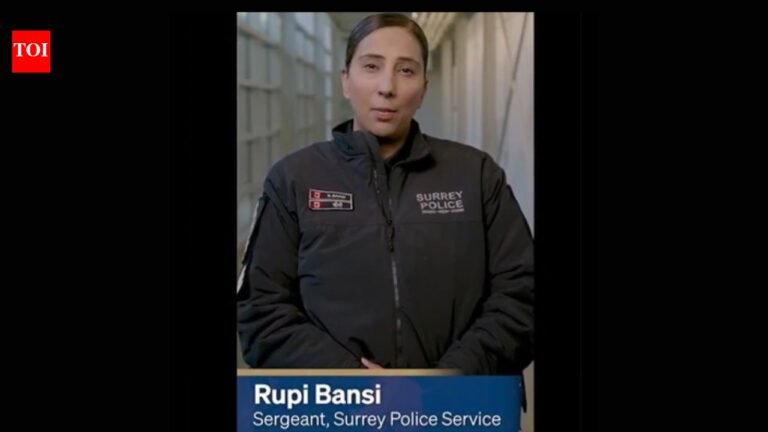
Amid Surrey’s ongoing extortion crisis, which has the mayor calling on federal authorities to declare a state of emergency, Surrey police have released a bizarre video shot by Sikh police officer Rupi Bansi to appeal to those who may have fallen into a gangster’s trap. “Have you been asked to help someone extort money from someone else? Have you been offered money to shoot up homes or businesses? Or send threatening messages to people? Don’t be fooled,” said Sgt. “You are being offered a small amount of money to take a huge risk that could harm you, your family and the people who work hard every day. This is not why you came to Canada. You came to school, to look for a better life, to be the first in your family to start something new,” the reminder added. “For many of you, your family or your temple sponsored you. Committing these crimes does not deserve the shame and disappointment of those who have given so much. Do not risk arrest, imprisonment and deportation from Canada,” police said, announcing a $250,000 reward for any information related to the racketeering. Surrey Mayor Brenda Locke said the city of Surrey is facing an unprecedented crisis and residents and business owners are living in constant fear. “Our laws are too weak. Canada’s law enforcement tools are inadequate to protect the public from the scale of extortion and violence we are experiencing. Surrey is entering the third year of this crisis. We need strong federal leadership to protect Canadian communities and restore public confidence,” she said in a statement calling on the federal government to take immediate action. Extortion gangs have become extremely powerful in Surrey, with their main targets being people from the South Asian community. They shoot into the target’s house, record the video, and then send the video to the target to extort money. Most victims do not even report the crime to the police, fearing there will be more trouble once the offender is released on bail, which happens in most cases.
Satellite data over two decades shows declining green cover in Uttarakhand hills India News
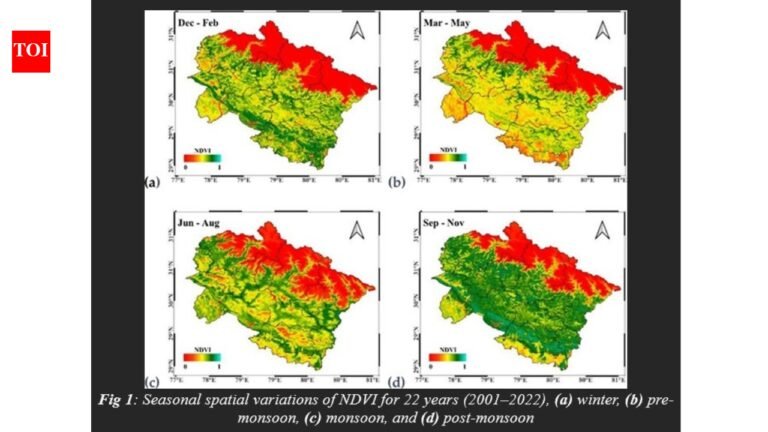
BENGALURU: Satellites observing the Himalayas have started reading the mountains like a slow-moving diary. Grasslands revive with the changing seasons, forests deepen in color, and patterns of valley flora change, but the same images also carry warnings of stress. Analysis of two years of data on Uttarakhand’s vegetation shows how closely the region responds to climate, and how those rhythms are starting to falter.Mountain ecosystems respond to changes in temperature and rainfall more quickly than most landscapes. Rising global surface temperatures and changing precipitation patterns are already affecting plant growth, soil moisture and snowpack. Scientists say local and long-term monitoring is crucial if governments are to prepare for floods, droughts and biodiversity loss.To track these changes, researchers at the Aryabhatta Institute of Observational Sciences (ARIES) in Nainital, an autonomous institute under the Department of Science and Technology (DST), worked with Indian and international collaborators, using Google Earth Engine (GEE), a platform for processing large amounts of satellite data. The tool enables scientists to study land degradation, urban growth, dust movement and temperature trends without the heavy burden of storing raw images.The team examined satellite records from 2001 to 2022 and relied on a widely used metric, the Normalized Difference Vegetation Index (NDVI). The index measures how well a plant reflects light and provides a simple guide to a plant’s health. Lower NDVI values indicate rock, sand, water, or snow, while higher values indicate dense forest, farmland, or wetlands. The researchers also looked at the Enhanced Vegetation Index (EVI), which performs better in areas with rich biomass.The findings, led by Umesh Dumka of ARIES and published in the journal Environmental Monitoring and Assessment, reveal clear seasonal cycles. NDVI and EVI peak after monsoon when hills become lush and fall to minimum levels before rainfall. Monthly and annual changes follow familiar patterns, but the long-term chart shows a gradual decline.The study linked the decline to deforestation, agricultural expansion, illegal logging and increased pollution in towns and industry. The researchers note that the effects of pollution are not uniform. Some areas suffered more severe damage, adding to stress from rising temperatures and erratic rainfall. This pressure threatens wildlife habitats, river systems and the livelihoods of millions of people who depend on the mountains downstream.Using time-series maps generated by GEE, the scientists compared vegetation trends with climate data and applied Pearson correlation coefficients to understand their relationships. This approach allowed them to pinpoint areas where greenness has been reduced the most.The authors argue that satellite science can serve as an early warning system. By identifying vulnerable areas, authorities can plan reforestation, regulate construction and control emissions before damage becomes irreversible. The Himalayas, they say, are sending signals of pain in the language of pixels and numbers. Listening to this message may determine the region’s ability to recover in the coming decades.
DMK MP files privilege notice against Piyush Goyal | India News
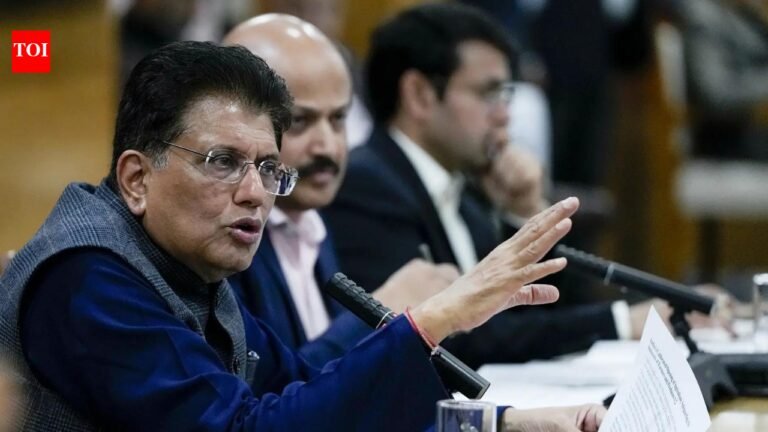
New Delhi: DMK MP Tiruchi Siva on Monday said he has submitted a breach of privilege notice to the commerce minister Piyush Goyal Details of the interim trade agreement between India and the United States were shared at a press conference during the session of Parliament. Siva raised the issue shortly after the RS meeting on Monday morning. “He (Goyal) gave an interview regarding the government’s policy decision outside the House during the session of Parliament. This amounted to a violation of the prerogatives of the House,” Siva said. LoP Khage supported him. Chairman CP Radhakrishnan responded that he would look into the matter and pointed out that Goyal had made a statement in the House. neural network
Nancy Guthrie Kidnapping for Ransom: Can Bitcoin Be Traced? What we know about the $6 million need
Nancy Guthrie, mother Savannah Guthriehas been missing since Saturday, January 31st. As the search for the 84-year-old continues, his family has received two alleged ransom notes. They also agreed to a request for a $6 million Bitcoin transfer.

It is worth noting that the ransom deadline expires at 5pm on Monday. While many viewed the family’s request for ransom payment as an act of desperation, experts say there was, in fact, a well-thought-out strategy behind it.
Recently, a criminal defense attorney wrote on Fox News that transferring Bitcoin to accounts associated with ransom demands could provide investigators with key clues in finding the suspects.
Nancy Guthrie Ransom: Former FBI agent provides clues
Criminal defense attorney Josh Ritter said on “Fox & Friends” that numbers associated with ransom Bitcoin accounts could lead investigators to the kidnappers. Ritter thinks Bitcoin It’s not as secure as many people think, and the account holder’s information can be easily traced.
“One interesting thing is that these wallets have a number, like an account number, and they can retain that information and they can monitor the account if it has been used for any previous illegal activity,” he said.
Also read: Nancy Guthrie case: Is son-in-law Tommaso Cioni the prime suspect? what we know
Ritter believes that if a transfer was made, the person behind the account would at some point convert it into real currency for use, and that moment could lead to the FBI finding them.
Bitcoin account still empty
TMZ reports that the Bitcoin account used to transfer the Nancy Guthrie kidnapping ransom remains empty of funds with just hours left before the 5pm deadline.
As of 2:40 p.m. ET, the account had a zero balance and no transaction history, and the account was available for public viewing, the outlet reported.
Supreme Court: High court judges cannot assume the role of domain experts India News
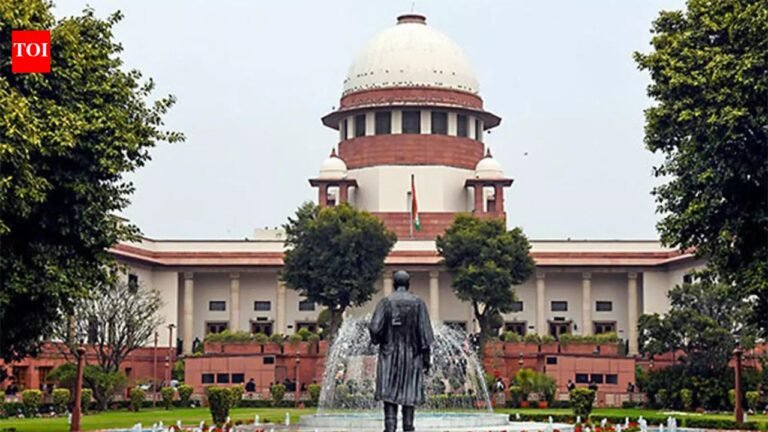
New Delhi: Supreme Court Constitutional Court judges on Monday warned against assuming the role of domain experts and recommending remedies, saying it would be dangerous if they strayed from their main duty to decide disputes as neutral referees after taking into account the opinions of rivals. Chief Justice Surya Kant, Justices Joymalya Bagchi and NV Anjaria made the remarks in a petition filed by the Jharkhand Public Service Commission challenging the Jharkhand High Court’s decision to directly delete two questions and award one mark for one of the two options in the question asked by candidates appearing in the preliminary test for recruitment of judicial officers. CJI Kant said: “Just because the examination is for the recruitment of judicial officers and issues related to law, should the Constitutional Court assume the role of super examiner? It will be very dangerous if the Supreme Court judges assume the role of domain experts.” “Tomorrow’s judge may have knowledge of biochemistry. Should he interfere with question papers and answer keys related to recruitment in the field of biochemistry? The HC judge must leave these questions to domain experts,” he added. On the administrative front, the bench said the issues were raised by the Supreme Council in consultation with the JPSC. “The power of re-appreciation/reconsideration of answer sheets must be uniform for all examinations and not just for judicial service examinations. HC cannot become a super examiner and these matters must be left to domain experts,” it said. “If this is the case, then, while exercising its power of judicial review, it is necessary for the Supreme Court to submit the issue to the administrative department of the Supreme Court and form an expert committee to re-examine the answer sheets and answers,” the judge said. The bench asked the high commission to constitute an expert committee of subject experts, including those in the fields of law and English, to re-evaluate the answer keys and answer sheets. While the lawyers sought early resolution of the dispute, the bench asked the HC to resolve it within two weeks and send a report to the JPSC. The lawyer said the Jharkhand judiciary has not made any recruitment in the last two and a half years. In this regard, the CJI said, “What worries me more is that no lawyer has been elevated to the rank of Supreme Court judge since 2017.”
U.S. FDA says TV ads for Novo diet pill are false or misleading
The U.S. Food and Drug Administration said television ads for Novo Nordisk’s weight-loss drug were “false or misleading,” according to a Feb. 5 letter.
The health watchdog said the TV ad misleadingly stated wiggsIts pill form is an advancement or improvement over other weight loss drugs that fall into the GLP-1 category.
Also read: How Obesity Drugs Are Prescribed and Obtained in India
“We confirm that Novo Nordisk received an email from U.S. Food and Drug Administration “The ad relates to a television ad for Wegovy pills that has been running since its launch and is not a Super Bowl ad,” Novo spokesperson Ambre James-Brown said. The agency said Novo’s direct-to-consumer ads violated the Federal Food, Drug and Cosmetic Act and required the drugmaker to take immediate action to address any violations, which could include halting all ads containing misleading claims.
James Brown added: “We take all regulatory feedback seriously and are responding to the FDA to address their concerns about the display of ads.”
The FDA also said that the “Live Lighter” and “Way Forward” claims misleadingly suggested additional weight loss compared with other currently approved GLP-1 therapies, but this has not been proven.
“Additionally, they misleadingly suggest benefits other than physical weight loss, such as emotional relief, reduced psychological burden, hope, or direction in patients’ lives, positioning the drugs as addressing broader life challenges rather than treating specific diseases, which has also not been proven,” the agency said in the letter.
The FDA also noted that the ad contained a demonstration in which some on-screen text did not match the audio.
Bengal SIR deadline extension, notice to DGP, message to states: SC’s key order on Mamata Banerjee’s plea | India News
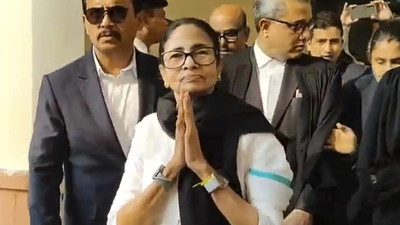
New Delhi: Supreme Court The deadline for review of claims and objections in the Special Intensive Revision (SIR) of West Bengal’s electoral roll was extended on Monday and a personal affidavit of the state’s police chief was sought over allegations that election officials faced threats, violence and obstruction during the elections. A bench comprising Chief Justice Surya Kant and Justices Joymalya Bagchi and NV Anjaria directed that the examination of documents and objections should be extended by at least a week beyond February 14, the scheduled date for publication of the final electoral roll, citing the time required to examine the claims.
The court also made it clear that it would not allow any interference in the SIR proceedings. “We will not allow anyone to create any hurdles in the SIR exercise. States must be aware of this,” the CJI said while hearing a batch of petitions, including one filed by the West Bengal chief minister. Mamata Banerjee.
Final authority belongs to ERO, micro observers only provide assistance
Clarifying the key points of contention, the bench reiterated that the final decision on claims and objections can only be taken by the Electoral Registration Officer (ERO), while micro-observers appointed by the Electoral Commission (EC) only play a facilitative role.“The duty that has been assigned to the micro observer is only to assist the DEO/ERO. In other words, the final decision will be taken by the ERO only,” the court said. The judge also clarified that ERO is obliged to consider objections under the statutory scheme and can independently verify the authenticity of documents, regardless of whether the objector attends the personal hearing.
Country deploys Group B personnel, ECI decides suitability
To streamline the procedure, the court directed the West Bengal government to ensure that all 8,550 Group B officers whose lists were submitted during the hearing report to the district collector or ERO by Tuesday evening.From this pool, the ECI can shortlist officers equivalent to the number of micro-observers already employed after assessing their biodata and work experience and provide them with brief training. How they are deployed and how they work will be decided by a voting panel, which will also be free to replace officials found not performing their duties, the court said.
Notification to DGP regarding violence, burning notice
Taking into account the ECI’s affidavit accusing miscreants of intimidation, hostility and burning of notices, the bench issued notice to the West Bengal DGP directing him to file a personal affidavit.The court took note of the ECI’s submission that despite multiple complaints, no FIR has been registered in connection with the alleged violence and mass burning of Form 7 objections. It also recalled the January 19 order directing the DGP to ensure that law and order is maintained during the SIR exercise.“A message must be sent that the Constitution of India applies to all states,” said Solicitor General Tushar Mehta, appearing for the Centre.
‘No mass exclusion’, court says during Banerjee hearing
During the hearing, senior advocate Shyam Divan, appearing for Banerjee, expressed concern over the possibility of appointment of micro-observers from outside the state and “massive exclusion” of eligible voters.“We don’t want any mass exclusion,” Dewan told the judges.The court noted these concerns while clarifying that the statutory authority to determine claims rests solely with the ERO.The bench was hearing a slew of petitions filed by Trinamool Congress leaders and others challenging the conduct of SIR in West Bengal, as well as petitions by Sanatani Sangsad, poet Joy Goswami and others. While Banerjee’s plea questions the ECI’s classification of voters into the “logical difference” category, Sanatani Sansad has sought protection of election officials and deployment of state police under ECI control.Last week, Banerjee personally appeared before the Supreme Court to claim that West Bengal was being targeted ahead of the assembly elections and expressed concern over a slight mismatch in names in Bengali and local dialect translations.(With inputs from PTI and Live Law)

Epstein associate Ghislaine Maxwell rejects House testimony, seeks clemency from Trump
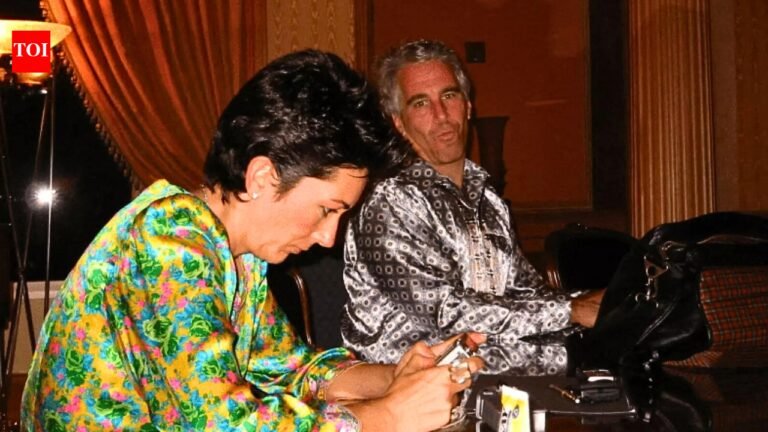
Jeffrey Epsteincolleagues Ghislaine Maxwell She declined to answer questions from a U.S. congressional panel on Monday and said she would only speak if she received clemency from President Donald Trump.Maxwell, 64, who is serving a 20-year sentence for sex trafficking, was subpoenaed by the House Oversight Committee to testify about her relationship with Epstein.However, the former British socialite did not answer the panel’s questions, instead citing her Fifth Amendment right against self-incrimination.“As expected, Ghislaine Maxwell finished fifth and refused to answer any questions,” committee chairman James Comer told reporters. “This is obviously very disappointing.”“We have many questions to ask about the crimes she and Epstein committed and potential co-conspirators,” he added.Maxwell’s attorney, David Marcus, said she would be willing to speak publicly if Trump granted her clemency.“If this committee and the American public truly want to hear the unfiltered truth about what happened, there is a direct path,” Marcus said in a statement. “If President Trump grants clemency, Ms. Maxwell is prepared to speak fully and honestly.”Marcus also said that Trump and former President Bill Clinton – both of whom had past relationships with Epstein – “did not engage in any wrongdoing.”“Only Ms Maxwell can explain why, and the public is entitled to such an explanation,” he said.Maxwell is the only person convicted in connection with Epstein, who died in a New York prison in 2019 while awaiting trial on sex trafficking charges.In 2021, she was convicted of recruiting and providing underage girls to Epstein. Epstein had ties to powerful business leaders, politicians, celebrities and academics.Maxwell was serving time in a Texas prison and was called to testify. Her testimony comes as the Justice Department recently released millions of documents, photos and videos related to the Epstein investigation.The Justice Department said it expected no new indictments, but some politicians and business figures have faced public scrutiny or resigned after their ties to Epstein surfaced.
“Unrepentant”
Democratic lawmaker Subrahmanyam, who took part in the closed-door testimony, said Maxwell had shown no remorse.“She’s very robotic, you know, and she has no regrets at all about the fifth house request today,” Subramaniam said. “This is all part of her strategy to try to get a pardon from President Trump.”The House Oversight Committee also subpoenaed former President Bill Clinton and his wife, former Secretary of State Hillary Clinton, to testify about their interactions with Epstein.The Clintons asked that their testimony be held publicly to prevent Republicans from politicizing the process.Trump, who was once close to Epstein, has not yet been called to testify by the Republican-led committee.Trump had earlier opposed the release of Epstein’s documents but later signed a law forcing their release under pressure from lawmakers, including members of his own party.The move reflects growing public pressure over longstanding suspicions that powerful people linked to Epstein are being protected.