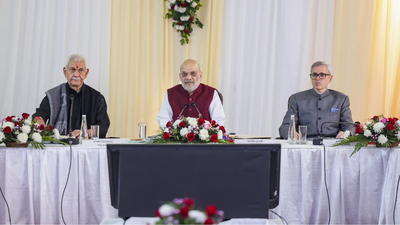
JAMMU: The enthusiasm among tourists from across the country to visit Jammu and Kashmir has not diminished, Union Home Minister Amit Shah said on Saturday after the Pahalgam terror attack last year hit the tourism industry.Shah was addressing a review meeting held in Jammu to assess the progress of development projects in the Union Territory.“The enthusiasm of tourists from across the country to visit Jammu and Kashmir has not diminished. There is a need to actively market the tourist destinations of Jammu and Kashmir in other states to tap the tourism potential here,” he said.Shah said the BJP-led Center would provide all possible assistance to plans to develop new tourist destinations in Jammu and Kashmir.On April 22 last year, Pakistani terrorists affiliated with Lashkar-e-Taiba attacked tourists in the famous mountain resort of Pahalgam in southern Kashmir, killing 26 people and dealing a serious blow to the tourism industry in Jammu and Kashmir.
Not Dwayne Bravo or Sunil Narine: Jason Holder becomes first… | Cricket News
Jason Holder His name is etched in cricketing history as West Indies begin their campaign for the 2026 T20 World Cup with a memorable win over Scotland. The former captain became the first West Indies bowler to take 100 T20I wickets, reaching the milestone when he dismissed Scotland skipper Richie Berrington in 13.2 overs.Holder now joins an elite list of players with 100 wickets in every format of the men’s international game, including Lasith Malinga, Tim Southee, Shakib Al Hasan, Shaheen Afridi and Jasprit Bumrah.
The historic moment has arrived as West Indies have a cause for celebration as they play their first match of the 2026 T20 World Cup. Scotland won the toss and elected to bowl first. West Indies started slowly but recovered strongly, scoring 182 runs in 5 out of 20 overs.Shimron Hetmyer, the third batsman, played the decisive inning. The left-hand bowler smashed 64 off 36 balls and also recorded the fastest fifty by a West Indies batsman in the T20 World Cup, reaching the milestone in just 22 balls.Scotland’s chase never really took off. They were eventually bowled out for 147 in 18.5 overs and the decisive moment came in the 17th over. Romario Shepherd Created a stunning spell, taking four wickets in the match, including a hat-trick. Shepard finished with an outstanding record of 3-0-20-5.Jason Holder took the last wicket of the match to cap off Scotland’s innings, capping a landmark night for himself and West Indies cricket.
Delhi govt: MCD commissioner’s financial powers increased from Rs 5 crore to Rs 50 crore India News
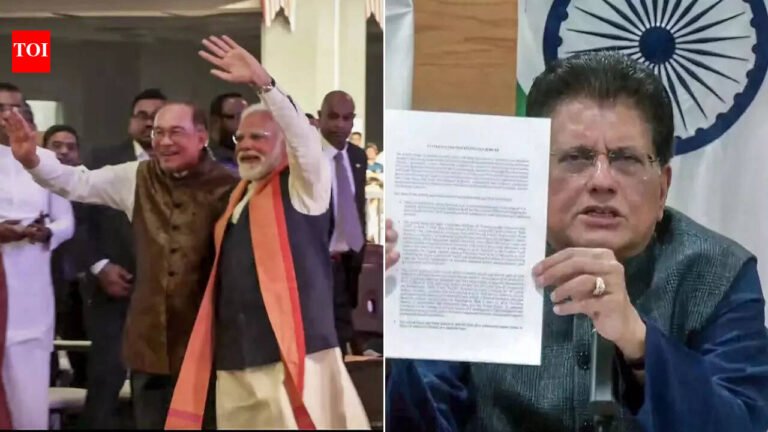
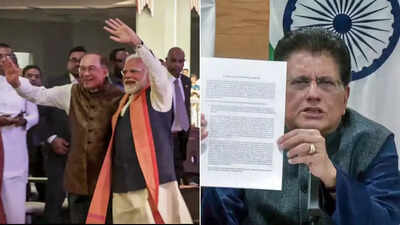
Evening News Coverage: PM Modi on two-day visit to Malaysia; key details of India-US trade deal revealed and more | India News
- During his two-day visit to Malaysia, Prime Minister Modi interacted with and praised the Indian diaspora in Kuala Lumpur, highlighting the strong cultural ties and the global significance of Tamil language and culture.
- India and the United States agreed to establish a temporary trade framework to reduce tariffs, expand market access and resolve issues in various sectors including agriculture, manufacturing and technology.
- As part of the interim trade framework, the United States eliminated the additional 25% tariff on Indian imports, reducing the tariff from 50% to 18%.
- Opposition leaders have criticized the India-US trade deal, warning it could hurt farmers, cut tariffs excessively and harm India’s interests.
- Police probing the deaths of three teenage sisters in Uttar Pradesh’s Ghaziabad say the case has revealed complex family circumstances, emotional distress and isolation, with new details emerging about their father’s late live-in partner.
Here are the top 5 stories of the day:
PM Modi addresses Indian diaspora in Malaysia, stresses cultural ties
Prime Minister Narendra ModiDuring his two-day visit to Kuala Lumpur, he celebrated the strong cultural and emotional ties between India and Malaysia, interacted with the Indian diaspora and praised communities for preserving traditions and acting as a “living bridge” between the two countries. He highlighted Malaysia’s large Indian-origin population and the global importance of Tamil language and culture, recalled his friendship with Malaysian Prime Minister Anwar Ibrahim, and shared anecdotes of cultural exchanges, including Indian film and music. Read more
From agricultural protections to preferential auto quotas: What industries get in India-US trade deal
India and the United States have agreed on an interim trade agreement framework to reduce tariffs, expand market access and prepare for a broader bilateral trade agreement. The deal cuts tariffs on Indian manufacturing exports and U.S. industrial goods, provides limited access for agricultural products while protecting sensitive staples and dairy products, and touches on pharmaceuticals, medical devices, cars, aircraft, technology and digital trade. It also aims to strengthen supply chain and economic security. Read more
US lifts 25% tariff on Indian imports, India-US trade framework eases tensions
President of the United States Donald Trump India has canceled the 25% additional tariff imposed on purchases of Russian oil, which took effect from February 7. The move is part of a broader temporary trade framework between India and the United States aimed at easing trade tensions. Under the framework, U.S. tariffs on Indian goods will be reduced from 50% to 18%, and India has also agreed to reduce or eliminate tariffs on U.S. industrial products and certain agricultural products. India has also committed to buying $500 billion worth of US energy products, aircraft, technology products and coking coal over five years. The framework includes monitoring India’s oil imports from Russia and stipulates that the US Commerce Secretary recommends reinstating the 25% tariff if imports resume. Read more
Opposition leader slams India-US trade framework
Opposition leaders on Saturday criticized the framework for an interim trade agreement between India and the United States, accusing the government of undermining India’s interests and harming farmers, tariffs and rural livelihoods. Congress leader Randeep Singh Surjewala warned that imports of US corn, soybeans, sorghum, fruits, nuts and processed products could harm the interests of India’s 720 million farmers. Pawan Hera accused the government of undermining India’s diplomatic standing, calling the deal a “surrender” rather than an achievement. RJD MP Manoj Kumar Jha questioned the reduction in tariff from 50% to 18%, calling it misleading and warned that there could be public unrest once the impact of the deal is felt. Read more
Father’s three wives and a dead live-in partner: Why the Ghaziabad sisters’ suicides become more confusing
Ghaziabad police have intensified their investigation into the deaths of three minor sisters who allegedly jumped to their deaths from the ninth floor of a residential building, revealing deeper details about the family’s past and dynamics. Investigators said the girls were distressed when their father, Chetan Kumar, confiscated and sold their phones due to their interest in Korean culture and online gaming, and are currently tracing the phones’ IMEI numbers to recover the data and verify the claim. The case became murkier as one of Kumar’s live-in partners died under suspicious circumstances in 2015, and questions surrounding his three-wife family structure led to widespread questioning of him and other family members. Read more
T20 World Cup 2026: Pakistan considering U-turn? PCB starts talks with ICC | Cricket News
TimesofIndia.com in Mumbai: Talks have finally begun between the Pakistan Cricket Board (PCB) and the International Cricket Council (ICC) after the Pakistani government decided to boycott the T20 World Cup match against India on February 15 in Colombo. It is reported that the two parties have exchanged emails with each other in recent days. The PCB invoked force majeure citing government directives not to play their arch-rivals in the group stages of the multi-nation tournament. In the statement, the government did not give any further explanation or reasons for doing so. In response, cricketThe global body has asked the PCB to demonstrate how it is trying to get out of the impasse under the terms of participation.
“Yes, the PCB invoked force majeure but did not give any further explanation or details. In response, the ICC has asked the Pakistan board to demonstrate its efforts to mitigate FM,” said a source tracking the developments.Push boundaries with our YouTube channel. Subscribe now!Furthermore, in its detailed reply, the ICC set out the conditions for invoking force majeure and highlighted the evidentiary threshold required for non-participation. The ICC also highlighted the impact of non-participation on sport, business and governance.With eight days left until the conflict breaks out, the ICC has kept channels of dialogue open. The International Cricket Council’s approach when dealing with sensitive issues is one of engagement, not confrontation, and all efforts will be directed towards exploring possible solutions that do not affect the Championship and Test cricket.The 2026 T20 World Cup kicks off today in Colombo and Mumbai, but the suspense surrounding the India-Pakistan match continues ever since the Pakistan government’s social media post and Sherbaz Sharif’s subsequent comments. While the PCB is yet to make a public statement on the matter, the team insists it will follow government advice.“India’s game, that’s not within our control. It’s the government’s decision and we respect that. Whatever they say, we do it. ” Pakistan captain Salman Agha said during the captain’s meeting.
polling
Do you support Pakistan’s decision to boycott the T20 World Cup against India?
However, India captain Suryakumar Yadav had a different view and said that India will travel to Colombo as planned and have already booked their tickets for the match.“The mentality is very clear,” Suryakumar said at the captains’ media briefing in Mumbai on Thursday. “We did not refuse to play them. It was them who refused. The ICC organized the match. The BCCI and the Indian government decided to play the match at a neutral venue coordinated by the ICC. Our flight to Colombo has been booked. So we are going. We will see what happens later.”The outcome of the game now remains to be seen, but conversations are ongoing between the two parties that could provide some much-needed clarification in the coming days.
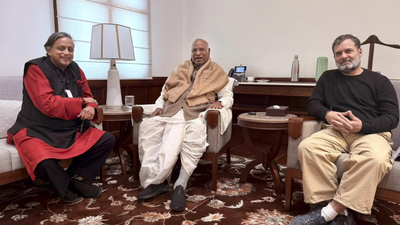
Shashi Tharoor How Congress’ ‘Hum Saath Saath Hai’ moment brought support to UDF in time for Kerala polls India News
New Delhi: Latest tinkering and ‘all’s well’ moments Shashi Tharoor and congress The high command has given the Kerala Congress a much-needed impetus ahead of the assembly elections in April-May. Tharoor’s meeting with Mallikarjun Kharge Rahul Gandhi After weeks of speculation about his strained relationship with the party, New Delhi put an end to what many within the Congress party called an “embarrassing episode” and positioned him as a core campaign representative for the Congress-led United Democratic Front (UDF).The settlement has given the ruling Left Democratic Front (LDF) new cohesion and impetus at a time when it is battling incumbent fatigue and the BJP is testing the limits of its expansion in the state.ALSO READ | Congress vs Tharoor: A new beginning or a temporary truce?“Everything is fine” at the critical momentTharoor’s recent thaw with the Congress has sent a strong message of unity to cadres and allies at a critical time. Tharoor was reportedly upset with the treatment given to him by Rahul Gandhi at a recent event in Kochi and the attempts by some leaders to sideline him in Kerala.For a party that has often been in crisis due to factional fighting in its state unit, the situation in Kerala is devastating.Reconciliation addresses this issue head-on. Parliamentary opposition leader VD Satheesan’s faction and leaders seen as sympathetic to Tharoor now have little room for parallel centers of power.The enthusiasm also saved Congress from embarrassment in front of its own SDF allies.Last year, as Tharoor pointed out that there was a “lack of leadership” in the party in Kerala, Indian Muslim League (IUML) president Sadiq Ali Thangal publicly asked the Congress to resolve internal differences, warning that apparent discord would only benefit rivals. That concern has now been allayed by restoring Tharoor’s confidence.This drive for unity is crucial to the election.Since the late 1980s, Kerala voters have switched governments between the UDF and LDF every five years. However, the situation changed in the 2021 assembly polls, with the LDF failing to make headway and Pinarayi Vijayan-led LDF winning for a second consecutive term.The LDF’s seats increased from 91 seats in 2016 to 99 seats in 2021, while the UDF’s seats fell from 47 seats to 41 seats.Tharoor’s voter appealIn the 2021 Assembly polls, the biggest impetus for the LDF sweep comes from the Travancore region, which includes Thiruvananthapuram, Kollam, Alappuzha, Pathanamthitta and Kottayam. The LDF won majority seats in Thiruvananthapuram and Kollam, two traditionally swing districts. Thiruvananthapuram, Tharoor’s Lok Sabha seat, has also historically been a swing constituency, alternating between the Congress and the Left, and has recently become a target seat for the BJP. In the 2024 Lok Sabha elections, Union Minister Rajeev Chandrasekhar of the Bharatiya Janata Party faced Tharoor, but the Congress leader retained the seat for the fourth time with over 16,000 votes. The UDF swept 18 of the 20 Lok Sabha seats.Tharoor’s appeal is particularly pronounced among educated, salaried and first-time voters, groups that have shown increasing volatility in recent state and local elections. This group has not consistently aligned itself with the Congress organization and has at times embraced the BJP’s urban outreach or vigilante governance propositions. Tharoor’s continued victory in Trivandrum demonstrates his ability to stem the tide even as broader party trends are mixed.At a strategic level, this provides the UDF with a way to expand without alienating its traditional social base. Urban centers like Thiruvananthapuram, Kochi and Kozhikode, where turnout is more volatile and the margins tend to be smaller, could play a huge role by 2026. Tharoor’s presence gives the Congress a more credible bid for these spaces, especially at a time when the BJP has signaled its intentions through rising municipal gains and recent mayoral victories.The Congress leadership’s decision to spearhead the campaign with Tharoor touring all 140 constituencies has added star power to a campaign that often hinges on narrative dominance. Tharoor’s oratory, media clout and ability to articulate local issues in national and global contexts give the UDF an edge in appealing to undecided voters.Refuting the claims of LDF and BJPThis patch immediately undercuts the competitor’s narrative. For the BJP, the rapprochement weakens the “internal chaos” line of attack. The BJP has repeatedly highlighted infighting in the Congress to project itself as a disciplined alternative (and has frequently used Tharoor’s name recently).Meanwhile, the BJP is looking to capitalize on its recent victory as mayor of the Thiruvananthapuram Municipal Corporation, a symbolic breakthrough that signals the city’s growing appeal, although success at the assembly level remains elusive.Moreover, Tharoor’s active participation in the election campaign may help the UDF attract the youth, especially the aspirant and educated youth. The Congress leader’s credibility as a writer, diplomat and global speaker also gives him unique appeal among Kerala voters, given the state’s high literacy rate.The LDF and the Bharatiya Janata Party-led National Democratic Alliance have also often portrayed the Congress as dynastic and directionless. The image of Tharoor standing side by side with Rahul Gandhi will undermine these claims, at least for now.Risks contained, momentum restoredPerhaps the most immediate benefit of settlement is risk reduction. Speculations that Tharoor might turn to vigilantes or even explore non-Congress platforms have been firmly refuted. His integration into the congressional campaign delivered a message of consistency.For congressional strategists, the memory of 2021 is still fresh. Despite favorable anti-incumbency indicators at the time, the Democratic Alliance failed to convert its chances into victory. Tharoor’s tinkering is seen as a corrective measure to ensure that organizational weaknesses do not squander political opportunities again.By restoring unity, the Congress’s rapprochement with Tharoor provides a credible opportunity for the opposition UDF to turn a new leaf after years of Left rule. Whether that translates into electoral seats will depend on execution, alliances and local dynamics, but for now, riding on the image of “Hum Saath Saath Hai”, the UDF has secured an early and much-needed victory heading into the elections.
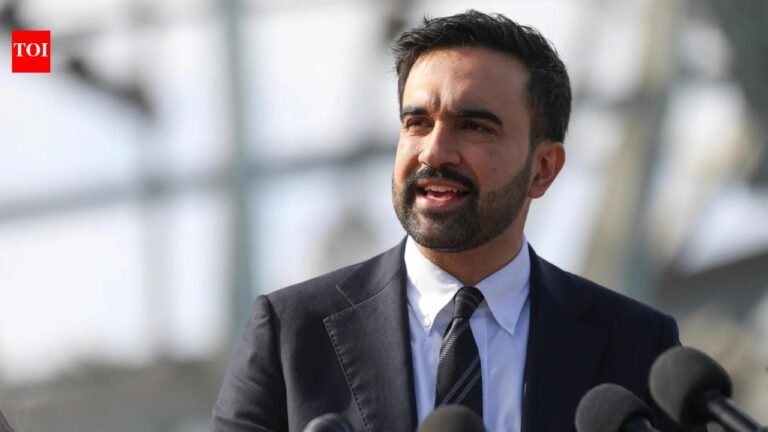
‘Islam is a religion built on immigration’: New York City Mayor Mamdani invokes Prophet Muhammad’s migration on immigration
New York City Mayor Zohran Mamdani has drawn attention by invoking Islamic history when talking about immigration, using religious references to develop a broader argument for compassion and asylum in U.S. immigration policy.The remarks came at an interfaith breakfast on Friday, where Mamdani spoke about how faith traditions influence views on immigration and hospitality. Referring to Islam, he described it as “a religion built on a narrative of migration,” noting that the Migration, the Prophet Muhammad’s journey from Mecca to Medina, was a defining moment in Islamic history.“The story of Hijra reminds us that the Prophet Muhammad was also a stranger,” Mamdani said. “He fled Mecca and was welcomed in Medina.”Mamdani sees this historical reference as a lesson in how societies deal with people escaping hardship, and suggests it provides perspective on modern debates about immigration. He tied the example to New York City’s identity as a city shaped by immigrants and reaffirmed its sanctuary status, arguing that protecting immigrants reflected deep-seated moral values. In his speech, he also drew on teachings from other faith traditions, such as Christianity and Buddhism, to highlight what he said were common principles of compassion and care for the vulnerable.The comments elicited mixed reactions. Supporters hailed the remarks as a call for empathy based on faith and interreligious solidarity, saying they reflected New York City’s long history of welcoming immigrants. Critics, however, question the appropriateness of invoking religious figures in discussions about U.S. immigration policy, arguing that such debates should be separated from religious narratives.Responses to the mayor’s speech highlighted ongoing tensions in the national discussion about immigration, the role of faith in public discourse, and how elected leaders draw on moral and historical references when addressing contentious policy issues.
T20 World Cup: Shimron Hetmyer writes history as fastest ever… | Cricket News
Himron Heitmeyer West Indies put up a brilliant knock as they posted 182 runs for 5 in their second T20 World Cup match against Scotland at the Eden Gardens in Kolkata on Saturday. The left-hander smashed 64 runs in just 36 deliveries, stabilizing the innings after a shaky start. Scotland enter the World Cup under unusual circumstances, having been selected only two weeks ago after Bangladesh withdrew from the tournament citing security concerns for their trip to India. Despite the short notice, the Scots showed discipline soon after winning the toss and electing to bowl.
Their bowlers kept the two-time champions West Indies in check by applying pressure with a tight line in the powerplay. Brandon King Safyaan Sharif, who was the first to break free, hit a six and two fours in the seventh over to inject momentum. King eventually scored 35 points as Scotland fought back. Off-spinner Michael Leask breaks through, dismisses skipper Shay Hope 19. Soon after, debutant left-arm spinner Oliver Davidson claimed his first T20 wicket when King was caught at backward point. Hetmyer then took control of the innings, launching a fierce counterattack against the Scotland bowling. He broke the ropes six times and completed a quick partnership of 81 runs off just 37 balls. Roffman Powellhe contributed 24 goals. Hetmyer scored his half-century off just 22 balls, scoring a total of six. This is the fastest 50-run score by a West Indies batsman in the T20 World Cup. Although Powell fell in the final round, the aggression did not drop. Hetmyer continued to find boundaries with Sherfane Rutherford, who hit a quick 26 off 13 balls. Heitmyer’s inning ended when Safiyaan Sharif forced an errant hit, which was brilliantly caught by Brandon McMullen on a long pitch. Rutherford departed on the very first ball of the next over. Left-arm seamer Brad Currie was Scotland’s most economical bowler with 2 for 23. Looking back on his innings, Heitmyer acknowledged that conditions were testing. “It’s a mixed bag because of how hot it is. I don’t know about other people but I asked the referee and he said he didn’t feel too good but I think we can get back to playing during the day and night,” he said. When talking about his partnership with Powell, Heitmeier emphasized the clarity of approach. “It’s just batting with a clear mind. Every ball that’s bowled, you can take chances, if not just try to limit penalties, which is something we talk about as a team and the batting unit. Limit penalties as much as possible. Because we’re a boundary batting team and everyone knows that, but just the singles and penalties we were a little short on and glad it worked in our favor today.“ Heitmeier also attributed his performance to improved conditioning. “I think it’s (being healthier). I’ve been working on it a little bit at home. My coach is my wife and she’s pushing me at home to work harder and so far, it’s been great and I’m excited to be out on the park and contribute as much as I can for the team.”
‘Khejri Bachao Andolan’: Why Rajasthan is rallying to protect its ‘Kalpavriksha’? Explained | India News
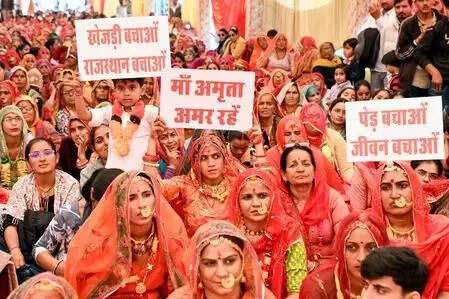
In the heat of Rajasthan’s desert districts, a tree has become the focal point of a widening confrontation. Markets have shut, saints have gone on strike, political rivals have shared protest stages, and thousands have gathered under open skies to demand its protection.What began in Bikaner as a local objection to the alleged felling of khejri trees for solar power projects has since evolved into the ‘Khejri Bachao Andolan’, a statewide campaign pressing for stricter legal safeguards and an immediate ban on cutting the species. The movement has drawn support across party lines, producing a rare moment of political convergence.The khejri, botanically known as Prosopis cineraria and recognised as Rajasthan’s state tree, occupies a distinctive place in the ecology of the Thar desert. Amid the ongoing protests, chief minister Bhajan Lal Sharma, assuring the protection of the khejri, termed the tree as the state’s “Kalpavriksha,” a wish-fulfilling tree in Indian tradition. In an arid landscape where survival is closely tied to ecology, the reference reaffirms the tree’s symbolic and practical importance. For many communities in western Rajasthan, the debate now extends beyond development policy into questions of history, identity and survival.
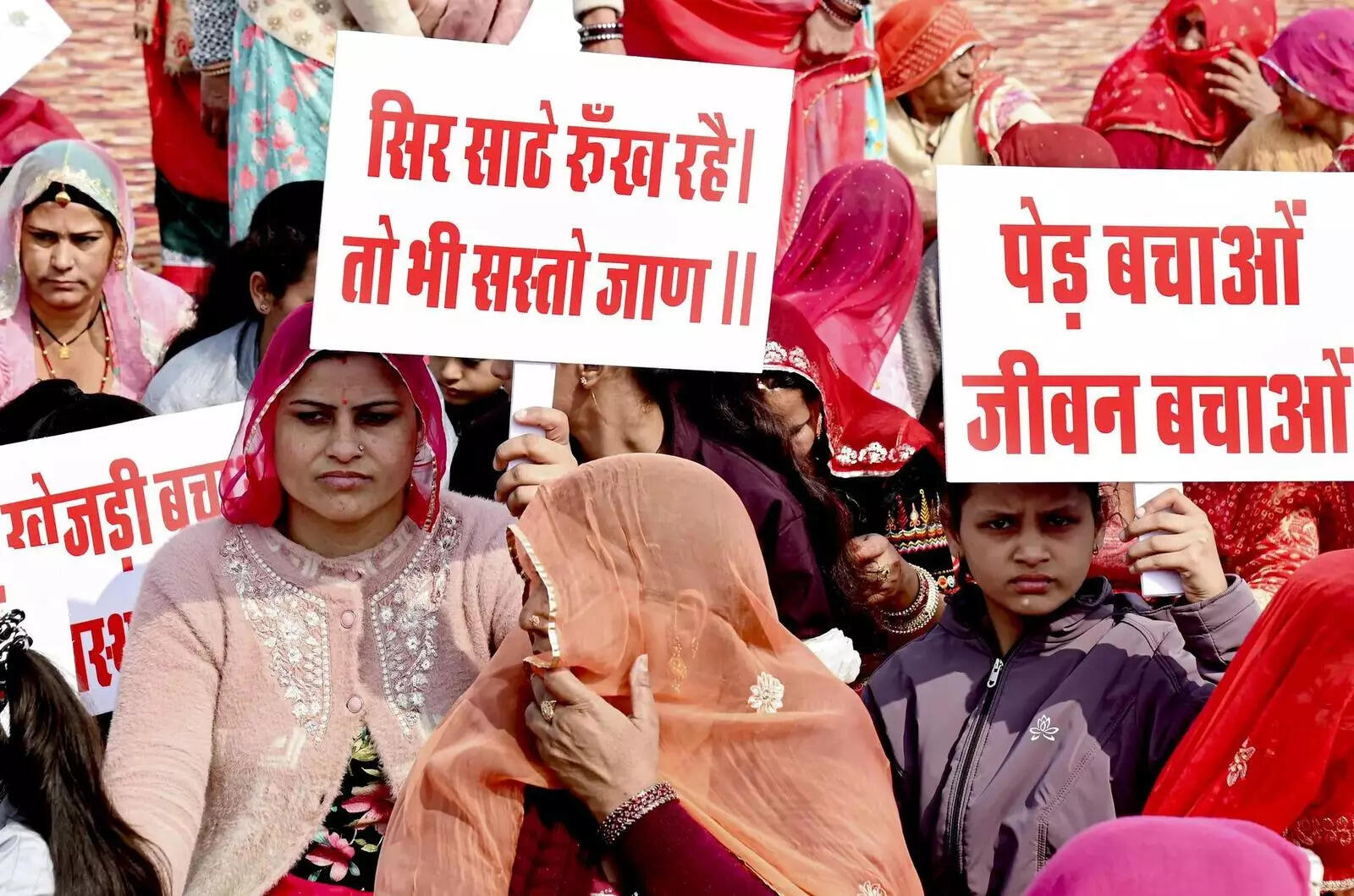
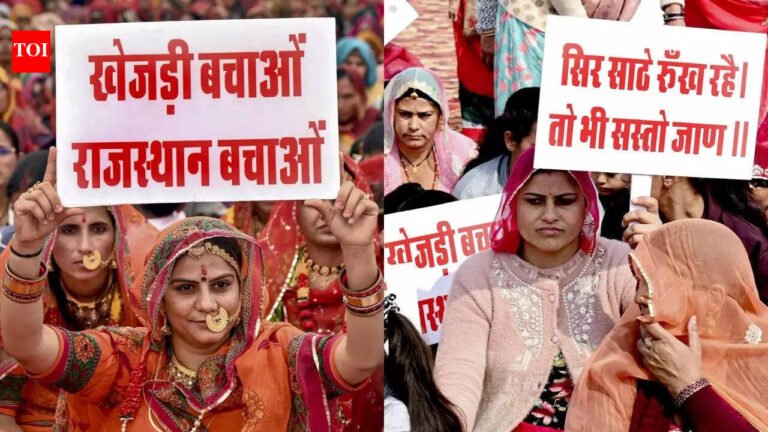
Protestors carried posters featuring a revered proverb in the Bishnoi community: “Sir saanthe rukh rahe to bhi sasto jaan” (If a tree can be saved, even at the cost of one’s head, consider it a bargain). (PTI)
How the agitation unfolded
The present phase of the movement intensified in early February, when over 360 saints and local residents began a hunger strike in Bikaner, demanding an immediate ban on the felling of khejri trees for solar power projects. The protest site was initially the Polytechnic College ground near the Collectorate before shifting to the Bishnoi Dharamshala, where the hunger strike continues.In Bikaner, markets remained closed for hours on Monday after a call by trader associations. Government and private schools in urban areas observed a half-day holiday in solidarity. Thousands gathered at the Polytechnic College ground before marching towards the Collectorate, where organisers announced an indefinite sit-in.Protesters came not only from different districts of Rajasthan but also from Uttar Pradesh, Haryana, Maharashtra and Madhya Pradesh. Organisers said they had arranged food for nearly one lakh participants, with hundreds of volunteers handling logistics. Police deployed additional forces, erected barricades near the Collectorate and kept water cannons on standby. Despite the scale and tensions, the protest remained peaceful.
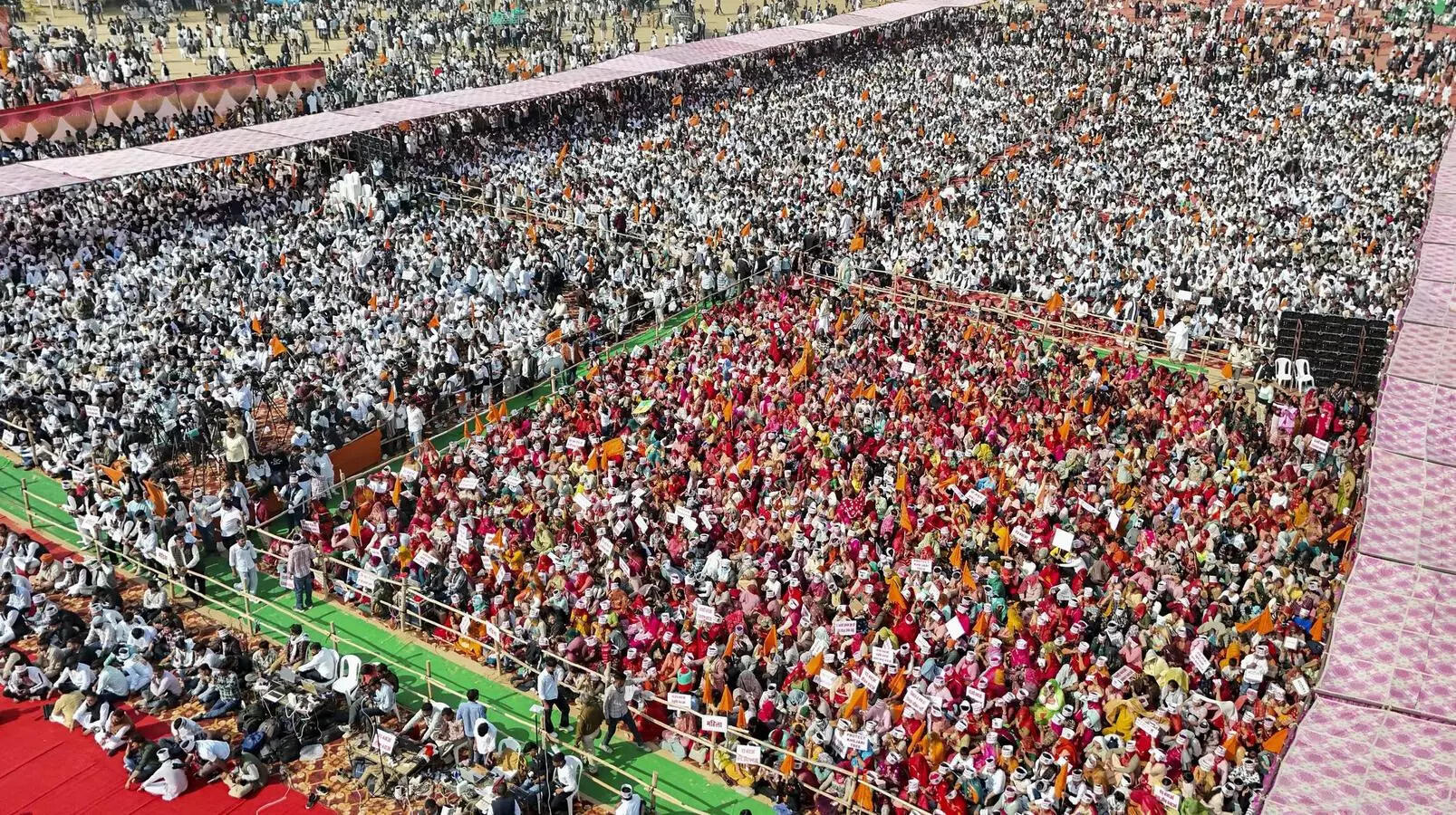
Environmental activists and members of the Bishnoi community participate in the Save Khejri Movement at Polytechnic College, protesting against the proposed cutting of Khejri trees for a solar power plant, in Bikaner. (PTI)
Four protesters were admitted to Prince Bijay Singh Memorial Hospital as their health deteriorated during the hunger strike, while several others received medical assistance at camps set up near the site. Mokhram Dharaniya, one of the hospitalised protesters, said, “People are sitting on a hunger strike, including me. Our protest will continue until our demands are met.”
The trigger? Solar expansion
At the centre of the agitation are allegations that large numbers of khejri trees have been cut to facilitate solar power projects in western Rajasthan. The region has emerged as a hub for renewable energy, given its high solar irradiance and availability of land. While solar development is central to India’s energy transition goals, protesters argue that project implementation has come at the cost of ecologically vital trees.Tensions escalated when the state government announced a restriction on felling khejri trees only in the Jodhpur and Bikaner divisions. Protesters rejected the move as inadequate, demanding a blanket statewide ban. During one address by a government representative, protesters reportedly took away the microphone, insisting on a written assurance.
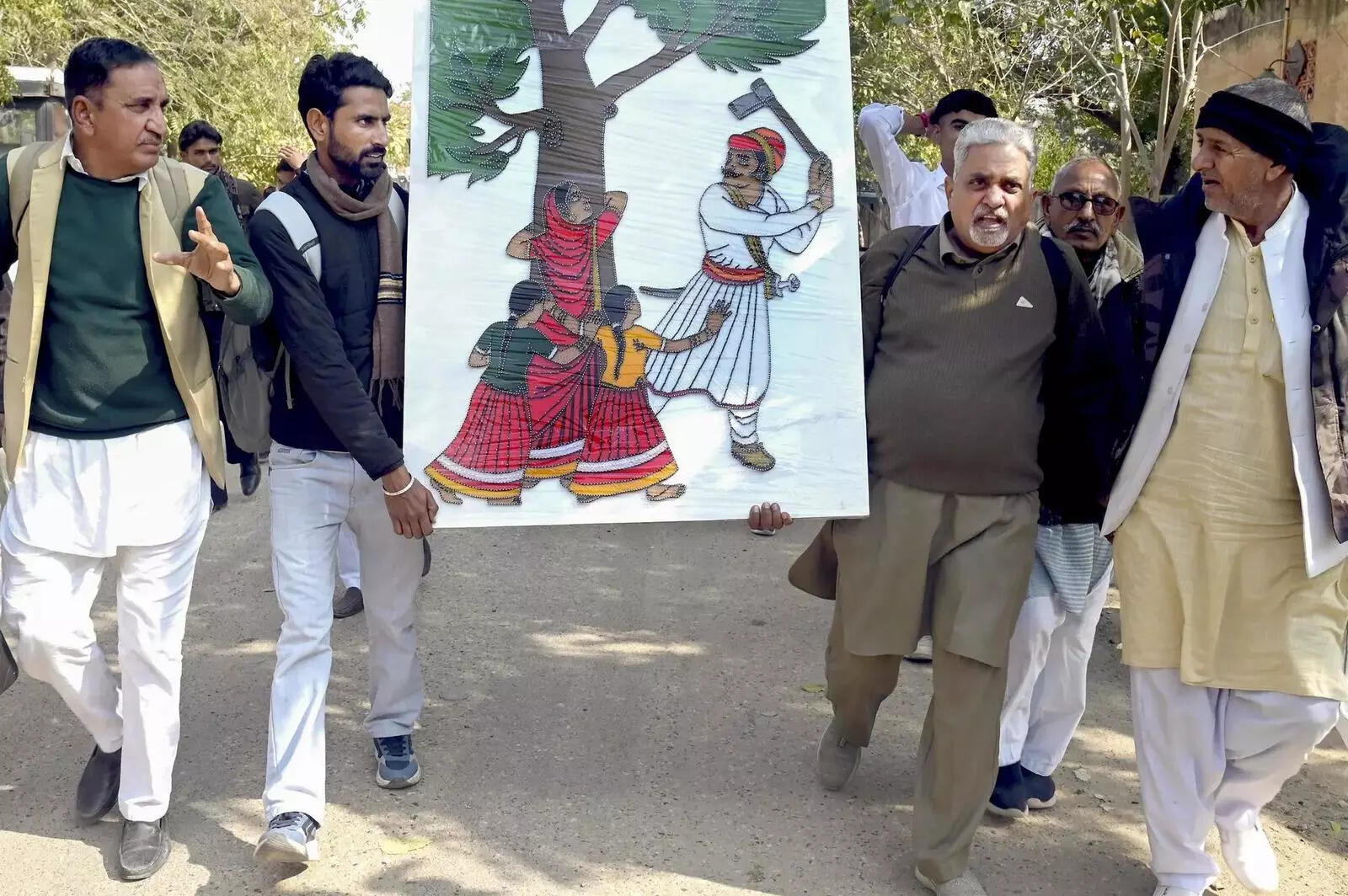
Environmental activists and members of the Bishnoi community take part in the ‘Save Khejri Movement’, protesting against the proposed cutting of Khejri trees for a solar power plant, in Bikaner. (PTI Photo)
Minister for skill, employment and entrepreneurship KK Bishnoi and State Animal Welfare Board chairman Jaswant Bishnoi visited the Bishnoi Dharamshala and offered juice to the hunger strikers in an attempt to persuade them to break their fast. The minister said the government was ready to provide a written commitment and appealed to protesters to end the hunger strike. However, saints on the stage refused to withdraw without formal documentation.Agitation leader Parsaram Bishnoi said, “The hunger strike did not end. The government order was incomplete as it failed to cover the entire state.” Former minister Bhanwar Singh Bhati said: “All sections of society participating in the agitation decided to continue until a complete ban on cutting Khejri trees was imposed across Rajasthan.”
Storm in the assembly
The issue has resonated in the Rajasthan Assembly. Congress MLA Dungar Ram Gedar raised the matter during Zero Hour, accusing the government of failing to act despite a persistent two-year protest led by the Bishnoi community in Bikaner. “Khejri being the state tree, there is an urgent need for a strict law to protect it,” Gedar said.Independent MLA Ravindra Singh Bhati stated that the matter was already under discussion in the assembly. “Bhagat Singh (the Indian freedom fighter) said that sometimes a blast is needed to make the voice heard. If it takes gheraoing the Assembly to save khejri, I will be at the forefront,” he said.Chief Minister Bhajan Lal Sharma told the assembly that his government was drafting a conservation law for the khejri tree, which he described as the state’s “Kalpavriksha”. “In August, saints from Bikaner, Phalodi, Jodhpur and Nagaur met me. Following that, I instructed officials to prepare the draft legislation. The process is under way, and it will soon be presented in the assembly,” he said.The chief minister also used the assembly session to defend his government’s broader record, speaking about economic growth, recruitment reforms and water supply projects. However, protesters have maintained that until a formal statewide ban is issued, the agitation will continue.Former chief minister and senior Congress leader Ashok Gehlot expressed support for the public movement, describing the indiscriminate cutting of khejri trees in the name of development as “extremely painful and unacceptable.” He recalled the historical sacrifice associated with the tree and said environmental protection must be prioritised.In a development seen as politically significant, former chief minister Vasundhara Raje publicly backed the movement that has put her own party, the BJP, in the dock.Sharing a photograph of herself worshipping a khejri tree, she wrote, “I also worship the Khejri tree. Rising above politics, we should all come forward to protect it. We must save it. I stand with everyone in the campaign to save the Khejri tree and the Oran (grazing land).” She also quoted a proverb revered in the Bishnoi community: “Sir saanthe rukh rahe to bhi sasto jaan” (If a tree can be saved, even at the cost of one’s head, consider it a bargain).Observers have noted that her intervention has added to political pressure on the state government.
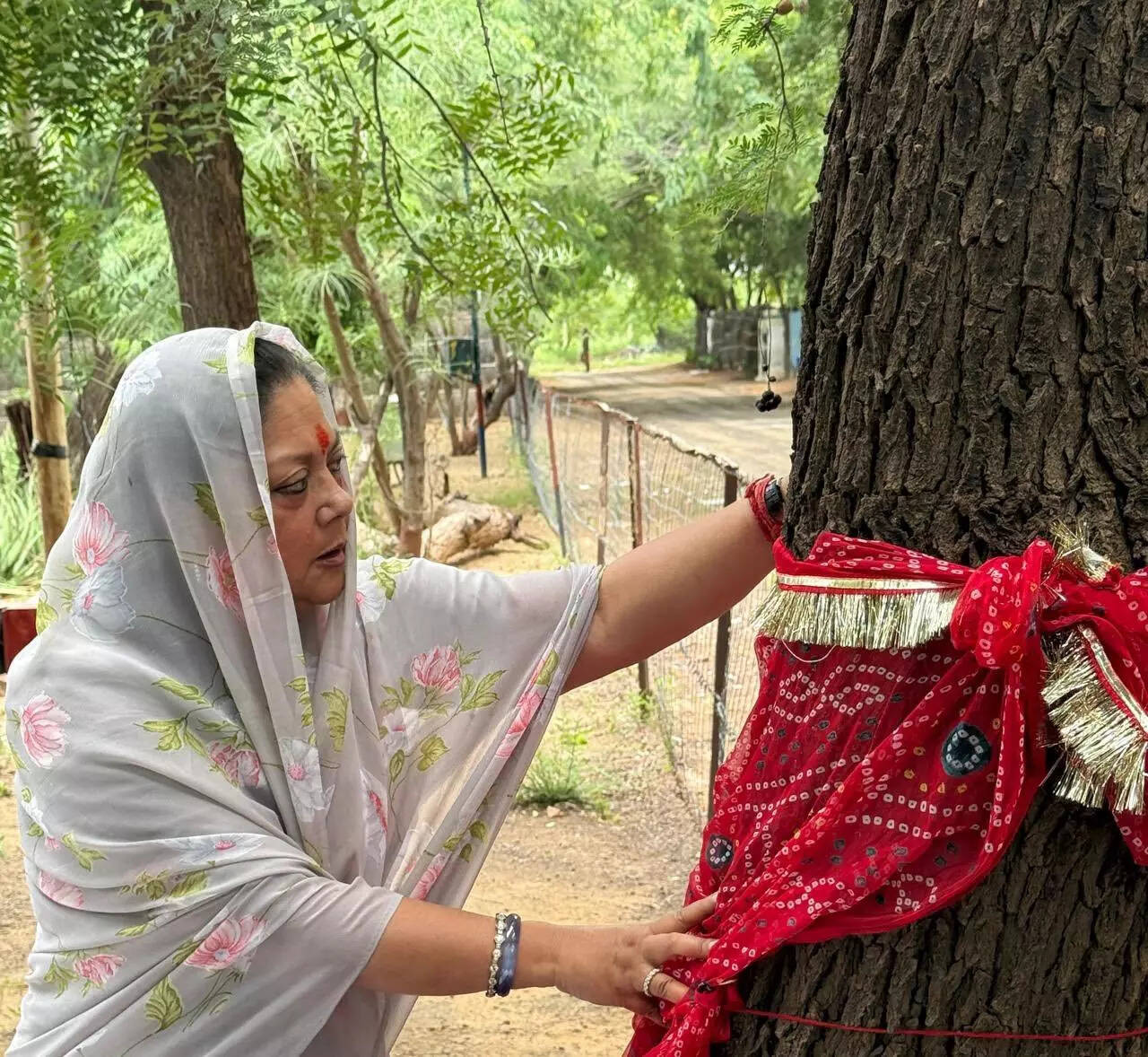
Vasundhara Raje shared a photo of herself performing a ritual puja, while pledging cross-party support to protect these trees and associated Oran grazing lands from development threats.
The historical memory: Khejarli and Amrita Devi
Any discussion of the khejri in Rajasthan inevitably returns to the events of 1730 in the village of Khejarli near Jodhpur. According to historical accounts, 363 members of the Bishnoi community, led by Amrita Devi Bishnoi, sacrificed their lives to prevent the felling of khejri trees ordered for royal construction.The episode, often referred to as the Khejarli massacre, is widely regarded as one of the earliest recorded instances of environmental resistance. Amrita Devi is said to have declared that the loss of her head would be a small price to save a tree. Her sacrifice and that of the others form a cornerstone of Bishnoi identity and environmental ethics in the region.
According to historical accounts, 363 members of the Bishnoi community, led by Amrita Devi Bishnoi, sacrificed their lives to prevent the felling of khejri trees ordered for royal construction.
Protesters in the current agitation have repeatedly invoked this legacy. Even Ashok Gehlot referred to the sacrifice of 363 individuals, including Amrita Devi Bishnoi, and said their legacy should be honoured.
Ecological significance
The khejri is uniquely adapted to arid (extremely dry) and semi-arid climates. It has a deep root system that allows it to access groundwater and survive prolonged drought. Unlike many other species, it does not compete aggressively with crops and is often grown in agricultural fields in a traditional agroforestry system. An agroforestry system is a land-use practice where trees are grown alongside crops or livestock on the same land to improve productivity and sustainability.Its leaves, known as “loong,” are used as fodder for livestock. Its pods, called “sangri,” are a staple ingredient in traditional Rajasthani cuisine, particularly in the dish Ker Sangri. The wood is used as fuel and timber, while its bark and other parts have been used in traditional medicine.
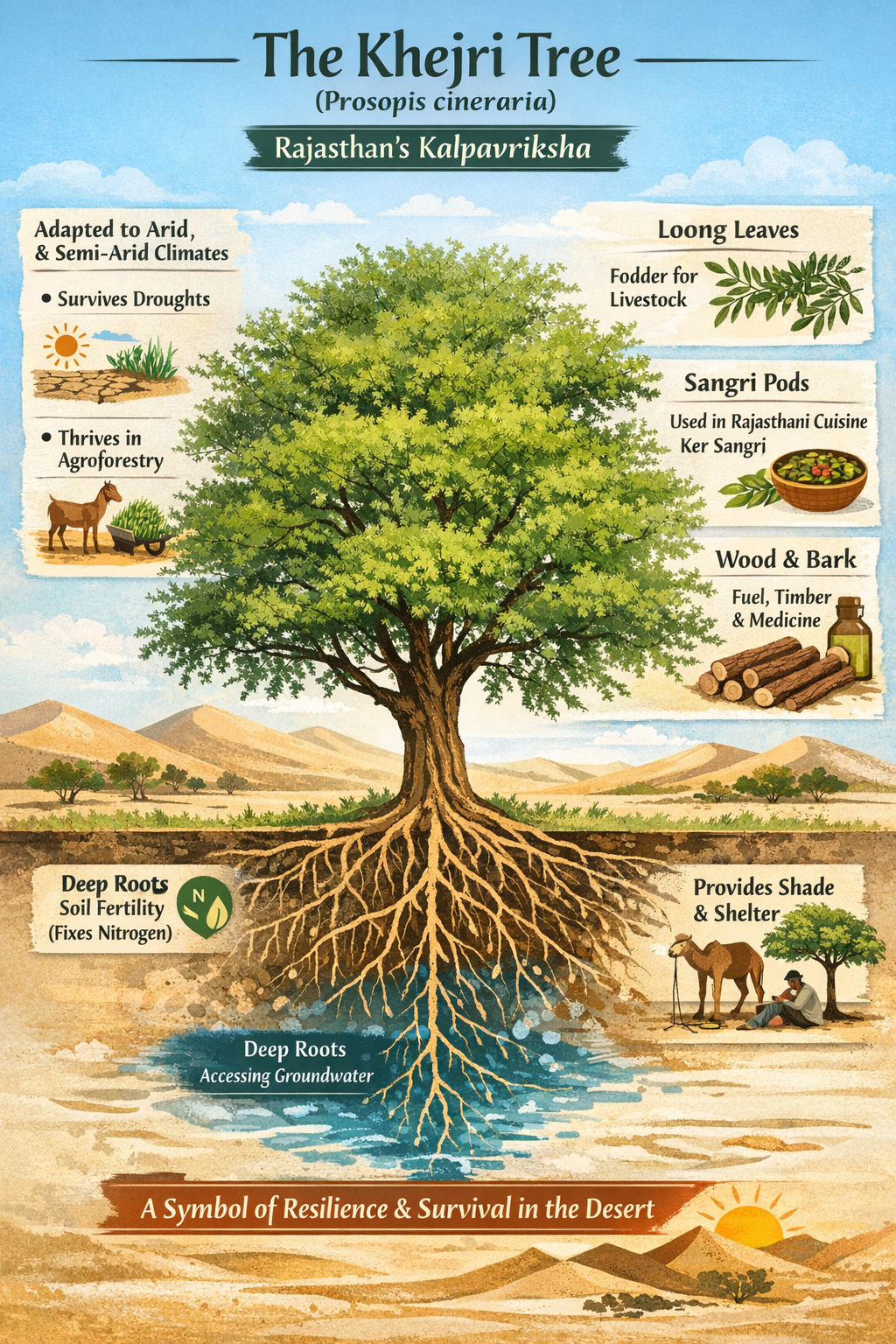
The Khejri tree (Generative image)
Ecologically, the tree improves soil fertility by fixing nitrogen, reduces desertification by stabilising sand dunes and provides shade in extreme heat. In regions where annual rainfall is minimal, it plays a crucial role in sustaining both human and animal life.Given these attributes, many in Rajasthan see the khejri not just as a tree but as a symbol of resilience and survival in a harsh environment.
Legal framework and demands
Currently, khejri trees are protected under various forest and environmental regulations, but protesters argue that enforcement is inconsistent and that ambiguities in existing laws create loopholes. Former Luni MLA Mahendra Vishnoi said, “Confusion exists in current laws concerning khejri conservation. The penalties must be precise and severe. Without a fear of the law, this destruction will persist.”Environmental activist Mokhram Dharniya alleged administrative inaction. “The administration has betrayed us repeatedly. Over the past year, we have held numerous protests, receiving assurances each time, while the trees continue to be axed. We will not permit the cutting of khejri anymore,” he said.One of the demands emerging from the agitation is a provision imposing a fine of Rs 1 lakh for violations. Activists have also called for a temporary statewide ban on felling until a comprehensive conservation law is enacted.
Spread of the movement
The agitation has extended beyond Bikaner. In Barmer, protesters gathered at the Collectorate, and some youths climbed the gate and raised slogans after police closed the premises. A memorandum addressed to the chief minister was submitted.The movement has also taken on a deeply personal dimension for some families. Following the death of environmental activist Radheshyam Bishnoi in a road accident last year, his mother Ratni Devi and wife Nirma Bishnoi have continued his work and are now on a hunger strike demanding protection for khejri trees.
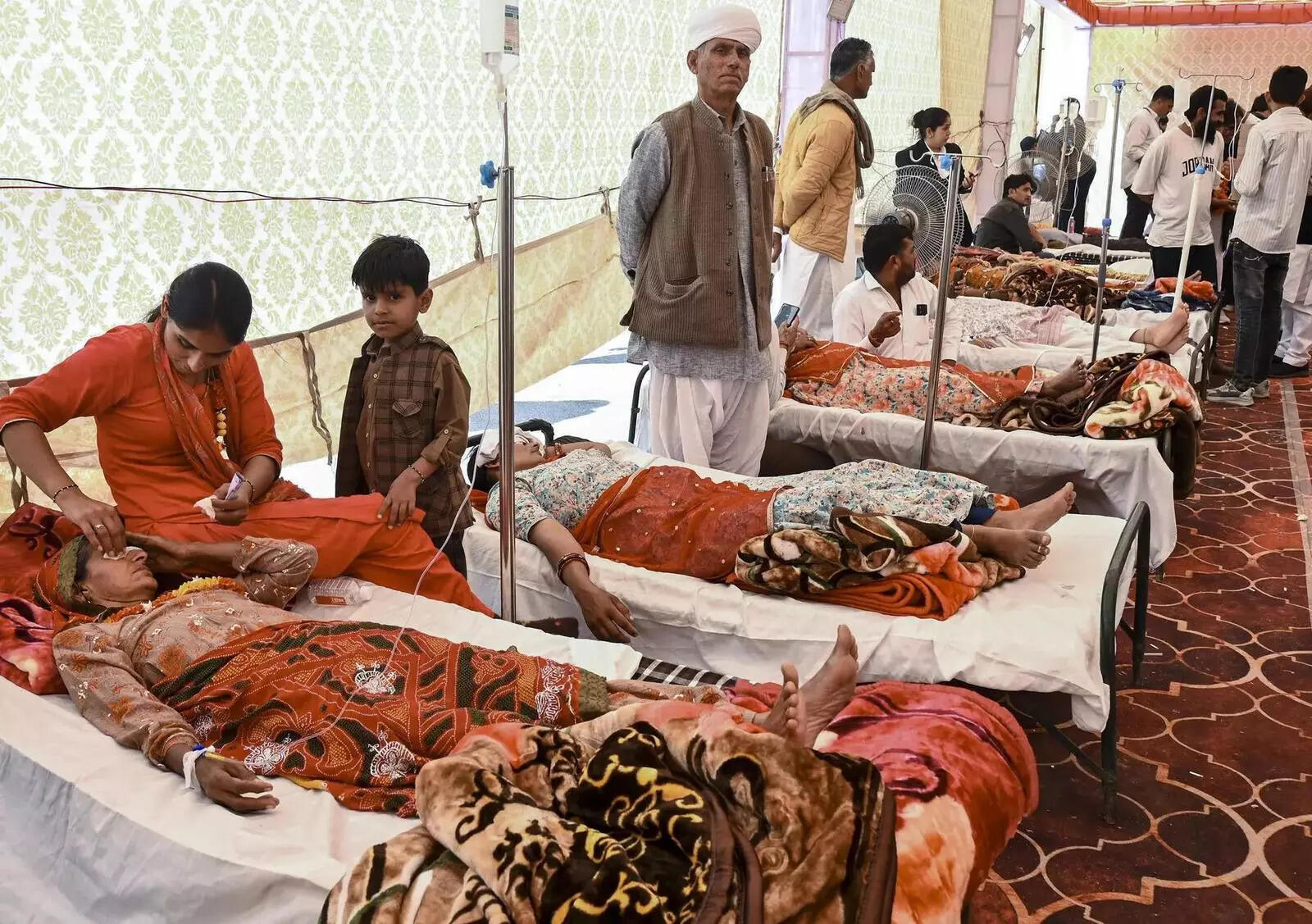
Members of the Bishnoi community during an indefinite hunger strike, demanding a tree protection bill in the ongoing assembly session and a complete ban on cutting of khejri trees, near a Bishnoi Dharamshala, in Bikaner, Rajasthan. (PTI Photo)
Meanwhile, reports of illegal logging in other parts of the state, including in the forest area of Bayana subdivision in Bharatpur district, have further fuelled concerns about enforcement.Activists said the issue concerns the entire desert belt, including Jaisalmer, Barmer, Jodhpur, Pali, Jalore, Phalodi, Sriganganagar, and Churu. Protesters alleged that thousands of khejri trees were felled in recent years, largely for infrastructure and solar power projects.Founder of the Khejri Bachao Andolan, Parasram Bishnoi, said the agitation would continue until the state enacts a specific law making the cutting of khejri trees a punishable offence.“Large tracts of desert land are being indiscriminately handed over to solar parks, destroying the local ecosystem. Without legal protection, the desert’s survival is at stake,” Bishnoi told TOI.He added that participation is swelling daily and asserted that the onus now lies on the state government led by chief minister Bhajan Lal Sharma. Bishnoi alleged that khejri trees were uprooted across vast desert areas both in the name of renewable energy projects and by an illegal wood mafia, with little effective oversight.
Development versus conservation
The unfolding debate reflects a broader tension between renewable energy expansion and environmental safeguards. Rajasthan is a key state in India’s solar mission. Large tracts of land are being allocated for solar parks, transmission corridors and associated infrastructure.
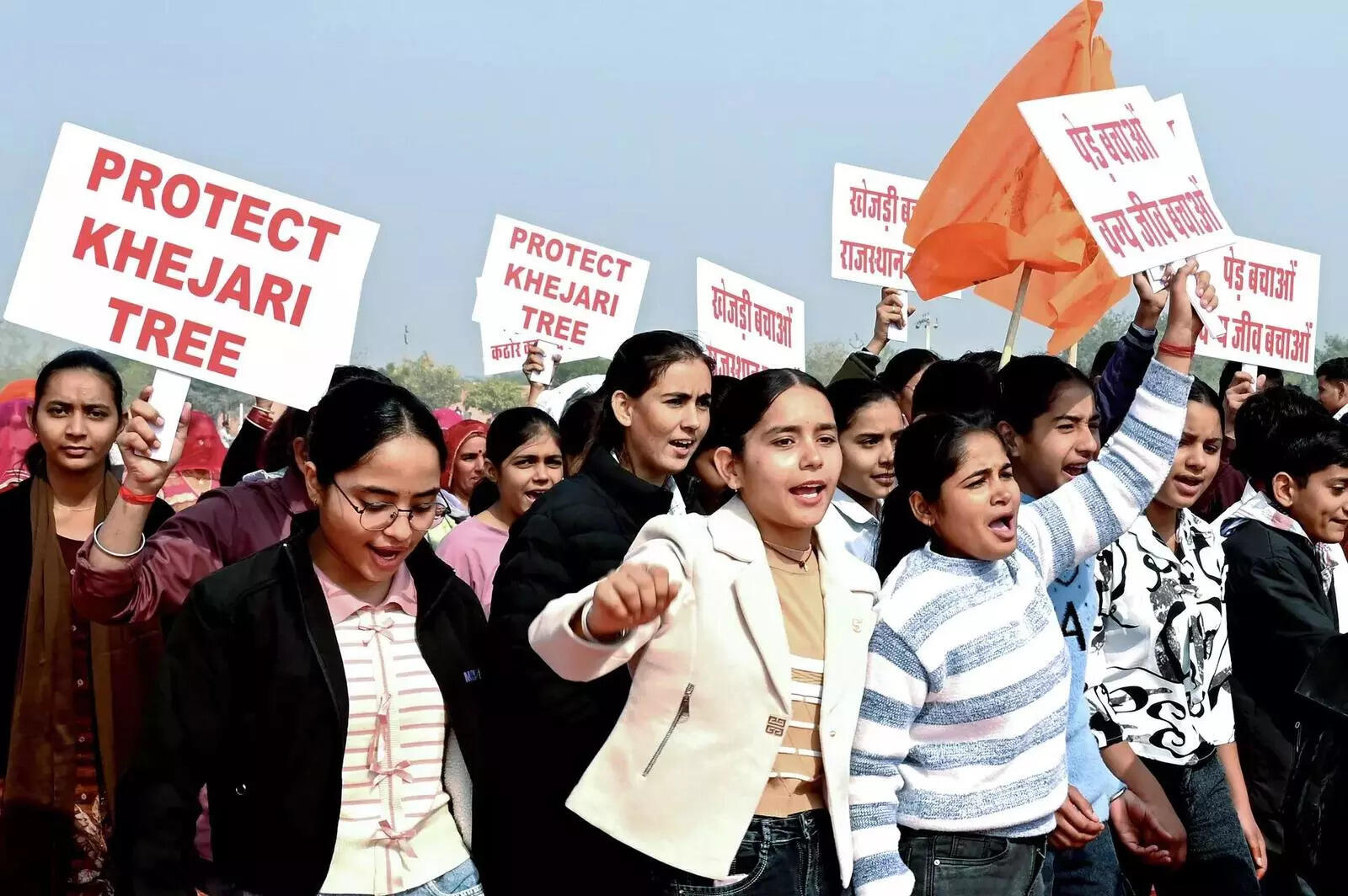
Environmental supporters and members of the Bishnoi community participate in the ‘Save Khejri Movement’ (ANI photo)
While renewable energy is seen as essential for climate mitigation, local communities argue that development planning must take into account ecological realities and traditional land-use patterns. The khejri, embedded in agricultural and grazing systems, is not easily replaceable.For many protesters, the demand is not to halt development but to ensure that it does not erode the ecological foundation of desert life.
An evolving movement
As the Khejri Bachao Andolan entered its sixth day, its trajectory remains uncertain. The state government has indicated it is drafting legislation. Protesters insist on immediate written assurances and a comprehensive statewide ban.What is clear is that the agitation has tapped into a powerful historical memory and a deeply rooted cultural ethos. The khejri tree stands at the intersection of ecology, economy and identity in Rajasthan. Its fate has become a test case for how the state balances development with conservation in one of India’s most fragile landscapes.Whether the movement results in a new conservation law, stricter enforcement or a recalibration of project implementation, it has already reaffirmed the enduring symbolic power of a tree that many in Rajasthan consider their “Kalpavriksha”.