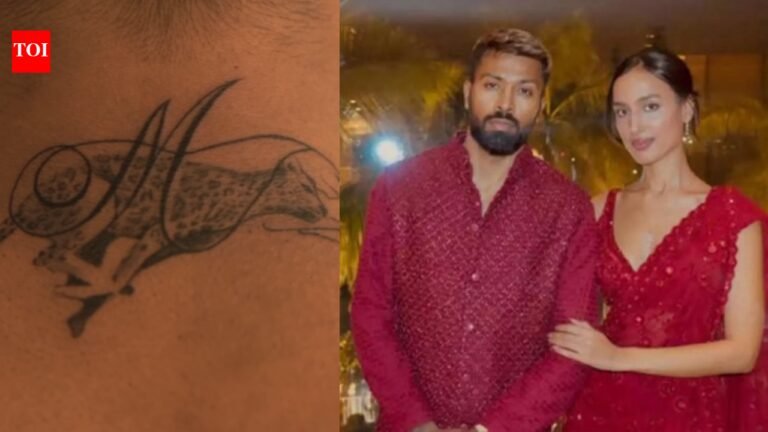
As the surprises of Valentine’s Day continue, Hardik Pandya A special gesture was made for his girlfriend Mahieka Sharma. The Indian all-rounder got a new tattoo in her honour, and it quickly grabbed attention online.Push boundaries with our YouTube channel. Subscribe now! Hardik first wanted to print the initial “M” as a simple yet meaningful symbol of love. However, after detailed discussions with the artist and late-night brainstorming sessions, the idea turned into a larger design. The final tattoo shows two leopards. One is bold and realistic, the other features smooth lines that subtly form the letter “M” for Mahieka. The leopard represents strength and partnership. Hardik confirmed his relationship with Mahika Sharma in 2025.Also read: WATCH: Hardik Pandya spotted with girlfriend Mahieka; Arshdeep Singh steals the show as he arrives in Colombo, India Hardik Pandya has previously worked with Natasha Stankovic. The couple married in May 2020 and renewed their vows in February 2023 through Hindu and Christian ceremonies. They announced their separation in July 2024 and continue to co-parent their son Agastya. On the field, Hardik was also in top form against Namibia. He scored 52 runs off 28 balls as India posted 209 runs for 9 in 20 overs. With the ball, he took two wickets and scored 21 runs as Namibia were bowled out for 116 runs. India won the match by 93 runs and Hardik was named the man of the match. India faces major rivals next Pakistan Sunday, February 15th.
Do semen, ek jaan? No thanks: How homophobia is changing the language of love | India News
In a world where relationships have become more visible and complex, a strange psychological phenomenon is quietly gaining attention—homophobia, the fear of commitment or marriage.It’s not just the occasional cold feet, pre-proposal nerves, or hesitation about settling down. Homophobia is a deeply ingrained lived experience that can impact every connection, shape life choices, and define what love is like for many people. Increasingly, mental health professionals, writers, and even everyday couples are seeing this concept not just as a quaint term, but as a real form of emotional resistance.Ankur Halder, a 27-year-old IT professional, puts it very well – like Abai Deer Said in zindaji already Milej Dobala“I don’t want a soul in my body.” The word “gamophobia” itself comes from the Greek words gamos (marriage) and phobia (fear). At its core is the fear of getting married or entering into a long-term intimate commitment. In practice, however, the situation is much more nuanced. People who struggle with homophobia are not necessarily afraid of love or companionship. Rather, they worry about the permanence, vulnerability, expectations, and potential loss of autonomy that lifelong attachment may bring.But why has this fear become more pronounced now? Why are more and more people willing to call themselves “commitment-afraid”? Is this simply a symptom of a generation’s spoiled choices, or is it rooted in deeper psychological and social shifts? Importantly, in a place like India, where marriage still has cultural gravity, unlike much of the world, what does that look like?To explore these questions, we must move beyond labels and into the real-life realities where homophobia resonates in the twenty-first century.
The Many Faces of Homophobia
Homophobia is not a clinical diagnosis in major psychiatric manuals such as the DSM-V. This is a loosely defined term used in psychology, culture, and pop psychology circles. However, its presence reflects real emotional and relational patterns that therapists see every day.For some people, when discussions about the future get serious, it manifests as anxiety or panic. For others, it manifests as long-term relationship damage—becoming forceful, distant, or falling into a self-fulfilling breakup before things get too real. Some people experience insomnia, avoidance, or physical symptoms at the thought of tying their lives to others.Importantly, homophobia is not just a fear of marriage. It can be expressed as:
- fear of dependence or vulnerability
- Fear of repeating past relationship trauma
- fear of losing one’s identity
- fear of failure in love
- Fear of social expectations associated with marriage
For a growing number of young Indians, this fear is not abstract. It emerges at a very specific moment – when the romance begins to build.

In this country, relationships rarely remain emotionally unresolved. They are expected to peak. They must be formalized. They must move towards marriage.It is often at this threshold that things change.
When love is easy, but never is
Arav, 32, who works for a multinational company in Mumbai, said he has been in three serious relationships in the past decade. Everyone follows a similar rhythm: intense beginnings, emotional intimacy, shared holidays. For months, sometimes years, everything felt certain.Next is the topic of meeting parents. About the schedule. About “where is this going” and starting to retreat.“I didn’t know what to expect,” he said. “It was like something switched off. I started imagining all the ways it could go wrong. What if I lose my freedom? What if I’m not ready? What if I make the wrong choice and can’t undo it?”This is how homophobia often unfolds. People form romantic connections easily. They are affectionate, attentive, and emotionally involved. But when a relationship approaches a formal commitment—an engagement, marriage, shared finances—anxiety can spike. The future no longer feels romantic and begins to feel irreversible.
Doesn’t mean you can’t love
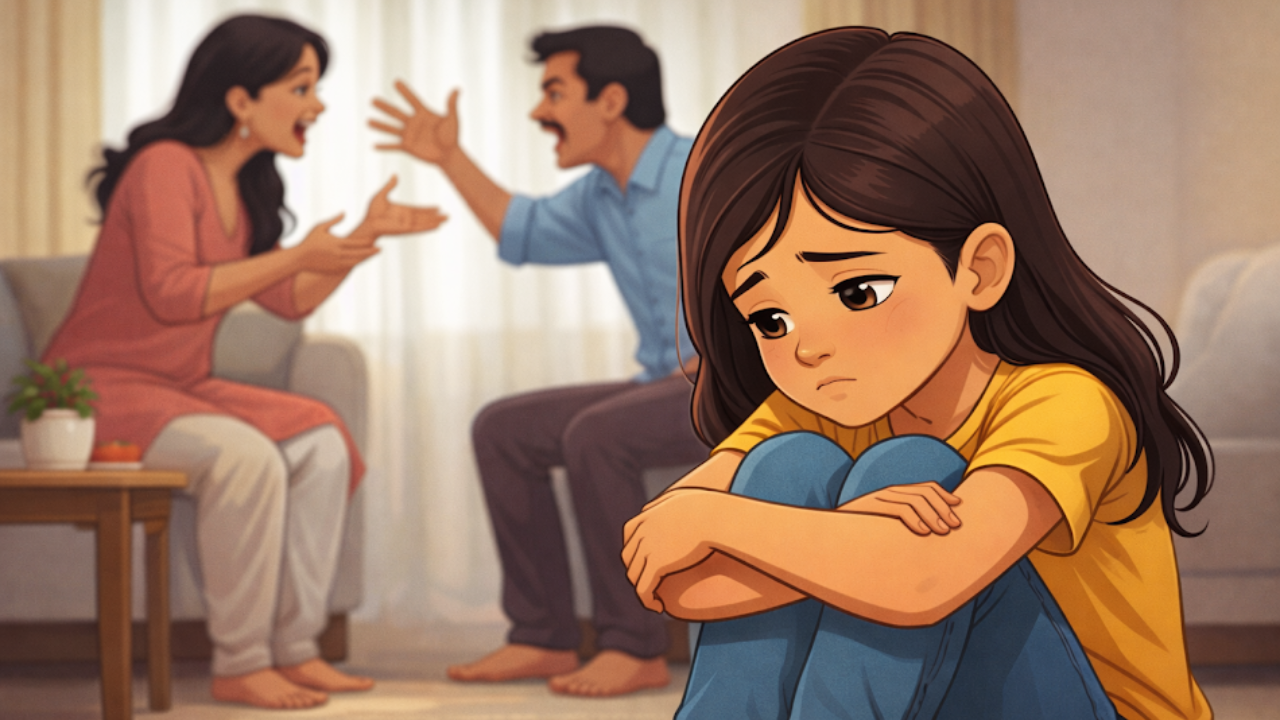
One of the most persistent misconceptions about homophobia is that it signals emotional immaturity or an inability to feel deeply. This assumption couldn’t be further from the truth.People who struggle with commitment anxiety tend to love intensely. They can be attentive partners, emotionally available, and genuinely invested in their relationship. The difficulty is not about feelings. It lies in anticipation.For some, the fear stems from childhood experiences. For others, it stems from witnessing marital dissatisfaction. For many in contemporary India, it stems from the burden of making the “right” decision in a world that offers unlimited choices and irreversible consequences.In this sense, homophobia is not so much a rejection of love as a fear of making an irreversible mistake.A 29-year-old woman (who chose to remain anonymous) grew up watching her parents argue behind closed doors while maintaining a calm public image. Divorce was never discussed. Silence is easier than separation.“When people talk about marriage,” she said, “I don’t imagine romance. I imagine being able to stay even if you’re not happy.”Children absorb more than they realize. When marriage is framed as endurance rather than companionship, commitment may begin to subconsciously resemble confinement.

Why fear of commitment may be growing
A culture of choice and comparison
We live in an age of endless choices, especially romantic ones. Dating apps, social media, global mobility and the carefully curated image of the “perfect relationship” create the illusion of endless possibilities. Commitment to a person can feel ambivalent rather than reassuring when one believes the next swipe may be better.This reflects deeper cognitive patterns of comparison, fear of missing out, and choice overload. Instead of being comforting, narrowing your options can trigger anxiety about losing potential options forever.
Personal identity over collectivism
In recent decades, individualism has become central to people’s sense of self. Career goals, personal growth, and self-discovery are more important than ever. While this is empowering, it also changes the way people think about relationships. Commitment begins to feel like a trade-off—balancing autonomy with attachment. Ankur Halder said: “I believe a healthy relationship should consist of two independent people choosing to be together. Today’s relationships have evolved, unlike older generations like my grandparents, whose partners tended to be overly dependent on each other. I appreciate that relationships now allow for more individuality.”
Witness the breakdown of a relationship
We grow up on stories of failed marriages, divorces and high-profile celebrity breakups. Seeing a relationship fall apart can affect how we think about commitment—making it feel risky rather than romantic.
Trauma and attachment styles
The way we connect emotionally is influenced by early life experiences. People with avoidant attachment often fear losing their independence in close relationships. Those with anxious attachment may worry about abandonment, even in healthy relationships. People whose early friendships ended abruptly may have difficulty remaining completely committed to their partners, fearing the inevitable loss of intimacy that will result.
Changing gender roles and expectations
Traditional roles, such as men as sole breadwinners and women as primary caregivers, have changed, but old expectations won’t disappear overnight. Women don’t want to be tied down by household chores, and years of social conditioning have left many feeling that at some point, they will have to sacrifice their dreams to meet relationship expectations. People around the world often find themselves balancing new possibilities with inherited norms, creating tension in romantic relationships as they decide who does what, how decisions are made, and what each partner “should” contribute.
Homophobia in India: Between Tradition and Modernity
In India, marriage has long been considered an important milestone in life—anticipated, celebrated and carefully planned by families. Urbanization, increased female labor force participation and exposure to global cultures have changed the way young Indians view partnerships. Emotional compatibility and personal growth are more important than ever.Meanwhile, deep-seated expectations remain:
- Marriage is a family responsibility
- Pressure to settle down early
- Fear of “what people will say”
- arranged marriage tradition
- Gender expectations for roles
In this environment, homophobia takes on unique contours. For some, it becomes a resistance to pressure, a boundary against social coercion. For others, it reflects real uncertainty about whether traditional marriage structures fit their changing identities.To further complicate matters, leaving a partner in India often creates difficulties socially. Relationships aren’t just between two people—they’re entangled with family expectations, social judgment, and, in many cases, children. In India, many people are reluctant to end relationships even if they feel unsatisfied because they worry about the shame of separation or the impact on their children. This creates a common misconception: staying despite being unhappy is often interpreted as proof of commitment or love, when in fact it may reflect social pressure and obligation.

Generational values also play a role. Many Indian families value endurance and sacrifice in relationships. While these ideals are admirable, they can inadvertently suppress emotional needs. Young people may find themselves torn between respecting tradition and respecting their own preparation.Mental health awareness in India is still evolving. Anxiety about commitment may be viewed as stubbornness or irresponsibility rather than being understood as emotional complexity. Unable to verbalize their fears, many people internalize guilt rather than seek support.
Not all fears are pathological
It’s important to realize that homophobia is not always dysfunctional. Fear can be protective, especially after a painful or unstable relationship. It may indicate a need for clarity, healing, or stronger identity formation.In a society that often equates marriage with success, choosing to pause or question is not necessarily avoidance. This may be insight.Challenging traditional marriage norms, Ankur said: “I have some doubts about marriage. While I know this works well for many people, most marriages I observe seem complicated and fraught with ongoing problems. This makes me question whether the institution itself is necessary, or whether the commitment could exist in some other form. “Homophobia is a mirror. It reflects both personal insecurities and broader cultural changes. It reminds us that commitment is not just a social contract but an emotional decision shaped by history, identity, and context.Just because commitment anxiety is increasingly evident in India and elsewhere does not mean that this generation is incapable of love. This shows that people are thinking more deeply about the requirements of love.Perhaps, in asking these difficult questions, we are not straying from our commitment but are learning to approach it with greater awareness.After all, love does not diminish with reflection.It is reinforced by choice.

‘Hindu extremism and…’: BNP chief Tariq Rehman’s adviser’s key comments on India relations after Bangladesh win
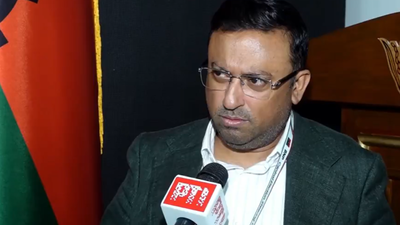
“Hindu extremism and far-right intolerance” are spreading in India, Humayun Kabir, an adviser to Bangladesh Nationalist Party chief Tariq Rehman, said on Saturday, describing radicalization as a broader South Asian problem. He also called for a balanced and cooperative relationship with New Delhi as the BNP prepares to form the next government after a landslide election victory.
Speaking to PTI, Kabir said, “Radicalization is a problem in South Asia. We see Hindu extremism and far-right intolerance growing in Indian society, and in Pakistan we hear about extremists as well. In Bangladesh, although not to that extent, there are some issues,” he said.He stressed that local governments must work together rather than operating in isolation.“This is why we all need to share counterterrorism evidence and assessments and strengthen cooperation. Isolation without information exchange or security cooperation will only hinder progress,” Kabir said.“Cooperation at all levels is important and is the norm in diplomacy, especially between democratically elected governments in our region. Going forward, information sharing and joint efforts will build confidence in detecting and tracking terrorists and extremists in the region,” he added.Kabir also addressed India’s concerns about the safety of minorities, especially Bangladeshi Hindus.Referring to the previous government led by Sheikh Hasina, he said: “In the last 15 years under the Hasina regime, there was a deep and uneasy feeling that the foreign policy was more in line with India than with Bangladesh. These concerns will continue to exist. “He said the BNP would pursue what he called a more balanced foreign policy.“What we want is a balanced relationship. We will not limit our relationship to one country and we will not accept any agreement that prevents us from doing business with other countries. We will avoid such agreements and disclosures,” he said.On allegations of violence against minorities, Kabir maintained that communal harmony prevails in Bangladesh.“The violence against minorities in India is different from that in Bangladesh, where there is social harmony,” he said.Giving the background of the political transition, he added, “Bangladesh has been without a government for five days after the August 5 uprising, but no one is attacking minorities as our leader Tariq Rahman urged people to remain calm and not take the law into their own hands.”“He provided calm leadership to ensure stability until an interim government was formed. In Bangladesh, Muslims and minorities coexist peacefully and communal harmony is strong,” Kabir said.The comments came as the Bangladesh Nationalist Party (BNP) won a landslide victory with a more than two-thirds majority in parliamentary elections held after the 2024 uprising that ousted Sheikh Hasina.In the wake of recent violence, the safety of minority groups has come under renewed scrutiny. Just days before the assembly elections, 62-year-old Hindu businessman Susen Chandra Sarkar was hacked to death in his shop in Mymensingh district. Unidentified assailants attacked him with sharp weapons and then fled the scene, police said.
Second death reported at Vijay rally; man consumed poison near venue | India News
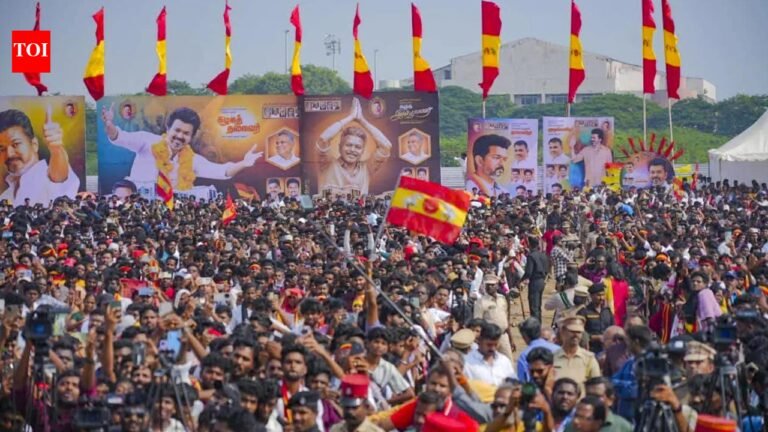
New Delhi: The second death of actor-turned-politician Vijay was reported during a Tamilaga Vettri Kazhagam (TVK) rally in Salem on Saturday. A man died after allegedly taking poison near a party venue. A 50-year-old Murugan man died at Vijay’s rally. The body of the deceased, a porter from Mettur, was found right in front of the meeting area.Police said Murugan had traveled to Salem and consumed a deadly poison-wine mixture, news agency ANI reported.Investigators found a letter left by Murugan in which he cited ongoing family issues as his motive.While the act was personal in nature, its proximity to high-profile political events attracted widespread attention. A case has been registered and his family members have reached Salem Government Hospital to collect his body after post-mortem.Murugan’s death is the second fatality related to the Salem incident.Earlier, a 37-year-old man Suraj, identified as a silver industry worker from Maharashtra, fainted while attending the meeting as a spectator.Although he was rushed to a nearby private hospital, he was declared dead due to a heart attack. Suraj is survived by his wife and a young child.Following the devastating stampede in Karur a few months ago that left nearly 40 people dead, these spate of incidents have once again raised concerns over security and crowd management at TVK events.After Suraj’s fall, the atmosphere became unstable. When journalists tried to cover the medical emergency, violent scuffles broke out between members of the media and TVK cadres.Journalists at the scene said party workers physically assaulted them to prevent the incident from being recorded, leading to a tense standoff despite a heavy police presence.
Nancy Guthrie Update: Latest ransom emails suggest suspect fleeing U.S. — ‘Ready to go international’
A new ransom email sent to TMZ related to disappearance Nancy Guthrie indicating that her abductor may no longer be in the United States.
According to TMZ , the latest message (reportedly one of three emails received that day) ends with this line: “Look for the main guy who has all the answers and is ready to go international.”
The wording sparked speculation that authorities might need to cross the U.S. border to find the suspect.
Guthrie, 84, was kidnapped from her home near Tucson, Arizona. The reference to “internationalization” raises particular concerns given the city’s proximity to the Mexican border.
Sender claims to know the identity of the kidnapper
TMZ reports that the author of the email claims to know who kidnapped Guthrie and her current condition. The sender described himself as a “middleman” and wrote, “You don’t trust me and I don’t trust you,” and explained why they were communicating through channels rather than directly with law enforcement.
Ransom demands have also changed.
An earlier newsletter mentioned a Bitcoinworth approximately $68,000. But the latest request for $100,000 is reportedly related to the FBI’s reward for information leading to Guthrie or her kidnapper.
Investigators are said to be scrutinizing the original ransom note and recent emails demanding Bitcoin in exchange for details about the kidnappers.
Also read: Body found in Pima County during search for Nancy Guthrie? The truth behind the viral video
possible accomplice
The term “key figures” in the latest email also raised questions. As TMZ points out, this wording seems to suggest that more than one person may have been involved in the kidnapping.
previous one ransom Sources cited by TMZ indicate Guthrie is being held within a 700-mile radius of Tucson.
Observers noted that such distances could allow travel by car, potentially across the southern border, rather than taking commercial flights that require identification.
Authorities have not publicly confirmed the authenticity of the emails or identified any suspects. The investigation is ongoing.
Sharjah Ruler responds to public pleas, restores salaries and approves Dh300,000 in education aid | World News
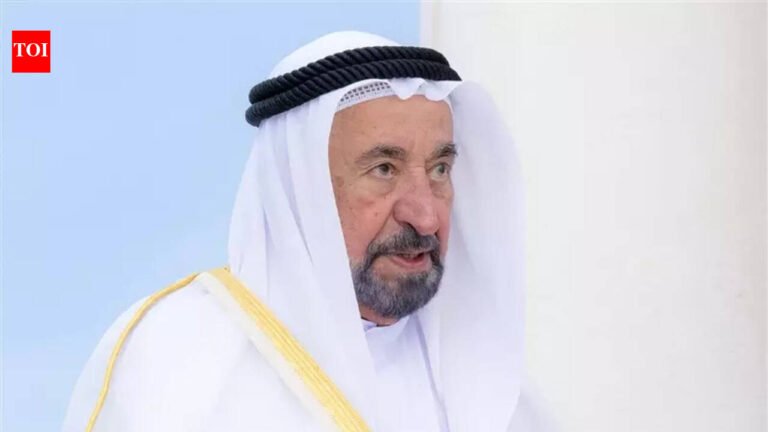
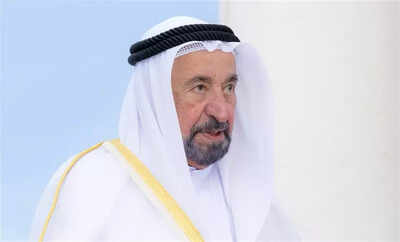
His Highness Dr. Sheikh Sultan bin Mohammed Al Qasimi has personally intervened in multiple public cases on his popular “Beeline” radio program, transforming on-the-spot complaints into immediate government action, a powerful demonstration of responsive governance.One of the most high-profile cases involved Amal Al-Junaibi, a government employee who revealed that her entire vacation balance had been deducted and her wages had been withheld for several months after she took time off to care for her husband, who was recovering from surgery. The Ruler of Sharjah made it clear that this behavior violated established human resources regulations. He directed the head of human resources to urgently rectify the matter and restore her rights, while also calling for a faster humanitarian review mechanism for similar cases.The intervention highlights how Sharjah’s leadership continues to combine supervision with compassion, particularly when employees face unique family situations.
Sharjah ruler takes immediate action
In another emotional phone call, a mother urgently sought help after her daughter’s scholarship in Sydney was suspended, leaving the family unable to pay tuition fees of nearly Dh300,000 a year. The ruler immediately directed the authorities to bear the costs and ensure that students could continue their studies without interruption.This swift approval highlights Sharjah’s continued emphasis on education as a pillar of development, even if financial or administrative setbacks threaten students’ futures.
Infrastructure plan announced
Infrastructure issues were also addressed on-site. A resident of Kalba reported sewage problems caused by a nearby building. The ruler confirmed that the issue fell within the wider development framework and announced that the affected families would be relocated to a new residential complex in the university area opposite Khor Kalba within six months, with the possibility of completion ahead of schedule.The announcement reflects ongoing development projects in Sharjah’s eastern area aimed at improving living standards, community services and urban infrastructure.
Support from AED 17,500 per month
Beyond individual cases, broader welfare measures continue to shape Sharjah’s social safety net. The previous directive increased monthly social assistance to Dh17,500, benefiting more than 4,200 cases, including senior citizens, widows, divorced women and low-income families.This structured support, combined with direct intervention through public platforms, embodies a policy-driven and personally participatory governance model.
wider context
The Direct Line program has become more than just a forum for complaints; it has become a direct channel for governance where citizens have their say and solutions are followed. Whether it is restoring employment rights, approving six-figure education aid, relocating families or strengthening the welfare framework, decisions are announced with transparency and implemented quickly.In an era when bureaucratic delays are endemic around the world, Sharjah’s model stands out for its immediacy and human touch, turning public dissatisfaction into measurable results within minutes of hearing it.
‘Shows PM cares’: Congress books PM Modi’s ticket to visit Manipur India News
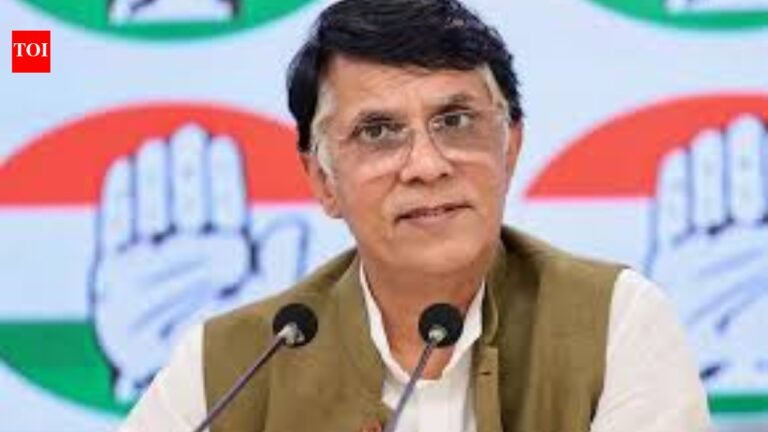
New Delhi: Congress leader Pawan Khra on Saturday hit out at Prime Minister Narendra Modi for visiting Assam instead of neighboring Manipur while booking a flight ticket for him from Guwahati to Imphal.In a post on He believed the Prime Minister’s presence might have a calming influence on the beleaguered people.
“Honey Prime Minister Narendra Modiwe know that poll-bound states are always your top priority. But Manipur should not be abandoned. The state has been burning since 2023 — and is burning again,” Kayla wrote. He noted that Prime Minister Modi was in Assam, adding that Manipur was “only an hour away” and appealed to him to extend his visit to Imphal. In a sarcastic gesture, Hera also shared what he said was a flight ticket from Guwahati to Imphal, urging the Prime Minister to “show that the Prime Minister cares”.The call comes amid renewed tensions in parts of Manipur. On February 6, protests in Churachandpur district against the swearing-in of the state’s new deputy chief ministers Nemcha Kipgen and Losii Dikho turned violent, with security forces clashing with demonstrators.Police said the unrest started in the Tuibong Main Market area around 6pm when a large group of young protesters tried to push security personnel back to their barracks. Miscreants also set fire to several houses in villages around Litan in Ukhrul district earlier this week, officials said.Manipur police said that although the situation in the affected areas remains tense, it is basically under control. A joint control room has been set up at Litan police station to coordinate security measures and senior police officers are camping in the area to closely monitor the situation.The overall law and order situation across the state remained normal during the past 24 hours, the police added.Meanwhile, Prime Minister Modi made a historic landing at the Northeast’s first Emergency Landing Facility (ELF) aboard a C-130J aircraft located in Dibrugarh district.After arriving, Prime Minister Modi took off from Chabua Airport and landed at ELF Airport in Moran, a section of National Highway 37.The Rs 100-crore ELF, a 4.2-km fortified stretch on Moran Bypass inaugurated by the Prime Minister, will serve as a strategic multi-purpose runway for Indian Air Force fighter jets and transport aircraft, enhancing defence, logistics and disaster response, officials said.The facility is designed for both civilian and military use and can serve as an alternative facility to the Dibrugarh airport in case of emergency, they said.The Prime Minister was received by Chief Minister Himanta Biswa Sarma, Union Minister Sarbananda Sonowal, Air Marshal AP Singh and other Assam cabinet ministers at the ELF.
Three people taken into custody after SWAT team raids home near Nancy Guthrie’s home
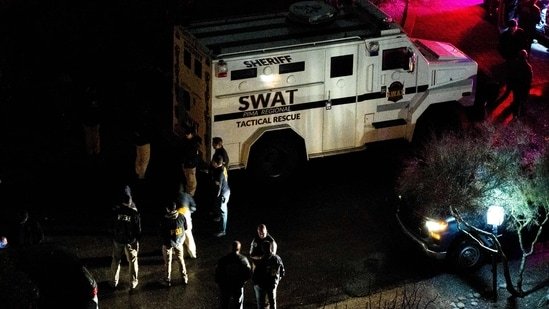
Three people were reportedly detained on Friday night local time beat The team landed at a nearby house Nancy Guthrieresidence in Tucson, the New York Post reported. The development comes as authorities continue to investigate the 84-year-old’s disappearance.

Local police sources told Fox News Digital that law enforcement acted on the tip and executed a search warrant at a property about two miles from Guthrie’s home. Two men and the mother of one of the men were detained, sources said.
The Pima County Sheriff’s Department confirmed law enforcement activity related to the case is ongoing in the Tucson area. in a statement Late Friday, the department said the operation took place at a home near an intersection about two miles from Guthrie’s home.
Also read: Body found in Pima County during search for Nancy Guthrie? The truth behind the viral video
Authorities have not yet clarified whether the detainees are considered suspects. No arrests have been officially announced.
DNA evidence recovered from Guthrie’s property
The SWAT operation was launched hours after investigators recovered DNA evidence from Guthrie’s possessions that did not belong to anyone known to have been in “close” contact with her, the New York Post reported.
The unidentified DNA has been sent to a laboratory for analysis. Officials have not commented publicly on the potential significance of the evidence.
Savannah Guthrie’s mother Guthrie was last seen Jan. 31 at her home in Tucson. Authorities previously said she appeared to have been forced out of the residence, leaving behind what investigators said was a blood trail, the New York Post reported.
Also read: Is this Nancy Guthrie’s suspect? Forensic artist’s sketch gives masked man creepy new look
The FBI has released a description of an armed man captured on doorbell camera footage. The person is described as a male, approximately 5 feet 9 inches to 5 feet 10 inches tall with a medium build. The FBI is also reportedly doubling the reward to $100,000 for information leading to Guthrie or his kidnappers.
The investigation remains ongoing as authorities continue to pursue leads.
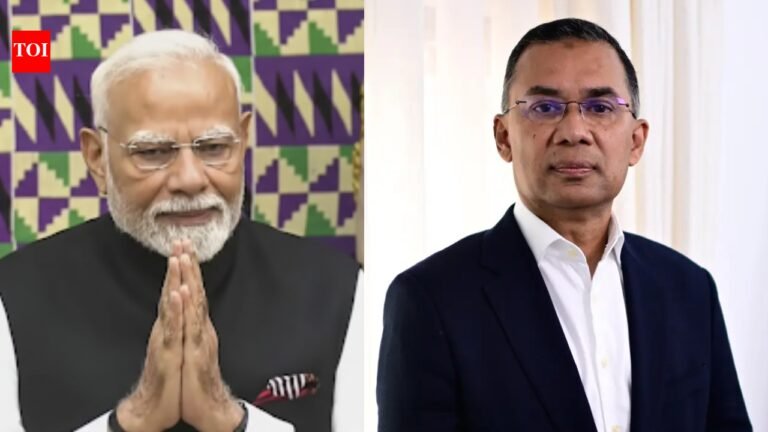
‘Together committed to peace, stability’: Bangladesh National Party thanks PM Modi for aspirations after election win | India News
New Delhi: The Bangladesh Nationalist Party (BNP) has thanked Prime Minister Narendra Modi for recognizing the party’s leadership in the national elections and said it “looks forward to constructive engagement with India to advance our multifaceted relations”The party’s official social media handle posted: “Thank you so much, respected @narendramodi. We are deeply grateful for your recognition of Mr. Tariq Rahman’s leadership in ensuring the BNP’s decisive victory in the national elections. This outcome reflects the trust and confidence the people of Bangladesh have in our leadership and democratic process. ““We look forward to engaging constructively with India to advance our multifaceted relationship guided by mutual respect, sensitivity to each other’s concerns, and a shared commitment to peace, stability and prosperity in the region,” the statement added.Prime Minister Modi also spoke directly to Tariq Rehman on Friday, congratulating him on the party’s victory and reaffirming India’s commitment to closer bilateral ties. In a post on X, Prime Minister Modi said:“It was a pleasure to speak with Mr. Tariq Rehman. I congratulate him on his resounding victory in the Bangladesh elections. I convey my best wishes and support for his efforts to realize the aspirations of the people of Bangladesh.”The BNP secured a two-thirds majority in the parliamentary elections, winning more than 200 seats, up from 193 seats in 2001. The victory was seen as a step towards political stability after months of turmoil that ousted former Prime Minister Sheikh Hasina in a youth-led uprising in July 2024.Tarique Rahman, founder of BNP Paribas and son of the former president Zia RahmanAfter 18 years in exile, he returned to Dhaka in December and is expected to be sworn in as prime minister. Ziaur Rahman ruled Bangladesh from 1977 until his assassination in 1981 and remains a key figure in the country’s political history.