Home Blog Page 669

‘Expectations overwhelmed him’: Sunil Gavaskar reveals how Abhishek Sharma survived T20 World Cup Test | Cricket News

0

'Expectations overwhelmed him': Sunil Gavaskar reveals how Abhishek Sharma survived T20 World Cup Tests
Abhishek Sharma (AP Photo)

New Delhi: An Indian Legend Sunil Gavaskar Believe that the weight of expectations has passed Abhishek SharmaThe shocking slump in the T20 World Cup has urged the young opener to resist the temptation of instant big shots and instead focus on patiently building up his innings.Push boundaries with our YouTube channel. Subscribe now!Abhishek came into the tournament as the world’s number one T20I batsman and one of India’s most feared six-batsmen, but his campaign was derailed by three consecutive matches against the United States, Pakistan and Netherlands.

About Abhishek Sharma’s Lonely Networking Sessions in Ahmedabad

“Abhishek Sharma is a lovely guy but the expectations seem to be weighing on him,” Gavaskar told Star Sports. “If he starts well against the United States, it will be different. Now, the pressure of being a No. 6 batsman and a top-order batsman is setting in. “According to Gavaskar, the 25-year-old’s attacking instincts worked against him early in the game. “With his range, he needs to take time in the middle. He can’t try to hit a boundary or a six on the first ball of the first innings. If a big ball comes, that’s fine. But he shouldn’t force himself to hit a big ball over the line.”Instead, the former captain stressed the importance of starting small. “Just one hit will be fine. Even four dots won’t matter. He can make up for it later. He needs to play smart in the beginning. Take one or two more to get used to it and then play into his natural game.“First, hit the target. Every batsman wants to get the first run. Once he gets it, everything will fall into place,” he added.While Abhishek struggled, Gavaskar was full of praise for all-rounder Shivam Dube, whose explosive 66 helped India beat Netherlands by 17 runs. “Shivam Dube is difficult to bowl because of the wide range of his delivery. If he struggles to develop his inside-out delivery at extra cover, he will be a very scary batsman,” he said.Gavaskar also highlighted the importance of spinner Varun Chakravarthy, who took three wickets in 14 matches. “When you take wickets, you also take away runs. Obviously, Varun will be your key bowler. India will depend a lot on his four overs,” he pointed out.

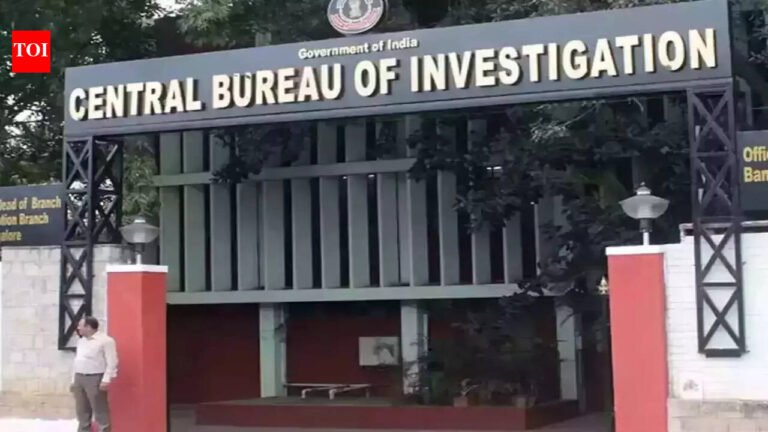
Autopsy suggests rape overlooked, Mumbai HC asks CBI to probe 2010 deaths India News

0

Autopsy suggests rape overlooked, Mumbai HC asks CBI to probe 2010 deaths

MUMBAI: The Bombay High Court recently handed over the investigation into the accidental death of a 13-year-old schoolgirl in 2010 to the CBI, saying the police did not consider the post-mortem report which stated that she had been subjected to sexual intercourse in the last 24 hours before her death. The HC said the police relied on incomplete video recordings and statements from doctors who had not seen the autopsy. The report found “too many unanswered questions” in the girl’s death and said police “did not even consider the serious possibility of rape-murder”. The school has taken students to a camp near Tungareshwar forest. They were playing in the stream and when the current became stronger the teacher asked them to come out. Everyone was out except the girl. She was taken away and her naked body was later found, prosecutors said. “No investigation was carried out from this angle at all. The non-recovery of clothes on the body is also an important aspect that requires serious investigation,” a bench of Justices Sarang Kotwal and Sandesh Patil said in their February 10 order.

Assam poll schedule to consider Bihu: CEC | India News

0

Assam poll schedule to consider Bihu: CEC
Chief Election Commissioner Gyanesh Kumar (file photo)

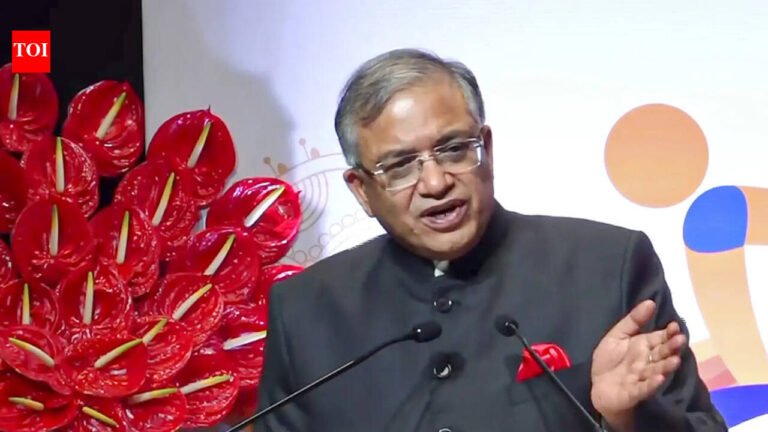
Guwahati: Chief Election Commissioner Ganesh Kumar on Wednesday said the special revision (SR) of Assam’s electoral roll is a legitimate exercise aimed at weeding out ineligible voters, while saying the state’s election schedule will be framed around Rongali Bihu after parties seek polls ahead of the mid-April festival. The CEC said the purpose of the SR is to “include all eligible voters and exclude all ineligible voters” and dismissed the criticism as political noise that cannot change legal procedures. The EC concluded its three-day visit to Assam where the entire assembly led by Kumar and Election Commissioners SS Singh Sandhu and Vivek Joshi met various political parties and reviewed preparations. On the addition and deletion of SR, Kumar said the police officer “performed well…”

Need to maintain balance between innovation and regulation: Vaishnaw | India News

0

Need to maintain balance between innovation and regulation: Vaishnaw
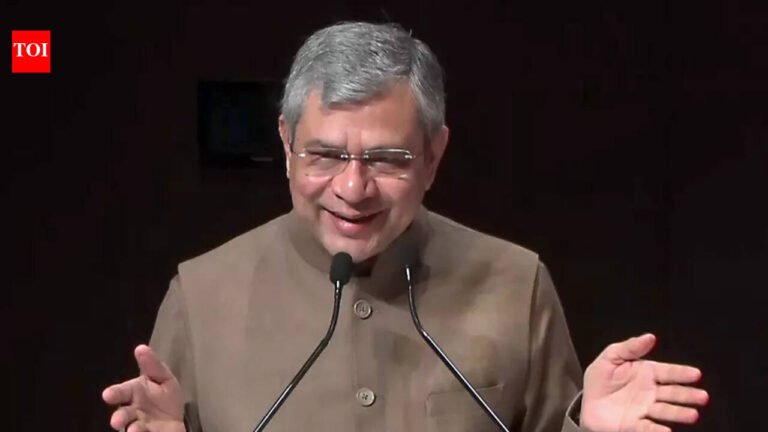
New Delhi, February 18 (ANI): Union Minister Ashwini Vaishnaw on Wednesday spoke on artificial intelligence (AI) security at the India AI Impact Summit 2026 at the Bharat Mandapam in New Delhi. (ANI video capture)

New Delhi: Federal Minister for Information Technology Ashwini Vashno The government on Wednesday stressed the need to strike a balance between the development and regulation of artificial intelligence, asserting that the government will use a combination of technology regulations and laws in the future.Speaking to TOI, the minister said: “The Indian approach is a techno-legal approach that combines technical solutions and legal structures. This approach is now appreciated by the international community. Some regions used to use only regulatory or legal approaches. This did not really bring the desired results.”

Need to maintain balance between innovation and regulation: Vaishnaw

‘Restricting children’s social media should only be done after careful consideration’

Given that innovation has a long way to go, strict regulation may not be needed at this stage. “This could be the first innings of the first match of the Test series,” he quipped.The minister said big tech companies are “pretty much in sync with society and policymakers.”Asked about restricting children’s use of social media, Vishno said discussions were ongoing. “The discussion on the impact of social media on children and how it should be dealt with is ongoing. Some countries have already imposed restrictions and bans and in India, the issue is also being discussed by other stakeholders, both industry and public. The right solutions can only be found after thoughtful deliberation.He also said that artificial intelligence provides many opportunities for Indian IT companies.“The IT industry is also very aware of these challenges and they are rapidly moving away from old models and creating a new service delivery model, from software as a service to artificial intelligence-based services. There are thousands of legacy systems in the world. These legacy systems must be modernized, and our IT services companies are best suited to modernize them using new AI-based solutions. ” Vaishnaw said, adding that the government, academia and industry are in concert.Asked about the Prime Minister’s remarks asking IT companies to diversify their services, products and platforms, the minister said the industry was adjusting to these changes. “They are trying to gauge what this change will bring to their industry…The IT industry is focusing on a number of very focused small models that can be placed in enterprises where trust is the most important factor,” he said.Vaishnaw added that the IT industry has designed a series of small models and our sovereign model is complementing them.

Survey: Children are using artificial intelligence every day, but most don’t know how it works | India News

0

Survey: Kids use artificial intelligence every day, but most don’t know how it works

NEW DELHI: Generative artificial intelligence (GenAI) is fast becoming part of the learning routine for Indian children, but so are deep misunderstandings about the practical uses of the technology. The Bharat EdTech Survey 2025 released by Central Square Foundation on Wednesday showed that 35% of children who already use edtech are using GenAI tools for learning, even though nearly three-quarters of children who know about GenAI mistakenly believe that these tools are just internet search engines. The survey, conducted between July 2025 and January 2026 and covering 12,500 families and 2,500 teachers in 10 states, shows that GenAI adoption is no longer experimental for children from low-income families: 96% of children use it multiple times a week and 69% use it every day.

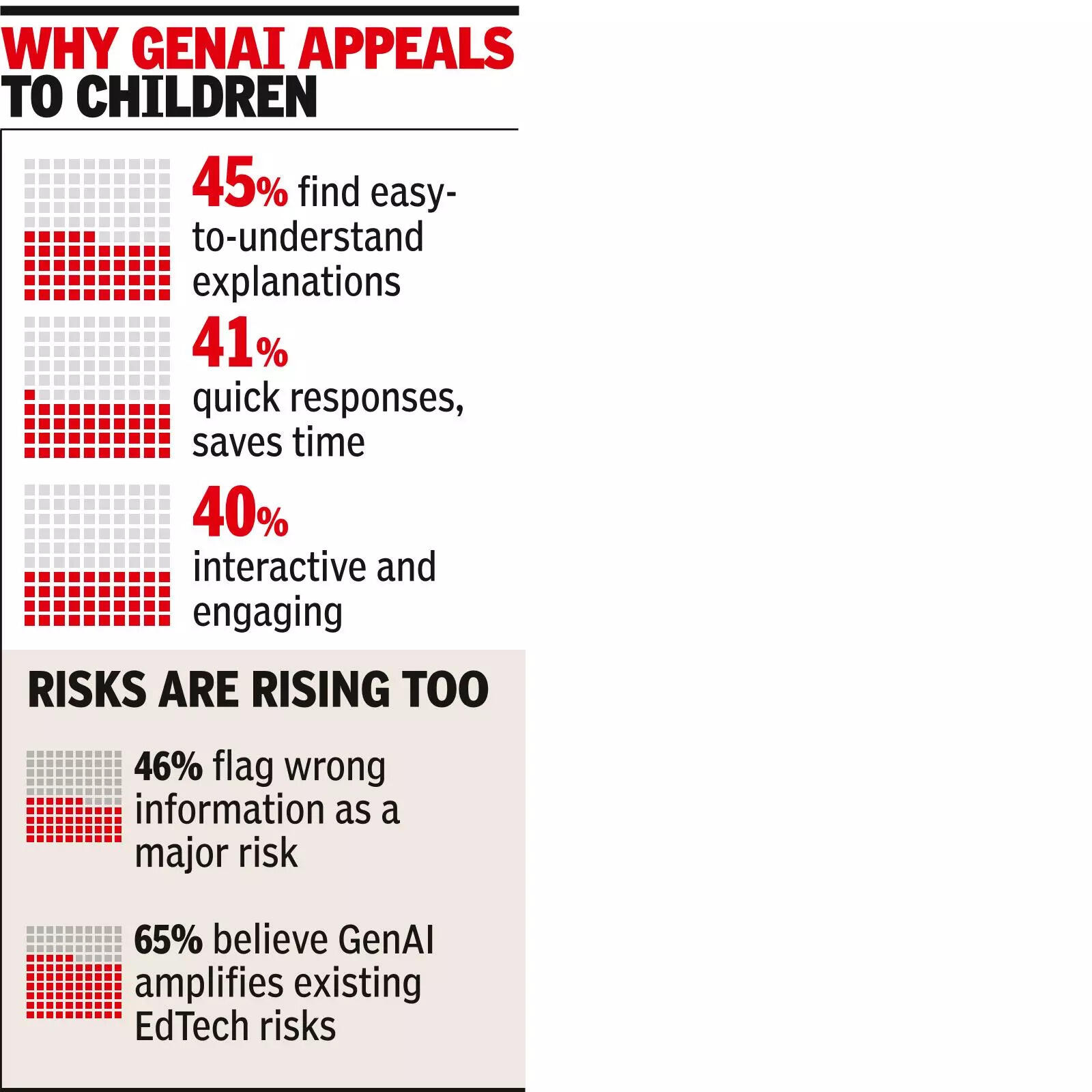
Why GenAI appeals to kids

Why GenAI appeals to kids

However, understanding lags far behind usage. While 85% of children who are aware of GenAI say they understand how it works, 72% equate it to a search app, blurring the lines between probabilistic responses generated by AI and verified online information. This gap is critical, as 46% of respondents flagged “misinformation” as a major risk associated with edtech and GenAI use, while also worrying about overuse. The report shows that children mainly use GenAI for school-related activities, with 73% of children relying on it to solve questions and practice, 48% of children use it to learn new skills or language translation, and 32% of children use it to prepare for exams. Key draws are easy-to-understand explanations (45%), time-saving quick responses (41%) and interactive formats (40%), features that make GenAI particularly attractive among families where adult academic support may be limited. However, experts warn that frequent use without basic AI literacy may amplify the risks. The New Delhi-based NGO said the findings highlighted the urgent need to move beyond access and adoption metrics.

Artificial intelligence expert: Technology development needs to be wary of risks Indian News

0

Artificial intelligence expert: Technology development needs to be wary of risks
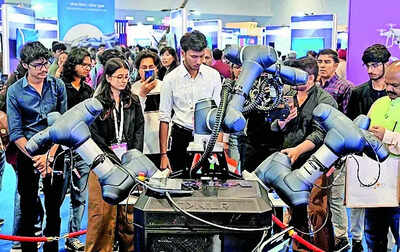
Visitors explore cutting-edge artificial intelligence gizmos at summit on Wednesday

NEW DELHI: Current cutting-edge models in artificial intelligence are developed by companies in a handful of countries, including the US and China, while most other countries are “passive victims of what they have created”, University of Montreal computer science professor Yoshua Bengio told a conference. Artificial Intelligence Impact Summit in New Delhi on Wednesday. Bengio, widely regarded as a pioneer in artificial intelligence, stressed that it was “unacceptable” that only a few countries are leading in the field and that countries must address the issue at the highest diplomatic level. Cutting-edge models in the field of artificial intelligence are the most advanced, large-scale, general-purpose machine learning models that currently push the boundaries of functionality, multimodality (text, image, audio, video) and performance. Yoshua said this is not only a moral issue, but also a sovereignty issue. It’s also about concentration of power, he added. “If AI capabilities continue to grow, it is likely that there will be a huge difference between the models in the United States and China and those being developed in other countries, even larger than they are now. This could make a huge difference for these two countries, or for any country that leads a huge economic power.…”, noting that “…the stability, the geopolitical stability that we have known since World War II could be in vain. I’m not saying it’s going to happen, but when you bring in so much power and concentrate it in this way, you do run the risk of destroying the house. “ These observations are significant at a time when India is spearheading the drive to democratize artificial intelligence. On the issue that India should be cautious when it comes to artificial intelligence, Bengio said people should be aware of the impact or risks that may affect society while developing the technology. “We need to understand it from a scientific perspective. We need to understand it from a social perspective because AI has a social component in psychology because we are talking about systems that interact with people and language. So countries like India can contribute to this understanding,” he said. He also said there is an urgent need for independent risk assessments before deploying open AI models. “If the risks are not too big compared to the benefits, because obviously there are benefits to sharing, especially in a developing country like India, then of course, you should definitely be open. But if you find that the risk crosses the threshold of social accessibility, then you shouldn’t do it. So, in this way, we might be able to get the benefits of open source when it makes sense and prevent catastrophic uses,” Bengio said. The professor also compared how a thorough risk assessment should be conducted before allowing the sale of medicines, and how the same should be followed when using artificial intelligence among the public. “You can’t make money doing whatever you want. You need to first show to independent groups, such as those representing the government, that your product will not be harmful. But there is no such thing yet. It is a scandal,” he said.

“Estonia uses AI smartly by building trust between government and society” | India News

0

“Estonia uses artificial intelligence smartly by building trust between government and society”
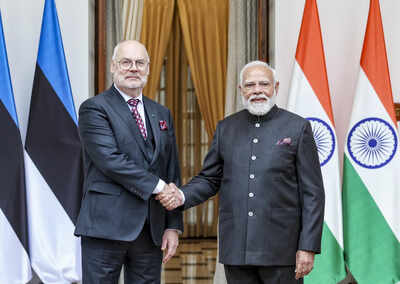
In this image received on February 18, 2026, Prime Minister Narendra Modi holds a meeting with Estonian President Aral Karis in New Delhi. (PMO via PTI Photo)

Estonia uses artificial intelligence extensively in education and wants to collaborate with India. In an interview with Times of India reporter Surojit Gupta, Estonian President Aral Karis talked about how they are building trust while rolling out citizen-centric e-services. extract:What can Estonia offer to the world and India when it comes to AI and technology? n We can offer our experience and how we digitize society to India and the rest of the world. One important thing we should share with the rest of the world is how we build trust when we digitize or use artificial intelligence. You should build trust not only between technologies, but also between governments and society at large. AI is still developing so fast. We don’t know what’s going to happen in, say, three months or even two weeks. But we are ready and trying to use this new technology smartly. This is what we can tell India. India is also a digital country, so we learn from each other. Can you tell us about the digitalization happening in Estonia?In Estonia, everything is online. This means you can even get married online. I mentioned taxes, I mentioned prescriptions, basically everything. Instead of lawyers, one startup is using artificial intelligence. This does not mean that we no longer need lawyers, but we can focus on more important things as Estonia needs to line up and go to court. How do you ensure data privacy?As artificial intelligence technology develops, privacy becomes increasingly important. Data may belong to citizens, but data privacy, especially in healthcare, is a concern. We saw in some countries in Europe how difficult it was to introduce ID cards because people were worried about data. What are the productivity improvements brought about by digitalization?Some people estimate that it increased GDP by 5%. This is the official calculation that has just been made. It makes your life very comfortable. In some countries, filling out tax forms is very difficult. For us, it comes pre-populated. If you don’t have anything to add, it may take a few minutes. It makes the whole thing transparent. For medical prescriptions, you don’t have to see a doctor. He knows what your disease is, they write you a prescription, you see it immediately, and then you go to the pharmacy. What areas of cooperation do you see with India?Like India, Estonia values ​​education. We can collaborate on this. We started AI Leap. 30 years ago we provided computer access services to schools. Now, we are doing the same thing with artificial intelligence. We teach teachers and students how to use artificial intelligence smartly. We worked with OpenAI and Google and asked them to provide a platform tailored to the needs of Estonian students. AI Leap is in every school and we’re learning how to use it and how to really change the entire system of how we teach our students. What are your thoughts on AI regulation?Regulations need to be enacted. We try to ensure that there is at least some degree of global regulation. But every country is different. Technology has limitations and there are rules and regulations.

“Switzerland actively contributes to the development of technical standards” | India News

0

“Switzerland actively contributes to the development of technical standards”
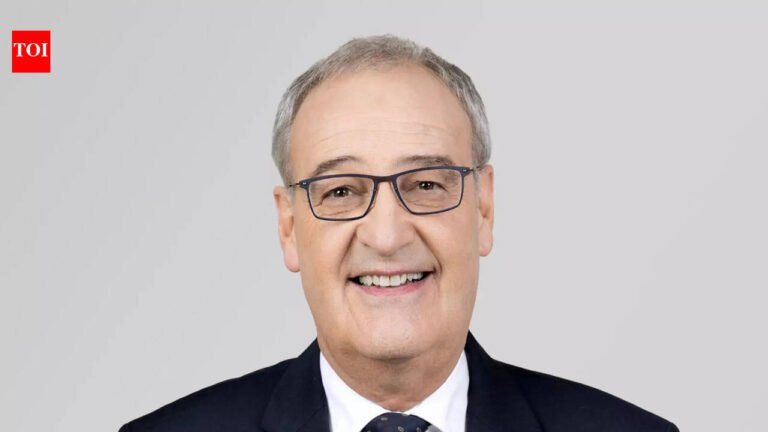
Swiss President Guy Parmelin

Swiss President Guy Parmelin supports an AI governance framework that does not rely on a single tool and calls for the establishment of social norms to guide users. Excerpts from TOI interview:How should countries respond Artificial Intelligence Regulation? Will a new agency need to be established? Will regulators stifle AI innovation and development, but how to deal with challenges such as deepfakes?Over the past 200 years, humanity has established thousands of legal, technical and social norms to “regulate” the development and use of engines in a large number of different machines and vehicles with varying degrees of coordination depending on the specific context of use. Like engines, we believe that AI cannot be “regulated” by a single tool, but we need to develop a governance framework composed of multiple tools to cover different aspects of AI development and use. Therefore, Switzerland is actively promoting the development of technical standards for AI, binding and non-binding legal instruments, such as the recommendations of UNESCO or the Global Partnership on Artificial Intelligence (GPAI) and the Council of Europe Framework Convention on Artificial Intelligence, which was developed by 55 countries around the world and is the first binding international treaty on AI. But we also need social and cultural norms to guide our use of AI in specific contexts.Switzerland holds the OSCE chairmanship for the third time this year. In this capacity, what measures would you recommend to end the conflict between Russia and Ukraine? Also, what do you think of India’s efforts to promote a ceasefire and resume dialogue and diplomacy between the two sides?In line with the first priority of its OSCE Chairmanship (“Helsinki Principles – Towards a Lasting Peace”), Switzerland is committed to achieving a just peace in Ukraine on the basis of international law and the Helsinki Principles. Federation Councilor Ignazio Cassis, in his capacity as OSCE Chairman-in-Office, visited Kiev (February 2) and Moscow (February 5-6) together with the OSCE Secretary-General to engage in dialogue and ensure that all relevant actors understand what contribution the OSCE can make in the context of a negotiated settlement. Ultimately, it’s up to states to decide whether to use it.Trade turmoil over the past year? How much buffer do trade deals like with India provide?Free trade agreements such as the Trade and Economic Partnership Agreement (TEPA) are an important tool, especially in these challenging times for trade policy. They enable the Swiss export industry to open up new markets and diversify. This strengthens Switzerland’s position as a location for business and increases its ability to generate added value, create new jobs and retain existing jobs.Given the unilateral tariff actions of the past 10 months, with the power of the WTO completely weakened and bilateral trade agreements being signed around the world, what is the way forward?The WTO has long been under intense pressure, but despite institutional paralysis, some 74% of global trade still proceeds on most-favored-nation terms, underscoring the system’s continued relevance. It remains the only global body that oversees member countries’ trade measures and provides a permanent forum for dialogue among the 166 economies. Against a backdrop of heightened tensions and challenges to established rules, Switzerland will continue to advocate for multilateralism and support WTO reform to safeguard rules-based trade. WTO members generally share this view: they have repeatedly expressed a strong willingness to pursue meaningful reforms, especially in light of the 14th WTO Ministerial Conference.The global order is changing, whether it’s trade, reducing armaments or threatening or attacking other countries. Where are things going, is this a transitional phase?The international order is undergoing profound and far-reaching changes. Democracies around the world are under pressure. Tariffs are rising, trade deals are being scrapped, and international rules are being ignored. What prevails is not the rule of law but the rule of force. Joint solutions are sidelined by unilateral action. Great powers safeguarded their own interests, and some countries launched wars to restore old empires. So, today, we are at a turning point. This is a turning point between progress and regression, global cooperation and geopolitical competition. Between democratic resurgence and authoritarian relapse. We must actively shape this transformation. In this context, Switzerland is keen to diversify and deepen relations with democratic partners such as India, a supporter of international law and the rules-based international order with considerable global influence and influence.Some believe the immigration issue is overblown and that it is necessary to get people to help as Europe’s population declines. But immigrants face their own challenges, especially issues of adaptation and resistance. How do you balance the two when you see the backlash against certain immigrant groups?Switzerland recognizes that the movement of people is a global phenomenon. People have always sought opportunities and/or security in response to economic, social, political, security and environmental challenges. Fair, regular and safe migration can be a driver of sustainable development and economic resilience, growth and prosperity in countries of origin and destination. However, unsafe and irregular migration also poses risks and challenges, especially for young people and women. Switzerland, as a small but highly globalized country, has a strong interest in an international migration governance system that addresses the risks associated with unsafe migration and forced displacement, while harnessing the benefits that migration brings to the economy and people. To address challenges and seize opportunities, Swiss immigration foreign policy is characterized by partnerships with countries of origin, transit and destination.

EU leaders back early trade deal, AI cooperation in meeting with Modi India News

0

EU leaders back early trade deal, AI cooperation in meeting with Modi

New Delhi: After hosting French President Emmanuel Macron in Mumbai, Prime Minister Narendra Modi on Wednesday held bilateral meetings with the leaders of Spain, Finland, Estonia, Croatia and Serbia, seeking to further deepen cooperation with Europe in technology, innovation, security and defence. Artificial Intelligence Impact Summit. According to official sources, 26 countries are officially represented, making this the largest participation of European countries at a technology event in India.During the formal talks, EU leaders/members unanimously supported the early implementation of the India-EU FTA. It is reported that they also pledged to support the European Council and the European Parliament to ratify the agreement as soon as possible.

‘Mother of all deals’: PM Modi signals new order for global trade as India and EU sign historic deal

“They are both keen to use the free trade agreement to strengthen trade relations with India and create new opportunities and jobs for people,” a government source said.During Modi’s meeting with Spanish Prime Minister Pedro Sanchez, the two recognized ongoing defense cooperation, welcomed progress in cooperation between Tata and Airbus on the C-295 transport aircraft final assembly line in Vadodara, and emphasized the importance of defense industrial cooperation based on joint development and joint production. Sanchez emphasized the importance of the AI ​​Summit and expressed confidence that its outcomes will make a meaningful contribution in shaping global AI governance, while supporting India and Spain to strengthen cooperation to harness the potential of AI for inclusive development and social benefits.“They reiterated their strong condemnation of terrorism in all its forms and manifestations and stressed the need for enhanced international cooperation in combating terrorism,” a government statement said, adding that both Prime Ministers hailed the India-EU Free Trade Agreement as an important milestone that will help unlock huge trade and investment potential.Modis is expected to meet the leaders of the Netherlands, Switzerland, Greece, the Slovak Republic and Liechtenstein over the next two days.For India, Europe’s strong presence is an important factor in the success of the AI ​​Summit, as Europe remains the epicenter of cutting-edge AI innovation, digital governance and responsible AI frameworks.Government officials pointed out that the EU plays an important role in formulating global norms, including artificial intelligence, and is the first EU in the world to enact comprehensive artificial intelligence legislation. France plays a key role in AI governance and applications, the UK has organized its first AI summit in 2023, while the Netherlands and Belgium host key companies in the semiconductor supply chain such as ASML and IMEC respectively.India works closely with European countries to expand AI-led growth: Official | Page 14While Germany is Europe’s leading semiconductor hub, Estonia is also a global leader in artificial intelligence, ranking sixth globally for AI startups, sources said. “India is working closely with several European countries to learn from each other and expand AI-led growth and development,” an official said.Modi and Finnish Prime Minister Petri Orpo called for doubling bilateral trade and strengthening technological cooperation, including joint development of quantum and 6G, renewable energy, circular economy and defence, as they agreed that the India-EU Free Trade Agreement will be a catalyst for mutual progress and prosperity. When meeting with Modi, Croatian Prime Minister Plenkovic also called for the early implementation of the India-Free Trade Agreement to promote bilateral trade.“During recent diplomatic events, Europe has given a clear vote of confidence in the vitality of the India-EU strategic partnership, which is based on artificial intelligence, digital innovation, strategic cooperation, economic growth and shared global priorities,” an official said.India works closely with European countries to expand AI-led growth: Official While Germany is Europe’s leading semiconductor hub, Estonia is also a global leader in artificial intelligence, ranking sixth globally for AI startups, sources said. “India is working closely with several European countries to learn from each other and expand AI-led growth and development,” an official said. Modi and Finnish Prime Minister Petri Orpo called for doubling bilateral trade and strengthening technological cooperation, including joint development of quantum and 6G, renewable energy, circular economy and defence, as they agreed that the India-EU Free Trade Agreement will be a catalyst for mutual progress and prosperity. When meeting with Modi, Croatian Prime Minister Plenkovic also called for the early implementation of the India-Free Trade Agreement to promote bilateral trade. “During recent diplomatic events, Europe has given a clear vote of confidence in the vitality of the India-EU strategic partnership, which is based on artificial intelligence, digital innovation, strategic cooperation, economic growth and shared global priorities,” an official said.

Resolutely crack down on racial and linguistic crimes: SC | India News

0

Resolutely crack down on racial and linguistic crimes: SC
Ask the Attorney General to raise issues with the Center

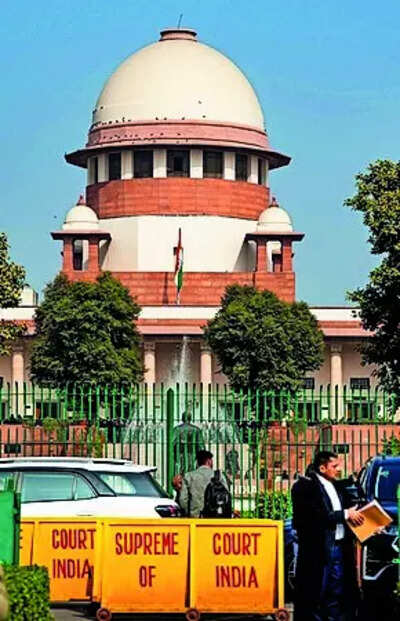
New Delhi: In a petition highlighting a racially motivated attack in December last year that led to the death of Anjel Chakma in Uttarakhand, Supreme Court “Those who attack others because of their appearance, language, race, region or origin must be dealt with with an iron fist,” he said on Wednesday.The CJI’s bench of Justices Surya Kant, Joymalya Bagchi and Vipul M Pancholi expressed reluctance to enter the legislative arena and frame mechanisms under criminal law to prevent communal violence against others based on race, place of origin and language.Petitioner Anup Prakash Awasti stressed that violence against people from northeastern states has been recurring in many parts of the country simply because of their physical features and said they were often racially profiled. “The killing of Angel Chakma was not an isolated incident but part of a long pattern of ethnic violence against citizens of the northeastern states, which includes the death of Nido Taniam in 2014 and multiple attacks on students and workers in the metropolis, a phenomenon that the government formally acknowledged in its parliamentary reply but did not address through any dedicated legislative or institutional framework,” Avasti said.The CJI-led bench said that despite cultural, linguistic and regional diversity, India’s strong federal character built on civic unity cannot be undermined by such crimes and needs to be dealt with with an iron hand.The bench said the petitioner requested the court to lay down guidelines in line with the Visakha judgment to prevent sexual harassment of women at the workplace and to prevent violence against others on the basis of race, region and language until Parliament enacts a law and the government will better deal with the issue.The court asked Awasthi to hand over a copy of the petition to Attorney General R Venkataramani and asked the Attorney General to take up the issue with the relevant authorities of the Union government.