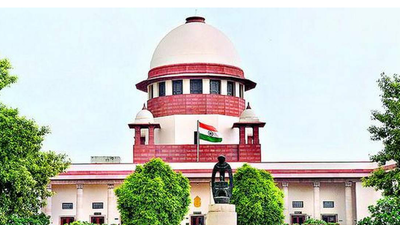
New Delhi: Supreme Court Exhuming the bodies of tribal Christians in some villages in Chhattisgarh state and moving them to cemeteries designated by religious groups has been temporarily halted as an NGO said the act violated the fundamental rights of local Christians to be buried in villages. A bench of Justices Vikram Nath and Sandeep Mehta on Wednesday agreed to hear a petition by NGO Chhattisgarh Association for Justice and Equality after senior lawyer Colin Gonsalves cited the Supreme Court’s split judgment on a plea seeking to bury the body of a priest in his village or farmland. While one judge allowed the petitioner to bury his father’s body on his private land, another judge said no citizen had the unconditional right to choose where to be buried. Following a split decision in January last year, the bench directed that the body be buried in a designated cemetery 25 to 30 kilometers away from the village in Chhattisgarh. After hearing Gonsalves, Justices Nath and Mehta sought the Chhattisgarh government’s response to the PIL and ordered that no further exhumation of the bodies be allowed.Gonsalves accused the state government of misusing the secession verdict to prevent the burial of tribal Christians in village precincts. The senior advocate said the court must intervene to direct that every deceased person, irrespective of religion, caste or status, has the right to be buried in a place demarcated in his/her village.The petitioners said the authorities should be directed to demarcate land for burial in those villages where there are no designated cemeteries.Interestingly, Justices Nath and Mehta on Monday refused to entertain a petition challenging the Chhattisgarh High Court’s October 28, 2025 order directing the petitioners to approach statutory authorities over their grievances against gram sahas, which had put up hoardings to bar entry of Christian priests and priests, purportedly to prevent conversions through temptation.
5% Muslim quota officially lifted in Maha province | India News
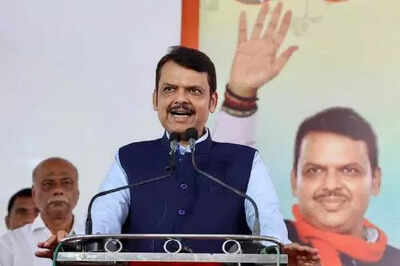
Mumbai: Eleven years after the BJP-Sena government Devendra Fadnavis Having scrapped the 5% quota for Muslims in government jobs and education, the Mahayut government has canceled a notification outlining the process for issuing caste validity certificates for the quota. Officials said the long-delayed process was completed after questions were raised at the last state Legislature meeting. The 5% minority quota was introduced by the Congress-NCP government in June 2014. However, the ordinance lapsed in December 2014 as it had not been converted into a bill by the subsequent BJP-Sena government led by Fadnavis. A high court petition also led to the stay of job quotas. In March 2015, the Fadnavis government issued an order officially canceling the ordinance. However, relevant notifications issued by the social justice department regarding caste validity certificates for minorities were ignored. The circular has now been cancelled. “This is just a formality,” one official said.
‘When friends connect, innovation follows’: French President Macron shares AI images with PM Modi | India News
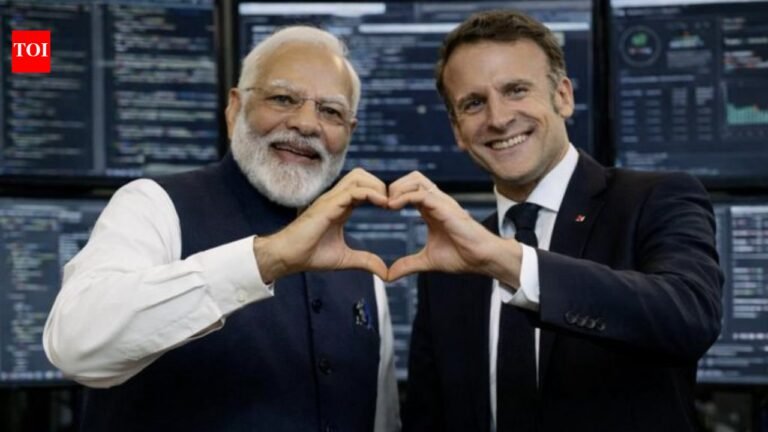
French President Emmanuel Macron shared an artificial intelligence image with his prime minister on Wednesday Narendra Modias he was on a three-day trip to India. He is also preparing to participate Artificial Intelligence Impact Summit In New Delhi. The image showed the two leaders smiling, holding hands and drawing a heart with the words “Yes, this is artificial intelligence.” Two white mugs with Indian and French flags can also be seen in the image. Macron shared the image with the caption: “When friends connect, innovation follows. Get ready for the AI Impact Summit!”
The summit builds on earlier global initiatives, including the Paris AI Action Summit 2025, co-hosted by Prime Minister Modi and Macron, which brought together world leaders and technology executives to discuss the future of artificial intelligence.Earlier in the day, Macron, while addressing an event at the All India Institute of Medical Sciences, said India and France were on the same page on the future of artificial intelligence, stressing the need to avoid overreliance on globally dominant models. “I think it’s very important that this kind of innovation becomes a very important part of our country. I believe we have the same goals in India and France and also in Europe – we don’t want to be completely dependent on the American and Chinese models. We believe we need our own balanced model and we want to be part of the solution. We want our players to be part of the solution,” he said.Macron called the ongoing India AI Impact Summit 2026 in Delhi crucial to advancing responsible and development-focused AI. Referring to previous global discussions, he said the dialogue must continue to ensure that innovation benefits society broadly.India will host the summit from February 16 to 20, which will revolve around three pillars – People, Planet and Progress. Earlier this week, the Prime Minister of India inaugurated the India AI Impact Expo 2026 at the Bharat Mandapam.The summit is hailed as the first important global artificial intelligence event in the southern hemisphere, attracting more than 20 heads of state, dozens of ministers and hundreds of artificial intelligence leaders. The event brings together policymakers, industry, innovators and academia to translate global AI discussions into practical development outcomes under the Indian AI Mission and Digital India initiative.The Prime Minister will deliver his inaugural speech on February 19, outlining India’s vision for inclusive, trustworthy and development-oriented AI.
‘Remain committed to working in India’: Why Bill Gates opted out of AI summit – says his foundation | India News
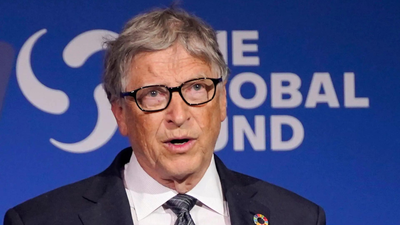
New Delhi: Microsoft founder Bill Gates on Thursday pulled out of the Artificial Intelligence Impact Summit and will not deliver a keynote address.Originally, Gates was supposed to be one of the keynote speakers at the event. However, Gates came under heavy criticism after his name appeared in parts of Epstein documents released by the U.S. Department of Justice.
The Gates Foundation said in a post on X that the organization will be represented by Ankur Vora, president of the Africa and India offices.The Gates Foundation said: “After careful consideration and to ensure that the focus remains on the key priorities of the Artificial Intelligence Summit, Mr. Gates will not deliver the keynote address. The Gates Foundation will be represented by Ankur Vora, President of the Africa and India Office, who will speak at the Summit later today.”“The Gates Foundation remains fully committed to our work in India to advance our shared health and development goals,” it added.Gates is listed as a speaker on the official website of the Artificial Intelligence Impact Summit, taking place in the nation’s capital from February 16 to 20, which includes tech moguls, industry leaders, policymakers, founders and technology experts.The clarification comes against the backdrop of recent allegations against Gates citing documents related to convicted sex offender Jeffrey Epstein, who died in prison in 2019. Gates’ name appears in some documents released by the U.S. Department of Justice.In a note cited in the materials, Epstein allegedly claimed he helped Gates obtain drugs “to deal with the consequences of having sex with a Russian girl.” Gates has flatly denied the accusations. Speaking to Nine News, he described the comments as “absolutely ridiculous and completely wrong”.In a separate NPR interview, Melinda French Gates said her ex-husband’s meetings with Epstein were one of the factors that led to the end of their 27-year marriage.Previously, government sources said Gates would attend the meeting. However, a spokesman for his foundation refuted this statement, saying, “Bill Gates is attending the Artificial Intelligence Impact Summit. He will deliver the keynote speech as scheduled.”However, Tuesday’s summit website did not list his name among the key speakers.
‘Critical need’: PM Modi’s AI MANAV vision – what it means India News
New Delhi: Prime Minister Narendra Modi on Thursday unveiled what he called India’s “MANAV Vision for AI” at the India AI Impact Summit 2026, laying out a human-centric framework for the development and governance of AI.“Today at the AI Impact Summit in New Delhi, I presented the MANAV vision for artificial intelligence. MANAV means human,” he said. “M-Moral and ethical system: AI should be based on moral guidance. A-Responsible governance means transparent rules, strong supervision; N-National sovereignty means whose data, his rights. A-Accessible and inclusive means AI should be a multiplier, not a monopoly. V-Effective and legal means AI should be legal and verifiable.“This vision, he added, will serve as “an important link for human well-being in a 21st century artificial intelligence world.”
Calling for international cooperation, PM Modi said, “…let us commit to developing AI as a global common good. A critical need today is to establish global standards. Deepfakes and fabricated content are destabilizing open societies…”He believes that trust must be built into technology from the beginning. “In the digital world, content should also have authenticity labels so people know what is real and what AI has created. As AI creates more text, images and videos, the industry will increasingly require watermarks and clear provenance standards. So it’s critical to build this trust into the technology from the start.”The Prime Minister warned against reducing individuals to mere statistics. “For AI, humans are just data points. To ensure that humans are not reduced to mere raw materials, AI must be democratized. It must be a medium of inclusion and empowerment, especially in countries of the Global South. “He used a metaphor: “We must give artificial intelligence an open sky, but also put the command in our hands, just like GPS. GPS points the way for us, but which direction we should take is ultimately up to us.”He described AI as “a transformative force” and added: “If there is no direction, it becomes a disruption; if the right direction is found, it becomes a solution. How to make AI from machine-centric to human-centric… This is the basic goal of this Global AI Impact Summit. Well-being for all, happiness for all. This is our benchmark.”
AI Summit: From Tata Sons Chairman Chandrasekaran’s expansion strategy to Google CEO Pichai’s ‘vision’ – who has the final say | India News
India’s AI ambitions took center stage at the India AI Impact Summit 2026 in New Delhi, where national and global leaders, policymakers and top technology executives discussed how AI could reshape economies, governance and society.From Union Minister Ashwini Vaishnaw’s emphasis on democratizing AI and building sovereign capabilities, to Tata Sons Chairman ChandrasekaranIn describing artificial intelligence as the next big infrastructure shift, speakers defined the technology as transformative and foundational. Additionally, industry leaders such as Google CEO Sundar Pichai and Anthropic CEO Dario Amodei highlighted India’s growing role in the global AI ecosystem, while also pointing out the scale of opportunities and emerging risks.
On the fourth day of the summit, speakers highlighted themes such as accessibility, sovereignty, infrastructure and inclusive growth, reflecting India’s efforts to position itself as a trusted AI hub in the global South.
‘AI must be democratized and scaled’: Union Minister Ashwini Vaishnaw
Union Minister Ashwini Vaishnaw described AI as a foundational technology that will transform work and decision-making and highlighted India’s comprehensive five-tier AI strategy covering applications, models, computing, infrastructure and energy.“Welcome to the first and largest AI summit in the Southern Hemisphere to date… The true value of technology is in ensuring that it reaches the masses,” Vaishnaw said.“Artificial intelligence is a fundamental technology that will transform work and decision-making, and the Prime Minister’s vision is to democratize and scale it so that it benefits the masses. India is working on all five levels of the AI stack, focusing on practical solutions in areas such as healthcare, agriculture, education and finance. At the model layer, the focus is on sovereignty, believing that more than 90% of use cases can be solved by smaller, more specialized models, providing value at a lower cost. ” he added while addressing heads of state, representatives, industry leaders, students and members of the media.He emphasized the importance of sovereign AI capabilities at the model layer, arguing that most use cases can be solved by smaller, specialized models that provide value at a lower cost.Vaishnaw also announced what he called a key outcome of the summit, the New Delhi Frontier AI Commitment, a voluntary framework adopted by leading global AI companies and India’s leading AI companies. He said the program focuses on two priorities: advancing the use of real-world AI through anonymized, aggregated insights to support evidence-based employment and skills decisions; and strengthening multilingual, use-case evaluation to ensure AI systems work effectively across languages and cultures.
Artificial intelligence is the next major infrastructure: Tata Sons chairman N Chandrasekaran
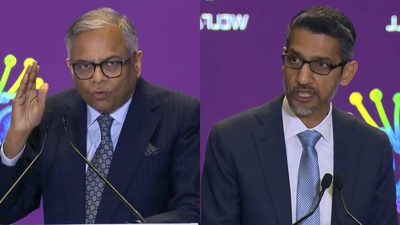
Chandrasekaran defines AI as a transformative infrastructure shift comparable to the steam engine, electricity, and the Internet. “In my opinion, artificial intelligence is the next big infrastructure. It’s smart infrastructure,” he said.Chandrasekaran believes that AI tools must reach the “last person” and highlights how accessibility will define the technology’s social impact. He cited examples of rapid AI adoption, including rural actors learning and deploying AI tools within hours, as examples of how the technology lowers barriers.He also positioned India as a nation of “AI optimists,” linking the country’s confidence to its record in building large-scale digital public infrastructure, from digital identity systems to payment platforms. He emphasized the need to build capabilities across the entire technology stack, from chips and systems to energy and applications, to ensure long-term competitiveness.
Anthropic CEO Dario Amodei says the energy of building together is palpable
Anthropic CEO Dario Amodei expressed his appreciation for India’s AI ecosystem, praising the country’s unique drive and ambition. “The energy and ambition in this room and across India is incredible… The energy of building together here is palpable and unlike anywhere else,” Amodei said in his speech.Highlighting Anthropic’s growing footprint, he added: “As a sign of our commitment, we have just opened an office in Bengaluru this week… We have also announced partnerships with major Indian players including Infosys.”Amodai highlighted the transformative potential of artificial intelligence, saying the technology could “cure diseases that have been incurable for thousands of years” and “help billions of people escape poverty.” At the same time, he warned of the risks, adding, “I worry about the autonomous behavior of AI models, their potential for abuse… and their potential to cause economic displacement.”
Google CEO: ‘The biggest platform shift of our lifetime’ Sundar Pichai
Google CEO Sundar Pichai has highlighted artificial intelligence as a decisive technological change, describing it as “the biggest platform shift of our lifetimes.” Speaking at the summit, he stressed that AI showed “when humans dream big, anything is possible,” while warning that its benefits “are neither guaranteed nor automatic.”Pichai further mentioned India’s expanding role in global artificial intelligence and noted the rapid development in Visakhapatnam. “I remember it being a quiet and modest coastal city, full of potential. Now…Google is building a full-stack artificial intelligence center as part of our $15 billion infrastructure investment in India,” he said, adding that the facility would bring “gigawatt-scale computing and a new international undersea cable gateway.”“Pichai cited scientific breakthroughs in explaining his reasons for optimism about artificial intelligence. “Artificial intelligence can improve the lives of billions of people and solve some of the most difficult problems in science,” he noted, citing AlphaFold’s impact on drug discovery. He added that the Nobel Prize-winning innovation “compresses decades of research into a database that is now open to the world” and is currently used by “more than 3 million researchers in more than 190 countries.”“Pichai also emphasized the need for bold and responsible deployment of AI, saying, “We must be equally bold in addressing areas where technology is lacking,” while reiterating the importance of inclusive and responsible development to ensure the benefits of AI are widely shared.
UN Secretary-General António Guterres: “Artificial Intelligence must belong to everyone”
In one of the most direct warnings at the summit, U.N. Secretary-General Antonio Guterres warned that the trajectory of artificial intelligence cannot be determined by “the whims of a few billionaires” or by just a few countries. He stressed that “artificial intelligence must belong to everyone” and pushed for the establishment of global guardrails to ensure oversight, accountability and fairness as the technology rapidly develops.Guterres called on governments and technology leaders to support a proposed $3 billion global artificial intelligence fund aimed at building basic capabilities and ensuring open and fair opportunities. That’s not a huge number, he added, adding that the target represents less than one percent of a major tech company’s annual revenue and calling it “a small price to pay for the proliferation of AI that benefits everyone.”Speaking about the transformative prospects of artificial intelligence, from accelerating medical breakthroughs to enhancing food security and climate resilience, he warned of parallel risks. Without coordinated safeguards, AI could exacerbate inequalities, amplify bias and harm vulnerable groups. He also stressed the need to protect individuals from exploitation, noting that “no child should be a test subject for unregulated artificial intelligence”.In addition to ethics and governance, Guterres also pointed to growing environmental pressures related to AI infrastructure. As energy and water demands from data centers surge, he urged businesses to prioritize clean energy rather than “passing costs onto disadvantaged communities.”
French President Macron: “India’s digital model sets a global benchmark”
French President Emmanuel Macron has spoken about Europe’s role in shaping the future of artificial intelligence, describing the region as a “space for innovation and investment” amid rapid technological change. Addressing the summit, he also hailed India’s digital public infrastructure as a global benchmark.“India has built something that no other country in the world has built. Digital identity for 1.4 billion people. A payments system that now handles 20 billion transactions a month… They call it the India stack – open, interoperable, sovereign. That’s what this summit is about.” Macron said of the scale and impact of India’s digital system.Looking back on past collaborations, he recalled the AI Action Summit co-hosted by France and India in Paris. “We have developed a global guiding principle… that artificial intelligence will be an enabler of faster innovation for us humans… for the benefit of humanity. We all believe in this revolution,” he said.Macron also acknowledged the competitive dynamics surrounding artificial intelligence. “Artificial intelligence has become a major area of strategic competition, with large technology companies becoming more powerful,” he noted, stressing the need for balanced, responsible and investment-driven innovation.
Prime Minister Modi: Artificial intelligence is a global common good and must be trusted and protected
Prime Minister Narendra Modi has positioned artificial intelligence as a shared global responsibility, urging leaders to “develop AI as a global common good.” Emphasizing inclusivity, he said AI must be democratized and become “a tool of inclusion and empowerment, especially for countries in the Global South.” Prime Minister Modi also unveiled the “MANAV Vision” for AI, which has at its core a moral and ethical system, responsible governance and national sovereignty.He stressed that the AI ecosystem must remain “child-safe and family-guided,” while warning that deepfakes and fabricated content were destabilizing open societies. He called for the development of global standards, advocating for authenticity labels, watermarks and clear provenance specifications to embed trust in artificial intelligence technology “from the beginning”, noting that artificial intelligence not only makes machines intelligent, but also amplifies human potential at unprecedented speed and scale.

‘Give AI an open sky, but…’: PM Modi praises AI, but warns of caution – Top Quotes India News
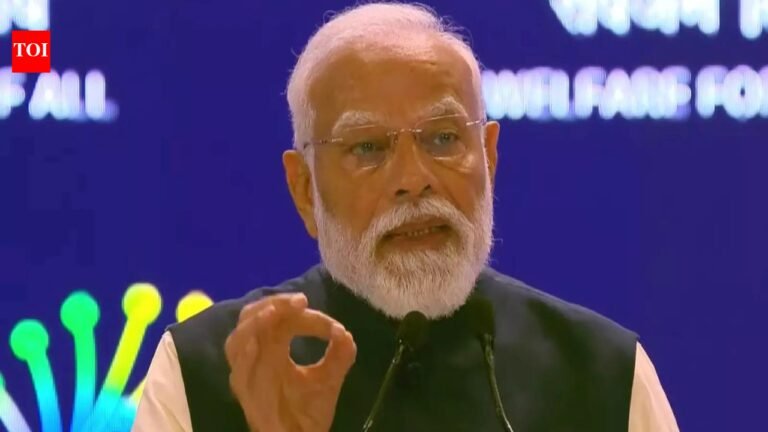
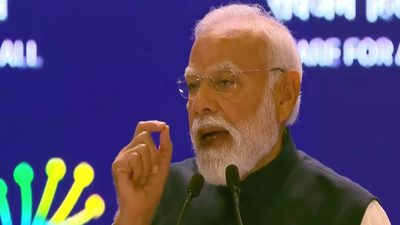
New Delhi: Indian Prime Minister Narendra Modi on Thursday attended the Artificial Intelligence Impact Summit along with world leaders, heads of states and global technology leaders and expressed his appreciation for India’s development in the field of artificial intelligence.In his keynote speech, Prime Minister Modi said that AI needs to be democratized to ensure that humans do not become data points or raw materials.
Here are the key quotes from PM Modi’s speech
- We have seen the devastation of nuclear energy, but also its positive contributions. Likewise, artificial intelligence is a transformative force. Without direction, it leads to chaos; with the right direction, it leads to solutions. How to make artificial intelligence from machine-centered to human-centered, and how to become sensitive and responsible – this is the main purpose of this Global Artificial Intelligence Impact Summit. “
- India sees a bright future in artificial intelligence. We have the people, energy capabilities and clear policies. I am happy to tell you that at this summit, three Indian companies launched their artificial intelligence models and applications. These models showcase the talent of our young people. I invite everyone to design and develop in India and deliver humanity to the world.
- We are entering an era where humans and intelligent systems co-create, work together and evolve together.
- Decades ago, when the Internet was born, no one could have imagined how many jobs it would create. The same is true for artificial intelligence. Today, it is difficult to imagine what kind of job opportunities this field will create in the future. The future of AI jobs is not predetermined. It will depend on our decisions, our approach and our course of action. I believe the future of work is a new opportunity for us. This is the era of humans and intelligent systems working together.
- Today at the Artificial Intelligence Impact Summit in New Delhi, I presented the MANAV Artificial Intelligence Vision. MANAV means human being and MANAV Vision means M-Moral and Ethical System: Artificial Intelligence should be based on ethical guidance. A-Responsible governance means transparent rules and strong supervision; N-National sovereignty means whose data belongs to him. A-Accessibility and inclusion means AI should be a multiplier, not a monopoly. V-valid and legal means that the AI should be legal and verifiable. India’s MANAV vision will serve as an important link for human welfare in the 21st century AI world.
- We must be more careful about children’s safety. AI spaces should also be child-safe and family-oriented.
- Let us commit to developing artificial intelligence as a global common good. A key need today is the establishment of global standards. Deepfakes and fabricated content are destabilizing open societies. In the digital world, content should also have an authenticity label so that people know what is real and what is created by AI. As AI creates more text, images, and videos, the industry increasingly requires watermarking and clear-source standards. Therefore, it is critical to build this trust into the technology from the beginning.
- To artificial intelligence, humans are just data points. To ensure that humans are not reduced to mere raw materials, AI must be democratized. It must be a medium of inclusion and empowerment, especially in countries of the Global South. We must give AI an open sky, but also put the command in our hands like GPS. GPS shows us the way, but the final decision about which direction we should take rests with us. The direction we take in artificial intelligence today will determine our future.
- The speed at which the world’s youth are embracing and mastering AI is commendable. Young people have great enthusiasm for the Artificial Intelligence Summit.
- Artificial intelligence is a transformative force. If there is no direction, it becomes a distraction; if the right direction is found, it becomes the solution. How to transform artificial intelligence from machine-centered to human-centered, and how to make it sensitive and responsive are the basic goals of this Global Artificial Intelligence Impact Summit. The theme of the summit clearly reflects India’s perspective on artificial intelligence. The welfare of all beings, the happiness of all beings. This is our baseline.
- We must make skills training, reskilling and lifelong learning a mass movement. The future of work will be inclusive, trustworthy, and people-centered. If we move forward together, AI will advance human potential.
- We must have a big vision and an equally big responsibility. Like the current generation, we must also worry about what form of artificial intelligence we will hand over to the next generation. So the real question today is not what AI can do in the future. The question is, what do we do with artificial intelligence now? Such problems have been faced by mankind before. The most powerful example is nuclear energy. We have seen its destruction as well as its positive contributions.
- I welcome you all to the world’s most historic Artificial Intelligence Summit. India is the center of the world’s largest technology pool. For countries in the southern hemisphere, it is a matter of pride for the Artificial Intelligence Summit to be held in India.
- When signals were first transmitted wirelessly, no one imagined that one day the entire world would be connected in real time. Artificial intelligence is a revolution in human history. What we are seeing today and what we are predicting is just the beginning of its impact.
- Artificial intelligence is making machines smarter, but more importantly, it is also exponentially improving human capabilities. The only difference is: this time the speed is unprecedented and the scale is unexpected. Earlier, the impact of technology often took decades to manifest. Today, the journey from machine learning to learning machines is faster, deeper, and broader than ever before.
‘Culturally insensitive’: Mamata slams PM Modi over ‘Swami’ prefix in Ramakrishna’s name India News
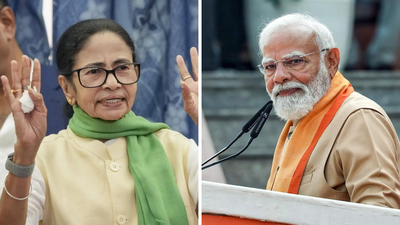
New Delhi: Chief Minister of West Bengal Mamata Banerjee Thursday launched scathing attack on PM Narendra Modi While paying tribute to Sri Sri Ramakrishna Paramahamsadeva on his birth anniversary, an “unprecedented and inappropriate prefix” has been added to his name.Mamata accused the Prime Minister of “displaying aggressive cultural insensitivity towards the great men of Bengal”.
“Once again our Prime Minister has shown cultural insensitivity to a great personality of Bengal. Today is the janmatithi of Yugavatara (the incarnation of God in our time) Sri Sri Ramakrishna Paramahansadeva. While trying to pay tribute to this great saint on this occasion, our Prime Minister has added an unprecedented and inappropriate prefix of ‘Swami’ to the name of this great saint!” Mamata said in X’s social media post.“It is known that Sri Ramakrishna was widely revered as Thakur (literally God). Although his ascetic disciples formed the Ramakrishna Math Society and the Ramakrishna Mission after the death of the Master, and these monks were called “Swami” according to Indian tradition, the Master, Acharya himself, was still known as Thakur “The prefix ‘Swami’ refers to his disciples in the Hindu Order of Ramakrishna; but the holy trinity of the Order remains Thakur-Ma-Swamiji, Thakur is Sri Ramakrishna Paramahansadeva, Ma Sri Rama Sarada and Swamiji is Swami Vivekananda,” she added.Earlier in the day, Prime Minister Modi paid tribute to Swami Ramakrishna Paramahansa on his birth anniversary and said his noble thoughts will always be a source of inspiration.“On the occasion of Swami Ramakrishna Paramahansa’s birth anniversary, a tribute is paid to him. The way he established spirituality and meditation as important life forces will continue to bless humanity in every era. His noble thoughts and messages will always be a source of inspiration. “Modi said in a Hindi post on X.Ramakrishna Paramahansa was born on this day in 1836.Ramakrishna Paramahansa served as the priest of the Dakshineswar Kali Temple in Kolkata and was famous for his teachings on religious harmony.Ramakrishna Mathematics and Ramakrishna Mission were founded by Sri Ramakrishna and his chief disciple Swami Vivekananda.The Ramakrishna Mathematical Society and the Ramakrishna Mission are world-wide, non-political, non-sectarian spiritual organizations that have been engaged in various forms of humanitarian and social service activities for more than a century.
PM Modi’s nameplate carries ‘Bharat’ message at AI summit | India News
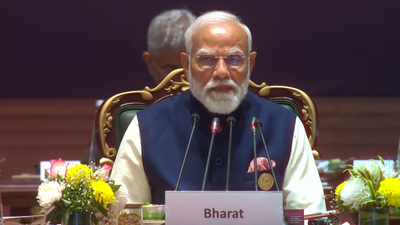
New Delhi: Prime Minister Narendra Modi addresses plenary session on Thursday Artificial Intelligence Impact Summitcalling on the international community to transform the current technological disruption into humanity’s greatest opportunity.Addressing the plenary session, Prime Minister Modi expressed confidence that the summit will help shape a more ethical and responsive digital future.
In addition to his address, equally eye-catching is the nameplate on the desk he sits behind.The placard read “Bharat” instead of “India”.This is not the first time that the name ‘Bharat’ has been used to refer to the country at official events around the world.During the G20 summit in New Delhi in 2024, “Bharat” placards were used, sparking widespread controversy. Moreover, in the invitation issued by President Dhurupati Murmu to world leaders, “India” was replaced with “Bharat”.The word “Bharat” also appears in a G20 manual prepared for foreign delegates titled “Bharat, the Mother of Democracy”. “Bharat is the official name of the country. It is mentioned in the constitution and in discussions of 1946-48,” the pamphlet reads.“Correct action comes from correct understanding”Prime Minister Modi said in his speech at the plenary session: “I believe this summit will play a vital role in building a human-centered and sensitive global artificial intelligence ecosystem. Looking back at history, we will find that mankind has transformed every disruption into new opportunities. Today, we are faced with such an opportunity again. We must work together to transform this disruption into the greatest opportunity for mankind.”Prime Minister Modi invoked the teachings of Buddha and emphasized the importance of clear and timely decision-making in AI governance.“India is the land of Buddha, who said: ‘Right action comes from right understanding.’ Therefore, it is important that we work together to create a roadmap that demonstrates the true impact of AI. Real impact only occurs when a person makes the right decision at the right time with the right intention. ” he observed.The Prime Minister highlighted the collaborative response during the COVID-19 pandemic, drawing parallels with recent global challenges.“During the global COVID-19 pandemic, the world has seen that when we come together, the impossible is possible. From vaccine development to supply chains, from data sharing to saving lives, collaboration provides solutions,” he said.Earlier in the morning, the Prime Minister attended the opening ceremony of the India AI Impact Summit 2026. French President Macron, United Nations Secretary-General Antonio Guterres and several top industry leaders from around the world also delivered speeches at the ceremony.The first Global Artificial Intelligence Summit to be hosted in the Southern Hemisphere reflects the transformative potential of artificial intelligence, in line with the national vision of “Sarvajana Hitaya, Sarvajana Sukhaya” and the global principle of artificial intelligence for the benefit of humanity.
French nationalist killed: Raphael Arnault, man at center of French political scandal World News
Deadly street clashes in Lyon sparked one of France’s most explosive political controversies in recent years, thrusting first-term lawmakers into the national spotlight.Earlier this month, 23-year-old nationalist activist Quentin Deranque was brutally beaten to death during a confrontation between far-left and far-right groups, Reuters reported. Prosecutors launched a homicide investigation and police detained multiple suspects in connection with the attack.What turned the incident into a political crisis was the road to parliament. Reuters reported that some of the detainees had ties to the parliamentary office of Raphaël Arnault, a far-left lawmaker from La France Insoumise. French media later identified one of them as a current parliamentary assistant and the other as a former intern, and investigators are looking into whether one of them was directly involved in the attack and whether the other helped the suspect evade police.Arnault himself has not been accused of participating in the violence. He said he had initiated dismissal proceedings after a staff member was arrested and said he would fully cooperate with investigators.
Who is Raphael Arnault
The controversy attracted intense attention because Arnault is not a traditional political figure. His rise reflects a broader shift in European politics, with radical grassroots activism increasingly intertwined with electoral institutions.Before entering parliament, Arnault was best known as the leader of Lyon’s radical anti-fascist network. French authorities disbanded the group in 2023, citing its risk to public order and its involvement in numerous violent confrontations with far-right activists. Arnault also has previous convictions for protest-related violence, which became a major issue during his campaign.This activist background is why the Derank case was politically explosive. Critics argue it highlights the blurred lines between radical movements and institutional politics, while supporters see anti-fascist action as a legitimate political response to extremism.
How did he come to power?
Arnault’s entry into parliament is not the result of a gradual rise in the party’s standing, but the result of a dramatic political moment in France.In 2024, French President Macron dissolved the National Assembly after his party suffered a crushing defeat in the European elections. The surprise vote could split voters on the left and benefit the far right.To prevent this outcome, several left-wing parties formed a broad electoral alliance called the New Popular Front. Under this arrangement, constituencies are divided between coalition partners to ensure that only one left-wing candidate runs for each seat.Arnault was nominated by La France Insoumise in a constituency allocated to the party under the seat-sharing agreement. With the entire left-wing coalition backing him, he benefited from a unified tactical vote in France’s two-round electoral system and won a seat despite a controversial past for his activism.His election is indicative of a broader trend across Europe in which political legitimacy increasingly derives not from traditional party hierarchies but from the mobilizing capacity of grassroots movements.
Why this case is politically explosive
The Derank murder has become a national flashpoint because it intersects with several deep tensions in French society.First, Lyon has long been the center of ideological street conflicts between anti-fascist networks and far-right nationalist groups. The city’s history of recurring confrontations gave the event wider symbolic significance.Second, the arrests of individuals linked to the offices of sitting MPs have intensified the debate over whether radical activism can coexist with democratic institutions. Opponents argue that Arnault’s continued ties to radical networks and his hiring choices reflect poor judgment, while allies say he was targeted for political reasons.Third, the controversy unfolds in an already polarized political climate following snap elections in 2024, amplifying its national impact.
The bigger picture
Arnault’s political journey and current controversies illustrate the structural transformation taking place in European democracies. As protest movements increasingly translate street legitimacy into electoral power, unresolved ideological conflicts tend to move from public demonstrations to parliamentary politics.The ongoing investigation into Derank’s death will determine individual criminal responsibility. Whatever the outcome, however, the incident has become a decisive moment in the French debate on radicalism, extremism and the limits of political legitimacy in a deeply polarized society.