Home Blog Page 512

Why the Netherlands is building houses on water: The global climate solution no one expected World News

0

Why the Netherlands is building houses on water: The global climate solution no one saw coming
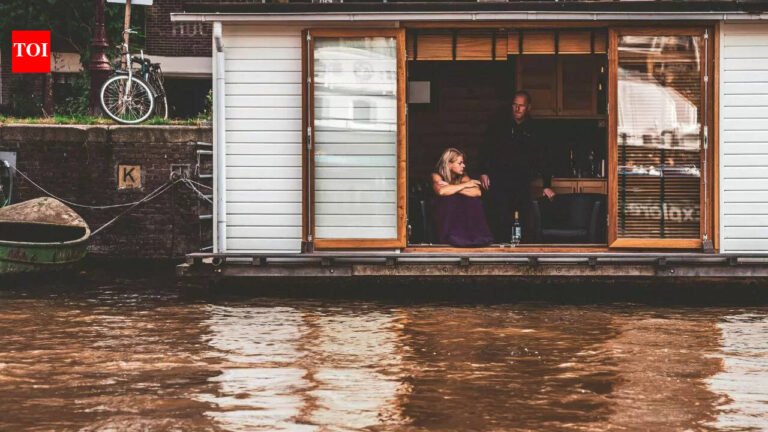
Floating houses are being built in the Netherlands (Image: Canva)

The Netherlands has been symbiotic with water since ancient times. Much of the country is below sea level. Rivers, canals and coastlines influence people’s daily lives. For hundreds of years, the Dutch have built dikes, dams, and drainage systems to protect their land. But the problem has become more severe in the past few years as sea levels rise, rainfall increases and flooding occurs more frequently. At the same time, the country does not have enough housing.There are millions of people looking for affordable housing, but there is not much land left. Many Dutch communities are learning to live with water rather than fighting against it. Once considered unusual, floating homes are now becoming part of modern city planning. According to the BBC, these water towns communities are growing in number and influence. What started as a small experiment is now shaping international projects in vulnerable coastal areas. From Europe to island nations, the Dutch floating housing model could be a way to combat climate change and housing shortages simultaneously.This is the story of how floating homes transformed from a niche project into a global paradigm for climate adaptation.

Why floating homes in the Netherlands are getting attention

The Netherlands is one of the most flood-prone countries in the world. Storm surges, heavy rainfall and rising sea levels all increase the risk of damage. Climate scientists warn that these threats will intensify in the coming decades.At the same time, the country needs new housing. Officials estimate that about one million new homes will be needed over the next decade. However, suitable land is scarce. Many areas are already heavily built up or protected from agriculture and nature.Floating homes offer a way to utilize water instead of land. Canals, lakes and ports can become housing sites without taking up farmland or green space.For years, water was viewed primarily as a hazard. The goal is to keep it out at all costs. Today, city planners are taking a different approach. They try to work with the water, not against it.This change in mindset is critical to the development of mobile communities. Instead of building taller walls and stronger barriers, some cities are building houses that rise and fall with changing water levels.

How Dutch floating houses are built: Not houseboats, but real houses

Dutch floating homes are not traditional houseboats. They are permanent structures built with modern building materials. Most are built on concrete platforms that act as floating foundations.These platforms are attached to steel poles driven into the water bed. The poles allow the houses to move up and down but keep them in place. This system helps the home remain stable during storms and changes in water levels.The buildings are also connected to electricity, water, sewage and internet networks. From the inside, they look a lot like regular houses on land.A concrete hull beneath each house acts as a counterweight. This keeps the structure balanced. Even in bad weather, activities are often limited.Siti Boelen, a resident of a floating community, told the BBC she felt safer during storms because her home floated rather than resisting water pressure. This sense of security is one reason more people are interested in water-based housing.

Schoonschip: a floating community in Amsterdam

Amsterdam’s Schoonschip is one of the most famous floating districts. The project was launched in 2009 by Dutch television director Marjan de Blok. Her idea was to create a sustainable aquatic community. After years of planning and collaboration with authorities, Schoonschip became a reality. Today it consists of 30 floating houses, including duplexes. They are located in a former industrial canal area.The residents of Schoonschip share many systems. They operate combined heat pumps for heating and cooling. Solar panels cover approximately one-third of each roof. Energy is shared within the community.Rainwater harvesting, waste management and electricity transport are also part of daily life. These features reduce environmental impact and lower costs.According to the BBC, Schoonschip shows how floating housing can combine climate adaptation with sustainable living.

local government support

Amsterdam city officials are currently adjusting planning laws to support more floating projects. Nienke van Renssen, a city councilor from the Green Left party, told the BBC that floating homes would enable a multi-functional use of space and meet long-term sustainability goals.By updating zoning regulations, the city hopes to make it easier for developers and residents to build homes on the water.Rotterdam is another major city in the Netherlands that has been working on climate adaptation for more than a decade. Most of the city lies below sea level.Since 2010, floating buildings have been part of its climate protection and adaptation strategy. Rotterdam is home to Europe’s largest floating office building and a floating dairy farm.Arnoud Molenaar, the city’s chief resilience officer, told the BBC that Rotterdam now sees water as an opportunity, not just a threat.

How a Dutch water house could become a global climate solution

Dutch architects and engineers are now applying their knowledge abroad. Waterstudio, led by Koen Olthuis, has designed around 300 floating structures worldwide.A major project is underway in the Maldives. It aims to create a floating area that can accommodate about 20,000 people. The Maldives faces serious risks from rising sea levels, so floating homes are particularly important.Another company, Blue21, is developing plans for floating islands in the Baltic Sea that could house up to 50,000 residents.Orshuis told the BBC that floating houses are no longer seen as strange experiments. Instead, they are becoming part of what he calls “blue cities” where water is used as a planning tool.This approach is currently influencing coastal development in areas such as French Polynesia and Southeast Asia.

Challenges of living on the water

Floating homes are not without their problems. Severe storms can still cause discomfort. Although the building is stable, movement of the building can still be felt during severe weather. Special infrastructure is also required. Utility connections, waste systems and emergency access require careful design. Maintenance costs may be higher than land-based housing.Building large floating communities requires significant investment. Materials, technology and engineering expertise are expensive.Blue21’s Rutger de Graaf told the BBC that large-scale development is crucial as rising sea levels by the end of the century could displace hundreds of millions of people. Reaching this scale, however, will take time and political support.

Floating homes and the housing crisis

The Netherlands needs 1 million new homes, and floating housing can play a supporting role. It won’t solve the shortage alone, but it can add valuable capabilities. By utilizing water spaces, cities can expand without destroying green spaces.Floating homes are likely to become increasingly important for low-lying countries and island nations. Where land is disappearing, building on water may be one of the few options.BBC reporting shows Dutch-led projects have impacted planning in vulnerable areas.

Adapting lifestyles to climate change

Floating homes in the Netherlands represent more than just a housing trend. They reflect a deeper shift in the way society responds to environmental change.Rather than trying to completely control nature, these communities adapt to it. Houses were raised from the ground due to flooding. The community is designed with flexibility in mind. Energy and water systems are shared.From the canals of Amsterdam to projects in the Maldives, this model is spreading. It combines engineering, environmental awareness and social cooperation.As climate risks increase and land becomes increasingly scarce, living on water may become less of an exception and more of a necessity. The Dutch experience, documented by the BBC, shows how innovation, planning and long-term thinking can transform a natural threat into a livable place.

Drama at Pappu Yadav’s home: Police arrive to arrest Bihar MP; he claims plotting ‘to kill’ | India News

0

Drama at Pappu Yadav's home: Police arrive to arrest Bihar MP; he claims plotting to 'kill people'

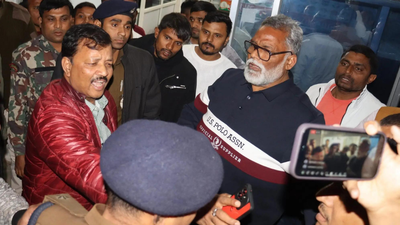
New Delhi: Police reached the residence of Patna Purnia MP Pappu Yadav late on Friday night in connection with an old case.Meanwhile, Pappu Yadav resisted arrest and accused the Bihar police of hatching a plot to kill him, saying policemen in civilian uniforms came to his residence like criminals.“I suspect these people may have killed me. I will go directly to the court. I will not go to the police station. If they want, they can put me under house arrest. The court will call me tomorrow,” Pappu Yadav said.“The police came here in civilian clothes like criminals. I thought they were here to kill me. Is this a criminal’s house?…A case was registered about 35 years ago and the police came to arrest me in connection with the case,” he added.In X’s social media post, Pappu Yadav claimed that police were present at his residence as he was protesting against the student’s death.“Fantastic Bihar Police. We fought for justice for the NEET girl students and the Bihar Police feel the pain deep inside,” he said.“They showed up at Patna residence to arrest us. But that will not make Pappu Yadav surrender or shut up. We will continue to expose the wrongdoings of dishonest people! Send us to jail, or give us a noose – Pappu will not stop,” he added.(This is a developing story)

‘I want to give you Rs 2 alms’: Owaisi slams Himanta Sarma over ‘Troublesome Miya Muslims’ remarks India News

0

'I want to give you Rs 2 alms': Owaisi slams Himanta Sarma over 'Troublesome Miya Muslims' remark

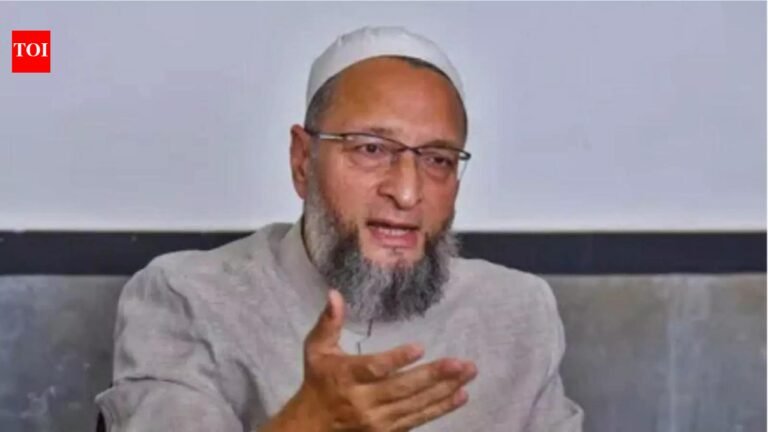
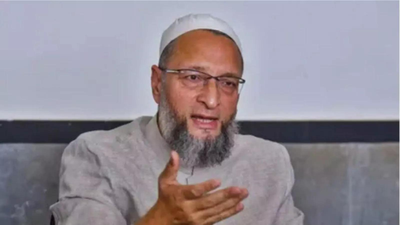
New Delhi: Chairman, AIMIM Asaduddin Owaisi Sharp attack on Assam chief minister on Tuesday Naimanta Biswa Sarma for his controversial remarks about the “disturbing Muslims of Mia”, calling them unconstitutional and divisive.Owaisi mocked the chief minister and said: “I want to give you Rs 2 as a charity” and accused him of reducing constitutional governance to bias and intimidation. In a lengthy response, Owaisi said the Indian constitution guarantees equality and non-discrimination irrespective of religion or community. “The Constitution says that everyone is equal. There should be no discrimination, whether it is the chief minister or anyone else,” he said.Owaisi alleged that Bengali-speaking Muslims in Assam were being scapegoated for issues such as immigration and rising prices. “If vegetable prices go up in Assam, Miya Muslims are blamed. If anyone wants to vote, they are told to go to Bangladesh,” he said, adding that such rhetoric amounted to targeting a community for political gain.The AIMIM leader’s remarks came after Sarma issued a statement encouraging action against the “Miya Muslims” in Assam. “Create trouble for Miya Muslims in any way. If they get into trouble, they will leave Assam… We are directly against Miya Muslims. We will not hide anything,” Sarma said.The comments sparked a political storm in the election-bound northeastern state, with opposition parties accusing the BJP of exploiting communal polarization to consolidate votes. However, the BJP has long maintained that its focus in Assam is on tackling illegal immigration and protecting indigenous rights. Bengali-speaking Muslims are often labeled as “illegal infiltrators” in political discourse, an issue that remains at the heart of Assam’s electoral politics.

Trump-Obama video controversy: White House blames staff after Tim Scott criticism; ‘taken down’

0

The White House has issued a clarification as President Donald Trump faces harsh criticism for releasing an artificial intelligence-generated video depicting the Obamas as monkeys/apes, including from his ally Tim Scott. The government says a racist video of Barack and Michelle Obama was posted by a staffer and has since been deleted.

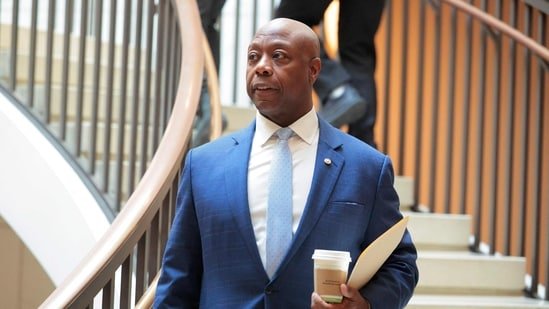
Senator Tim Scott (R-SC) arrives for a closed-door meeting on Capitol Hill in Washington, DC, December 16, 2025 (AFP Getty Images)

A White House official told AFP: “A White House staff member made the post in error. The post has been removed.” Trump’s spokesman dismissed “fake outrage” over the post.

What has Trump posted about the Obamas?

Trump shared a video about election conspiracy theories that included a racist description of the Obama family, depicting them as primates in a jungle. We currently cannot see the post on his Truth Social profile.

The 62-second clip comes from a video alleging intentional tampering with voting machines in 2020 swing states.

Tim Scott slams video

Sen. Tim Scott, the Senate’s only black Republican, reacted to the video. “Pray it’s fake because it’s the most racist thing I’ve ever seen in the White House. The president should delete it,” he wrote on the X (formerly Twitter) platform.

Scott has been a key ally of Trump and supported the president in 2024.

‘Shameless government and police’: AAP’s Saurabh Bhardwaj slams BJP over Janakpuri youth’s death | News India

0

“政府和警察无耻”:AAP的Saurabh Bhardwaj就Janakpuri青年之死猛烈抨击印度人民党

File photo: AAP leader Saurabh Bhardwaj

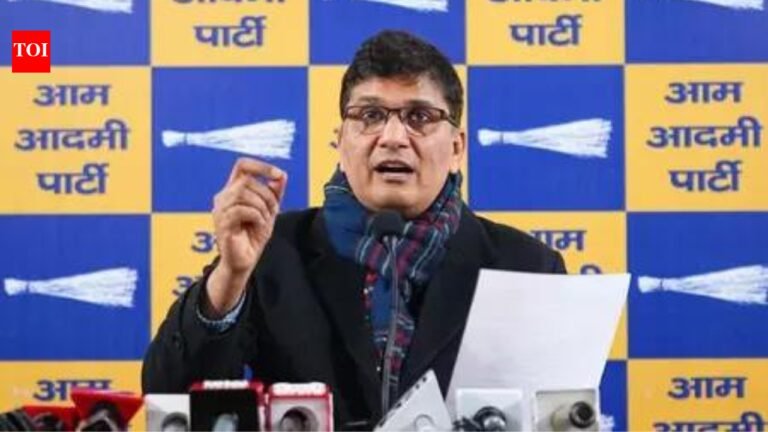
New Delhi: am admi party (AAP) President of Delhi Saurabh Bhardwaj Strong criticism of the Delhi Police and the Bharatiya Janata Party (BJP)-led Delhi government followed the tragic death of 25-year-old Kamal Dhyin Janakpuri on Friday, accusing the police of dereliction of duty and deliberately withholding important information.Speaking to ANI, Bhardwaj said the incident reflected the “shamelessness” of the government and police.“What happened in Janapuri exposed the BJP government in Delhi, the Delhi Police Commissioner and the entire Delhi Police…Today, a 25-year-old young man died…serious charges were laid against the police. Around 12 am, a family went to the police station in search of their son… Not one, they went to six police stations and no one reported the crime. Their children’s cell phone location information was deliberately and hastily deleted. Why do they do this? What are the police trying to hide? When the boy’s phone came through, police knew his location. They could have found him if they had wanted to. Maybe he might have been saved, but no one saved him. In the morning Ashish Sood went there and lied that arrangements had been made. If the arrangements are in place, will the boy commit suicide by jumping off the building? This is simply shameless on the part of the government and police, who are falsifying data. Today, with concrete evidence, the matter has been exposed to the entire country,” he told ANI.Bhardwaj went to the scene of the accident to assess the situation and flagged suspected tampering at the scene.“This is the crime scene… On one side of the road, there’s an 8-foot-tall barricade with barbed wire on top. There are also roadblocks on the other side of the road. On the third side of the road, there is a huge iron fence, and there is also a fence on the other side of the ditch. Delhi Police intervened directly at the crime scene. They are openly committing fraud by changing it. Everyone here knows that a cyclist will fall if someone throws him out of a plane. Any basic person knows this… Did this man appear out of thin air? Which department deserves to have stooped to such depravity? What government would be so dishonest as to claim only that it was no one’s fault and that the boy died on his own? That is why the crime scene was later cordoned off from all sides,” he added. Kamal Dhyani, a 25-year-old resident of Janakpuri, reportedly fell into a deep pit while riding his motorcycle home late on Thursday night, sparking criticism. Police confirmed the identity of the deceased.Dhyani’s brother claimed that the family also received no help after visiting six police stations and did not receive information about his death until an officer called him in the morning.Diani’s friends blamed the police department, saying they ignored the urgency of the situation and failed to provide the exact location of his phone during a search, leading to his death. He further questioned why his phone could not be traced last night.Meanwhile, Delhi Urban Development Minister Ashish Sood is scheduled to visit the site on February 7. The Delhi government issued a notification on Friday acknowledging the incident and ensuring action against the responsible authorities.The tragedy has drawn comparisons with a similar incident in January, when a 27-year-old IT professional, Yuvraj Mehta, died after his car got stuck in an unmarked, water-filled construction pit in Noida amid thick winter fog. The incident has raised widespread concerns over safety standards in the city, incomplete construction sites and the urgent need for better road safety measures in the National Capital Territory of Delhi.

ICE arrests 89 Indians classified as ‘worst’ criminals by US

0

ICE arrests 89 Indians classified as 'worst' criminals by US

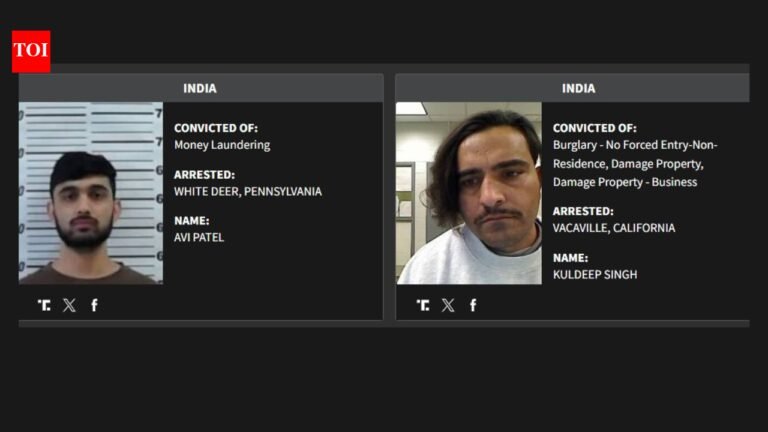
The United States has released a national list of criminals and illegal immigrants arrested by ICE, including at least 89 Indians. “The Department of Homeland Security is focusing on the most serious criminal aliens apprehended by U.S. Immigration and Customs Enforcement (ICE). Under Secretary Noem’s leadership, the hard-working staff of the Department of Homeland Security and Immigration and Customs Enforcement are fulfilling President Trump’s promises and conducting mass deportations — starting with the worst-case scenarios — including the illegal immigrants you see here,” the database said. Indians on the list have been convicted of a variety of crimes, including domestic violence, drug trafficking, sexual assault, fraud, robbery, money laundering and more. “We are pleased to announce that 5,000 additional illegal alien criminal suspects have been Wow. Department of Homeland Security. government. Our database now includes 25,000 arrests by @ICEgov and @CBP — just a snapshot of illegal immigrant crime on the streets under the Trump administration,” the Department of Homeland Security posted.“These monsters threaten our communities,” the department said. “We will not stop until every one of these people is gone. Americans should not be victimized by those who are not even legally allowed to live in our country.” He explained that they are naming and shaming every illegal immigrant so that Americans know what their officers are doing. ICE and border agents have come under attack recently after two U.S. citizens, Renee Good and Alex Pretti, were killed in Minneapolis during an ICE crackdown.

89 Indians included in ‘worst of worst criminals’ list

Avi PatelKuldeep SinghHarjinder SinghHarpreet SinghSukhwinder SinghDilip PatelAmandeep MultaniAmripal SinghKevin AthillUdit MehraDarshan Kumar PatelPatel Pradeep VishnubhaiMazban ModiDhiraj MaanBrijeshkumar PatelAmit PatelBhavesh Kumar ShuklaKaramjit SinghRafikari VillaniBrijesh GoreRajesh KumarBharatkumar ChaudhrySurinder SinghSushil KumarNileshkumar PatelKuldeep SinghAnkit PuriParvinAnand ChaukarKunal ChhetriJagandeep DeolPankaj BohraManish KumarHardik Kumar PatelAntpreet KaurMayurkumar PatelVarinder SinghDharmaprit SinghRavideep SinghYashkumar PatelGurpinder SandhuParamveer SinghShubham MittalJaya BhaskarNajot SinghAshok Kumar VenakotaHarpinder SinghSukhdev SinghGurvinder SinghDalveer SinghAnkit KirtaniyaMirza Rizaz UddinKumar Chetan KumarRupinder SinghManjinder SinghspamominNitish SharmaSurjit SinghJaspal SinghGaurang PatelJai Surehai PrajapatiIfanali MominBakarVijaydeep Singh MandharVikramveer SinghMeet PatelMohammad MohsinSuminder SinghAshok DeshmukhSaurabh SrivastavaAnish Kumar JhaDenzel D’SouzaRajneesh Kumar JhaGudev SinghGurjinder SinghManjot SinghSachin KumarSagar Kumar PatelJigar PatelSyed BuhariGuptaminder SinghAbhimanyu SharmaBaljinder SinghThoughtful foodHrithik HarmaRavi VongavoluAbdul ShaikhVidut RuddJagan Singh

Seven Naxalites, including top leader, killed in Gadchiroli; Special Forces Jawan dies of injuries India News

0

Seven Naxalites, including top leader, killed in Gadchiroli; Special Forces Jawan succumbs to injuries

New Delhi: At least seven Naxalites were killed in clashes with police special forces in Maharashtra’s Gadchiroli on Friday.Prabhakar, the top Naxalite leader from Telangana state, was also among the seven Naxalites killed, officials said. A bounty of Rs 25 lakh is being offered on Prabhakar’s head, officials addedThree days ago, the Maharashtra police launched an operation in Phodewada village on the Gachiroli-Narayanpur (Chhattisgarh) border after receiving information about the presence of cadres of Maoist Company 10. According to officials, the incident involved 14 C-60 aircraft owned by the SDPO.On Wednesday, police busted two Naxalite camps and on Thursday morning they deployed four more C-60s and a QAT (Quick Action Team) unit of the Central Reserve Police Force for reinforcements.C-60 is a special operations force of the Maharashtra Police tasked with combating Naxalism in Gadchiroli and Gondia districts.During the operation, Deepak Chinna Madavi, a soldier of the Special Forces, also died of his injuries. According to police, Deepak was airlifted to Bamragad after being injured in an anti-Naxal operation earlier and died during treatment.Another injured, Joga Madavi, was also airlifted to Bhamragad. He is out of danger and will be rushed to Gadchiroli soon, police said, adding that the operation was still on.

Zubayar Bakush: 5 key things to know about the suspect in the 2012 Benghazi consulate attack

0

Attorney General Pam Bondi said on Friday that Zubaar al-Bakoush, the main suspect in the deadly 2012 attack on a U.S. military base in Benghazi, Libya, had been arrested. Bundy added that Bakush landed at Joint Base Andrews in Maryland at 3 a.m. local time. “We never stop seeking justice for crimes against our country,” she said.

Pam Bundy speaks at a press conference to announce her arrest in the 2012 Benghazi attack (AFP)
Pam Bundy speaks at a press conference announcing her arrest in the 2012 Benghazi attack (AFP)

5 things you need to know about Zubaar al-Bakoush

Killed 4 Americans

Zubayar Bakush was part of the 2012 attack that killed four Americans in Benghazi. The attack on the night of September 11 included at least 20 militants armed with AK-47s and grenade launchers who broke through the gates of the consulate compound and set fire to the building.

Ambassador Chris Stevens and State Department employee Sean Smith

The fire killed Stevens and Smith. Other State Department personnel fled to a nearby U.S. facility known as the Annex.

Zubayar Bakush faces serious charges

Attorney Jeanne Pirro revealed that an eight-count indictment charged Al Bakush with crimes including the murders of Stevens and Smith.

First photo of Zubayar Bakush surfaces

A photo shows Zubayar Bakush being carried on a stretcher at Joint Base Andrews on Friday.

Contact with planners

A Libyan militant suspected of being the mastermind of the attack, Ahmed Abu Khatala, was captured by U.S. special forces in 2014 and taken to Washington to face prosecution. He was convicted and is serving time in prison.

Barack Obama, Hillary Clinton slam

The 2012 Benghazi attack quickly became a deeply divisive political issue. Republicans have repeatedly criticized President Barack Obama and then-Secretary of State Hillary Clinton for lapses in facility security, the military’s response to the violence and the administration’s changing narrative about who was responsible and why.

A final report released by a Republican-led congressional panel concluded that the Obama administration was responsible for security shortcomings at the Libyan outpost and a slow response to the attacks.

However, the same report found no wrongdoing by Clinton.

Clinton dismissed the report as an echo of previous investigations with no new findings and said “it’s time to move on.”

Other Democrats denounced the Republican report as a “conspiracy theory on steroids.”

(With inputs from The Associated Press)

Trump’s approval ratings take hit after Obama releases racist video; ‘Who’s the monkey now?’

0

President Donald Trump’s approval ratings have plummeted. The 79-year-old has a net approval rating of -15%, with 41% supporting him, 56% opposing and 5% unsure, The Economist reported using YouGov data. Although the 79-year-old’s approval rating has increased slightly by about 2.2 percentage points since last week, dissatisfaction with him among black voters remains a concern. Meanwhile, Trump released a disturbing AI-generated video depicting Barack Obama and his wife Michelle as monkeys.

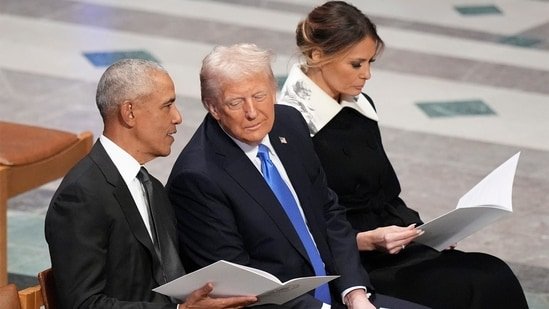
Former President Barack Obama talks with Donald Trump (AP)

What has Trump posted about the Obamas?

Trump posted a minute-long video to his Truth Social profile promoting conspiracies about his 2020 election defeat. The Obamas’ faces appear on the monkeys for about a second. As the former first couple appeared, “The Lion Sleeps Tonight” blared in the background.

Read more: Trump warns Iran ahead of talks that leaders should be ‘very concerned’

The clip repeated false claims that vote-counting company Dominion Voting Systems helped steal the 2020 election from Trump and hand the victory to then-Obama Vice President Joe Biden.

Trump video sparks outrage

The video was slammed by Democrats and some social media users. “The president’s actions were abhorrent. Every Republican must condemn this. Now,” California Governor Gavin Newsom posted to his press office account on the X (formerly Twitter) platform.

Former national security adviser Ben Rhodes tweeted: “Let it bother Trump and his racist followers that future generations of Americans will see the Obamas as beloved figures while viewing him as a blemish on our history.”

“How can Trump and MAGA claim they are not racist… when Trump posts racist shit like this on Truth Social? Trump is a total racist. So are his supporters,” one social media user wrote.

Read more: Trump calls US election ‘rigged’ and pushes for sweeping voting reform: What the US president wants

White House responds to criticism

The White House was quick to defend Trump. “This is an internet meme video depicting President Trump as the king of the jungle and Democrats as characters from ‘The Lion King,'” press secretary Carolyn Leavitt said in a statement to AFP.

“Please stop the false outrage and report on what really matters to the American public today,” she added.

Trump’s approval rating

Quinnipiac University (January 29-February 2)

Disapprove +19

37% agree/56% disagree

YouGov / The Economist (January 30 to February 2)

Disapprove +14

40% agree/54% disagree

Navigator Research (January 29 to February 1)

Disapprove +15

41% agree/56% disagree

Morning consultation (January 30 to February 1)

Disagree +8

45% agree/53% disagree

InsiderAdvantage (January 31 – February 1)

Approval +1

50% agree/49% disagree

ActiVote (January 1-31)

Disagree +9

44% agree/53% disagree

Marist University (January 27-30)

Disapprove+17

39% agree/56% disagree

NPR/PBS News/Public Policy Polling (January 29-30)

Disapprove+17

39% agree/56% disagree

TIPP Insights/Questions & Insights (January 27-29)

Disagree +11

40% agree/51% disagree

HarrisX/Harris Poll (January 28-29)

Disagree +6

45% agree/51% disagree

Harvard CAPS (January 28-29)

Disapprove +6

45% agree/51% disagree

Marquette University School of Law (January 21-28)

Disapprove +16

42% agree/58% disagree

RMG Research/Naples Press (January 21-28)

Disapprove +3

48% agree/51% disagree

Controversy/Verasight (January 26-27)

Disapprove +15

42% agree/57% disagree

Pew Research Center (January 20-26)

Disapprove+24

37% agree/61% disagree

Echelon Insights (January 22-26)

Disagree +16

41% agree/57% disagree

Beyond Mumbai & Goa: How India’s tourism map is quietly changing | India News

0

Beyond Mumbai & Goa: How India’s tourism map is quietly changing

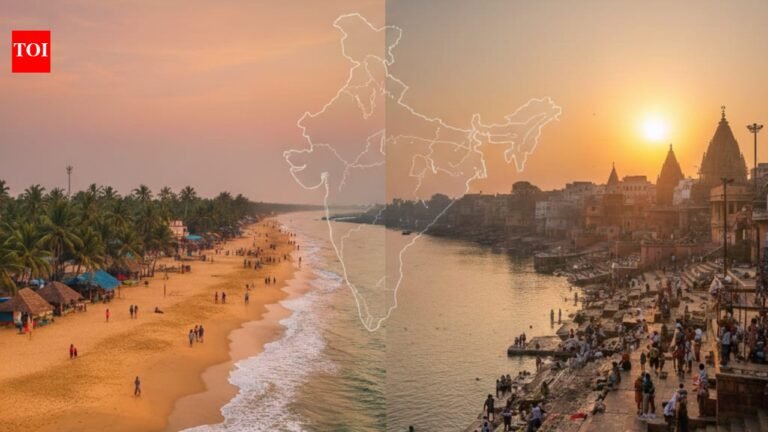
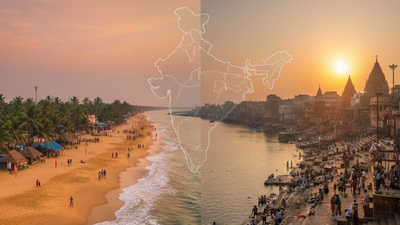
For years, planning a holiday in India meant choosing between two familiar choices: beach or hills. Goa or Manali. Sand or snow.Not anymore.Today, the most searched destinations on travel apps are just as likely to be Ayodhya as Alibaug, Varanasi as Vagator, Ujjain as Udaipur. A generation that grew up posting sunsets from shacks and selfies from mountain cafés is now booking flights to temple towns, river ghats and heritage streets.India’s tourism map is changing — quietly, steadily, and faster than many imagined.Across India, places once considered peripheral to mainstream tourism – religious towns, heritage cities, riverfront settlements and small cultural hubs – are emerging as year-round travel destinations. Ayodhya, Varanasi, Ujjain, Prayagraj, Dwarka, Puri, Hampi, Madurai and Maheshwar are no longer niche or purpose-driven stops. They are becoming central nodes in India’s tourism geography, drawing millions of travellers who are not just pilgrims, but explorers, photographers, students, influencers, backpackers and international visitors.What’s driving this change is not one factor, but a convergence: religious revival, infrastructure investment, social media discovery, generational travel habits, and a redefinition of what “travel” means in India today.

Religious tourism: From margins to mainstream

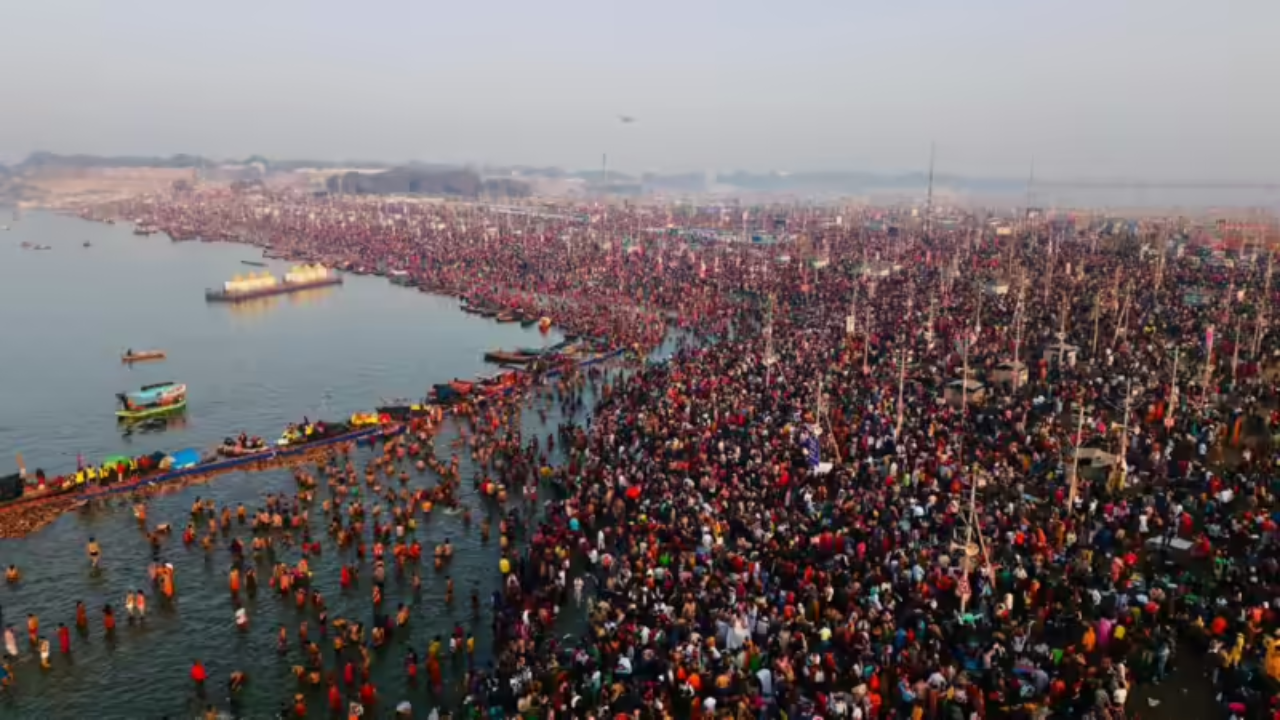
The most decisive force reshaping India’s tourism map is the scale and transformation of religious travel.India has always been a land of pilgrimage, but for much of the post-liberalisation era, religious tourism remained largely disconnected from mainstream travel narratives. Pilgrims travelled with families, stayed briefly, and rarely engaged with destinations beyond ritual.That distinction has collapsed. Data from the Union ministry of tourism and state governments shows that religious tourism now accounts for more than half of all domestic tourist visits in India. In several states, pilgrimage-led travel has overtaken leisure tourism as the primary driver of footfall. Uttar Pradesh illustrates this transformation most starkly. The state reported over 130 crore domestic tourist visits in a single year – 2025, making it India’s most visited state. The surge has been driven overwhelmingly by pilgrimage and heritage circuits connecting Ayodhya, Prayagraj, Varanasi and Mathura–Vrindavan. Ayodhya, once a relatively modest religious town, has undergone a dramatic transformation since the inauguration of the Ram Temple. Annual visitor numbers now run into millions, outpacing several long-established heritage destinations. The city’s airport, railway station, road network and public spaces have been redeveloped to accommodate a scale of travel previously unimaginable for a town of its size.Last year’s Maha Kumbh in Prayagraj, a once in 144 year affair, alone drew footfalls on a scale rarely seen anywhere in the world, making it the largest religious congregation, so much so that it was even visible from space.

Mahakumbh visible from space (X)

Varanasi, long considered a place one visited once in a lifetime, has emerged as one of India’s fastest-growing cultural destinations. State government figures show tourist visits crossing 10 crore annually in 2024, with foreign arrivals rising sharply over the past three years. What was once seen primarily as a site of ritual and renunciation is now firmly embedded in India’s travel economy.Tamil Nadu tells a similar story. Temple circuits linking Madurai, Rameswaram, Kanchipuram and Tiruvannamalai account for a majority of domestic travel into the state, drawing millions annually. Maharashtra’s Shirdi–Pandharpur belt, Odisha’s Puri, Madhya Pradesh’s Ujjain and Maheshwar, and Gujarat’s Dwarka and Somnath now function as high-volume, year-round tourism economies. Karnataka’s Udupi and Hampi, and West Bengal’s Kalighat and Dakshineswar reflect similar patterns.“Faith has become infrastructure-led,” said a senior employee of a travel agency in Delhi, working at a tech savvy firm which thrives on social media added, “Once access improved, demand exploded.” He says, the jump in visit plans to cities like Varanasi, Chopta, Kedharnath has increased manyfold, and when the char dham yatra opens, demand shoots up.Interestingly the crowd mostly has youths, reflecting a shift from assumed travel preferences.

Foreign Tourist Arrivals (2024) (Column Chart)

The power of religious events: Scale, spectacle and sustained travel

If religious tourism is the backbone of the new travel map, religious events are its accelerators.India’s religious calendar is dense with gatherings that combine faith, spectacle, culture and community – often on a scale unmatched anywhere else in the world. These events are no longer seen only as spiritual congregations; they have become major tourism drivers with global visibility and measurable economic impact.

Maha Kumbh and Magh Mela: Temporary cities, permanent impact

The Maha Kumbh Mela at Prayagraj, held once every 12 years at the Sangam of the Ganga, Yamuna and Saraswati, remains the best example. The most recent edition drew hundreds of millions of visits over several weeks, making it the largest human gathering on the planet – so vast that it was visible in satellite imagery. Beyond the ritual bathing, the Kumbh now attracts cultural tourists, photographers, researchers, vloggers and international visitors seeking to witness a phenomenon unmatched in scale.By the end of the event over 660 million people took a dip in Triveni Sangam. The festival generated approximately 1.2 million jobs in sectors like tourism, transportation, healthcare, and retail, significantly boosting the both state and national economies.

Mahakumbh 2025

The organisation of the event saw major revamp for the city, from over 200 roads renovated and 3 lakh plus trees planted. Post event data released by the state shows, trade in daily essentials reached Rs 17,310 crore, while the hotel and travel sectors were at Rs2,800 crore. Religious materials and flowers generated approximately Rs 2,000 crore and Rs 800 crore, respectively.Alongside the Maha Kumbh, the Magh Mela, held annually at Prayagraj, has emerged as a major draw in its own right. While smaller than the Kumbh, it attracts crores of devotees over its duration, sustaining tourism flows every year rather than once a decade. Temporary cities rise on the riverbanks, supported by transport networks, sanitation infrastructure and cultural programming – an example of how religious events are now treated as logistical and tourism exercises at scale.“These events create massive short-term employment and long-term tourism memory,” said an official involved in last year’s Mela administration. “People return later with families, friends, even tour groups.” He added, “during mela people come to stay for weeks at times the entire month of snan.”

Puri Rath Yatra: Faith meets coastal tourism

In eastern India, the Puri Rath Yatra draws millions of devotees annually, turning the coastal town into a global focal point for weeks. Odisha government estimates show hotel occupancy peaking across the state during the festival period, while transport networks operate at full capacity.Artisans, street vendors and small businesses see a surge in income, while the event also introduces many first-time visitors to Odisha’s beaches, crafts and heritage circuits.

Dev Deepawali, Deepotsav, Durga Puja and festival-led tourism

In Varanasi, Dev Deepawali has evolved from a local religious observance into a marquee tourism event. Lakhs of lamps illuminate the ghats of the Ganga on Kartik Purnima, drawing domestic and foreign travellers months in advance.If you think you can walk past the roads of the old holy city easily during and around the month of Diwali, think again. Every corner of the city is filled with people, tourists and visitors. Ghats bustle through the night and probably the night life is never better there. Durga Puja in Kolkata, now recognised by UNESCO, blends religion, art, music and urban culture, drawing tourists not just from India but from Bangladesh, Europe and Southeast Asia.Similarly, Deepotsav in Ayodhya, Holi in Mathura–Vrindavan and Barsana, Navratri in Gujarat, and Thrissur Pooram in Kerala,function as major tourism magnets. These festivals blend religion, culture, music, food and visual spectacle, extending stays and broadening visitor profiles beyond traditional pilgrims.“The festivals are no longer spikes; they are anchors,” said Naveen Singh, a resident of Varanasi who runs a hotel. “They fill rooms, generate repeat visits and stabilize demand.”What is notable is that these events are no longer treated as isolated spikes. State tourism boards actively integrate them into annual calendars, align transport and accommodation planning, and promote them digitally as experiential travel moments.

From pilgrimage to experience: How sacred cities are being reimagined

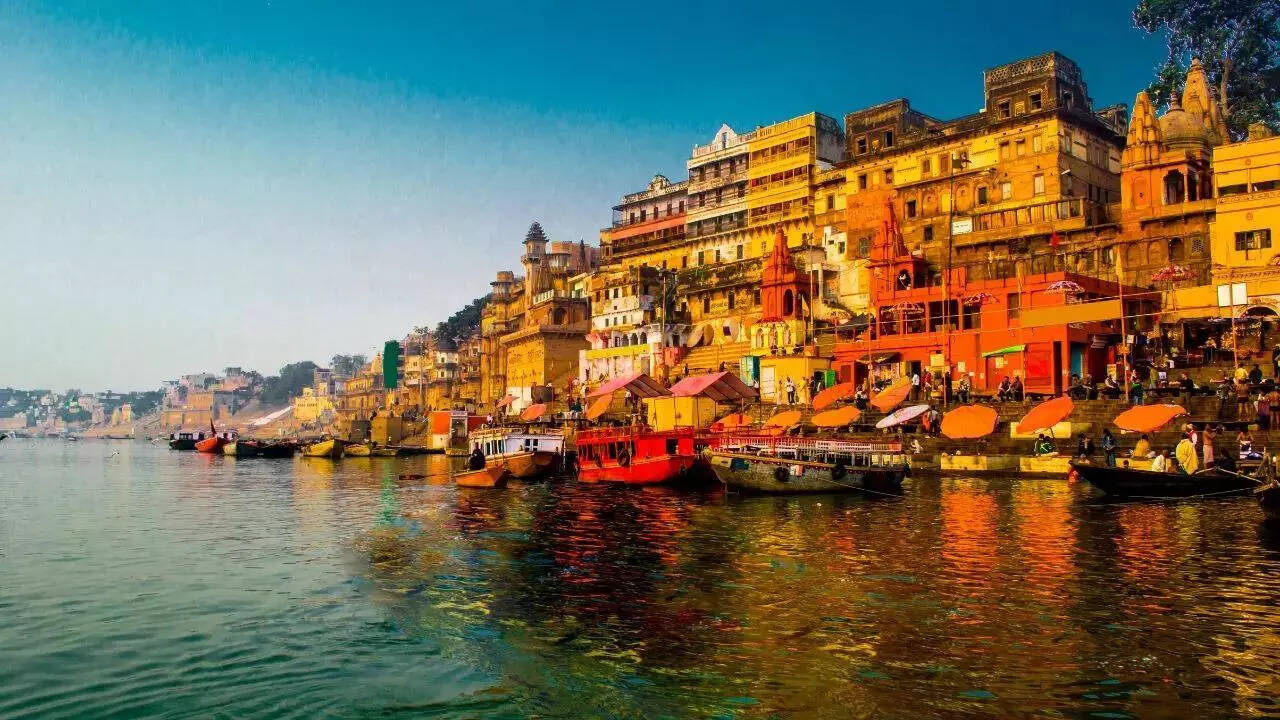
The transformation of religious destinations is not only about numbers. What’s changed is not just where people are travelling, but how they are travelling. Increasingly it is about how these places are experienced, the mark that the visit leaves on the people’s mind. Cities like Varanasi, Ujjain and Dwarka are no longer framed merely as sites of ritual obligation. They are increasingly experienced as layered cultural spaces. They are being reimagined – by travellers as much as by planners – as experience-led destinations.Morning boat rides on the Ganga, evening Ganga aartis framed by restored ghats, heritage walks through ancient neighbourhoods, classical music performances, local food trails, classical music performances, and café culture tucked into centuries-old lanes – all now form part of the itinerary.

Varanasi ghats

The sacred and the everyday coexist – and travellers engage with both. This shift has been enabled by sustained infrastructure investment: expanded airports, redeveloped railway stations, improved roads, pedestrian corridors, lighting projects and riverfront development. Government schemes such as PRASHAD and Swadesh Darshan have focused on improving tourist facilities around religious and heritage sites, while state tourism departments have leaned into festival-led tourism to keep destinations active year-round.What emerges is a new category of travel – one that blends faith, culture, leisure and storytelling. Leading travel companies of the country are also playing a crucial role in facilitating these travel experiences. Providing millions of devotees and visitors seamless travel solutions, including flight bookings, customized pilgrimage packages, and guided experiences, ensuring a smooth spiritual journey for attendees. While speaking at an event, Rikant Pittie, CEO and Co-Founder, EaseMyTrip said:“Spiritual tourism in India is witnessing significant growth as more travellers seek meaningful experiences at sacred destinations. In 2024, India’s religious tourism market was valued at US$ 202.8 billion, and is expected to grow to US$ 441.2 billion by 2032. Pilgrimage sites like Varanasi, Rishikesh, Tirupati, and Shirdi are attracting millions of devotees annually, contributing to both cultural preservation and economic growth. With improved infrastructure and digital advancements, accessibility to these sites has become easier, further fueling interest in spiritual travel.”

Foreign tourists: Fewer in number, deeper in engagement

India’s foreign tourist arrivals are yet to fully recover to pre-Covid levels, and international media has pointed to concerns ranging from cost to pollution and infrastructure stress. But the recovery, where it is happening, is highly destination-specific. Foreign travellers are increasingly gravitating toward cultural depth rather than checklist sightseeing. Hampi and parts of Rajasthan (deserts and old cities) and Madhya Pradesh, the likes of Khajuraho, and select Himalayan towns have seen renewed interest from overseas visitors looking for immersive experiences – slow travel, spiritual exploration, history, architecture, and everyday life.For many international travellers, India’s emerging destinations offer something that over-touristed global cities no longer do: authenticity without over-curation.

Growth in Pilgrim-Connected Destination Searches (2024) (Column Chart)

For instance, global pop icon Dua Lipa’s travel pattern to India offers a telling anecdote. She first visited the country in 2018 for a vacation with her then boyfriend Issac Carew, explored several iconic locations, including Ranthambore, Jaipur, Jodhpur, Kerala, and Goa.She returned again in 2023 on her fourth visit to the country, in late December to spend New Year with her family, this time in a very low profile exploring streets and small towns of Rajasthan. The trip was so out of the media gaze that people only found out about it once Dua herself posted pictures on her social media. Interestingly, during her interaction and exploration with people on streets she received warm welcome and hospitality, but notably no one recognised her to the star she is.

How youth are traveling differently

Perhaps the most consequential shift reshaping India’s tourism geography is generational.India’s Gen Z and young millennial travellers are not chasing the same markers of travel that defined earlier decades. Monuments still matter, but they are no longer the sole focus. For this cohort, travel is experiential, social and performative.

  • Cafés, sunsets, street food and local neighbourhoods often matter more than monuments
  • Travel is as much about content creation as consumption
  • Short trips, frequent getaways and budget-flexible itineraries are preferred over long vacations
  • A city’s “vibe” matters as much as its history

For many, travel is not an escape from daily life, but an extension of identity – curated, shared and remembered through content.Suchna Yadav, a content creator/ influencer working with a travel agency in Delhi says, “while travelling I see unexplored places which take my breath away, so beautiful that one part of me wants that it should remain the way it is, but then I also want people to see the surreal beauty of nature. And to relay my message, what could be a better option than social media and a little storytelling.” Another influncer Nikita Rawat, has the same opiion and she does it through docu-series and short clips. Travel platforms report a sharp rise in bookings to spiritual and heritage destinations among travellers under 35, often combining pilgrimage with leisure, photography and food exploration.Well many today discover and decide their travel plans according to the social media, but there are also people who have it the old classic way – movies.Aastha Jha, a young journalist working in Delhi has been to Varanasi twice. She started off her travel journey from the city and her most recent visit has been there as well. The reason? ‘Masaan’ (movie).“Watching Masaan, I was so fascinated by the ‘Ye dukh kahe khatam nahi hota be’ scene, that I made up my mind…if I travel, I will definitely go to Benaras,” she said.

Travel as performance, not escape

Social media has fundamentally altered how destinations are discovered.Instagram reels, YouTube vlogs and travel influencers have turned once-understated towns into aspirational stops. A single viral sunset video from Dwarka or a café walkthrough in Varanasi can reach millions.This has changed the rhythm of tourism:

  • Destinations peak not just during festivals, but after viral moments
  • Cafés, boutique stays and experiential tours become anchors of tourism
  • Local entrepreneurs – from boatmen to homestay owners – increasingly shape the tourist economy

In this new ecosystem, travel is not always about escape. It is about visibility, storytelling and identity.Underrated, but risingBeyond the headline destinations, India’s tourism boom is quietly lifting lesser-known places into the spotlight.

  • Chitrakoot, straddling Uttar Pradesh and Madhya Pradesh, is emerging as a spiritual and nature-led destination
  • Badami–Aihole–Pattadakal in Karnataka offer a quieter alternative to Hampi
  • Mandawa and Bundi in Rajasthan are drawing heritage travellers looking beyond Jaipur and Udaipur
  • Maheshwar on the Narmada blends spirituality, architecture and textiles

These destinations benefit from a trickle-down effect – travellers extending trips, seeking quieter experiences, or deliberately avoiding crowds.

Concerts, culture and the rise of event-led travel

Alongside religious festivals, concerts and large-scale cultural events have emerged as powerful drivers of domestic travel.These events often trigger short, high-intensity travel bursts, filling hotels, boosting transport demand and introducing new audiences to destinations.The effect is cumulative: travellers arrive for an event, discover a place, and return later for leisure or exploration. Over the past couple of years multiple national and international celebrities have held concerts across the country, and their impact has been phenomenal. Now a global superstar Diljit Dosanjh ‘Dil-Luminati’ tour was a sold out game, spanning through multiple cities and the story was the same everywhere, immense demand and sold-out, high-energy shows. So has been the results of Lollapalooza India, Sunidhi Chauhan’s ‘I am Home India tour’ and Shreya Ghosal’s ‘All Hearts Tour’ all of which have been monumental successes.The massive crowd in every show has not been only the locals but people travel cities, states to attend these concerts and events. Similarly, international acts like The Coldplay concerts, Ed Sheeran’s India tour, Maroon 5, Cigarettes After Sex, Akon and many others triggered massive short-term travel spikes. Hotels sold out, flight fares surged, and cities that rarely featured on tourism maps saw first-time visitors.Last year when Coldplay performed in Ahmedabad, the record-breaking shows, featuring 1.34 lakh attendees, created a massive ₹Rs 641 crore economic impact. One of the attendees was Kikruheno Casavi, then a student in Delhi now a working professional in Kohima. She along with her friends who flew all the way from Kohima visited the Ahmedabad, paid much more for the flights to hands down everything from hotels to local travel and food, when compared to regular time, given the high demand, at the end she ended of spending close to lakh on the concert, that was a good influx into the economy. So has been the impact of these massive events on the domestic travel and economy.

Marketing, platforms and the democratisation of discovery

One of the most profound changes in Indian tourism is how destinations are discovered.For decades, tourism marketing centred on a narrow set of icons – beaches, palaces, monuments. Today, social media has emerged as a powerful equaliser. A single Instagram reel of a sunset in Dwarka or a café walk-through in Varanasi can reach millions, bypassing traditional campaigns entirely.Unlike curated brochures or seasonal campaigns, digital storytelling is organic, constant and often driven by travellers themselves. A single reel, vlog or photo series can introduce millions to places that once barely featured on travel maps. As a result, destinations are no longer marketed only as pilgrimage stops or heritage sites, but as spaces for culture, leisure, food and everyday exploration.Travel platforms, too, have adapted. Pilgrimage packages now integrate leisure, experiences and flexible itineraries. Boutique stays, heritage homestays and experiential tours have become anchors of tourism ecosystems.The change in narrative – from “must-see” landmarks to “must-feel” moments – has made India’s emerging destinations more accessible, relatable and aspirational, particularly for younger travellers.In many ways, the tourism boom reflects not a discovery of new places, but a reframing of familiar ones – amplified by platforms where authenticity, not advertising, now drives attention.

Economic ripple effects and the sustainability challenge

The tourism shift has tangible economic consequences. Hospitality players report higher occupancy rates across the year, not just during peak seasons. Local economies – transport operators, guides, artisans, food vendors – benefit from sustained demand rather than seasonal spikes.

Contribution to tourism employment between 2017-23 (Table)

At the same time, challenges are mounting. Overcrowding, waste management, environmental stress and infrastructure capacity pose real risks. Experts warn that without heritage-sensitive planning and sustainability measures, the very qualities drawing travellers could be compromised.

A tourism map still in motion

What’s clear is that India’s tourism map is no longer static – or metro-centric.It is being reshaped by faith and culture, by digital discovery, by younger travellers redefining value, and by destinations once overlooked now stepping into the national and global imagination.The shift underway is not about discovering new places, but about seeing familiar ones differently. And in that reframing, India’s tourism future is quietly being rewritten. And in that shift, the most interesting stories may lie far beyond Mumbai and Goa.