Home Blog Page 457

T20 World Cup 2026: Pakistan considering U-turn? PCB starts talks with ICC | Cricket News

0

T20 World Cup 2026: Pakistan considering U-turn? PCB starts dialogue with ICC
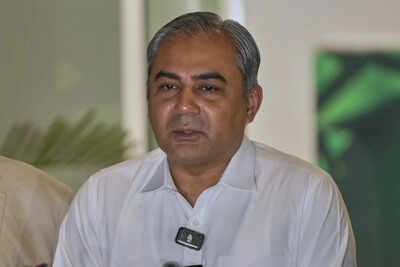
Mohsin Naqvi, Pakistan’s Home Minister and Chairman of the Pakistan Cricket Board, spoke at a press conference. AP/PTI(AP09_17_2025_000612B)

TimesofIndia.com in Mumbai: Talks have finally begun between the Pakistan Cricket Board (PCB) and the International Cricket Council (ICC) after the Pakistani government decided to boycott the T20 World Cup match against India on February 15 in Colombo. It is reported that the two parties have exchanged emails with each other in recent days. The PCB invoked force majeure citing government directives not to play their arch-rivals in the group stages of the multi-nation tournament. In the statement, the government did not give any further explanation or reasons for doing so. In response, cricketThe global body has asked the PCB to demonstrate how it is trying to get out of the impasse under the terms of participation.

T20 World Cup | ‘A sense of peace’ – Faheem Ashraf on Pakistan’s heroics against Netherlands

“Yes, the PCB invoked force majeure but did not give any further explanation or details. In response, the ICC has asked the Pakistan board to demonstrate its efforts to mitigate FM,” said a source tracking the developments.Push boundaries with our YouTube channel. Subscribe now!Furthermore, in its detailed reply, the ICC set out the conditions for invoking force majeure and highlighted the evidentiary threshold required for non-participation. The ICC also highlighted the impact of non-participation on sport, business and governance.With eight days left until the conflict breaks out, the ICC has kept channels of dialogue open. The International Cricket Council’s approach when dealing with sensitive issues is one of engagement, not confrontation, and all efforts will be directed towards exploring possible solutions that do not affect the Championship and Test cricket.The 2026 T20 World Cup kicks off today in Colombo and Mumbai, but the suspense surrounding the India-Pakistan match continues ever since the Pakistan government’s social media post and Sherbaz Sharif’s subsequent comments. While the PCB is yet to make a public statement on the matter, the team insists it will follow government advice.“India’s game, that’s not within our control. It’s the government’s decision and we respect that. Whatever they say, we do it. ” Pakistan captain Salman Agha said during the captain’s meeting.

polling

Do you support Pakistan’s decision to boycott the T20 World Cup against India?

However, India captain Suryakumar Yadav had a different view and said that India will travel to Colombo as planned and have already booked their tickets for the match.“The mentality is very clear,” Suryakumar said at the captains’ media briefing in Mumbai on Thursday. “We did not refuse to play them. It was them who refused. The ICC organized the match. The BCCI and the Indian government decided to play the match at a neutral venue coordinated by the ICC. Our flight to Colombo has been booked. So we are going. We will see what happens later.”The outcome of the game now remains to be seen, but conversations are ongoing between the two parties that could provide some much-needed clarification in the coming days.

Shashi Tharoor How Congress’ ‘Hum Saath Saath Hai’ moment brought support to UDF in time for Kerala polls India News

0

Shashi Tharoor How Congress' 'Hum Saath Saath Hai' moment lends support to UDF in time for Kerala polls

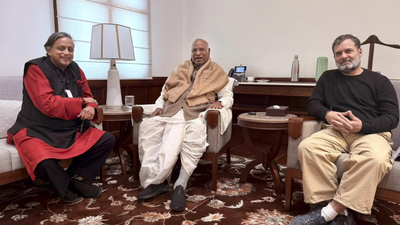
New Delhi: Latest tinkering and ‘all’s well’ moments Shashi Tharoor and congress The high command has given the Kerala Congress a much-needed impetus ahead of the assembly elections in April-May. Tharoor’s meeting with Mallikarjun Kharge Rahul Gandhi After weeks of speculation about his strained relationship with the party, New Delhi put an end to what many within the Congress party called an “embarrassing episode” and positioned him as a core campaign representative for the Congress-led United Democratic Front (UDF).The settlement has given the ruling Left Democratic Front (LDF) new cohesion and impetus at a time when it is battling incumbent fatigue and the BJP is testing the limits of its expansion in the state.ALSO READ | Congress vs Tharoor: A new beginning or a temporary truce?“Everything is fine” at the critical momentTharoor’s recent thaw with the Congress has sent a strong message of unity to cadres and allies at a critical time. Tharoor was reportedly upset with the treatment given to him by Rahul Gandhi at a recent event in Kochi and the attempts by some leaders to sideline him in Kerala.For a party that has often been in crisis due to factional fighting in its state unit, the situation in Kerala is devastating.Reconciliation addresses this issue head-on. Parliamentary opposition leader VD Satheesan’s faction and leaders seen as sympathetic to Tharoor now have little room for parallel centers of power.The enthusiasm also saved Congress from embarrassment in front of its own SDF allies.Last year, as Tharoor pointed out that there was a “lack of leadership” in the party in Kerala, Indian Muslim League (IUML) president Sadiq Ali Thangal publicly asked the Congress to resolve internal differences, warning that apparent discord would only benefit rivals. That concern has now been allayed by restoring Tharoor’s confidence.This drive for unity is crucial to the election.Since the late 1980s, Kerala voters have switched governments between the UDF and LDF every five years. However, the situation changed in the 2021 assembly polls, with the LDF failing to make headway and Pinarayi Vijayan-led LDF winning for a second consecutive term.The LDF’s seats increased from 91 seats in 2016 to 99 seats in 2021, while the UDF’s seats fell from 47 seats to 41 seats.Tharoor’s voter appealIn the 2021 Assembly polls, the biggest impetus for the LDF sweep comes from the Travancore region, which includes Thiruvananthapuram, Kollam, Alappuzha, Pathanamthitta and Kottayam. The LDF won majority seats in Thiruvananthapuram and Kollam, two traditionally swing districts. Thiruvananthapuram, Tharoor’s Lok Sabha seat, has also historically been a swing constituency, alternating between the Congress and the Left, and has recently become a target seat for the BJP. In the 2024 Lok Sabha elections, Union Minister Rajeev Chandrasekhar of the Bharatiya Janata Party faced Tharoor, but the Congress leader retained the seat for the fourth time with over 16,000 votes. The UDF swept 18 of the 20 Lok Sabha seats.Tharoor’s appeal is particularly pronounced among educated, salaried and first-time voters, groups that have shown increasing volatility in recent state and local elections. This group has not consistently aligned itself with the Congress organization and has at times embraced the BJP’s urban outreach or vigilante governance propositions. Tharoor’s continued victory in Trivandrum demonstrates his ability to stem the tide even as broader party trends are mixed.At a strategic level, this provides the UDF with a way to expand without alienating its traditional social base. Urban centers like Thiruvananthapuram, Kochi and Kozhikode, where turnout is more volatile and the margins tend to be smaller, could play a huge role by 2026. Tharoor’s presence gives the Congress a more credible bid for these spaces, especially at a time when the BJP has signaled its intentions through rising municipal gains and recent mayoral victories.The Congress leadership’s decision to spearhead the campaign with Tharoor touring all 140 constituencies has added star power to a campaign that often hinges on narrative dominance. Tharoor’s oratory, media clout and ability to articulate local issues in national and global contexts give the UDF an edge in appealing to undecided voters.Refuting the claims of LDF and BJPThis patch immediately undercuts the competitor’s narrative. For the BJP, the rapprochement weakens the “internal chaos” line of attack. The BJP has repeatedly highlighted infighting in the Congress to project itself as a disciplined alternative (and has frequently used Tharoor’s name recently).Meanwhile, the BJP is looking to capitalize on its recent victory as mayor of the Thiruvananthapuram Municipal Corporation, a symbolic breakthrough that signals the city’s growing appeal, although success at the assembly level remains elusive.Moreover, Tharoor’s active participation in the election campaign may help the UDF attract the youth, especially the aspirant and educated youth. The Congress leader’s credibility as a writer, diplomat and global speaker also gives him unique appeal among Kerala voters, given the state’s high literacy rate.The LDF and the Bharatiya Janata Party-led National Democratic Alliance have also often portrayed the Congress as dynastic and directionless. The image of Tharoor standing side by side with Rahul Gandhi will undermine these claims, at least for now.Risks contained, momentum restoredPerhaps the most immediate benefit of settlement is risk reduction. Speculations that Tharoor might turn to vigilantes or even explore non-Congress platforms have been firmly refuted. His integration into the congressional campaign delivered a message of consistency.For congressional strategists, the memory of 2021 is still fresh. Despite favorable anti-incumbency indicators at the time, the Democratic Alliance failed to convert its chances into victory. Tharoor’s tinkering is seen as a corrective measure to ensure that organizational weaknesses do not squander political opportunities again.By restoring unity, the Congress’s rapprochement with Tharoor provides a credible opportunity for the opposition UDF to turn a new leaf after years of Left rule. Whether that translates into electoral seats will depend on execution, alliances and local dynamics, but for now, riding on the image of “Hum Saath Saath Hai”, the UDF has secured an early and much-needed victory heading into the elections.

‘Islam is a religion built on immigration’: New York City Mayor Mamdani invokes Prophet Muhammad’s migration on immigration

0

'Islam is a religion built on immigration': New York City Mayor Mamdani invokes Prophet Muhammad's migration on immigration
New York City Mayor Mamdani addresses Islamic migration, citing Prophet Muhammad’s migration as he talks about immigration and asylum policies

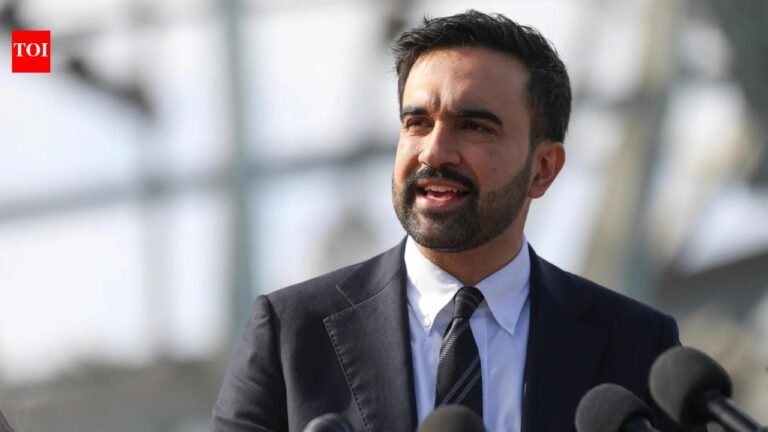
New York City Mayor Zohran Mamdani has drawn attention by invoking Islamic history when talking about immigration, using religious references to develop a broader argument for compassion and asylum in U.S. immigration policy.The remarks came at an interfaith breakfast on Friday, where Mamdani spoke about how faith traditions influence views on immigration and hospitality. Referring to Islam, he described it as “a religion built on a narrative of migration,” noting that the Migration, the Prophet Muhammad’s journey from Mecca to Medina, was a defining moment in Islamic history.“The story of Hijra reminds us that the Prophet Muhammad was also a stranger,” Mamdani said. “He fled Mecca and was welcomed in Medina.”Mamdani sees this historical reference as a lesson in how societies deal with people escaping hardship, and suggests it provides perspective on modern debates about immigration. He tied the example to New York City’s identity as a city shaped by immigrants and reaffirmed its sanctuary status, arguing that protecting immigrants reflected deep-seated moral values. In his speech, he also drew on teachings from other faith traditions, such as Christianity and Buddhism, to highlight what he said were common principles of compassion and care for the vulnerable.The comments elicited mixed reactions. Supporters hailed the remarks as a call for empathy based on faith and interreligious solidarity, saying they reflected New York City’s long history of welcoming immigrants. Critics, however, question the appropriateness of invoking religious figures in discussions about U.S. immigration policy, arguing that such debates should be separated from religious narratives.Responses to the mayor’s speech highlighted ongoing tensions in the national discussion about immigration, the role of faith in public discourse, and how elected leaders draw on moral and historical references when addressing contentious policy issues.

T20 World Cup: Shimron Hetmyer writes history as fastest ever… | Cricket News

0

T20 World Cup: Shimron Hetmyer writes history as fastest ever…
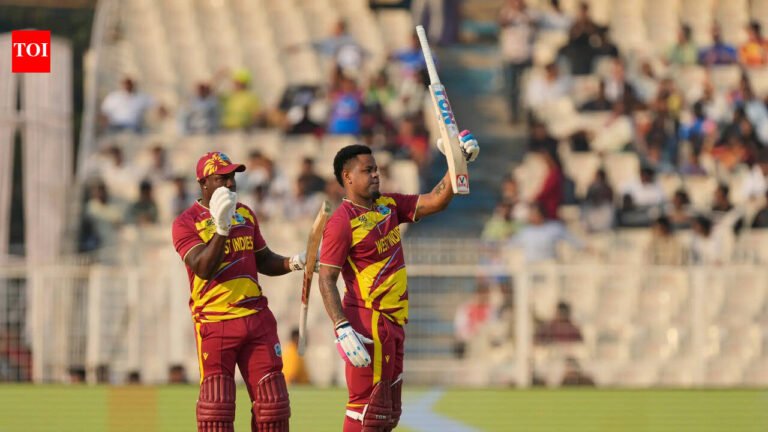
West Indies’ Shimron Hetmyer celebrates fifty (AP Photo/Bikas Das)

Himron Heitmeyer West Indies put up a brilliant knock as they posted 182 runs for 5 in their second T20 World Cup match against Scotland at the Eden Gardens in Kolkata on Saturday. The left-hander smashed 64 runs in just 36 deliveries, stabilizing the innings after a shaky start. Scotland enter the World Cup under unusual circumstances, having been selected only two weeks ago after Bangladesh withdrew from the tournament citing security concerns for their trip to India. Despite the short notice, the Scots showed discipline soon after winning the toss and electing to bowl.

T20 World Cup group details: Who can advance to the Super 8

Their bowlers kept the two-time champions West Indies in check by applying pressure with a tight line in the powerplay. Brandon King Safyaan Sharif, who was the first to break free, hit a six and two fours in the seventh over to inject momentum. King eventually scored 35 points as Scotland fought back. Off-spinner Michael Leask breaks through, dismisses skipper Shay Hope 19. Soon after, debutant left-arm spinner Oliver Davidson claimed his first T20 wicket when King was caught at backward point. Hetmyer then took control of the innings, launching a fierce counterattack against the Scotland bowling. He broke the ropes six times and completed a quick partnership of 81 runs off just 37 balls. Roffman Powellhe contributed 24 goals. Hetmyer scored his half-century off just 22 balls, scoring a total of six. This is the fastest 50-run score by a West Indies batsman in the T20 World Cup. Although Powell fell in the final round, the aggression did not drop. Hetmyer continued to find boundaries with Sherfane Rutherford, who hit a quick 26 off 13 balls. Heitmyer’s inning ended when Safiyaan Sharif forced an errant hit, which was brilliantly caught by Brandon McMullen on a long pitch. Rutherford departed on the very first ball of the next over. Left-arm seamer Brad Currie was Scotland’s most economical bowler with 2 for 23. Looking back on his innings, Heitmyer acknowledged that conditions were testing. “It’s a mixed bag because of how hot it is. I don’t know about other people but I asked the referee and he said he didn’t feel too good but I think we can get back to playing during the day and night,” he said. When talking about his partnership with Powell, Heitmeier emphasized the clarity of approach. “It’s just batting with a clear mind. Every ball that’s bowled, you can take chances, if not just try to limit penalties, which is something we talk about as a team and the batting unit. Limit penalties as much as possible. Because we’re a boundary batting team and everyone knows that, but just the singles and penalties we were a little short on and glad it worked in our favor today. Heitmeier also attributed his performance to improved conditioning. “I think it’s (being healthier). I’ve been working on it a little bit at home. My coach is my wife and she’s pushing me at home to work harder and so far, it’s been great and I’m excited to be out on the park and contribute as much as I can for the team.”

‘Khejri Bachao Andolan’: Why Rajasthan is rallying to protect its ‘Kalpavriksha’? Explained | India News

0

‘Khejri Bachao Andolan': Why Rajasthan is rallying to protect its ‘Kalpavriksha’? Explained

In the heat of Rajasthan’s desert districts, a tree has become the focal point of a widening confrontation. Markets have shut, saints have gone on strike, political rivals have shared protest stages, and thousands have gathered under open skies to demand its protection.What began in Bikaner as a local objection to the alleged felling of khejri trees for solar power projects has since evolved into the ‘Khejri Bachao Andolan’, a statewide campaign pressing for stricter legal safeguards and an immediate ban on cutting the species. The movement has drawn support across party lines, producing a rare moment of political convergence.The khejri, botanically known as Prosopis cineraria and recognised as Rajasthan’s state tree, occupies a distinctive place in the ecology of the Thar desert. Amid the ongoing protests, chief minister Bhajan Lal Sharma, assuring the protection of the khejri, termed the tree as the state’s “Kalpavriksha,” a wish-fulfilling tree in Indian tradition. In an arid landscape where survival is closely tied to ecology, the reference reaffirms the tree’s symbolic and practical importance. For many communities in western Rajasthan, the debate now extends beyond development policy into questions of history, identity and survival.
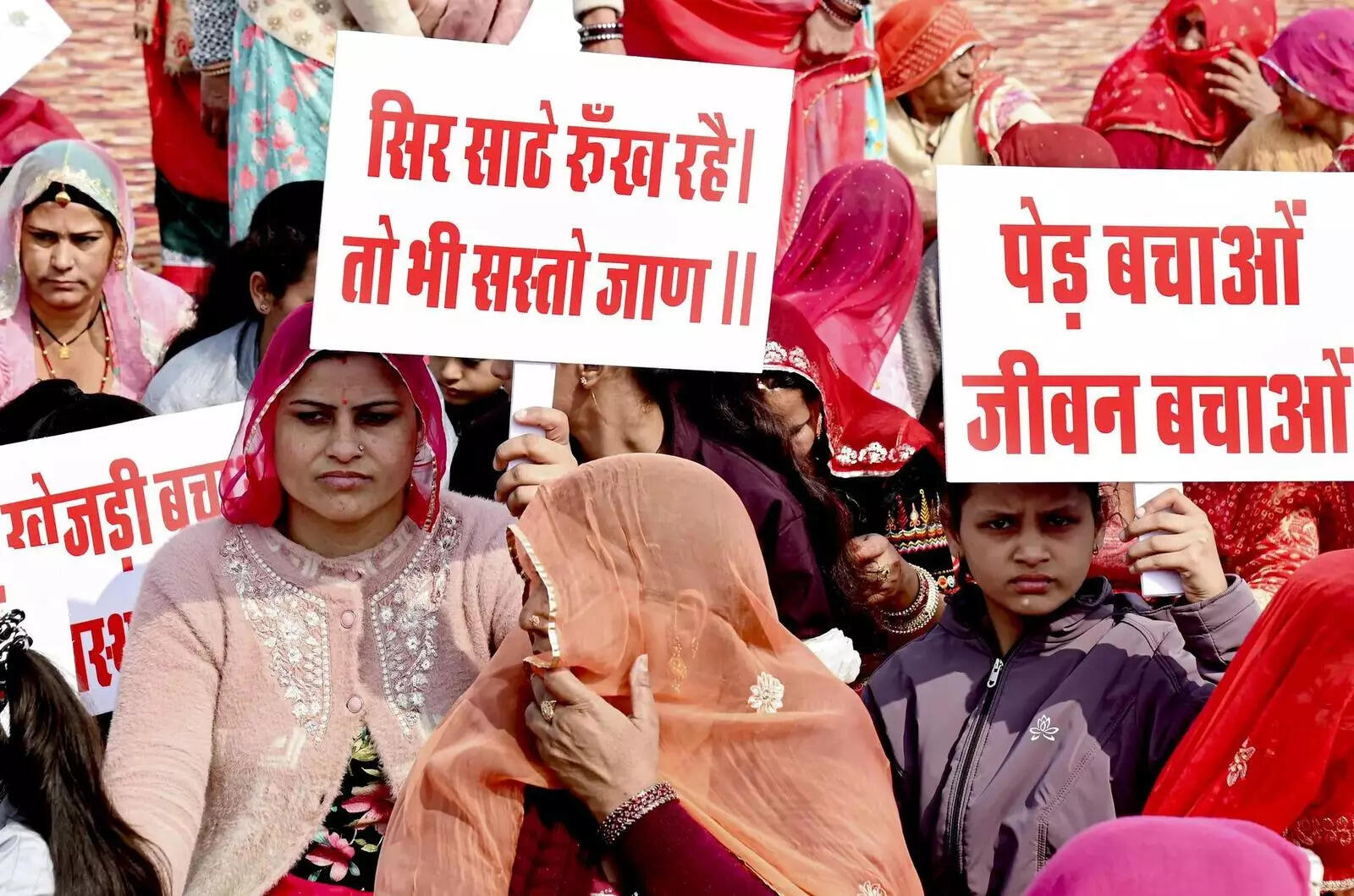
Protest against proposed cutting of Khejri trees in Bikaner (1).

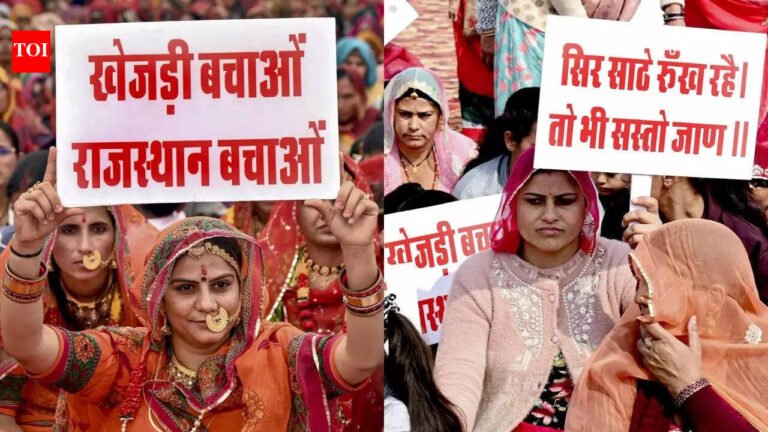
Protestors carried posters featuring a revered proverb in the Bishnoi community: “Sir saanthe rukh rahe to bhi sasto jaan” (If a tree can be saved, even at the cost of one’s head, consider it a bargain). (PTI)

How the agitation unfolded

The present phase of the movement intensified in early February, when over 360 saints and local residents began a hunger strike in Bikaner, demanding an immediate ban on the felling of khejri trees for solar power projects. The protest site was initially the Polytechnic College ground near the Collectorate before shifting to the Bishnoi Dharamshala, where the hunger strike continues.In Bikaner, markets remained closed for hours on Monday after a call by trader associations. Government and private schools in urban areas observed a half-day holiday in solidarity. Thousands gathered at the Polytechnic College ground before marching towards the Collectorate, where organisers announced an indefinite sit-in.Protesters came not only from different districts of Rajasthan but also from Uttar Pradesh, Haryana, Maharashtra and Madhya Pradesh. Organisers said they had arranged food for nearly one lakh participants, with hundreds of volunteers handling logistics. Police deployed additional forces, erected barricades near the Collectorate and kept water cannons on standby. Despite the scale and tensions, the protest remained peaceful.
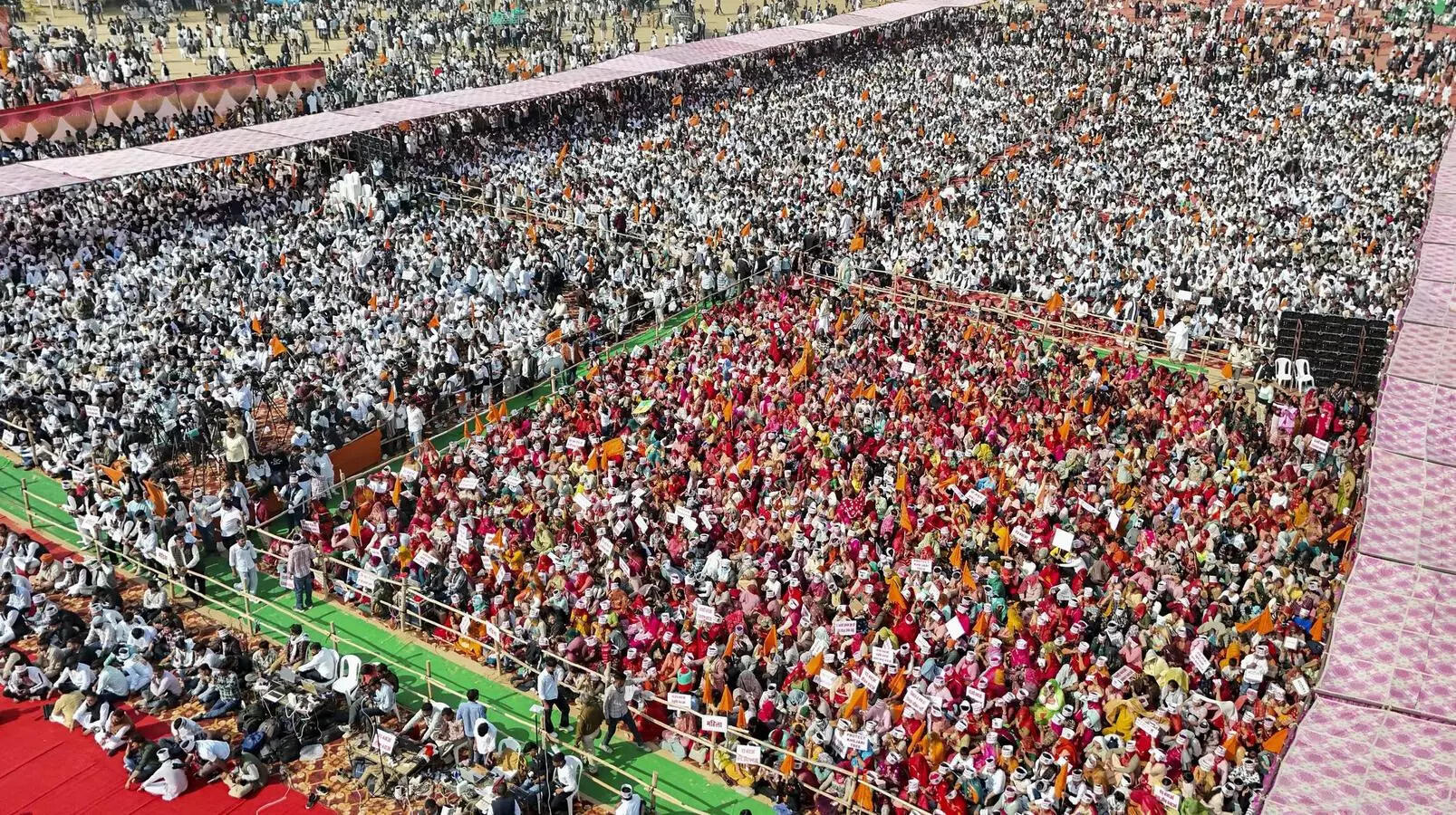
Save Khejri Movement in Bikaner (1).

Environmental activists and members of the Bishnoi community participate in the Save Khejri Movement at Polytechnic College, protesting against the proposed cutting of Khejri trees for a solar power plant, in Bikaner. (PTI)

Four protesters were admitted to Prince Bijay Singh Memorial Hospital as their health deteriorated during the hunger strike, while several others received medical assistance at camps set up near the site. Mokhram Dharaniya, one of the hospitalised protesters, said, “People are sitting on a hunger strike, including me. Our protest will continue until our demands are met.”

The trigger? Solar expansion

At the centre of the agitation are allegations that large numbers of khejri trees have been cut to facilitate solar power projects in western Rajasthan. The region has emerged as a hub for renewable energy, given its high solar irradiance and availability of land. While solar development is central to India’s energy transition goals, protesters argue that project implementation has come at the cost of ecologically vital trees.Tensions escalated when the state government announced a restriction on felling khejri trees only in the Jodhpur and Bikaner divisions. Protesters rejected the move as inadequate, demanding a blanket statewide ban. During one address by a government representative, protesters reportedly took away the microphone, insisting on a written assurance.
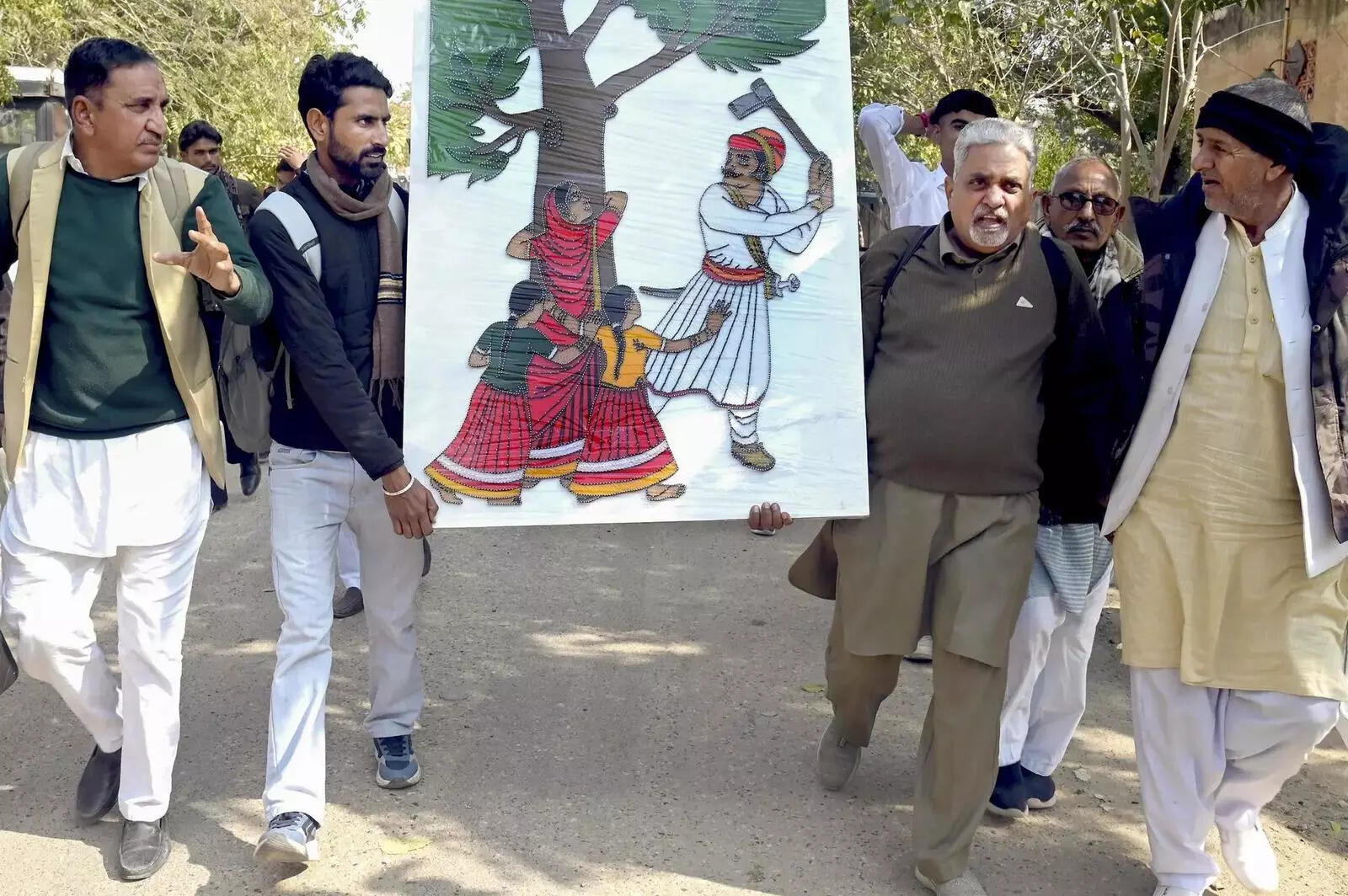
Protest against proposed cutting of Khejri trees in Bikaner.

Environmental activists and members of the Bishnoi community take part in the ‘Save Khejri Movement’, protesting against the proposed cutting of Khejri trees for a solar power plant, in Bikaner. (PTI Photo)

Minister for skill, employment and entrepreneurship KK Bishnoi and State Animal Welfare Board chairman Jaswant Bishnoi visited the Bishnoi Dharamshala and offered juice to the hunger strikers in an attempt to persuade them to break their fast. The minister said the government was ready to provide a written commitment and appealed to protesters to end the hunger strike. However, saints on the stage refused to withdraw without formal documentation.Agitation leader Parsaram Bishnoi said, “The hunger strike did not end. The government order was incomplete as it failed to cover the entire state.” Former minister Bhanwar Singh Bhati said: “All sections of society participating in the agitation decided to continue until a complete ban on cutting Khejri trees was imposed across Rajasthan.”

Storm in the assembly

The issue has resonated in the Rajasthan Assembly. Congress MLA Dungar Ram Gedar raised the matter during Zero Hour, accusing the government of failing to act despite a persistent two-year protest led by the Bishnoi community in Bikaner. “Khejri being the state tree, there is an urgent need for a strict law to protect it,” Gedar said.Independent MLA Ravindra Singh Bhati stated that the matter was already under discussion in the assembly. “Bhagat Singh (the Indian freedom fighter) said that sometimes a blast is needed to make the voice heard. If it takes gheraoing the Assembly to save khejri, I will be at the forefront,” he said.Chief Minister Bhajan Lal Sharma told the assembly that his government was drafting a conservation law for the khejri tree, which he described as the state’s “Kalpavriksha”. “In August, saints from Bikaner, Phalodi, Jodhpur and Nagaur met me. Following that, I instructed officials to prepare the draft legislation. The process is under way, and it will soon be presented in the assembly,” he said.The chief minister also used the assembly session to defend his government’s broader record, speaking about economic growth, recruitment reforms and water supply projects. However, protesters have maintained that until a formal statewide ban is issued, the agitation will continue.Former chief minister and senior Congress leader Ashok Gehlot expressed support for the public movement, describing the indiscriminate cutting of khejri trees in the name of development as “extremely painful and unacceptable.” He recalled the historical sacrifice associated with the tree and said environmental protection must be prioritised.In a development seen as politically significant, former chief minister Vasundhara Raje publicly backed the movement that has put her own party, the BJP, in the dock.Sharing a photograph of herself worshipping a khejri tree, she wrote, “I also worship the Khejri tree. Rising above politics, we should all come forward to protect it. We must save it. I stand with everyone in the campaign to save the Khejri tree and the Oran (grazing land).” She also quoted a proverb revered in the Bishnoi community: “Sir saanthe rukh rahe to bhi sasto jaan” (If a tree can be saved, even at the cost of one’s head, consider it a bargain).Observers have noted that her intervention has added to political pressure on the state government.
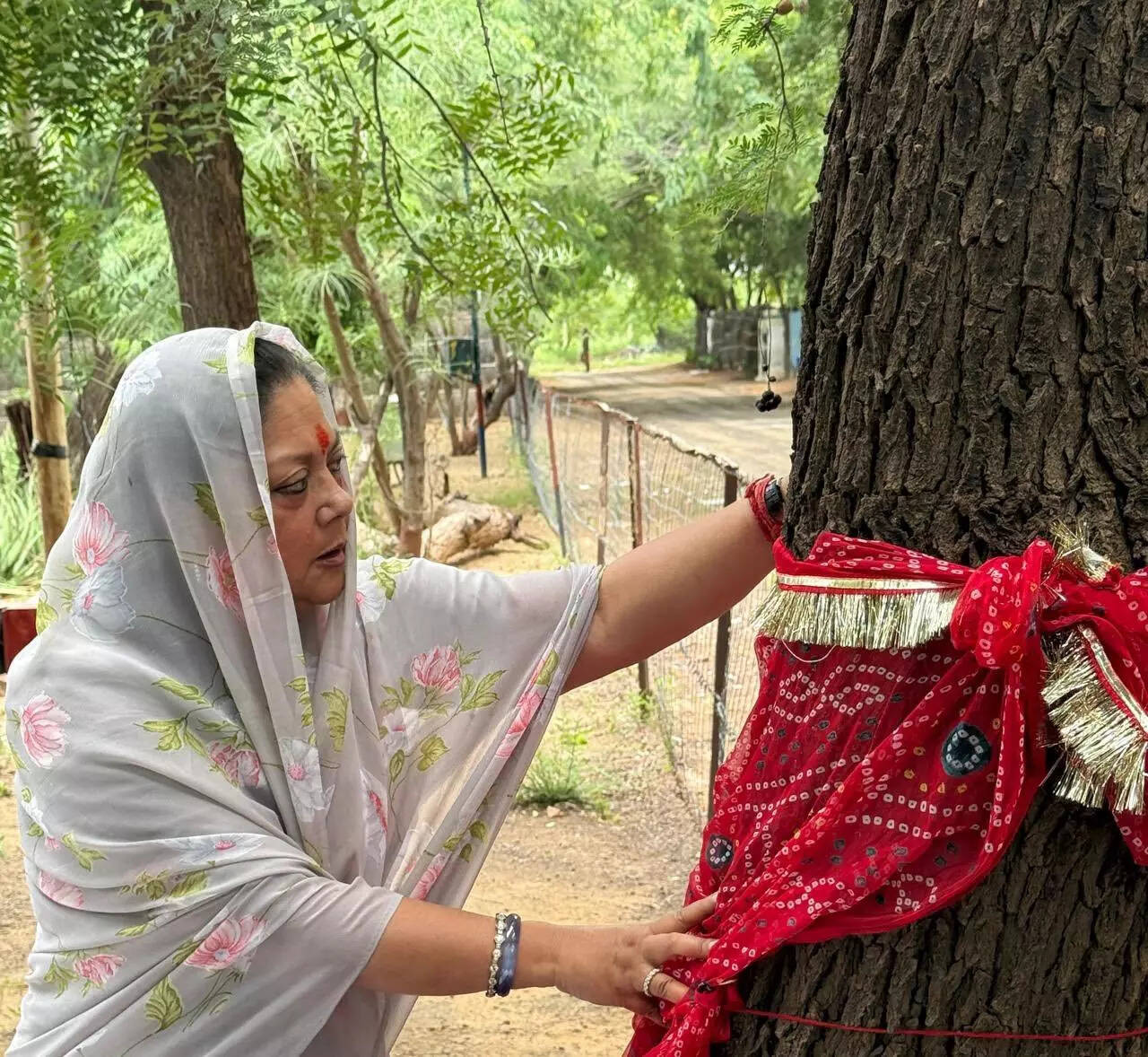
HANljwpbcAEAvxv

Vasundhara Raje shared a photo of herself performing a ritual puja, while pledging cross-party support to protect these trees and associated Oran grazing lands from development threats.

The historical memory: Khejarli and Amrita Devi

Any discussion of the khejri in Rajasthan inevitably returns to the events of 1730 in the village of Khejarli near Jodhpur. According to historical accounts, 363 members of the Bishnoi community, led by Amrita Devi Bishnoi, sacrificed their lives to prevent the felling of khejri trees ordered for royal construction.The episode, often referred to as the Khejarli massacre, is widely regarded as one of the earliest recorded instances of environmental resistance. Amrita Devi is said to have declared that the loss of her head would be a small price to save a tree. Her sacrifice and that of the others form a cornerstone of Bishnoi identity and environmental ethics in the region.
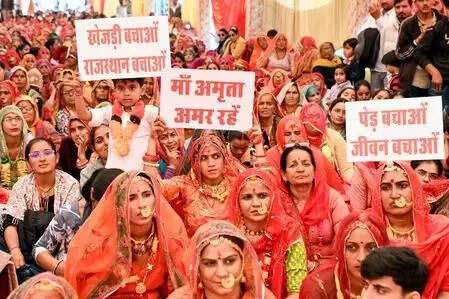
Khejri movement_ Rajasthan govt steps in as saints' health worsens, minister visits Bikaner.

According to historical accounts, 363 members of the Bishnoi community, led by Amrita Devi Bishnoi, sacrificed their lives to prevent the felling of khejri trees ordered for royal construction.

Protesters in the current agitation have repeatedly invoked this legacy. Even Ashok Gehlot referred to the sacrifice of 363 individuals, including Amrita Devi Bishnoi, and said their legacy should be honoured.

Ecological significance

The khejri is uniquely adapted to arid (extremely dry) and semi-arid climates. It has a deep root system that allows it to access groundwater and survive prolonged drought. Unlike many other species, it does not compete aggressively with crops and is often grown in agricultural fields in a traditional agroforestry system. An agroforestry system is a land-use practice where trees are grown alongside crops or livestock on the same land to improve productivity and sustainability.Its leaves, known as “loong,” are used as fodder for livestock. Its pods, called “sangri,” are a staple ingredient in traditional Rajasthani cuisine, particularly in the dish Ker Sangri. The wood is used as fuel and timber, while its bark and other parts have been used in traditional medicine.
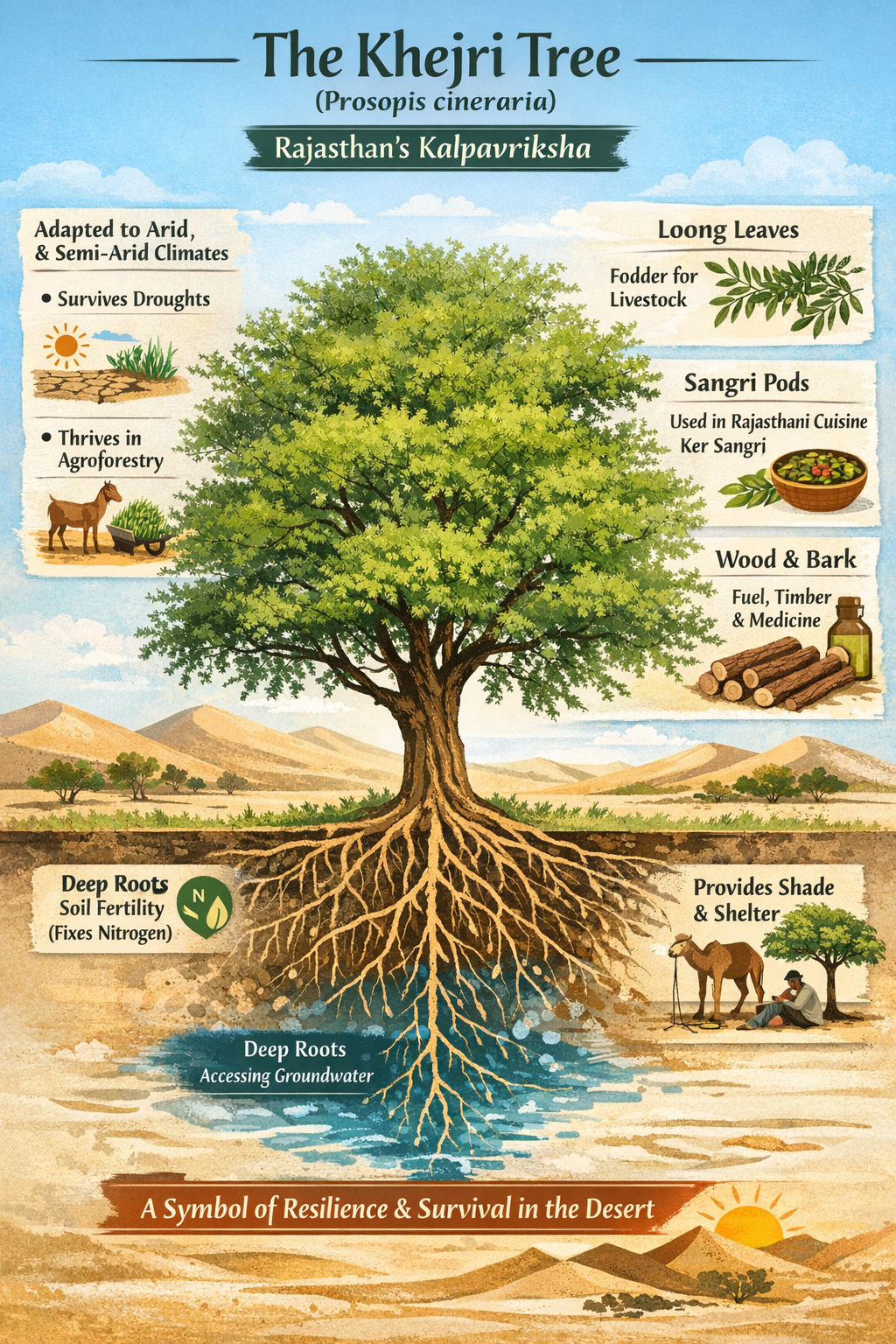
Khejri tree

The Khejri tree (Generative image)

Ecologically, the tree improves soil fertility by fixing nitrogen, reduces desertification by stabilising sand dunes and provides shade in extreme heat. In regions where annual rainfall is minimal, it plays a crucial role in sustaining both human and animal life.Given these attributes, many in Rajasthan see the khejri not just as a tree but as a symbol of resilience and survival in a harsh environment.

Legal framework and demands

Currently, khejri trees are protected under various forest and environmental regulations, but protesters argue that enforcement is inconsistent and that ambiguities in existing laws create loopholes. Former Luni MLA Mahendra Vishnoi said, “Confusion exists in current laws concerning khejri conservation. The penalties must be precise and severe. Without a fear of the law, this destruction will persist.”Environmental activist Mokhram Dharniya alleged administrative inaction. “The administration has betrayed us repeatedly. Over the past year, we have held numerous protests, receiving assurances each time, while the trees continue to be axed. We will not permit the cutting of khejri anymore,” he said.One of the demands emerging from the agitation is a provision imposing a fine of Rs 1 lakh for violations. Activists have also called for a temporary statewide ban on felling until a comprehensive conservation law is enacted.

Spread of the movement

The agitation has extended beyond Bikaner. In Barmer, protesters gathered at the Collectorate, and some youths climbed the gate and raised slogans after police closed the premises. A memorandum addressed to the chief minister was submitted.The movement has also taken on a deeply personal dimension for some families. Following the death of environmental activist Radheshyam Bishnoi in a road accident last year, his mother Ratni Devi and wife Nirma Bishnoi have continued his work and are now on a hunger strike demanding protection for khejri trees.
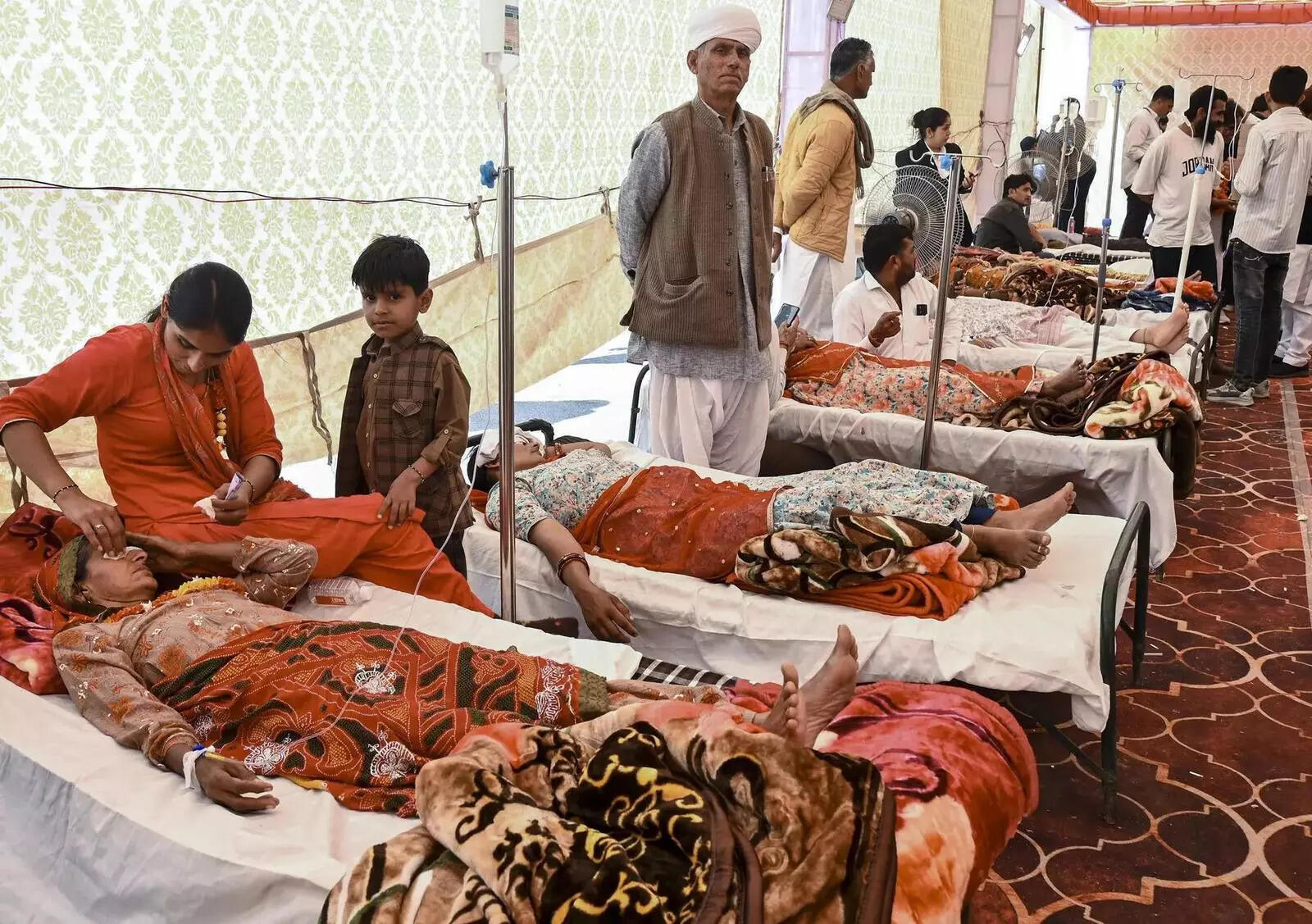
Bishnoi community's hunger strike.

Members of the Bishnoi community during an indefinite hunger strike, demanding a tree protection bill in the ongoing assembly session and a complete ban on cutting of khejri trees, near a Bishnoi Dharamshala, in Bikaner, Rajasthan. (PTI Photo)

Meanwhile, reports of illegal logging in other parts of the state, including in the forest area of Bayana subdivision in Bharatpur district, have further fuelled concerns about enforcement.Activists said the issue concerns the entire desert belt, including Jaisalmer, Barmer, Jodhpur, Pali, Jalore, Phalodi, Sriganganagar, and Churu. Protesters alleged that thousands of khejri trees were felled in recent years, largely for infrastructure and solar power projects.Founder of the Khejri Bachao Andolan, Parasram Bishnoi, said the agitation would continue until the state enacts a specific law making the cutting of khejri trees a punishable offence.“Large tracts of desert land are being indiscriminately handed over to solar parks, destroying the local ecosystem. Without legal protection, the desert’s survival is at stake,” Bishnoi told TOI.He added that participation is swelling daily and asserted that the onus now lies on the state government led by chief minister Bhajan Lal Sharma. Bishnoi alleged that khejri trees were uprooted across vast desert areas both in the name of renewable energy projects and by an illegal wood mafia, with little effective oversight.

Development versus conservation

The unfolding debate reflects a broader tension between renewable energy expansion and environmental safeguards. Rajasthan is a key state in India’s solar mission. Large tracts of land are being allocated for solar parks, transmission corridors and associated infrastructure.
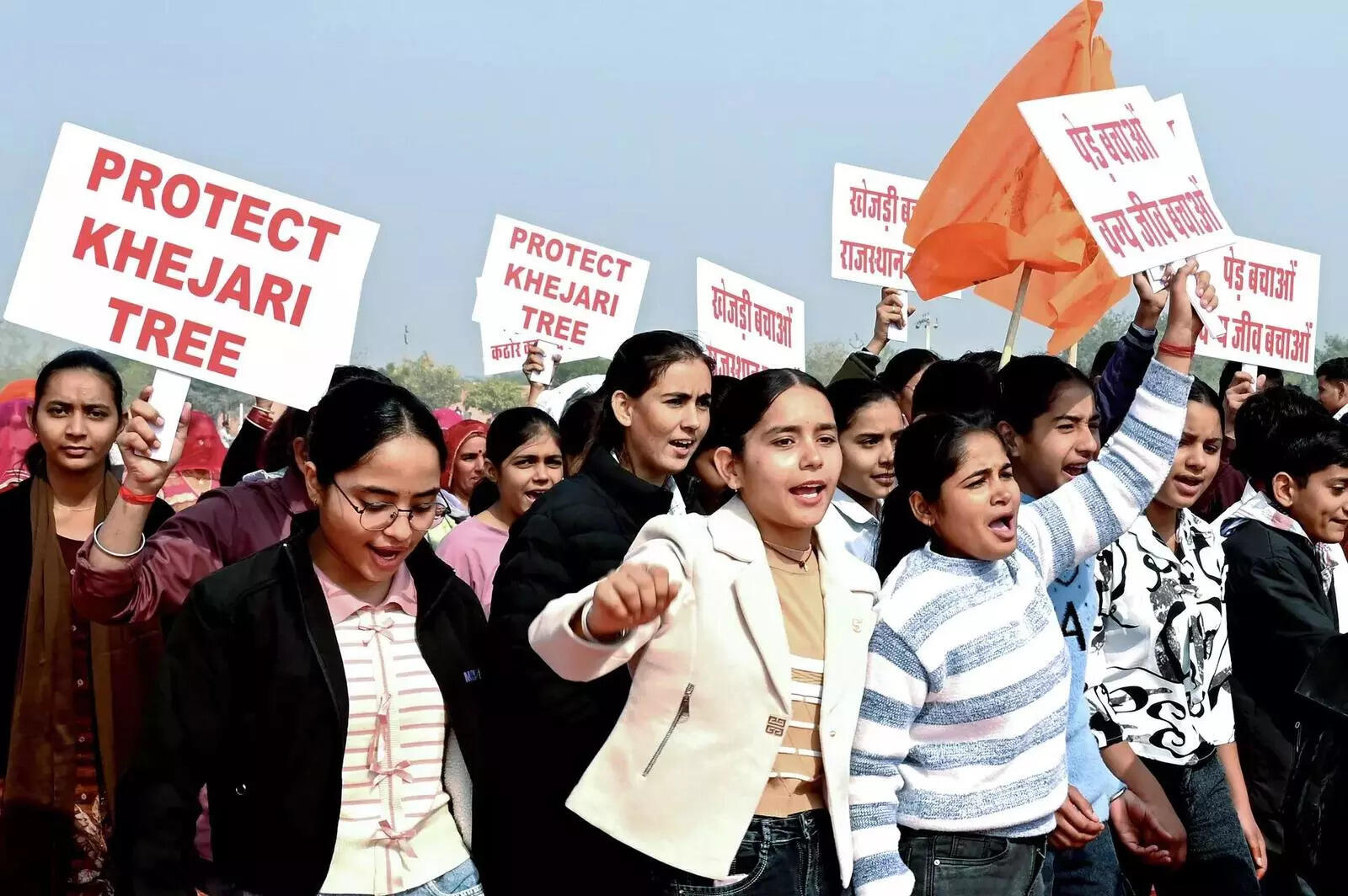
Bikaner, Feb 02 (ANI)_ Environmental supporters and members of the Bishnoi commu....

Environmental supporters and members of the Bishnoi community participate in the ‘Save Khejri Movement’ (ANI photo)

While renewable energy is seen as essential for climate mitigation, local communities argue that development planning must take into account ecological realities and traditional land-use patterns. The khejri, embedded in agricultural and grazing systems, is not easily replaceable.For many protesters, the demand is not to halt development but to ensure that it does not erode the ecological foundation of desert life.

An evolving movement

As the Khejri Bachao Andolan entered its sixth day, its trajectory remains uncertain. The state government has indicated it is drafting legislation. Protesters insist on immediate written assurances and a comprehensive statewide ban.What is clear is that the agitation has tapped into a powerful historical memory and a deeply rooted cultural ethos. The khejri tree stands at the intersection of ecology, economy and identity in Rajasthan. Its fate has become a test case for how the state balances development with conservation in one of India’s most fragile landscapes.Whether the movement results in a new conservation law, stricter enforcement or a recalibration of project implementation, it has already reaffirmed the enduring symbolic power of a tree that many in Rajasthan consider their “Kalpavriksha”.

PAK vs NED: From 98/2 to 114/7, then Faheem Ashraf’s rescue act; How did the Pakistan T20 World Cup almost end on day one? cricket news

0

PAK vs NED: From 98/2 to 114/7, then Faheem Ashraf's rescue; how Pakistan T20 World Cup almost ended on day one
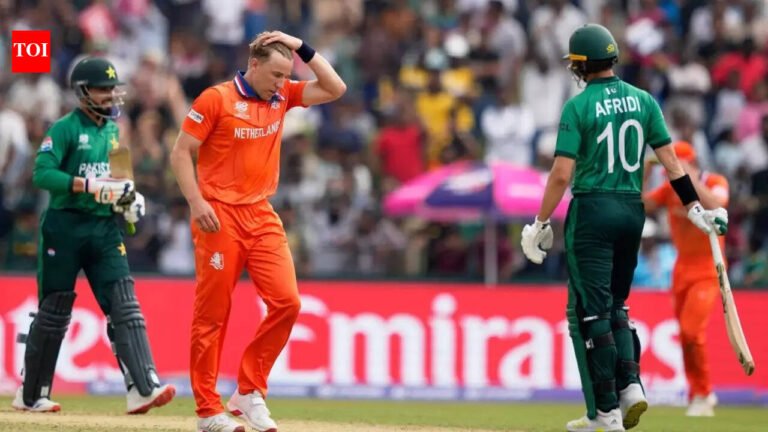
Netherlands’ Logan van Beek (centre) reacts after being hit for a six by Pakistan’s Faheem Ashraf (left) during the T20 World Cup cricket match in Colombo, Sri Lanka, on Saturday, February 7, 2026. (Associated Press)

With the specter of a boycott hanging over the match against India on February 15, Pakistan cannot afford to make any more mistakes in the remaining three games against its partner nations. They almost did that on Saturday, nearly ending the 2026 T20 World Cup before it even officially started before Faheem Ashraf rescued Salman Ali Agha’s side from a major setback.In the opening match at the Sinhala Sports Club Stadium in Colombo, Pakistan scored 148 runs against the Netherlands, scoring 98 runs for 2 in 11 overs, scoring 50 runs off 54 balls.The game soon turned around when Paul van Meekeren dismissed the defensively brilliant Sahibzada Farhan, who was caught at 47 off 31 balls by Roelof van der Merwe. Van Miklen then removed Usman Khan for a duck in the same over.Babar Azam followed in the 13th over when he was caught by Michael Klein at long-on off van der Merwe. As Mohammad Nawaz and Shadab Khan were dismissed consecutively, Pakistan scored 100 for 5, then 114 for 6, and 114 for 7, with a total score of over 16.1 overs.Pakistan still needed 34 off 23 balls and they could only score five off the next 11 balls. It was 29 points short of 12 when Logan van Beek came on. Pakistan was about to lose and Netherlands smelled victory.Faheem Ashraf then changed the game. He scored 24 runs in the 19th over and hit three sixes. At the end of the game he was dropped into the abyss by Max O’Dowd. This shift completely shifted the situation in Pakistan’s favour.After that burst, Ashraf completed the chase with a high cover shot to earn the winner as Pakistan returned home with a three-goal advantage. Just nine deliveries ago, that goal looked out of reach.Ashraf remained unbeaten on 29 off 11 balls as Pakistan beat the Netherlands by 3 wickets to avoid a major shock in the opener in Colombo.Van Miklen and van der Merwe put Holland in a strong position to break through Pakistan’s lower-middle order. But one in the 19th over proved decisive as Van Beek failed to reach his target and Ashraf took advantage of the opportunity. Although the day was shelved, questions about Pakistan’s batting still lingered.

‘A blow to Indian farmers’: Opposition slams Indo-US trade framework – who said what? indian news

0

'A blow to Indian farmers': Opposition slams India-US trade framework - who said what
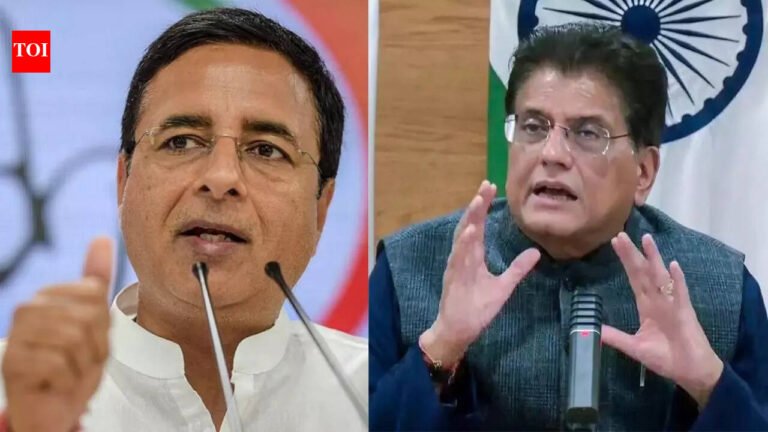
Randeep Surjewala, Piyush Goyal

NEW DELHI: Opposition leaders on Saturday criticized the framework for an interim trade agreement between India and the United States, accusing the government of undermining India’s interests and raising concerns about its impact on farmers, tariffs and oil imports.Congress leader Randeep Singh Surjewala warned that the deal could harm farmers and rural livelihoods. He said, “A blow to the stomach of India’s 720 million farmers has taken away the livelihood of India’s 720 million food providers, farm workers and farmers.”He also expressed concerns about agricultural imports from the United States. “U.S. corn, U.S. soybeans, U.S. sorghum, U.S. walnuts, almonds, pistachios, fresh fruits such as apples and oranges, processed fruits and other ‘additional’ agricultural products will flood the Indian market,” he said.Surjewala questioned the government on the possible impact. “We have imported $334 million worth of cotton from the United States, which has led to a collapse in cotton prices for Indian farmers. Now, with corn, cotton, sorghum, fruits, processed fruits and soybeans being imported from the United States, I ask Prime Minister Modi and Piyush Goyal: What will happen to Indian farmers? Where will they go?” he said.Congress leader Pawan Hera also attacked the government over the India-US interim trade agreement, questioning what he called a change in India’s diplomatic posture. “Where is the India that looked the Nixons, George Bushs and Obamas in the eye and had pragmatic relations?” he asked. Kaira claimed that the interests of ordinary Indians were being harmed, saying: “This is not an agreement with the United States, but a compromise on our self-esteem.” He said those who predicted the success of the framework were already aware of its impact. “This is not an agreement, this is a surrender,” he said, adding that the opposition was unable to raise the issues in parliament because the government feared scrutiny of the deal’s terms.RJD MP Manoj Kumar Jha also criticized the tariff changes and accused the government of misleading the public. “On most things, our tariffs, at the worst of times and at the best of times, were 2.9 percent. Through threats, it was raised to 50 percent. Then it was lowered to 18 percent. Is that something to celebrate? Aren’t you misleading the entire country?” he said.He warned the deal could spark public outrage once its full implications are understood. “When this situation develops further and comes to the forefront, there will be riots on the streets,” Jia said.India and the United States on Saturday announced a framework for an interim agreement on mutually beneficial trade as part of wider talks on a bilateral trade deal.

Disappearance of Nancy Guthrie: FBI, Sheriff examine new clues after ‘new information’ uncovered

0

Arizona Authorities announced they are investigating a second letter from the person claiming to be responsible for Nancy Guthrie’s kidnapping.

Arizona officials are reviewing a second piece of information related to the kidnapping of Nancy Guthrie. (Savannah Guthrie/Facebook)

KOLD reported that new information about the disappearance was received on Friday. Savannah Guthrie’s mother and turned it over to law enforcement.

“The FBI and the Pima County Sheriff’s Department have learned of new information regarding Nancy Guthrie. Investigators are actively reviewing the veracity of the information provided in the tip.” pima county officials said.

Also read: Who is Michael Feldman? Savannah Guthrie’s husband finally breaks silence on missing mother-in-law Nancy

Nancy Guthrie Disappearance: Here Are the DNA Test Results

Friday marked the sixth day of the search for Nancy Guthrie, who was last seen Saturday night. Authorities have not identified any suspects or persons of interest in the 84-year-old’s disappearance.

The most recent message was received a day later Savannah GuthrieThe Today program host urged families to appeal to the kidnappers to contact them.

“Whoever is out there holding our mother, we want to hear from you. We haven’t heard anything directly yet,” said Cameron Guthrie in a video shared on social media.

Authorities believe she was abducted from her Tucson-area home over the weekend. DNA testing confirmed that bloodstains found on Guthrie’s front porch matched her own, according to the sheriff.

“Right now, we believe Nancy is still out there. We want her home,” Pima County Sheriff Chris Nanos said at a news conference Thursday. However, he acknowledged that authorities had no evidence that she was in good condition.

Also read: Annie Guthrie and Tommaso Cioni’s Marriage and Children: Inside Their Relationship Amid ‘Prime Suspect’ Allegations

View previous ransom letters

On Monday, at least three media organizations, including KOLD, received previous extortion letters. Hayes Janke FBI Phoenix officials said details include monetary demands, with a deadline set for Thursday night and a second deadline on Monday if the first deadline isn’t met.

Authorities reported the arrests after discovering a ransom note was fraudulent. The man is from california Identified as Derek Carrera.

Sheriff Nanos noted that Guthrie had dinner at a relative’s residence on Saturday, then was sent back to her home later that night and was never seen again.

Vaibhav Sooryavanshi is currently unavailable for the Indian team – here’s why | Cricket News

0

Vaibhav Sooryavanshi can’t play for India now – here’s why
Vaibhav Sooryavanshi (X-Cricbuzz)

The dust has yet to settle at Harare Sports Club, but Vaibhav Sooryavanshi’s stunning performance in the Under-19 World Cup final against England continues to resonate in the cricketing world. He struck out 175 off just 80 balls, which was more than an innings – a record-breaking blitz. With 15 towering sixes and a strike rate that seemed to mock the intensity of a final, the 14-year-old prodigy from Bihar left fans asking a burning question: If he can knock off England U19 toppers and smash centuries in the IPL, why can’t he be part of the Indian senior team? The answer lies with the International Cricket Council (ICC). The main hurdle Sooryavanshi faces is the ICC’s minimum age policy. The rules, introduced in 2020 to protect the physical and mental health of young players, stipulate that players must be at least 15 years old to participate in international cricket.

Why Gautam Gambhir and Hardik Pandya had a heated chat ahead of India vs USA T20 World Cup

Born on March 27, 2011, Vaibav He was only 14 years old when he won the World Cup in February 2026. Ironically, while he was too young for the senior team, he also outgrew the U19 team. The BCCI has implemented a strict “one match” rule for the U19 World Cup, which is aimed at preventing the emergence of age-group specialists and ensuring a constant influx of fresh talent. Vaibhav has already dominated the 2026 edition and won the Player of the Tournament award, but he is not eligible for the 2028 or 2030 editions despite being less than 19 years old.

Vaibhav Sooryavanshi Records

The excitement surrounding the young opener is easy to understand considering the string of records he has broken over the past year:

  • U19 World Cup final high scores: Scored 175 off 80 balls against England, the highest score in an U19 final.
  • World Cup Six-a-side record: In the 2026 edition, a total of 30 sixes were hit, surpassing the previous record of Dewald Brevis.
  • Global list-A record: The youngest player in history to score an A-century at the age of 14 years and 272 days.
  • Fastest 150 miles in history: 150 out of 59 balls Vijay Hazare trophy, break AB de Villiers‘ Record.
  • IPL Century Milestones: Youngest IPL centurion, 14 years and 32 days old, batted 35 balls rajasthan royals.
  • Indian Pioneer: The first player to score a T20 century for India A, scored a 32-ball hundred against UAE.
  • Youth ODI pace: Fastest youth ODI century, 52 goals against England U19s.
  • Youth test records: Fastest teenage Test century by an Indian (58 balls), second fastest in world history.
  • Domestic T20 records: the youngest centurion Syed Mushtaq Ali Trophy with an unbeaten record of 108 games.
  • Border landmarks: The first player to hit 100 sixes in his junior ODI career.

Currently, ‘Sooryavanshi Storm’ is limited to domestic cricket and franchise tournaments. But time is passing. Later in 2026, when he turns 15, it’s only a matter of time before the blue jersey with his name on it makes his debut at the highest level.

‘Reckless and politically motivated’: Sonia Gandhi objects to guilty plea over 1980 electoral roll entries India News

0

'Reckless and politically motivated': Sonia Gandhi objects to guilty plea over 1980 electoral roll entries

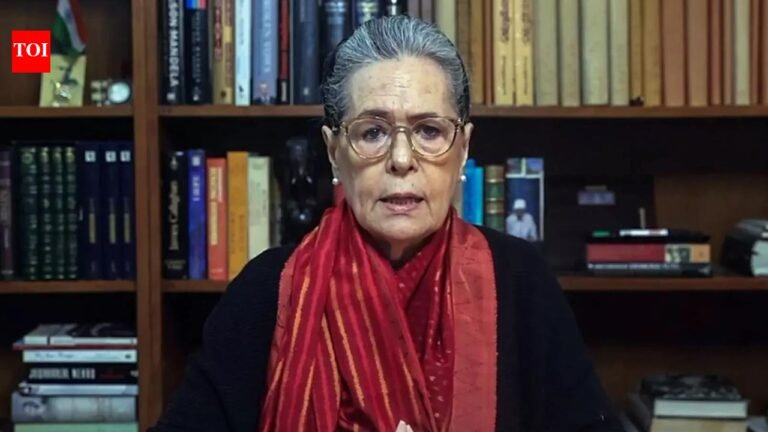
New Delhi: congressional leaders Sonia Gandhi objected to a criminal modification petition filed against her in the Louth Avenue Courthouse, calling it “completely misunderstood, frivolous, politically motivated and an abuse of the legal process.”“She believed that, forty years later, citizenship and electoral roll issues could not turn into criminal proceedings.The reply, filed through her lawyer before the court of special judge (CBI) Vishal Gogne, challenged the allegation that she was included in the electoral roll before she was granted Indian citizenship.She urged the request to be dismissed, calling it baseless and speculative.According to her response, complainant’s allegations were based on assumptions, media reports, and personal presumptions rather than actual government records.The response further emphasized that no specific documents were found to be forged or fabricated, and therefore the allegations had no substance. It argued that citizenship issues were entirely within the jurisdiction of the central government, while the Election Commission of India was responsible for maintaining the electoral rolls.The reply held that the Criminal Court could not have jurisdiction over such matters and noted that entertaining the petition would constitute interference in the electoral process.It also denied that Gandhi’s name was ever re-entered into the electoral roll as a result of any forged or improper application, saying the complainant failed to produce any genuine documents or make efforts to obtain them legally.Sonia Gandhi’s reply also dismissed the claims of fake identity documents or Gandhi’s voting in the 1980 general elections as “baseless”. The Committee also objects to the complainant’s reliance on media reports from decades ago, stating that these sources are not legally binding and cannot serve as the basis for criminal proceedings.The response emphasized that the complaint attempted to revive an issue from 1980-83 (more than four decades later) without underlying evidence, making it both archaic and legally untenable.Procedural objections were also raised claiming non-compliance with the mandatory requirements of the Indian Code (BNSS), including the lack of a valid affidavit, which Gandhi’s lawyers argued deprived the court of its jurisdiction.The revision petition filed by advocate Vikas Tripathi challenged a September 2025 magistrate court order dismissing his earlier complaint. The magistrate held that issues of citizenship and electoral registration fell within the purview of the central government and the electoral commission and could not be decided through criminal complaints.