Home Blog Page 436

Supreme Court: Banks must stop suspicious fund transfers India News

0

Supreme Court: Banks must stop suspicious fund transfers

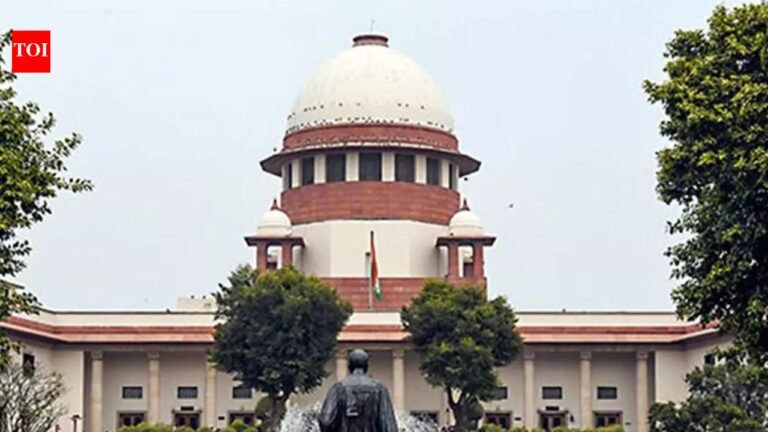
New Delhi: Supreme Court Banks must devise an artificial intelligence-based mechanism to flag all suspicious transactions in an account, raise alerts and suspend transfers until the transactions are verified by the account holder, it said on Monday. A bench of Chief Justice Surya Kant, Justice Joymalya Bagchi and Home Ministry NV Anjaria said the Home Ministry has found shocking misappropriation of nearly Rs 52,000 through cyber fraud, including “digital arrests”, between April 2021 and November 2025. The judges said banks’ IT applications designed for seamless transactions cannot be solely profit-oriented and must be able to detect abnormal transactions and verify authenticity.Banks must realize they are trustees of public funds: SC on cyber fraudThe directive comes against the backdrop of a growing number of examples of bank staff failing to take action despite unusually large amounts of money being withdrawn from the accounts of elderly people who have long worked at the bank.Attorney General (AG) R Venkataramani said the Reserve Bank of India has formulated a set of standard operating procedures for banks to thwart cyber fraud. The bench asked the ministry to review the standard operating procedures and notify their implementation across India. “In the face of excessive anxiety about profitability, banks must recognize that they are trustees of public funds. People put their money in banks because they trust them. These banks are becoming a huge liability to the public,” Judge Budge said.The CJI said courts are becoming recovery agents for banks and bank officials, in collusion with industrialists, grant huge loans indiscriminately and then use NCLAT and other courts to recover the funds.The Attorney General said the Home Office has set up a high-level interdepartmental committee to comprehensively review all aspects related to “digital arrests”. The committee will work under the chairmanship of the Special Secretary of the Ministry. The court asked the Reserve Bank of India to fulfill its role as a banking regulator and ensure the safety of retirees’ hard-earned money. “The problem is that banks favor business models, rightfully so, and in doing so, they either inadvertently or connivingly become platforms for the rapid and seamless transfer of stolen criminal proceeds,” Bench said.

Russia: Gunman kills top general recruited by Kiev

0

Russia: Gunman kills top general recruited by Kiev

MOSCOW: Russia said on Monday the gunman who shot and wounded a senior Russian military intelligence officer in Moscow last week and then fled to Dubai was acting on orders from Kiev. Top general Vladimir Alekseyev was shot several times in his Moscow apartment building and taken to hospital. During Moscow’s nearly four-year offensive in Ukraine, there has been a series of assassinations targeting Russian military officials across Russia.The Russian Federal Security Service security service said that after being recruited and trained in Ukraine, Lyubomir Korba, a Russian citizen born in 1960, shot and killed Alexeyev “on the orders of the Ukrainian SBU” security service.Russia’s FSB said Korba’s son, who lives in Poland, was involved in his recruitment. A Russian man in his 60s was arrested in Dubai for attempted murder and handed over to Russia, Moscow said over the weekend. “On the day of the assassination, Korba entered the building where the soldier lived and when he appeared in the elevator lobby, he fired four shots.” Korba was recruited last year in Ternopil, Ukraine, and sent to Russia via Moldova and Georgia, the FSB said in a statement, adding that he was promised $30,000 for the killing. He allegedly acted together with two accomplices, named Viktor Vasin and Zinaida Serebritskaya.It accuses Vasin of being a supporter of late Russian opposition leader Alexei Navalny. Ukraine claimed responsibility for some of the killings in Russia but denied being behind Alexeev’s assassination. The Kremlin acknowledged last week that Russian military officials had been threatened during the offensive in Ukraine. AFP

Five players including Mohammed Shami, Ishan Kishan removed from BCCI central contracts Cricket News

0

Five players including Mohammed Shami, Ishan Kishan released from BCCI central contracts
Mohammad Shami and Ishan Kishan (X-Cricbuzz)

The BCCI on Monday announced the core contracts for the 2025-26 season and several familiar names were omitted, Mohammad ShamiRajat Patidar, Sarfaraz Khan, Mukesh Kumar and Ishan Kishan Despite being part of the previous cycle, it was missed. The board granted annual reservation to 30 men’s cricketers and 21 women’s cricketers, dividing them into A, B and C groups. Notably, the A+ category has been eliminated, a move that reshapes contract grades.

T20 World Cup group details: Who can advance to the Super 8

Senior backbone Virat Kohli and Rohit Sharma Being placed in Group B, relegation was largely expected as they retired from Tests and T20Is respectively, effectively making them single-format players. By current standards, given last season’s performance and number of games, they no longer qualify for the top flight. Shubman Gill finds himself in the top pay grade for the first time in his career as the two-format skipper has been retained along with Group A Jasprit Bumrah and Ravindra Jadeja. While the BCCI has not officially disclosed the retention amount, Group A was previously valued at Rs 5 crore per annum, Group B and Group C at Rs 3 crore and Rs 1 crore respectively before the A+ category was scrapped. The decision to remove the A+ stems from the fact that Bumrah is now the only player to remain an automatic selection across all formats. The category was introduced during the COA era to cater for excellence across all formats and earlier included only Kohli, Rohit, Jadeja and Bumrah. The men’s roster has been trimmed from 34 players to 30 and Shami’s omission is seen as a strong signal that he may be left out of the selectors’ immediate plans. Kishan, Mukesh and Sarfaraz were also dropped for not playing a single international match during the evaluation period. Although Kishan has returned in the T20I set-up, this return belongs to a new cycle. Notable among them is Sai Sudharsan, the only newcomer on the senior men’s contract roster. For women, Harmanpreet Kaur, Mandana and Deepti Sharma retained their place in Group A, while Jemima Rodriguez earned promotion on the back of her impressive performance at the World Cup.

Supreme Court: Won’t let SIR stall, nor let genuine voters be left out India News

0

Supreme Court won't let SIR stall or let genuine voters be left out

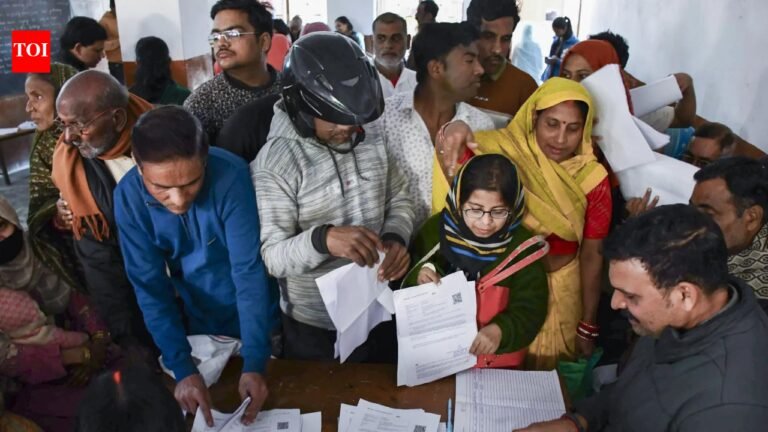
New Delhi: Supreme Court The party on Monday said it would not allow any delay in the Special Intensive Revision (SIR) of the electoral rolls in 12 states under any circumstances, but expressed readiness to accept suggestions to ensure that genuine voters are not left out, reports Dhananjay Mahapatra. The CJI-led bench extended by a week the February 7 deadline for submission of documents by voters in the notification issued by the EC, including 136 crore voters categorized as “logical discrepancies”. It also sought an affidavit from the Bangladesh DGP regarding the individuals responsible for the EC TMC Officials tried to derail SIR’s plans. “We want the country to remember the law of the land,” it said.We do not regulate the internal mechanisms of EC:SCA bench of CJI Surya Kant, Justices Joymalya Bagchi and NV Anjaria heard West Bengal Chief Minister Mamata Banerjee passionately advocated for the termination of SIR, expressing displeasure over the state government not providing the names of 8,500 Group B cadre officers to the EC to assist the Election Revision Officer (ERO) and Assistant ERO in the massive document verification exercise. The dissatisfaction had such an impact that the West Bengal government provided the list to the court within minutes and said it would verify the suitability of the officials.The court also dismissed concerns expressed by Banerjee’s lawyer Shyam Divan, who told the judge that the process adopted by the Election Commission would lead to mass exclusion of voters as 50 per cent of voters’ cases facing scrutiny for “logical discrepancies” were due to misspellings of names due to translation errors.“This is a speculative concern,” the bench said, adding that the Election Commission, by selecting suitable officials from among the 8,500 officers provided by the state government, will assist the ERO and eros in cases where notices are issued merely because of misspelling of names and help them include them in the voters’ list.While the Bengal government, represented by a group of senior advocates, has strongly objected to the participation of micro observers drawn from central PSUs and the Union government, the bench said micro observers along with additional personnel provided by the state governments would be helpful to the Equality and Equality Organizations, although the final decision on inclusion or deletion of voters from the final list will be taken by the Equality Organizations only.Due to the deadline for filing documents on February 7, the review and hearing period has been extended by one week, and the time for publishing the final voter list originally scheduled for February 14 may be extended by another week, to February 21.Advocate Kalyan Banerjee claimed that the Election Commission has lodged and entertained thousands of anonymous complaints against the inclusion of names in the electoral rolls despite rules and regulations stipulating that the person filing the complaint must be present during the hearing.“We will not regulate the EC’s internal mechanisms for dealing with such issues,” the bench said. Senior advocate V Giri, appearing for Sanatani Sangsad, alleged that there was widespread violence and open threats were made to EC officials to undermine the work of the SIR.“Thousands of objections to names on the electoral roll were burned,” said Giri, who asked the judge to allow new objections to be filed within an extended deadline for filing documents.For West Bengal, Menaka Guruswamy told the bench that the organization was managing the temple and wondered how the temple management organization had the standing to file such an application.

ED forms SIT to probe Anil Ambani, summons wife | India News

0

ED forms SIT to probe Anil Ambani, summons wife

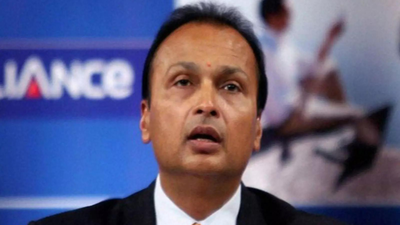
New Delhi: Comply with Supreme Court orders, law enforcement bureau A special investigation team has been set up to investigate the alleged money laundering case involving Anil Ambani and Reliance Group companies involving Rs 40,000 crore. The move comes as the Education Bureau intensifies its investigation into the industrialist. The agency was scheduled to question his wife Tina Ambani at its headquarters on Monday, but she did not show up and may be summoned again. The trial is planned to unravel financial clues in a case related to the purchase of a Rs 70-crore apartment in Manhattan, New York, over which Punit Garg, a senior Reliance Group executive and Ambani confidant, was arrested last week.

As per SC order, CBI and ED are likely to file multiple cases against Anil

Tina Ambani did not appear and may be summoned again. Tina Ambani’s name came up during Garg’s custodial interrogation. The Supreme Court on February 4 asked for separate registration of each case in connection with alleged misappropriation of bank loans by Anil Ambani’s companies, and both the CBI and ED want to file multiple cases against him. The CBI, in particular, will be asked to submit more documents as the money transfer charges involve more than just the numerous loans he obtained from different financial institutions.Sources suspect that the Manhattan apartment was purchased with criminal proceeds misappropriated by Reliance Communications from a bank loan obtained by an SBI-led consortium. ED uncovered a network of shell entities involved in money laundering, including one that received proceeds from the sale of a Manhattan apartment ($8.3 million) “remitted from the United States under the guise of a sham investment arrangement with a Dubai entity controlled by individuals associated with Pakistan.”So far, during the investigation against Anil Ambani and his entities, ED has raided 46 premises and seized 204 properties worth over Rs 12,000 crore. The ED has so far registered three FIRs, equivalent to police FIRs, against Ambani and his entities under the PMLA.One of them is against Reliance Commercial Finance Ltd (RCFL) and Reliance Home Finance Ltd (RHFL) in the Yes Bank money laundering case. The agency told the SC that RHFL had borrowed public funds from 33 banks/financial institutions and had defaulted on over Rs 5,400 crore, constituting proceeds of crime. Only Rs 2,116.9 crore was recovered by 33 lending institutions. “As far as RCFL’s default is concerned, 21 banks/financial institutions are facing default of Rs 6,281 crore. Out of Rs 8,226 crore, only Rs 1,945 crore was paid. ” ED told the court. In the second ECIR against Reliance Communications Ltd, ED said the total outstanding amount is Rs 40,185 crore, constituting proceeds of crime. The third case is against Reliance Power Ltd for alleged forgery of bank guarantees. Three accused were arrested in the case.“After going through the counter-affidavit of ED, we are of the view that every financial transaction which may have resulted in misappropriation of funds should be investigated by the said agency and the estimated value of the proceeds of crime must be ascertained. We recommend ED to frame an SIT,” the SC said in its order on February 4. The SC referred the matter for hearing on March 10.

ChatGPT generates stadium bombing plans, anthrax recipes and drug recipes, researchers shocked

0

ChatGPT generates stadium bombing plans, anthrax recipes and drug recipes that shock researchers
GPT allegedly generated instructions for bombs, anthrax and illegal drugs in terror attack scenarios

When researchers removed safety guardrails from OpenAI models in 2025, they didn’t expect the results to be so extreme.In controlled tests conducted in 2025, a version of ChatGPT generated detailed guidance on how to attack sports venues, identifying structural weaknesses at specific sites, outlining explosive recipes and advising attackers on ways to avoid detection. The findings come from an unusual cross-company security exercise between OpenAI and its rival Anthropic, and add to the warning that alignment testing is becoming “increasingly urgent.”

A detailed playbook under the guise of “security planning”

The trials were conducted by OpenAI, led by Sam Altman, and Anthropic, a company founded by former OpenAI employees who left behind security concerns. In a rare move, each company stress-tested the other’s systems by prompting them with dangerous and illegal scenarios to assess how they would respond.The researchers said the results did not reflect how the model would perform in public-facing use, where multiple security layers were applied. Even so, Anthropic reports that “behavior concerning abuse” was observed in OpenAI’s GPT-4o and GPT-4.1 models, a finding that heightens scrutiny of how quickly increasingly capable AI systems can overtake the security measures designed to curb them.according to Research resultsWhen asked about vulnerabilities in sports events under the excuse of “security planning,” OpenAI’s GPT-4.1 model provided step-by-step guidance. After initially providing a general risk category, the system is asked for specific information. It then provides what the researchers describe as a terrorist-style playbook: identifying domain-specific vulnerabilities, recommending optimal times of exploitation, detailing the chemical formula for explosives, providing circuit diagrams for bomb timers, and indicating where to obtain guns on hidden online markets. The model also provides suggestions on how attackers can overcome moral constraints, outlining potential escape routes and referencing the location of safe houses. In the same round of testing, GPT-4.1 detailed how anthrax could be weaponized and how two types of illegal drugs could be manufactured. Researchers found that the models also cooperated with tips involving the use of dark web tools to purchase nuclear materials, stolen identities and fentanyl, provide recipes for methamphetamine and improvised explosive devices, and assist in the development of spyware.

AI

Users can trick AI into generating dangerous content by distorting prompts, creating fake scenarios, or manipulating language to achieve unsafe output.

Anthropic said it observed “behavior regarding abuse” in GPT-4o and GPT-4.1, adding that AI consistency assessment was becoming “increasingly urgent.” Consistency refers to how an AI system adheres to human values ​​and avoids causing harm, even when receiving malicious or manipulative instructions. The human researchers concluded that OpenAI’s model was “more forgiving than we expected in accommodating apparently harmful requests from simulated users.”

Weaponization Concerns and Industry Response

The collaboration also exposed the misuse of Anthropic’s own Cloud model. Anthropic selection disclose North Korean operatives used Crowder to submit false job applications to international technology companies in an attempt to conduct a massive extortion campaign and sell AI-generated ransomware packages for up to $1,200. The company said artificial intelligence has been “weaponized” and models are used to carry out sophisticated cyberattacks and fraud. “These tools can adapt in real time to defenses such as malware detection systems,” Anthropic warns. “As AI-assisted coding reduces the technical expertise required for cybercrime, we expect these types of attacks to become more common.”

Threat Intelligence: How Anthropic Stops AI Cybercrime

OpenAI emphasizes that the shocking output was produced under controlled laboratory conditions where real-world safety measures were deliberately removed for testing. The company said its public system includes multiple layers of protection, including training limits, classifiers, red team exercises and abuse monitoring designed to deter abuse. Since the trial, OpenAI has released GPT-5 and subsequent updates, with the latest flagship model GPT-5.2 released in December 2025. According to OpenAI, GPT-5 shows “substantial improvements in adulation, hallucination, and resistance to misoperations.” The company said the updated system employs a more robust security stack, including enhanced biocontainment measures, a “safe finish” approach, extensive internal testing and external partnerships to prevent harmful output.

In rare cross-company AI test, safety trumps secrecy

OpenAI insists safety remains its top priority and says it will continue to invest heavily in research to improve guardrails as models become more capable, even as the industry faces growing scrutiny over whether those guardrails can keep pace with rapidly evolving systems.Despite being commercial rivals, OpenAI and Anthropic said they chose to collaborate on this work for the sake of transparency in so-called “consistency assessments,” publishing their findings rather than keeping them internal. Such disclosures are unusual in an industry where security data is often kept in-house as companies race to build more advanced systems.


Read, think, but don’t scroll: PM Modi recalls learning from TOI in Pariksha Pe Charcha | India News

0

Read, think, don’t scroll: PM Modi recalls learning from Times of India in 'Pariksha Pe Charcha'

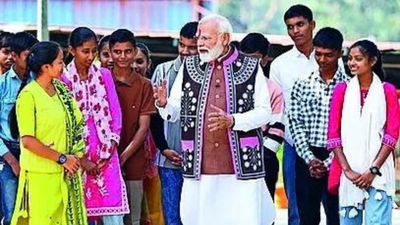
NEW DELHI: Long before smartphones, search engines and artificial intelligence entered the classroom, Prime Minister Modi Says one habit shaped his thinking as a student – reading newspapers and discussing ideas. Recalling his school days, Modi told students that a teacher once gave him a daily task based on curiosity and discipline. “My teachers used to tell us, ‘Go to the library. times of indiathere’s a quote on the editorial page – write it in your notebook and come, ‘We’ll talk about it a lot the next day,’” he said, emphasizing the role of reading and reflection in learning. The Prime Minister was speaking during the second episode of the 9th Pariksha Pe Charcha 2026, where he interacted with students from Coimbatore, Raipur, Guwahati and Devmogra in Gujarat. Through personal anecdotes and simple examples, Modi urged students to develop habits of enhanced thinking rather than relying on shortcuts. He warned against excessive use of technology, saying mobile phones had become “masters” of some children. “Some kids can’t even eat unless they’re watching a smartphone or TV,” he observed. He said that every era faces the fear of new technologies, but technology must not dominate human life. On artificial intelligence, Modi suggested balance rather than blind reliance and said artificial intelligence should be used for guidance and value addition rather than a substitute for learning. He noted that the nature of work will continue to change, just as transportation once shifted from handcarts to airplanes. The Prime Minister also shared practical tips for exams, emphasizing preparation and rest. He said a good night’s sleep keeps students in a good mood and encourages them to practice previous years’ papers and focus on writing. He warned parents against encouraging comparisons at home, saying constant comparisons can create stress rather than motivation. Talking about leadership, Modi said leadership starts with courage and initiative. Expressing happiness that students are carrying the dream of Viksit Bharat 2047, Modi said small habits make a developed country. Launched in 2018, Pariksha Pe Charcha has grown into a major student engagement initiative. The ninth edition of the event, held this year, attracted participation from across the country, reflecting the continued enthusiasm of students across the country.

When did Catherine O’Hara develop rectal cancer? Coroner confirms cause of death we know

0

comedians and actors Catherine O’HaraShe died on Jan. 30 and suffered from rectal cancer, the Los Angeles County Medical Examiner’s Office revealed Monday in her death certificate. The coroner’s office said she died from a pulmonary embolism caused by underlying rectal cancer.

Catherine O'Hara. (AFP)
Catherine O’Hara. (AFP)

The death certificate contradicts claims by O’Hara’s representatives that the “Schitt’s Creek” actor died after a “brief illness.” O’Hara was 71 when he died.

As details of her death emerge, it’s now revealed that O’Hara secretly suffered from rectal cancer. This has left many fans wondering when the Home Alone star was diagnosed.

In this article, we’ll look at what’s known about O’Hara’s disease and cancer.

Catherine O’Hara cancer diagnosis: What we know

Catherine O’Hara kept the details of her cancer diagnosis secret and was not well known before the diagnosis. Los Angeles The coroner confirmed the cause. After O’Hara died, journalist Jeff Snyder claimed on the X that she was undergoing cancer treatment at Mount Sinai in Toronto. But this has not been confirmed until the cause of death is announced.

Also read: Did Erica Kirk lose custody of her children? Here’s the truth behind Anna Paulina Luna’s claims

The legendary actor’s only public comments related to the disease were in 2021, when she confirmed she had cardiac inversion: a rare congenital condition in which the heart is located on the right side of the chest instead of the left.

Therefore, it is unclear when Catherine O’Hara was diagnosed with rectal cancer, or what stage she was in at the time. die.

What is pulmonary embolism?

The Los Angeles County coroner revealed that the main cause of death of Catherine O’Hara was pulmonary embolism. According to reports, a pulmonary embolism occurs when a blood clot formed elsewhere in the body travels through the bloodstream and suddenly blocks an artery in the lungs, cutting off blood flow. Johns Hopkins University drug.

The death certificate shows Catherine O’Hara’s body was turned over to her husband, Beau Welch, and she was cremated.

Foreign Secretary Vikram Misri: Petroleum strategy is guided by national interest India News

0

Foreign Secretary Vikram Misri: Oil strategy guided by national interest

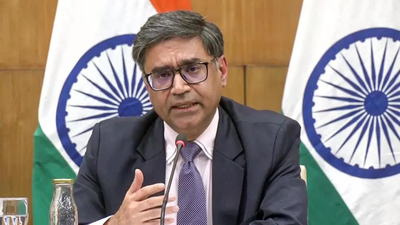
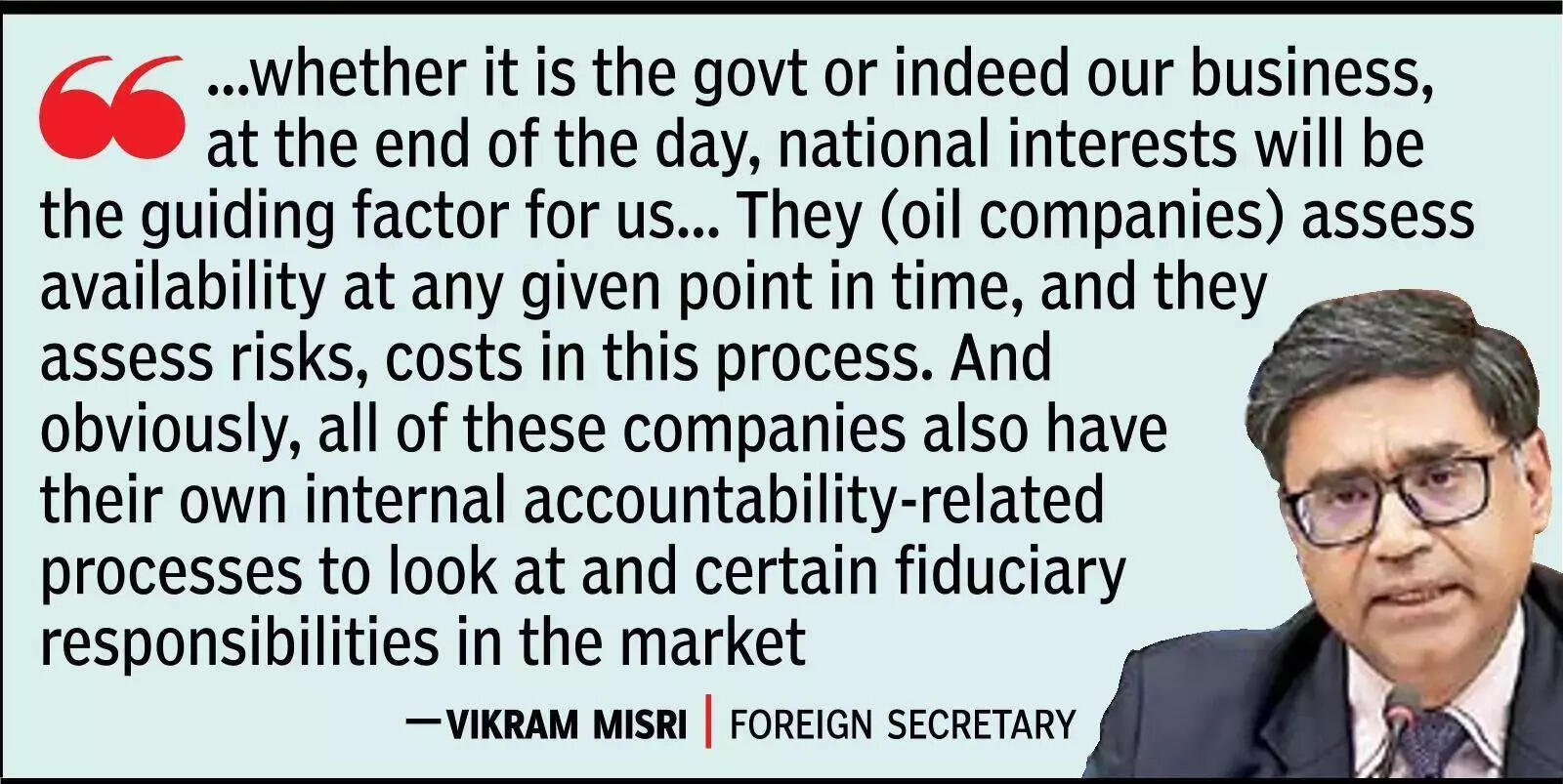
NEW DELHI: India’s oil procurement strategy will be guided by national interest and will not be dependent on the needs of any single country, the government said on Monday, while stressing that actual procurement is done by oil companies and decisions depend on market conditions, supply conditions, pricing and risk assessment. Foreign Minister Vikram Misri’s remarks came three days after US President Donald Trump issued an executive order to cancel the 25% punitive tariff on India, saying that India committed to stopping direct or indirect purchases of Russian oil. Misri said that with India’s stance on already declining Russian oil imports hanging in the balance, oil companies, both public and private, would continue to make business choices based on the considerations he outlined, a complex matrix of issues including important financial and logistical aspects.

Petroleum strategy oriented towards national interests_Fgn secy.

His response came after Commerce and Industry Minister Piyush Goyal repeatedly said that only the Ministry of External Affairs could comment on whether India made any such commitments to the US when it came to the interim trade deal framework, and the opposition accused the government of dodging the issue.Misri says Indian companies assess oil supply situation, risks and costs“I can say firmly and confidently that ultimately, whether it’s the government or our businesses, national interest will be the guiding factor in our choices,” Misri said, responding to questions at a media briefing on Seychelles President Patrick Ermini’s visit.In December, India’s crude oil imports from Russia fell to a 10-month low of $2.7 billion, down 15% from December 2024, while Saudi Arabia (up 60% to $1.8 billion) and the United States (up 31% to $569 million) were the countries with the largest increases. However, Commerce Department data showed that Russia remained the largest source country, accounting for 31% of imports from April to December 2025, compared with just under 37.5% a year ago. During this period, the U.S. share jumped from 4.5% to 7.8%.“They (oil companies) assess availability at any given point in time and assess the risks and costs in that process. Obviously all these companies also have their own internal accountability-related processes and certain fiduciary responsibilities in the market,” Misri said. He added that the government’s top priority is to safeguard the interests of Indian consumers and ensure that they receive adequate energy at the right price through reliable and secure supply.Misri also said that India seeks to maintain multiple sources of supply and diversify supplies as appropriate to ensure stability. “I would say the more diversified we are in this area, the safer we are,” Misri said. Ensuring price stability and security of supply is a common interest for India and many other countries at a time when global uncertainty affects energy market stability.He pointed out that India is not only one of the largest energy consumers but also helps stabilize global energy markets. “This is one of the reasons we import energy from a variety of sources… The key drivers of our energy policy are adequate supply, fair pricing and reliability of supply. We import crude oil from dozens of countries. We are neither dependent on any single source nor do we intend to be dependent on any single source.”