Home Blog Page 386

Beyond Mumbai & Goa: How India’s tourism map is quietly changing | India News

0

Beyond Mumbai & Goa: How India’s tourism map is quietly changing

For years, planning a holiday in India meant choosing between two familiar choices: beach or hills. Goa or Manali. Sand or snow.Not anymore.Today, the most searched destinations on travel apps are just as likely to be Ayodhya as Alibaug, Varanasi as Vagator, Ujjain as Udaipur. A generation that grew up posting sunsets from shacks and selfies from mountain cafés is now booking flights to temple towns, river ghats and heritage streets.India’s tourism map is changing — quietly, steadily, and faster than many imagined.Across India, places once considered peripheral to mainstream tourism – religious towns, heritage cities, riverfront settlements and small cultural hubs – are emerging as year-round travel destinations. Ayodhya, Varanasi, Ujjain, Prayagraj, Dwarka, Puri, Hampi, Madurai and Maheshwar are no longer niche or purpose-driven stops. They are becoming central nodes in India’s tourism geography, drawing millions of travellers who are not just pilgrims, but explorers, photographers, students, influencers, backpackers and international visitors.What’s driving this change is not one factor, but a convergence: religious revival, infrastructure investment, social media discovery, generational travel habits, and a redefinition of what “travel” means in India today.

Religious tourism: From margins to mainstream

The most decisive force reshaping India’s tourism map is the scale and transformation of religious travel.India has always been a land of pilgrimage, but for much of the post-liberalisation era, religious tourism remained largely disconnected from mainstream travel narratives. Pilgrims travelled with families, stayed briefly, and rarely engaged with destinations beyond ritual.That distinction has collapsed. Data from the Union ministry of tourism and state governments shows that religious tourism now accounts for more than half of all domestic tourist visits in India. In several states, pilgrimage-led travel has overtaken leisure tourism as the primary driver of footfall. Uttar Pradesh illustrates this transformation most starkly. The state reported over 130 crore domestic tourist visits in a single year – 2025, making it India’s most visited state. The surge has been driven overwhelmingly by pilgrimage and heritage circuits connecting Ayodhya, Prayagraj, Varanasi and Mathura–Vrindavan. Ayodhya, once a relatively modest religious town, has undergone a dramatic transformation since the inauguration of the Ram Temple. Annual visitor numbers now run into millions, outpacing several long-established heritage destinations. The city’s airport, railway station, road network and public spaces have been redeveloped to accommodate a scale of travel previously unimaginable for a town of its size.Last year’s Maha Kumbh in Prayagraj, a once in 144 year affair, alone drew footfalls on a scale rarely seen anywhere in the world, making it the largest religious congregation, so much so that it was even visible from space.

Mahakumbh visible from space (X)

Varanasi, long considered a place one visited once in a lifetime, has emerged as one of India’s fastest-growing cultural destinations. State government figures show tourist visits crossing 10 crore annually in 2024, with foreign arrivals rising sharply over the past three years. What was once seen primarily as a site of ritual and renunciation is now firmly embedded in India’s travel economy.Tamil Nadu tells a similar story. Temple circuits linking Madurai, Rameswaram, Kanchipuram and Tiruvannamalai account for a majority of domestic travel into the state, drawing millions annually. Maharashtra’s Shirdi–Pandharpur belt, Odisha’s Puri, Madhya Pradesh’s Ujjain and Maheshwar, and Gujarat’s Dwarka and Somnath now function as high-volume, year-round tourism economies. Karnataka’s Udupi and Hampi, and West Bengal’s Kalighat and Dakshineswar reflect similar patterns.“Faith has become infrastructure-led,” said a senior employee of a travel agency in Delhi, working at a tech savvy firm which thrives on social media added, “Once access improved, demand exploded.” He says, the jump in visit plans to cities like Varanasi, Chopta, Kedharnath has increased manyfold, and when the char dham yatra opens, demand shoots up.Interestingly the crowd mostly has youths, reflecting a shift from assumed travel preferences.

Foreign Tourist Arrivals (2024) (Column Chart)

The power of religious events: Scale, spectacle and sustained travel

If religious tourism is the backbone of the new travel map, religious events are its accelerators.India’s religious calendar is dense with gatherings that combine faith, spectacle, culture and community – often on a scale unmatched anywhere else in the world. These events are no longer seen only as spiritual congregations; they have become major tourism drivers with global visibility and measurable economic impact.

Maha Kumbh and Magh Mela: Temporary cities, permanent impact

The Maha Kumbh Mela at Prayagraj, held once every 12 years at the Sangam of the Ganga, Yamuna and Saraswati, remains the best example. The most recent edition drew hundreds of millions of visits over several weeks, making it the largest human gathering on the planet – so vast that it was visible in satellite imagery. Beyond the ritual bathing, the Kumbh now attracts cultural tourists, photographers, researchers, vloggers and international visitors seeking to witness a phenomenon unmatched in scale.By the end of the event over 660 million people took a dip in Triveni Sangam. The festival generated approximately 1.2 million jobs in sectors like tourism, transportation, healthcare, and retail, significantly boosting the both state and national economies.
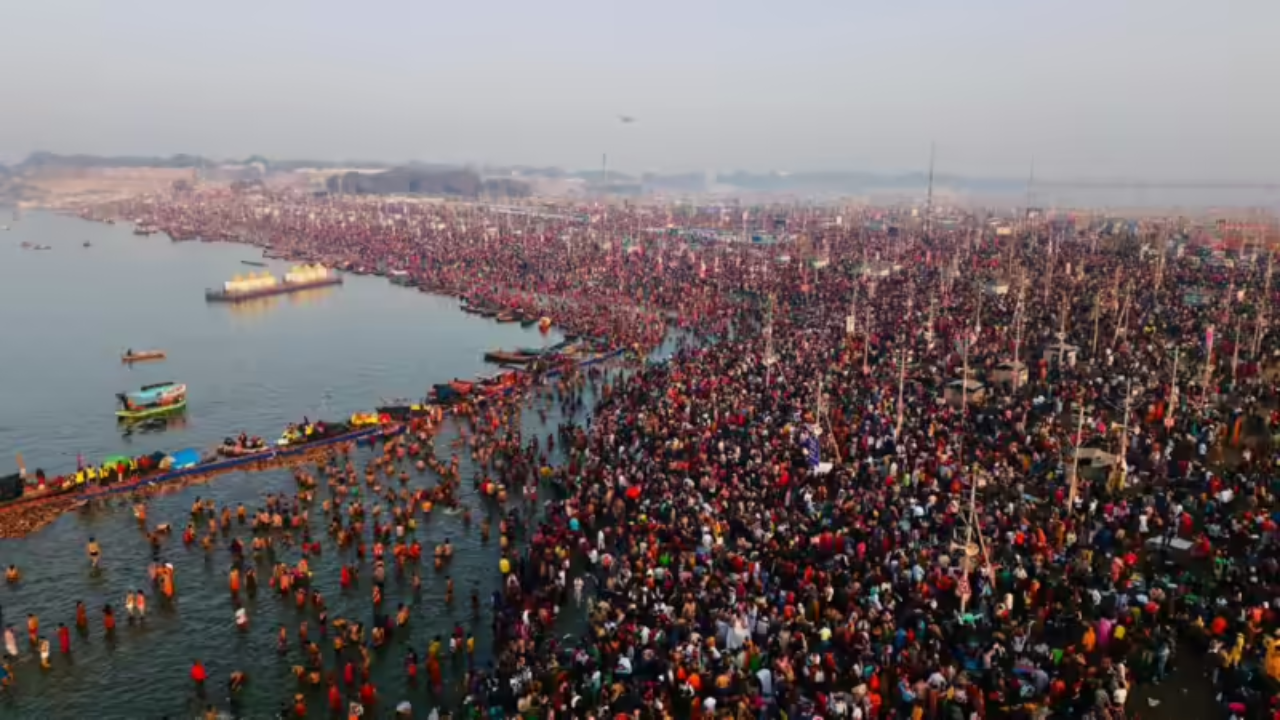
Mahakumbh 2025

The organisation of the event saw major revamp for the city, from over 200 roads renovated and 3 lakh plus trees planted. Post event data released by the state shows, trade in daily essentials reached Rs 17,310 crore, while the hotel and travel sectors were at Rs2,800 crore. Religious materials and flowers generated approximately Rs 2,000 crore and Rs 800 crore, respectively.Alongside the Maha Kumbh, the Magh Mela, held annually at Prayagraj, has emerged as a major draw in its own right. While smaller than the Kumbh, it attracts crores of devotees over its duration, sustaining tourism flows every year rather than once a decade. Temporary cities rise on the riverbanks, supported by transport networks, sanitation infrastructure and cultural programming – an example of how religious events are now treated as logistical and tourism exercises at scale.“These events create massive short-term employment and long-term tourism memory,” said an official involved in last year’s Mela administration. “People return later with families, friends, even tour groups.” He added, “during mela people come to stay for weeks at times the entire month of snan.”

Puri Rath Yatra: Faith meets coastal tourism

In eastern India, the Puri Rath Yatra draws millions of devotees annually, turning the coastal town into a global focal point for weeks. Odisha government estimates show hotel occupancy peaking across the state during the festival period, while transport networks operate at full capacity.Artisans, street vendors and small businesses see a surge in income, while the event also introduces many first-time visitors to Odisha’s beaches, crafts and heritage circuits.

Dev Deepawali, Deepotsav, Durga Puja and festival-led tourism

In Varanasi, Dev Deepawali has evolved from a local religious observance into a marquee tourism event. Lakhs of lamps illuminate the ghats of the Ganga on Kartik Purnima, drawing domestic and foreign travellers months in advance.If you think you can walk past the roads of the old holy city easily during and around the month of Diwali, think again. Every corner of the city is filled with people, tourists and visitors. Ghats bustle through the night and probably the night life is never better there. Durga Puja in Kolkata, now recognised by UNESCO, blends religion, art, music and urban culture, drawing tourists not just from India but from Bangladesh, Europe and Southeast Asia.Similarly, Deepotsav in Ayodhya, Holi in Mathura–Vrindavan and Barsana, Navratri in Gujarat, and Thrissur Pooram in Kerala,function as major tourism magnets. These festivals blend religion, culture, music, food and visual spectacle, extending stays and broadening visitor profiles beyond traditional pilgrims.“The festivals are no longer spikes; they are anchors,” said Naveen Singh, a resident of Varanasi who runs a hotel. “They fill rooms, generate repeat visits and stabilize demand.”What is notable is that these events are no longer treated as isolated spikes. State tourism boards actively integrate them into annual calendars, align transport and accommodation planning, and promote them digitally as experiential travel moments.

From pilgrimage to experience: How sacred cities are being reimagined

The transformation of religious destinations is not only about numbers. What’s changed is not just where people are travelling, but how they are travelling. Increasingly it is about how these places are experienced, the mark that the visit leaves on the people’s mind. Cities like Varanasi, Ujjain and Dwarka are no longer framed merely as sites of ritual obligation. They are increasingly experienced as layered cultural spaces. They are being reimagined – by travellers as much as by planners – as experience-led destinations.Morning boat rides on the Ganga, evening Ganga aartis framed by restored ghats, heritage walks through ancient neighbourhoods, classical music performances, local food trails, classical music performances, and café culture tucked into centuries-old lanes – all now form part of the itinerary.
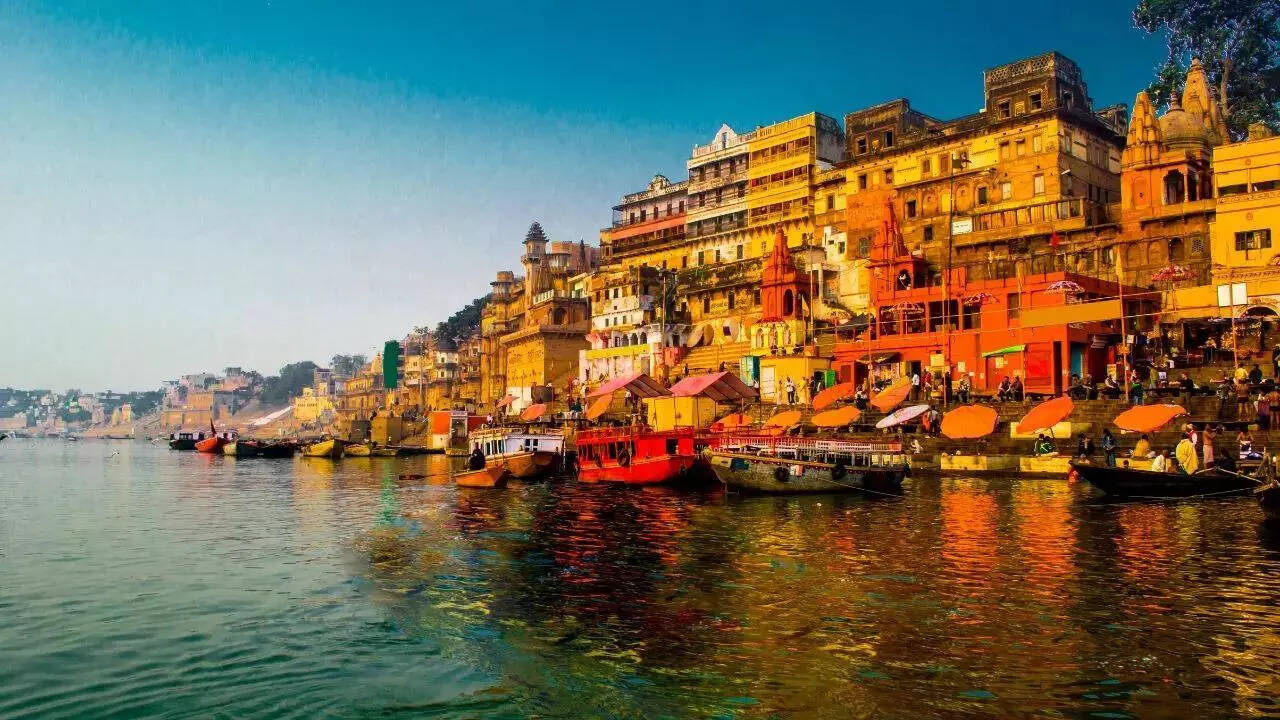
Varanasi ghats

The sacred and the everyday coexist – and travellers engage with both. This shift has been enabled by sustained infrastructure investment: expanded airports, redeveloped railway stations, improved roads, pedestrian corridors, lighting projects and riverfront development. Government schemes such as PRASHAD and Swadesh Darshan have focused on improving tourist facilities around religious and heritage sites, while state tourism departments have leaned into festival-led tourism to keep destinations active year-round.What emerges is a new category of travel – one that blends faith, culture, leisure and storytelling. Leading travel companies of the country are also playing a crucial role in facilitating these travel experiences. Providing millions of devotees and visitors seamless travel solutions, including flight bookings, customized pilgrimage packages, and guided experiences, ensuring a smooth spiritual journey for attendees. While speaking at an event, Rikant Pittie, CEO and Co-Founder, EaseMyTrip said:“Spiritual tourism in India is witnessing significant growth as more travellers seek meaningful experiences at sacred destinations. In 2024, India’s religious tourism market was valued at US$ 202.8 billion, and is expected to grow to US$ 441.2 billion by 2032. Pilgrimage sites like Varanasi, Rishikesh, Tirupati, and Shirdi are attracting millions of devotees annually, contributing to both cultural preservation and economic growth. With improved infrastructure and digital advancements, accessibility to these sites has become easier, further fueling interest in spiritual travel.”

Foreign tourists: Fewer in number, deeper in engagement

India’s foreign tourist arrivals are yet to fully recover to pre-Covid levels, and international media has pointed to concerns ranging from cost to pollution and infrastructure stress. But the recovery, where it is happening, is highly destination-specific. Foreign travellers are increasingly gravitating toward cultural depth rather than checklist sightseeing. Hampi and parts of Rajasthan (deserts and old cities) and Madhya Pradesh, the likes of Khajuraho, and select Himalayan towns have seen renewed interest from overseas visitors looking for immersive experiences – slow travel, spiritual exploration, history, architecture, and everyday life.For many international travellers, India’s emerging destinations offer something that over-touristed global cities no longer do: authenticity without over-curation.

Growth in Pilgrim-Connected Destination Searches (2024) (Column Chart)

For instance, global pop icon Dua Lipa’s travel pattern to India offers a telling anecdote. She first visited the country in 2018 for a vacation with her then boyfriend Issac Carew, explored several iconic locations, including Ranthambore, Jaipur, Jodhpur, Kerala, and Goa.She returned again in 2023 on her fourth visit to the country, in late December to spend New Year with her family, this time in a very low profile exploring streets and small towns of Rajasthan. The trip was so out of the media gaze that people only found out about it once Dua herself posted pictures on her social media. Interestingly, during her interaction and exploration with people on streets she received warm welcome and hospitality, but notably no one recognised her to the star she is.

How youth are traveling differently

Perhaps the most consequential shift reshaping India’s tourism geography is generational.India’s Gen Z and young millennial travellers are not chasing the same markers of travel that defined earlier decades. Monuments still matter, but they are no longer the sole focus. For this cohort, travel is experiential, social and performative.

  • Cafés, sunsets, street food and local neighbourhoods often matter more than monuments
  • Travel is as much about content creation as consumption
  • Short trips, frequent getaways and budget-flexible itineraries are preferred over long vacations
  • A city’s “vibe” matters as much as its history

For many, travel is not an escape from daily life, but an extension of identity – curated, shared and remembered through content.Suchna Yadav, a content creator/ influencer working with a travel agency in Delhi says, “while travelling I see unexplored places which take my breath away, so beautiful that one part of me wants that it should remain the way it is, but then I also want people to see the surreal beauty of nature. And to relay my message, what could be a better option than social media and a little storytelling.” Another influncer Nikita Rawat, has the same opiion and she does it through docu-series and short clips. Travel platforms report a sharp rise in bookings to spiritual and heritage destinations among travellers under 35, often combining pilgrimage with leisure, photography and food exploration.Well many today discover and decide their travel plans according to the social media, but there are also people who have it the old classic way – movies.Aastha Jha, a young journalist working in Delhi has been to Varanasi twice. She started off her travel journey from the city and her most recent visit has been there as well. The reason? ‘Masaan’ (movie).“Watching Masaan, I was so fascinated by the ‘Ye dukh kahe khatam nahi hota be’ scene, that I made up my mind…if I travel, I will definitely go to Benaras,” she said.

Travel as performance, not escape

Social media has fundamentally altered how destinations are discovered.Instagram reels, YouTube vlogs and travel influencers have turned once-understated towns into aspirational stops. A single viral sunset video from Dwarka or a café walkthrough in Varanasi can reach millions.This has changed the rhythm of tourism:

  • Destinations peak not just during festivals, but after viral moments
  • Cafés, boutique stays and experiential tours become anchors of tourism
  • Local entrepreneurs – from boatmen to homestay owners – increasingly shape the tourist economy

In this new ecosystem, travel is not always about escape. It is about visibility, storytelling and identity.Underrated, but risingBeyond the headline destinations, India’s tourism boom is quietly lifting lesser-known places into the spotlight.

  • Chitrakoot, straddling Uttar Pradesh and Madhya Pradesh, is emerging as a spiritual and nature-led destination
  • Badami–Aihole–Pattadakal in Karnataka offer a quieter alternative to Hampi
  • Mandawa and Bundi in Rajasthan are drawing heritage travellers looking beyond Jaipur and Udaipur
  • Maheshwar on the Narmada blends spirituality, architecture and textiles

These destinations benefit from a trickle-down effect – travellers extending trips, seeking quieter experiences, or deliberately avoiding crowds.

Concerts, culture and the rise of event-led travel

Alongside religious festivals, concerts and large-scale cultural events have emerged as powerful drivers of domestic travel.These events often trigger short, high-intensity travel bursts, filling hotels, boosting transport demand and introducing new audiences to destinations.The effect is cumulative: travellers arrive for an event, discover a place, and return later for leisure or exploration. Over the past couple of years multiple national and international celebrities have held concerts across the country, and their impact has been phenomenal. Now a global superstar Diljit Dosanjh ‘Dil-Luminati’ tour was a sold out game, spanning through multiple cities and the story was the same everywhere, immense demand and sold-out, high-energy shows. So has been the results of Lollapalooza India, Sunidhi Chauhan’s ‘I am Home India tour’ and Shreya Ghosal’s ‘All Hearts Tour’ all of which have been monumental successes.The massive crowd in every show has not been only the locals but people travel cities, states to attend these concerts and events. Similarly, international acts like The Coldplay concerts, Ed Sheeran’s India tour, Maroon 5, Cigarettes After Sex, Akon and many others triggered massive short-term travel spikes. Hotels sold out, flight fares surged, and cities that rarely featured on tourism maps saw first-time visitors.Last year when Coldplay performed in Ahmedabad, the record-breaking shows, featuring 1.34 lakh attendees, created a massive ₹Rs 641 crore economic impact. One of the attendees was Kikruheno Casavi, then a student in Delhi now a working professional in Kohima. She along with her friends who flew all the way from Kohima visited the Ahmedabad, paid much more for the flights to hands down everything from hotels to local travel and food, when compared to regular time, given the high demand, at the end she ended of spending close to lakh on the concert, that was a good influx into the economy. So has been the impact of these massive events on the domestic travel and economy.

Marketing, platforms and the democratisation of discovery

One of the most profound changes in Indian tourism is how destinations are discovered.For decades, tourism marketing centred on a narrow set of icons – beaches, palaces, monuments. Today, social media has emerged as a powerful equaliser. A single Instagram reel of a sunset in Dwarka or a café walk-through in Varanasi can reach millions, bypassing traditional campaigns entirely.Unlike curated brochures or seasonal campaigns, digital storytelling is organic, constant and often driven by travellers themselves. A single reel, vlog or photo series can introduce millions to places that once barely featured on travel maps. As a result, destinations are no longer marketed only as pilgrimage stops or heritage sites, but as spaces for culture, leisure, food and everyday exploration.Travel platforms, too, have adapted. Pilgrimage packages now integrate leisure, experiences and flexible itineraries. Boutique stays, heritage homestays and experiential tours have become anchors of tourism ecosystems.The change in narrative – from “must-see” landmarks to “must-feel” moments – has made India’s emerging destinations more accessible, relatable and aspirational, particularly for younger travellers.In many ways, the tourism boom reflects not a discovery of new places, but a reframing of familiar ones – amplified by platforms where authenticity, not advertising, now drives attention.

Economic ripple effects and the sustainability challenge

The tourism shift has tangible economic consequences. Hospitality players report higher occupancy rates across the year, not just during peak seasons. Local economies – transport operators, guides, artisans, food vendors – benefit from sustained demand rather than seasonal spikes.

Contribution to tourism employment between 2017-23 (Table)

At the same time, challenges are mounting. Overcrowding, waste management, environmental stress and infrastructure capacity pose real risks. Experts warn that without heritage-sensitive planning and sustainability measures, the very qualities drawing travellers could be compromised.

A tourism map still in motion

What’s clear is that India’s tourism map is no longer static – or metro-centric.It is being reshaped by faith and culture, by digital discovery, by younger travellers redefining value, and by destinations once overlooked now stepping into the national and global imagination.The shift underway is not about discovering new places, but about seeing familiar ones differently. And in that reframing, India’s tourism future is quietly being rewritten. And in that shift, the most interesting stories may lie far beyond Mumbai and Goa.

‘To Smriti Mandhana’: How Virat Kohli inspired RCB to WPL 2026 victory | Cricket News

0

'To Smriti Mandhana': How Virat Kohli inspired RCB to win WPL 2026
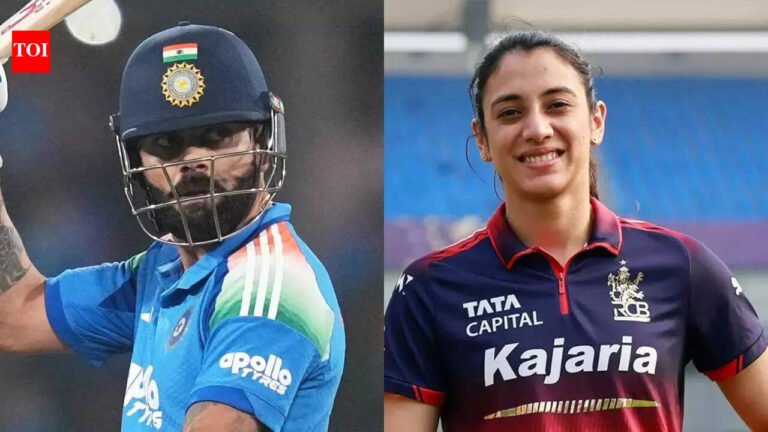
Virat Kohli and Smriti Mandhana (Photo: PTI)

Virat Kohli She played a behind-the-scenes role in inspiring the Royal Challengers Bangalore Women’s team before winning the WPL final and later joined in to celebrate the historic achievement. After RCB Women chased a record 204-run target to beat Delhi Capitals and lift their second WPL trophy, Kohli took to Instagram to congratulate the team in a heartfelt post praising their efforts and leadership.

T20 World Cup group details: Who can advance to the Super 8

“Being champions again. Keeping the RCB flag flying high is something that each of you can be proud of. Mandana As well as the entire squad and management team, a huge congratulations on this huge win. There is no doubt that you deserve it. Enjoy the moment and embrace the love of our amazing fans,” he wrote.The team also released a motivational video message from Kohli, which was played to the entire team on the eve of the final. In the video, the former India captain urged the players to soak in the moment and treat the final as a moment to cherish.“I wouldn’t call it another day or another game because that’s what we do in sport: big finals, big occasions, winning trophies,” Kohli said.Kohli praised the team’s consistency and ability to handle pressure throughout the season, noting that ranking first and being the first to reach the final was no accident.“I’ve been watching you guys this season and it’s great to see us winning these high-pressure games. It’s no surprise to me that we’re the first team to reach the final and top the table,” he said.He also stressed the importance of learning from mid-season setbacks and urged full commitment in decisive moments.“Little things make a big difference in the end…that’s what matters in the end,” Kohli said.Inspired by this message, RCB Women put in a composed performance to win the WPL final by six wickets, bringing a landmark victory to the team.

‘Ghee is made from bathroom cleaning chemicals’: Andhra Pradesh chief minister slams erstwhile Jagan govt over Tirupati Laddus issue India News

0

'Ghee made with bathroom cleaning chemicals': Andhra Pradesh chief minister slams erstwhile Jagan government over Tirupati Laddus issue

New Delhi: chief minister of andhra pradesh N. Chandrababu Naidu On Friday, it was alleged that Tirupati ladoos were made using ghee laced with “bathroom cleaning chemicals” during the YSRCP government led by erstwhile YS Jagan Mohan Reddy.Addressing a village meeting in Kalugutra village in Coonoor district, Naidu claimed, “They (former YSRCP government) used ghee made from bathroom cleaning chemicals in laddus.”He alleged that the earlier regime had compromised the sanctity and prestige of Lord Venkateswara Swamy by allowing adulterated prasadam (sacred food) to be used in Tirumala temples. Naidu further alleged that during the YSRCP rule, this adulterated ghee was supplied not only to Tirupati Ladus but also to the famous Srisailam temple.The chief minister added that the previous government had allegedly been using ghee mixed with chemicals to prepare laddus for nearly five years.Naidu said two chemicals are used in ghee, some of which are of plant origin and are more expensive, while animal fats are cheaper.Reiterating his allegation, Naidu said the National Dairy Development Board (NDDB) reported the use of animal fat.While the YSRCP leader claimed that the CBI-led Special Investigation Team (SIT) had come clean in the case, Naidu claimed that Reddy’s uncle and former TTD chairman YV Subba Reddy himself had earlier admitted to the adulteration.Naidu said his government was working to correct the alleged wrongdoings and claimed there was a “big difference” between the ladoos prepared now and those prepared during the previous regime. He claimed that the Tirumala Tirupati Devasthanams (TTD) were desecrated due to the use of adulterated prasadam.Earlier on Thursday, Naidu told a press conference that he would “leave no stone unturned” in the alleged Tirupati Ladu adulteration case. He also announced the formation of a one-man committee to take corrective measures based on the SIT report.Describing adulteration of ghee as the “biggest sin against God”, he claimed that the Central Food Technological Research Institute (CFTRI) 2022 report prepared during the YSRCP government “clearly pointed out the existence of adulteration” but alleged that irregularities continued.YSRCP Rajya Sabha MP YV Subba Reddy on Thursday hit back, saying that the CFTRI report 2022 did not mention the use of animal fat in ghee, but adulteration was allegedly observed.He refuted the TDP-led NDA government’s allegations that he suppressed the report. “If it was suppressed, then why should I write to CFTRI to test these samples,” Subba Reddy said.He further claimed that despite the SIT report “clarifying the issue”, the state government continues to spread false claims and put up slogans blaming the YSRCP.

No title defense! India suffer quarter-final exit in both Asian Badminton Team Championships Cricket News

0

No title defense! India crashed out of both Asian Badminton Team Championships

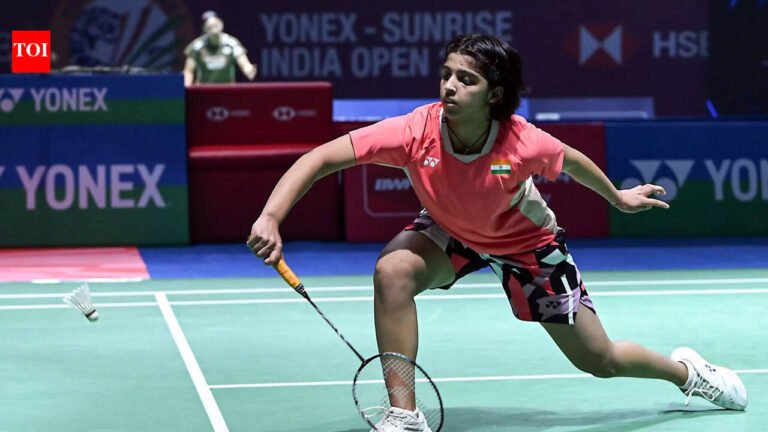
New Delhi: India had a disappointing performance at the Asian Badminton Team Championship on Friday as both the women’s and men’s teams were eliminated in the quarter-finals.The defending champion women’s team lost 3-0 to second-tier Chinese team and were eliminated due to the absence of star players PV Sindhu It proved costly. The Indian team failed to get off to a strong start. Tanvi Sharma, ranked 42nd in the world, who had performed well earlier in the match, lost in straight games to Fangjie Gao, ranked 10th in the world. She struggled to match her opponent in terms of speed and power. In doubles, Gayatri Gopichand and Teresa Jolly competed against the world’s number one player. No. 4 Jia Yifan and Zhang Shuxian lost their advantage in two close games and were eventually eliminated. Rakshita Ramraj, who was facing elimination, fought hard for 69 minutes in the second singles match before eventually losing three games before India crashed out and ended their title defence.Earlier in the day, the men’s team also bowed out with a 1-3 loss to South Korea in the absence of key players Lakshadweep Sen and Satwiselaji Rankireddy. Lakshya was rested due to back pain while Satwik was absent due to personal reasons. Ayush Shetty suffered a heartbreaking loss in her first singles match, missing several match points in an 84-minute match against Yoo Tae-bin. The makeshift doubles pair of Chirag Shetty and Hariharan Amsarkarunan then lost in straight sets. Kidabi Srikanth A straight-games win in the second singles match briefly revived India’s hopes, but losses to Pruthvi Krishnan and K Sai Pratheek in the second doubles match sealed South Korea’s victory.

Oman talks: Iran, US hold new nuclear discussions under threat of direct conflict – how the talks are going

0

Oman talks: Iran, US hold new nuclear discussions under threat of direct conflict - how the talks are going
Iranian Foreign Minister Abbas Araghchi (left) and Steve Witkoff (right) (AP file photo)

Oman held separate talks with Iranian and U.S. officials in Muscat on Friday as tensions over Iran’s nuclear program remain high.Oman’s foreign ministry said Foreign Minister Badr Busaidi met with Iranian Foreign Minister Abbas Araghchi, U.S. Middle East envoy Steve Witkov and U.S. President Donald Trump’s son-in-law Jared Kushner.“The consultations will focus on ensuring the importance of these negotiations and preparing for the resumption of diplomatic and technical negotiations, given the parties’ determination to successfully achieve sustainable security and stability,” the ministry said.Video later released by the state-run Oman News Agency showed that U.S. Navy Adm. Brad Cooper, commander of U.S. Central Command, was also present. His participation was unusual and had not been seen in previous rounds of talks.Oman had earlier hosted talks between Iran and the United States in 2025. Gulf Arab states remain concerned that any military escalation could lead to a wider regional conflict.

negotiating position

No details of the latest talks have been made public by Oman, the United States or Iran. The discussions are the first since the United States joined Israel in military operations against Iran in June. Weeks ago, Iranian authorities launched a crackdown on protests that human rights groups said resulted in thousands of deaths.Iran said the talks would focus solely on its nuclear program. Just before Friday’s talks, Araghchi said Iran was fully prepared to resist any pressure and defend its sovereignty and national security. “Iran enters the diplomatic arena with open eyes and a firm memory of the past year. We engage sincerely and firmly defend our rights,” he said on X.U.S. officials said they hoped the talks would also address Iran’s missile program and its support for regional groups. Iran insists the discussion should be limited to nuclear issues.U.S. Secretary of State Marco Rubio said reaching a deal might be difficult, but added, “I’m not sure we can get a deal with these people, but we’re going to try to find out.”

Tensions between Iran and the United States

Previous negotiations broke down after Israel launched a 12-day war against Iran in June. During that conflict, the United States carried out attacks on Iranian nuclear facilities, possibly damaging centrifuges used to enrich uranium. Israel also targets Iran’s air defense systems and ballistic missile capabilities.The United States has since increased its military presence in the region, deploying the USS Abraham Lincoln aircraft carrier, other warships and more fighter jets. Tensions remain high. U.S. forces recently shot down an Iranian drone near the aircraft carrier USS Abraham Lincoln, and Iran also attempted to intercept a U.S.-flagged ship in the Strait of Hormuz.

‘She cannot be forced to continue pregnancy’: SC allows minor abortion at 30 weeks of pregnancy – why this ruling matters | India News

0

'She cannot be forced to continue pregnancy': SC allows minor abortion at 30 weeks of pregnancy - why this ruling matters

New Delhi: The Supreme Court on Friday allowed medical termination of a 17-year-old girl’s 30-week pregnancy, stating that courts cannot force a woman, especially a minor, if she does not want to continue with the pregnancy.A bench of Justices BV Nagarathna and Ujjal Bhuyan said the key issue was the right of a minor to decide whether to continue the pregnancy. They observed that the girl was a minor, was in an unfortunate situation and did not want to have children. The court also considered a report from the hospital’s medical board which said there would be no threat to the life of the mother or the child if the pregnancy continued. However, the judge said the girl’s reproductive autonomy must be respected.During the hearing, Justice Nagaratna said such cases involve difficult ethical and legal issues. She noted that if courts do not allow safe medical termination of pregnancy in such circumstances, people may turn to unauthorized and unsafe medical providers, which can be dangerous.Why the ruling is importantMedical Termination of Pregnancy (MTP) is legal in India under the Medical Termination of Pregnancy (Amendment) Act, 2021. The law allows abortion up to 20 weeks with the opinion of a doctor. For certain categories, including minors, rape survivors and disabled women, abortion is allowed between 20 and 24 weeks with the opinion of two doctors. The law also applies to unmarried women. By allowing the termination of pregnancy, the Supreme Court also stated that each case must be considered on its own facts, especially when a minor is involved and has a clear stated unwillingness to continue the pregnancy. The decision emphasizes that courts can step in when needed to protect women’s rights, safety and dignity.

Evening News Report: Suicide bombing in Pakistan kills 31, injures more than 160; Siddaramaiah’s son rules out leadership change, other possibilities India News

0

Deadly blast at Shiite religious center in Islamabad raises questions about Pakistan's security failures

  • A suicide bombing killed at least 31 people and injured more than 160 in Islamabad’s crowded Shiite Imman Bargah during Friday prayers.
  • Congress MLC Yathindra Siddaramaiah said there will be no change in leadership in Karnataka and Chief Minister Siddaramaiah will complete his full five-year term.
  • India got an early breakthrough in the IND against ENG U19 as RS Ambrish dismissed Joseph Moores for 17 runs as England were 15/1.
  • Andhra Pradesh Chief Minister Chandrababu Naidu has accused the previous YSRCP government of using adulterated ghee in Tirupati Ladus, compromising the sanctity of the temple.
  • The Supreme Court allowed the termination of a 30-week pregnancy in a 17-year-old minor, confirming that a woman cannot be forced to continue a pregnancy against her will.

Here are the top 5 stories of the day:

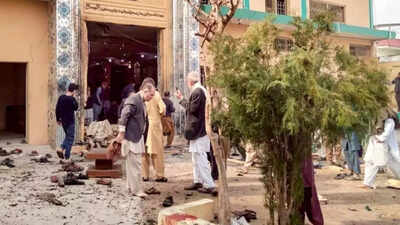
Suicide bombing shocks Pakistan: The explosion killed at least 31 people and injured more than 160

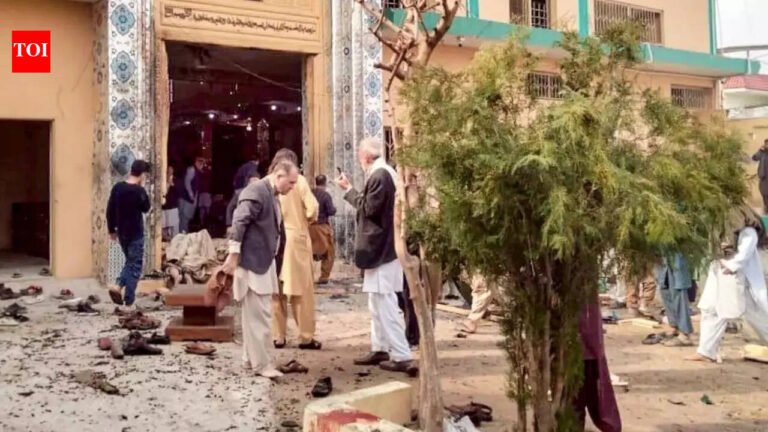
A suicide bombing in Islamabad’s crowded Iman Bargah killed at least 31 people and injured more than 160 others. According to Pakistani media reports, an explosion occurred at Teleman Bagh in Shehzad Town area during Friday prayers.

Deadly blast at Shiite religious center in Islamabad raises questions about Pakistan’s security failures

Police and rescue teams rushed the injured to nearby hospitals, including the Pakistan Institute of Medical Sciences, where a state of emergency was declared. Read more

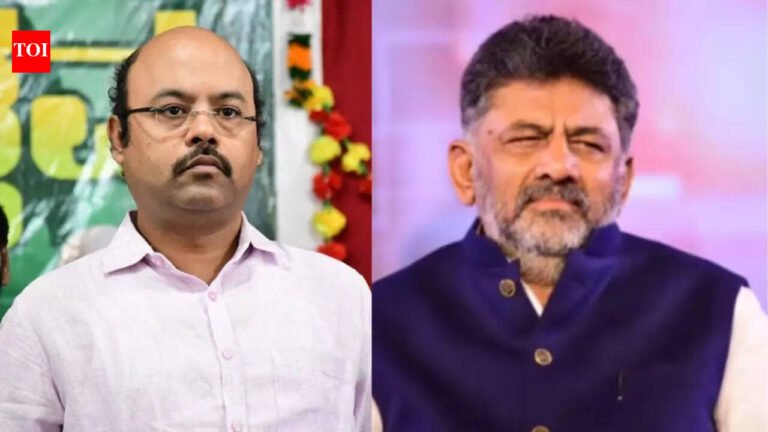
Siddaramaiah’s son Yathindra says leadership change in Karnataka unlikely; Shivakumar reacts

Congress MLC Yathindra Siddaramaiah said there is unlikely to be any change in leadership in Karnataka and Chief Minister Siddaramaiah is expected to complete his full five-year term. Speaking in Mysore, he said the party high command has made it clear that the issue has been resolved.Yasindra said no one in the party suggested removing Siddaramaiah as chief minister. His remarks come amid ongoing speculation over leadership changes within the Karnataka Congress. Read more

IND vs ENG U19: RS Ambrish scores an early defeat for England

The match started with India attacking and when England’s Joseph Morse was just starting to find his rhythm, RS Ambrish bowled him out. Morse was cramped by the short delivery and dragged his chip to the stumps.After a cautious start, the wickets left England needing to rebuild again, with Morse soon leaving for 17 runs. At the time of dismissal, England U-19s were 1 for 15 after 4.5 overs.Read live updates

Andhra pradesh cm naidu charges use of audited ghee in tirupati ladus under ysrcp rules

Andhra Pradesh Chief Minister N Chandrababu Naidu claimed that Tirupati ladoos were made using ghee laced with “bathroom cleaning chemicals” during the previous YSRCP government led by YS Jagan Mohan Reddy.Addressing a public meeting in Coonoor district, Naidu claimed that the practice compromised the sanctity of Lord Venkateswara Swamy and said such adulterated ghee was also supplied to the Srisailam temple. The YSRCP has not responded to the allegations so far.Read more

Supreme Court allows abortion for minors at 30 weeks of pregnancy

The Supreme Court allowed medical termination of a 17-year-old girl’s 30-week pregnancy, stating that courts cannot force a woman, especially a minor, to continue a pregnancy against her will.The key issue, the judge said, was the minor’s right to reproductive choice and autonomy. While the medical board said the pregnancy posed no immediate risk, the court ruled that the girl’s wishes must be respected given her age and circumstances. Read more

Knysna’s drought future: How South African towns race to save water | World News

0

Knysna's drought future: How South Africa's small towns are racing to save water
Knysna water crisis (Image source: Wikipedia)

People across South Africa and even abroad know Knysna for its tranquil lagoons, lush forests and beautiful coastline along the famous Garden Route. Thousands of people come to the town each year to enjoy its beaches, wildlife and laid-back lifestyle. Tourism is the main source of income for many people living there.But behind this peaceful image, Knysna is facing one of the most serious challenges in its recent history. The town is short of water!Local authorities have declared a state of disaster as water supplies continue to drop, the BBC reported. The main storage dam, Ackerkloof, only has enough water for about 20 days. At the same time, more than half of the town’s treated drinking water was lost to leaking pipes. This means that even the limited water available cannot reach homes and businesses efficiently.Knysna, with a population of about 100,000, is approaching what officials call “Day Zero.” Municipal taps may run dry at this time. The crisis is already having an impact on healthcare, tourism, daily life and already vulnerable communities. It also highlights wider issues facing water systems across South Africa.

Understanding Knysna’s water crisis

Reduced water reservesKnysna relies mainly on the Akerkloof Dam for its water supply. The water level in this dam has dropped significantly over the past few months. Dry weather patterns and reduced rainfall limit natural recharge.According to the BBC, the dam currently only has enough water to last about three weeks at current levels of use. This doesn’t leave much room for error. Technical glitches, delayed repairs or increased demand can cause system failure.Knysna does not have as many backup water sources as larger cities. This makes the town even more vulnerable when the main water source is depleted.Infrastructure failureOne of the biggest problems is water loss from damaged pipes. Approximately 55% of clean, treated water is lost before it reaches the consumer. This happens because the infrastructure is old, broken and poorly maintained.Many of Knysna’s pipes were installed decades ago. Over time, they wear out due to corrosion, ground movement, and lack of maintenance. If the leak is not repaired soon, the water will flow into the ground instead of into the house.Mayor Thando Matika told the BBC that maintenance had been neglected for years. Previous governments often said there was no money to repair it. As a result, even the boreholes drilled in 2009 are not functioning properly.Chronic underinvestment has created a serious emergency.

How the crisis affects daily life in Knysna, South Africa

Nursing homes cut off waterOne of the clearest examples of this crisis occurred in October, when a retirement center in Knysna went without water for ten days. A municipal water plant malfunctioned, leaving residents without water.The center’s owner, Franco de Grandis, was forced to invest ZAR 250,000 in a backup water supply system. He told the BBC: “We need water in our flats; when people are bedridden in nappies, we need water too. Without water we can’t work.”For elderly residents who rely on caregivers, water is important for hygiene, medical care and comfort. Without it, daily life would be impossible.The incident shows how fragile the system has become.Families struggle to copeMany households now rely on water tanks, boreholes or private suppliers. A competent person will install a backup system. Others rely on municipal tankers.Residents are asked to limit water consumption to 50 liters per person per day. This includes drinking, washing, cooking and cleaning. By comparison, the average Briton uses around 142 liters of water per day.Activities such as garden watering, swimming pool filling, and boat washing with municipal water are prohibited.For families, this means changing what was once normal habits. Showers are shorter. Doing less laundry. The dishes are washed carefully. Every drop counts.

Emergency assistance from aid organizations

Giver’s gift interventionAs the situation worsened, the NGO Gift of the Giver began providing emergency water. The organization drills private boreholes to provide thousands of liters of water per day to residents who cannot afford their own systems.Mario Ferreira, the organization’s local coordinator, told the BBC: “When we arrived, people expressed a deep sense of gratitude. “What’s disturbing is that people start to think that this is the way of life and it shouldn’t be this way.”While help is vital, it is only temporary. In the long term, aid groups cannot replace functioning public water systems.Their presence shows how serious the crisis has become.Community dependence on water supplyIn some communities, water trucks are now part of daily life. Residents waited in line with containers. Children and the elderly often carry heavy buckets.The system is tiring, uncertain, and unreliable. If trucks are delayed, households could go days without water.For many, this situation is becoming normal. Experts warn that this acceptance is dangerous because it hides deeper structural problems.

Knysna’s tourism industry under threat

Fear of “zero day”Tourism is at the heart of Knysna’s economy. Tourists are important to hotels, restaurants, tour companies and shops. The idea of ​​a “zero day” worries business owners. They worry that tourists will avoid the town if they think the water might run out.Elmay Bouwer, head of tourism at the Greater Knysna Business Council, told the BBC the word could cause panic.She said: “The name ‘Day Zero’ can cause panic and seem threatening. We should be telling people how to protect the water we have.”Tourism officials are now trying to clearly explain the restrictions to tourists. They encourage responsible use of water while assuring visitors that essential services are still available.Balance honesty and confidenceTourism leaders have a tough job. They need to be honest about what’s going on and not make people scared for no reason.If tourists stop coming, many people who work in the area will lose money. But concealing a crisis could also damage trust.The focus now is on promoting conservation and shared responsibility.

South Africa’s wider water issues

national challengeExperts say Knysna’s crisis is not unique. Watercan’s Dr Ferial Adam told the BBC that millions of South Africans face water shortages every day. “For millions of people in South Africa, ‘Day Zero’ is every day,” she said.About half of the country’s population does not have running water in their homes. Many communities rely on shared taps or water trucks. This shows that unequal access remains a major issue.Climate change and aging infrastructureSouth Africa faces rising temperatures and changing rainfall patterns. Droughts are becoming more frequent in some areas.At the same time, water systems in many towns and cities are aging. Pipes, pumps and treatment plants need to be in good condition at all times. When climate stress is combined with poor management, the system begins to fail.Knysna represents what happens when these pressures meet.

Impact on disadvantaged communities

Life in Kayaltu TownIn poorer areas such as Khayalethu town, water shortages have been common for years.Resident Khanyiswa Sewula, 60, told the BBC of her struggle, “You can’t survive without water, but we often go days without water.”She explained that although she had difficulty walking, she had to travel long distances to collect water from municipal water tankers. The situation is especially difficult for the elderly, disabled and single parents.Unequal access to backup solutionsThose with money can purchase water tanks, filters and pumps. Poor families cannot. This creates inequalities in basic needs. Rich people live comfortably. Others face difficulties every day.Experts say any long-term solution must address this imbalance.

Government response and funding

emergency supportThe national government has provided approximately $1.25 million in emergency funding to Knysna. The money is intended to support emergency repairs and temporary solutions. Local authorities say this will help stabilize the system while long-term plans are developed. On the other hand, experts say emergency funding alone won’t solve years of neglect.Repair and expansion plansAccording to the BBC, several projects are underway in the city:

  • Repair seven existing drill holes
  • Repair plants that extract salt from water
  • Dig a new hole in the ground
  • Introduction of circulating water system

The goals of these measures are to increase supply and reduce pressure on the main dam.

Long-term solutions for water security

Build new infrastructureKnysna plans to build another dam in the future. This frees up more storage space and gives you a safe buffer while it dries out. The town also plans to install water meters in homes that don’t have them or have damaged ones. Accurate measurements help find leaks and track usage.Such projects take several years and a lot of money. But without them, future crises are likely to occur.Improve maintenance systemExperts say maintenance needs to be a top priority. Regular inspections of pipes, pumps, and treatment plants can prevent big problems from occurring. Early repairs are much cheaper than emergency replacements. Training employees and improving management systems are also important.Warning to other townsThe situation in Knysna is being closely watched across South Africa. Many cities and towns face similar challenges: aging infrastructure, limited budgets and climate stress.If these issues are not addressed early, more communities may face “Day Zero.”According to the BBC, Knysna faces more than just local problems. It highlights country risks.

Karnataka CM chief debate: Siddaramaiah’s son Yathindra says leadership change unlikely; Shivakumar’s reaction | India News

0

Karnataka CM chief debate: Siddaramaiah's son Yathindra says leadership change unlikely; Shivakumar reacts
Yathindra Siddaramaiah (left), DK Shivakumar (right)

New Delhi: Congress MLC Yathindra Siddaramaiah on Friday said he is confident there will not be any change in leadership in Karnataka and his father Siddaramaiah is likely to continue as chief minister throughout the five-year term.Speaking to reporters in Mysore, Yasindra said the party high command has given a clear signal that there will be no leadership change, if not openly. He said the issue had been resolved and no one in the party said Siddaramaiah should be removed.“As far as I know, the high command may not have said it publicly, but it has given a clear signal that there will not be any change in the leadership. So, I believe Siddaramaiah will be the chief minister for five years,” he said.Yasindra also said there was no discussion on leadership change in political circles except in the media. He added that the government should focus on other matters, including the upcoming budget and the country’s financial situation.

Shivakumar’s sarcastic response

deputy chief minister DK ShivakumarHe, who is also seen as a contender for the chief ministership, gave a sarcastic response to Yasindra’s remarks. “Yasindra is our supreme commander, let us accept what he says with great respect,” Shivakumar told reporters in Mangaluru. If anyone has to clarify the issue, it is the party’s central leadership in Delhi, he added.

What is the controversy

After the Congress government completes half of its five-year term in November 2025, the leadership issue has come into focus. There are speculations that there could be a power-sharing arrangement between Siddaramaiah and Shivakumar when the government is formed in 2023.Shivakumar had earlier said that discussions had been held with the Congress high command on the issue and while a decision had been taken, the exact timing was yet to be finalized.Last month, DK Shivakumar’s brother had said that Rahul Gandhi had assured the deputy chief minister that a decision would be taken in due course.

From Misbah-ul-Haq’s tackle, Carlos Brathwaite’s six to Suryakumar Yadav’s catch: T20 World Cup History | Cricket News

0

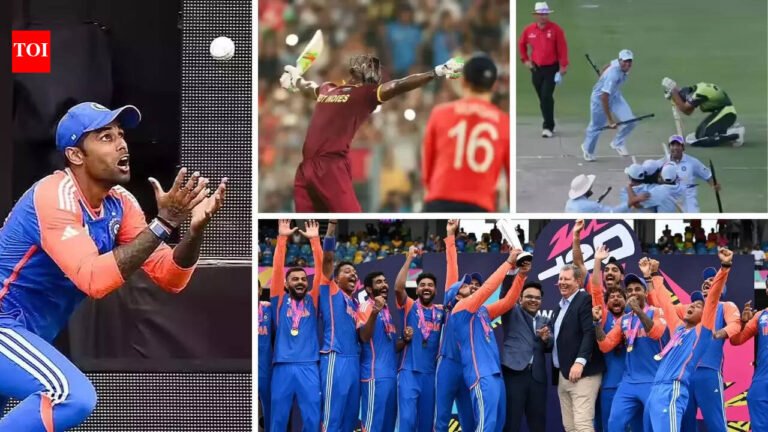
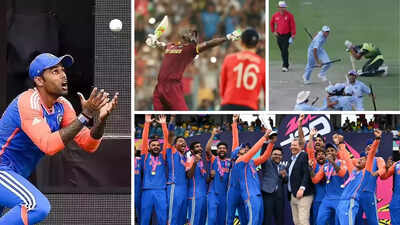
From Misbah-ul-Haq's tackle, Carlos Brathwaite's six to Suryakumar Yadav's catch: T20 World Cup history

The 2026 ICC T20 World Cup is the biggest ever, but also probably the most politically charged, with off-field drama taking center stage amid the turmoil.The 2026 ICC Men’s T20 World Cup will kick off between India and Sri Lanka on Saturday, marking a new chapter in a tournament that began 19 years ago. From its first edition in South Africa in 2007 to the event in the United States and Caribbean in 2024, the T20 World Cup continues to grow in size and scope.2026 will be the tenth edition of the Men’s T20 World Cup, scheduled to be held from February 7 to March 8. The inaugural tournament featured 12 teams. The competition has since expanded to include 20 teams from around the world.So far, six teams have won the championship. West Indies, England and defending champions India are the only teams to lift the trophy twice.

The origins of T20 cricket

T20 cricket emerged in the early 2000s with the aim of attracting new audiences to the sport. The format was first played at professional level in England in 2003 and quickly became popular in other countries.

2007 – South Africa

Final: India beats Pakistan by 5 runsThe first ICC Men’s T20 World Cup set the tone for the format. West Indies batsman Chris Gayle hit his first T20I century against South Africa, scoring four and scoring 117 runs off the first ball of the tournament.The game has several moments that have shaped its legend, including the knockout match between India and Pakistan, Yuvraj Singh’s six sixes in an over and Misbah-ul-Haq’s attempted tackle in the final over.In the final against Rangers, India scored 157 for 5 with Gautam Gambhir scoring 75 runs off 54 balls. Pakistan continued to chase before the Indian bowlers applied pressure. With six balls left in the last four balls and one wicket remaining, Misbah was caught by Sreesanth at short leg off Joginder Sharma to seal India’s victory.

2009 – England

Final: Pakistan beat Sri Lanka by 8 goalsThe Netherlands defeated England in Rhodes in the group stage, while Australia bowed out after losing two games. The final was held just months after the attack on the Sri Lankan team bus in Lahore.Sri Lanka were 32 for 4 and Kumar Sangakkara’s 64 took them to the target of 138 for 6. Pakistan chased down the target with Shahid Afridi hitting an unbeaten 54 and hitting the winner in the bye of the over.

2010 – Caribbean

Final: England beat Australia by 7 wicketsAfghanistan make their debut at the ICC’s major men’s event. Australia reached the final undefeated. Despite not winning in the first round, England qualified on the basis of net run rate.Australia were reduced to 147 for 6 after David Hussey’s 59. England chased down the target, with Craig Kieswetter shooting 63 and Kevin Pietersen 47 to seal a maiden world title.

2012 – Sri Lanka

Final: West Indies beat Sri Lanka by 36 runsBrendon McCullum scored 123 off 58 balls against Bangladesh, the highest individual score in the tournament’s history. In the final, Marlon Samuels’ 78 helped West Indies chase 137 for six.The bowling attack then restricted Sri Lanka with Sunil Narine taking 3 for 9. West Indies sealed the title in Colombo.

2014 – Bangladesh

Final: Sri Lanka beat India by 6 goalsThe Netherlands beat England in the Super Ten. Sri Lanka defeated West Indies in the rain-affected semi-final before chasing India down 130 for 4 in the final.Virat Kohli scored 77 points for India. Kumar Sangakkara’s unbeaten 52 led Sri Lanka to the target, the last time he and Mahela Jayawardene played a T20 match.

2016 – India

Final: West Indies beat England by 4 wicketsAfghanistan defeated West Indies by 123 runs in the group stage. West Indies later eliminated India in the semi-finals.England lost 155 for 9 in the final. With 19 needed in the final over, Carlos Brathwaite hit four consecutive sixes to secure the title.

2021 – United Arab Emirates

Final: Australia beat New Zealand by 8 pointsThe event was rescheduled due to the COVID-19 pandemic. Pakistan defeated India for the first time in a men’s World Cup match.New Zealand posted 172 for four in the final, with Kane Williamson hitting 85. With contributions from David Warner and Mitch Marsh, Australia chased down the target and won their first T20 title.

2022 – Australia

Final: England beat Pakistan by 5 wicketsMany teams faced early elimination in the preliminaries. Despite two defeats, Pakistan reached the final. England defeated India in the semi-finals and restricted Pakistan to 137 runs in the final.Ben Stokes scored an unbeaten half-century to help England complete their chase.

2024 – United States and Caribbean

Final: India beat South Africa by 7 pointsThe tournament marked the first time the ICC World Cup was held in the United States. The United States defeated Canada and Pakistan in the group stage to advance to the Super Eights.Afghanistan defeated Australia to reach the semi-finals. India defeated South Africa in the final to complete their unbeaten run.