Home Blog Page 298

Assam Assembly Elections 2026: Complete list of state chief candidates to go to high-stakes polls on April 9

0

NEW DELHI: The high-voltage campaigning for the Assam assembly elections came to an end on Tuesday, capping two weeks of intense political exchanges, aggressive rhetoric and a slew of promises.The competition mainly revolves around the ruling Bharatiya Janata Party and the opposition Indian National Congress. The BJP campaign centered on ‘jati-mati-bheti’ – protecting the identity, land and culture of Assamese people – and taking a strong stand against alleged illegal infiltration. This narrative remains so prominent that it even overshadows the party’s welfare commitments.Congress party, on the other hand, focuses its campaign on the Chief Minister Himanta Biswa Sarma He also accused the BJP of pursuing divisive politics and viewing the election as a battle against so-called “hate politics”.The election is the first parliamentary vote after the 2023 delimitation exercise, which redrawn constituency boundaries for all 126 seats. These changes have significantly altered the political landscape, particularly affecting Muslim voters of Bangladeshi origin, whose influence is now thought to have been reduced from 31 constituencies to 22 constituencies.The Bharatiya Janata Party is aiming for a third consecutive term in power, while the Congress seeks to recapture the state after being voted out in 2016.

Candidates and Parties in Debate

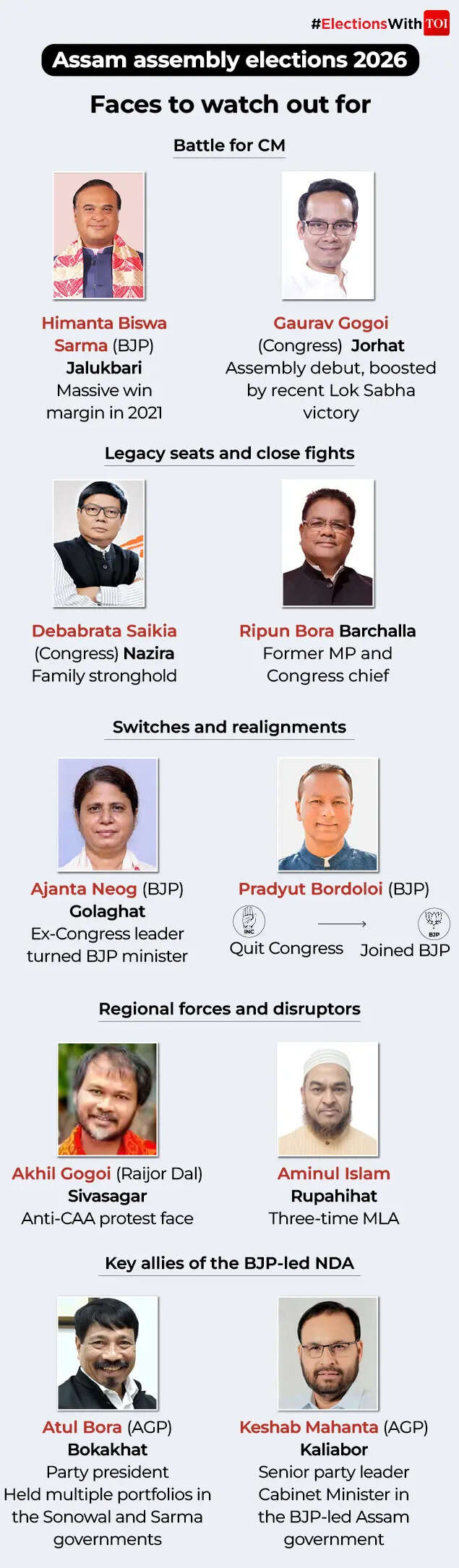
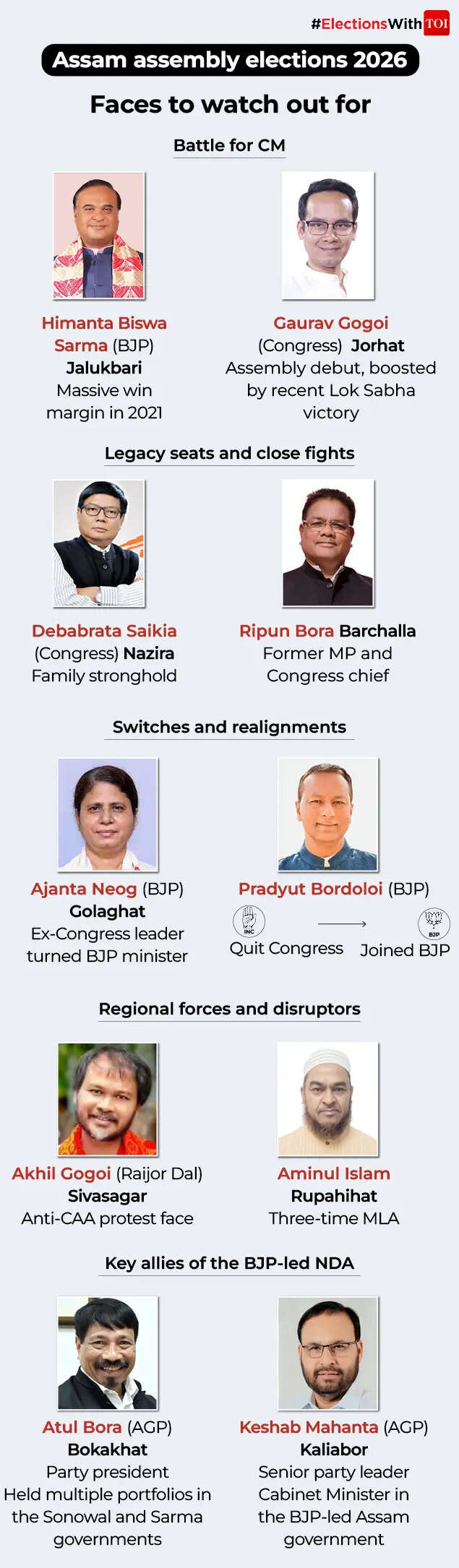
A total of 722 candidates are contesting, including Himanta Biswa Sarma, state Congress president Gaurav Gogoi, opposition leader Debabrata Saikia, All India United Democratic Front president Badruddin Ajmal, Raijor Dal leader Akhil Gogoi Gogoi and Assam People’s Front Chairman Lurinjyoti Gogoi.Among the parties, the Congress party fielded the highest number of candidates at 99, followed by the Bharatiya Janata Party with 90 candidates. AIUDF is contesting 30 seats, while NDA allies Asom Gana Parishad and Bodoland People’s Front are contesting 26 and 11 seats respectively.In the opposition camp, Raijor Dal is contesting on 13 seats, Assam Jatiya Parishad on 10 seats, Communist Party of India (Marxist) on 3 seats and All Party Hill Leaders Conference on 2 seats. Other parties in the fray include Aam Aadmi Party (18), United People’s Liberal Party (18), All India Trinamool Congress (22), Jharkhand Mukti Morcha (16) and 258 independent candidates.

faces to watch out for

faces to watch out for

There are high-profile contests in several constituencies. In Jalukbari, Sarma is seeking a sixth consecutive term against Congress candidate Bidisha Nyog. In Jorhat, Gaurav Gogoi is trying to make his parliamentary debut against the BJP’s Hitendranath Goswami.AIUDF chief Badruddin Ajmal is in a triangular contest with AGP’s Shahabuddin Mazumdar and AJP’s Rejaul Karim Chowdhury.In Sibsagar, Akhil Gogoi faces a three-corner contest with Jayantha Hazarika of the BJP and Pradeep Hazarika of the AGP. AJP’s Lurinjyoti Gogoi and BJP’s Chakradhar Gogoi engaged in a direct fight in Khowang.AGP president and minister Atul Bora is locked in a triangular contest in Bokakhat with Raijor Dal’s Hari Prasad Saikia and former independent MP Jiten Gogoi. Meanwhile, Minister Keshav Mahanta faces Raijor Dal candidate Pradip Kumar Baruah in Kaliabor.Voting will be conducted at 31,490 polling stations in 35 districts from 7 am to 5 pm. Chief Electoral Officer Anurag Goel said webcasting facilities have been activated at all polling stations for real-time monitoring, while the Central Armed Police Force, including Central Reserve Police Force personnel, has been deployed to ensure security.A total of 2.5 billion voters are eligible to vote, including 1.25 billion female voters and 318 third gender voters. The electorate also includes 642,000 first-time voters, 250,000 voters aged 80 and over – including 2,466 centenarians – and 205,000 people with disabilities.Voting will be held in phases on Thursday and the results will be announced on May 4, when it will be revealed who will form the next government in Assam.

‘We don’t know’: US officials claimed they had ‘no idea’ before Trump finalized Iran truce, report says

0

The United States, Iran and Israel agreed to a two-week ceasefire at the last minute ahead of a deadline given by US President Donald Trump and threatening to start a bombing campaign that he said would destroy Iranian civilization.

U.S. defense officials were kept in the dark until Trump made his decisive decision. (AFP)

Yet until Trump makes a decisive decision on a truce with Tehran, U.S. defense officials remain in the dark.

Axios quoted a defense official as saying: “We don’t know what’s going to happen. It’s crazy.” According to Axios, hours before the ceasefire was announced, U.S. troops in the Middle East and Middle East officials Pentagon has been preparing for a massive bombing of Iranian infrastructure. They’re also trying to figure out Trump’s tendencies.

Also Read | 10 Iran asks US to ‘accept’ two-week ceasefire

Immediately after Pakistani Prime Minister Shehbaz Sharif unveiled the terms of a possible ceasefire on X and called on both sides to accept it, Trump began receiving a barrage of phone calls and text messages.

Hawkish allies and confidants are said to be urging him to reject the deal. Therefore, even those among his close aides who may have spoken to him an hour or two before the ceasefire were convinced that he would not accept its terms.

U.S. allies in the region are said to have also anticipated a U.S. attack and are preparing for massive Iranian retaliation. In Iran, civilians are fleeing their homes to avoid what they believe is an imminent attack.

How was secret diplomacy conducted before the armistice?

Hours before Trump’s deadline and for the first time since the conflict began, Iran’s Supreme Leader Ayatollah Ali Khamenei directed his negotiators to work toward a deal, Axios said, citing an Israeli official, a regional official and a third source.

Axios said Iran’s 10-point counterproposal was not welcomed by Steve Witkoff, the U.S. envoy to the Middle East, according to 11 sources with knowledge of the negotiations. Vitkov allegedly told the mediator that the deal was “a disaster, a disaster,” according to sources.

Also Read | No uranium enrichment, tariffs and sanctions relief: Trump says US is working closely with Iran

Thereafter, “chaotic” back-channel negotiations began, with Pakistani mediators passing a new draft between Vitkov and Iranian Foreign Minister Abbas Araghchi. In addition to Islamabad, the foreign ministers of Egypt and Türkiye are also involved in efforts to secure a ceasefire. China has also suggested that Tehran seek a ceasefire.

Mediators later secured U.S. approval for an updated two-week ceasefire proposal late Monday. The proposal was subsequently approved by Khamenei, with Iranian Foreign Minister Araghchi also playing a central role in the negotiations and pushing the Revolutionary Guards to accept the deal, Axios reported.

Pakistani illegal truck driver arrested in U.S. three years after killing Maryland man in wrong-way crash

0

巴基斯坦非法卡车司机在错道事故中杀死马里兰州男子三年后在美国被捕

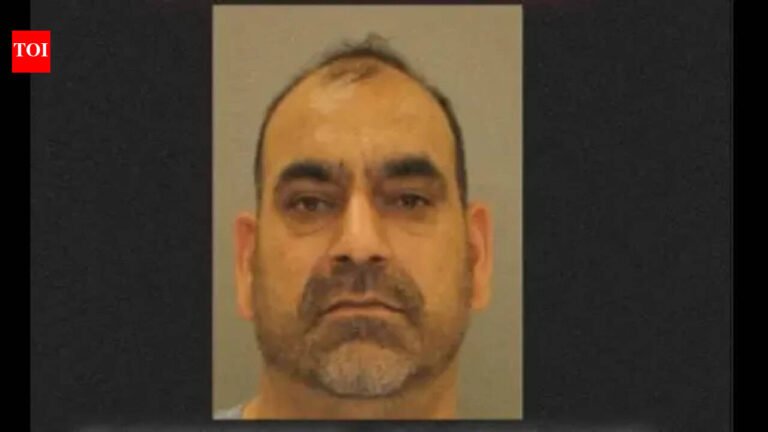
Dawood Hussain, a Pakistani truck driver living illegally in the United States, has been arrested three years after he killed a Maryland man in a car crash.

A Pakistani man has finally been caught by U.S. authorities three years after he caused a fatal car crash in 2023 that killed a Maryland man. However, the arrest was not carried out by law enforcement but by the Immigration Department, which arrested Pakistani citizen Dawood Hussain in March. He allegedly drove a tractor-trailer the wrong way down a Pennsylvania highway and struck Hendry Tamares Nunez’s vehicle.Both drivers tried to prevent a head-on collision, but Nunez’s car skidded, struck a guardrail, then went down an embankment and rolled into a tree. The engine caught fire and Nunez died at the scene. Hussein’s tractor-trailer was parked in the middle of Interstate 83 after being damaged in the crash.Hussein was charged with 2025 vehicular homicide, a third-degree felony. But he was not detained by police. USCIS alerted ICE while Hussein was being interviewed by immigration officials in Virginia. When he arrived for an interview on March 13, deportation officers arrested him without incident, the Daily Caller reported. U.S. Citizenship and Immigration Services said Hussein had been living in the country illegally.“Under President Trump’s leadership, USCIS remains committed to protecting our communities, helping ensure dangerous illegal immigrants are removed from our country, and supporting the president’s call for tougher measures to prevent future truck tragedies,” USCIS spokesman Matthew Tragsser said when questioned about why an illegal immigrant was driving an 80,000-pound tractor-trailer on U.S. roads. In the October 2023 incident, Hussein ignored wrong-way and one-way signs, drove the truck south on Interstate 83 and accelerated north in the southbound lane at 44 mph.The victim, Nunez, is a naturalized U.S. citizen and the father of two children.

The government requires 34 major airports to reduce parking fees for domestic flights taking off and landing for three months

0

NEW DELHI: In a bid to provide some relief to airlines severely affected by the US-Iran war, the aviation ministry has directed 34 major airports to reduce landing and parking charges for domestic flights by 25 per cent for three months. Accordingly, the Airports Economic Regulatory Authority (AERA) on Tuesday issued an order directing airport operators in Delhi, Mumbai, Bengaluru, Hyderabad and others to do so for a period of three months from Tuesday. The government is looking for ways to provide some relief to Indian airlines, most of which are struggling to survive. Therefore, the increase in domestic ATF this month is limited to 25%. With the assembly elections in important states like Kerala and West Bengal coming up, the aviation ministry is doing everything possible to try and ensure that at least the rise in domestic air tickets does not defy gravity. The ministry made a rare intervention in airport tariffs given that most airports operate under the PPP model.The order reads: “Landing and parking charges (part of aviation tariff) at all major airports shall be reduced by 25% from the prevailing tariff. This reduction shall be effective immediately and shall be applicable to all domestic flights for a period of three months. The decision shall be reviewed before the end of the three-month period. Any unrecovered situation in the total revenue requirement shall be rectified during the determination of tariff in the next control period.”This month, oil sales PSUs have increased the base price of aviation turbine fuel for domestic and international flights by more than 25% and more than 100%, respectively. Combined with western airspace restrictions forcing airlines to take longer routes to Europe and the Americas, airlines have been hit hard, in addition to a sharp reduction in flights on the lucrative Gulf route, coupled with a weak rupee. Air India Group and IndiGo have scrapped fuel surcharges.

Boulder County Goat Trail Fire: Sheriff’s Office issues emergency warning

0

Boulder’s Goat Trail Fire county People were evacuated door-to-door early Wednesday morning, CBS News reported.

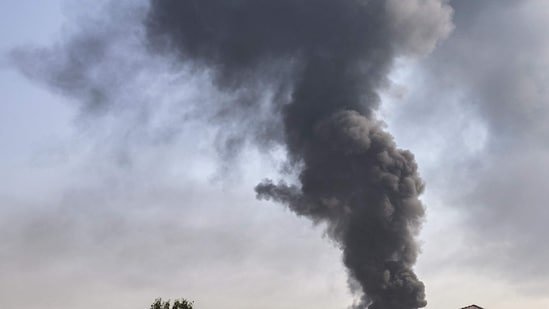
Goat Trail Fire Burns: A wildfire broke out near the 200 block of Hawthorne in Boulder County Wednesday morning, prompting evacuations. (Representative photo) (AFP)

The wildfire broke out near the 200 block of Hawthorne in north Boulder. Fire officials reported that the fire, which was estimated to be 1.7 acres in size and was accurately measured using drones, started around 3 a.m.

Police conduct door-to-door checks on Acorn Lane as evacuations are underway Neighborhood. Concerns remain as dryness persists in the foothills, coupled with unusually warm temperatures and minimal precipitation.

“Whenever we issue a warning, we always tell people if you need to collect medical equipment or medications or need a little extra time, even if things are looking a little better now, we want to make sure people are prepared, make sure you have your stuff ready and ready to go in case things change,” Vinny Montez with the Boulder County Sheriff’s Office said.

Also read: Dianna Russini and Mike Vrabel react to affair accusations after Sedona trip photos go viral

Boulder Fire Department releases statement

Meanwhile, the Boulder Fire Department urged people to avoid the area and let rescue teams do their work.

“Multiple crews, including Boulder Fire Rescue, are continuing to work the Goat Trail Fire area west of the 200 block of Hawthorne Ave. The fire is estimated to be just under 2 acres. Please avoid the area and allow crews to work.”

“Some community members are under evacuation warnings. On the BocoAlert.org website, to view issued emergency notifications, click on the menu in the upper right corner and select ‘Notifications,'” it added.

Goat Trail Fire: Cause of wildfire under investigation

Several deputies from the Boulder County Sheriff’s Office visited the home to notify residents of the situation. evacuation Warning as many people are still sleeping.

“While there was no formal evacuation order issued, they did it just to make sure people were aware and it was for safety,” an official said, according to Denver Seven. “It was in the middle of the night when the fire broke out. Fires are dangerous when people are asleep and don’t realize it.”

The cause of the fire is under investigation and will be investigated.

BJK Trophy: Vaishnavi, Sahaja score milestone wins; India beat New Zealand

0

BJK Trophy: Vaishnavi, Sahaja score milestone wins; India beat New Zealand
Photos by Sahaja Yamalapalli (Photo by DLTA)

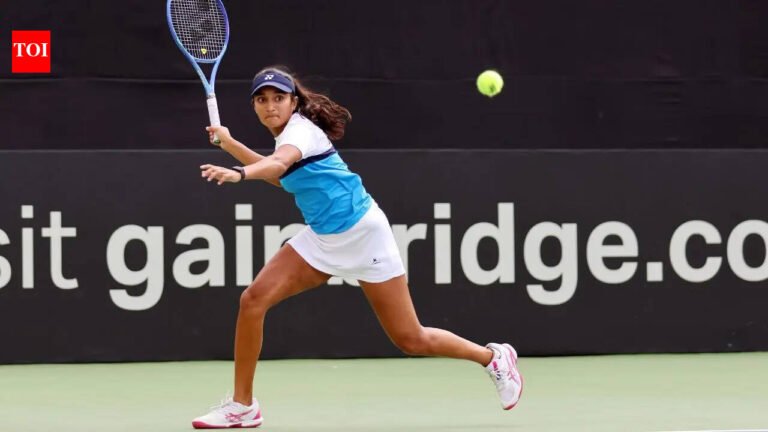
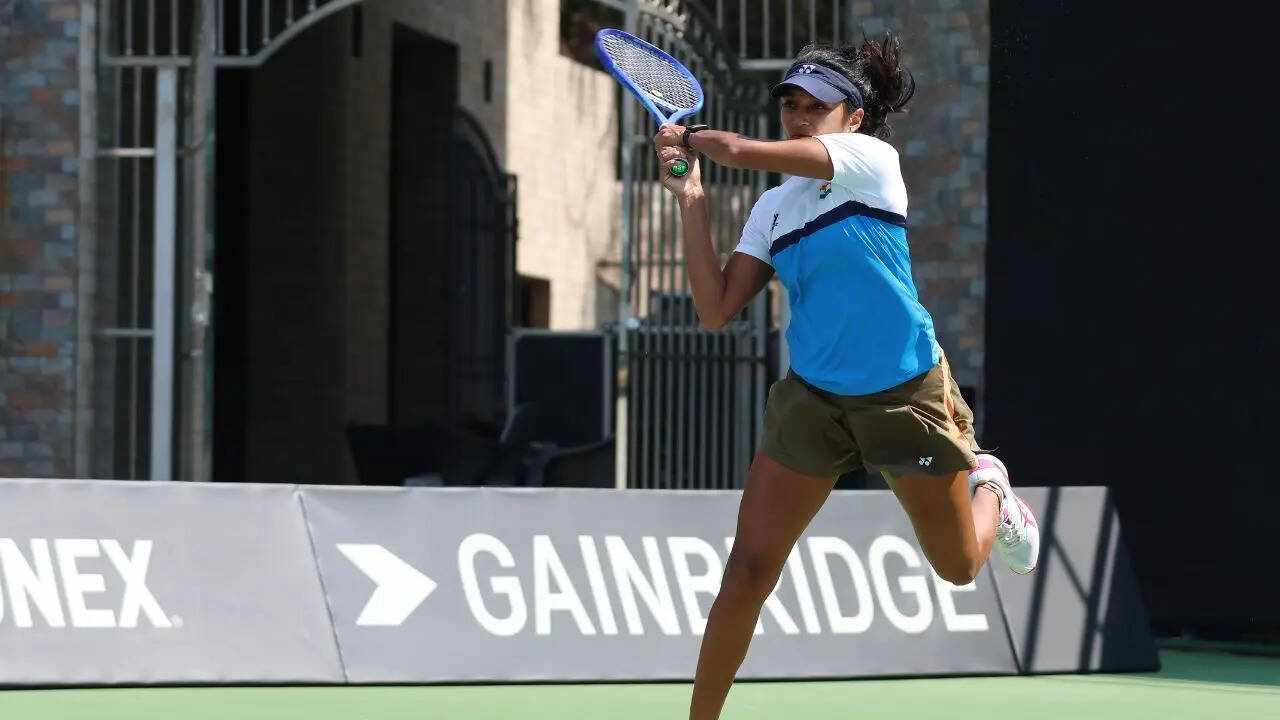
New Delhi: Like it delhi weather Over the past two days, from the cold on Tuesday night to the warm and hot on Wednesday afternoon, Vaishnavi Adkar’s luck and performance in the BJK Cup have also been contrasting.She let nerves define her debut with the national team when she was knocked down by a southpaw shot against Indonesia’s Aunchisa Chanta on Tuesday.A day later, in the Asia/Oceania Group 1 match against New Zealand, she scored with a forehand and her service error was mitigated. In a match that lasted 1 hour and 30 minutes, she defeated New Zealand’s Ash Das 6-2, 6-4 and achieved her first victory on behalf of the national team.

watch

Vishal Uppal on India’s BJK Cup opportunities, tennis growth and why doubles is more exciting than singles

“This is something I’ve been looking forward to for years. Like being on the team, not just as a substitute but as one of the five players. So to get the win is really special because it means a lot. Because there’s a lot of emotion behind it,” she told reporters after the win.“So it feels really special. Especially being at home and having the support of the crowd and everything. It really means a lot,” she continued.The far more experienced Indian emerged as the top-ranked Indian this week, taking full advantage of the inconsistent performance of world No. 1151 Das. Ironically, Adka ended the first set with an ace less than 24 hours after her serve hit a low point multiple times. The 21-year-old was broken after his lead was cut, taking the second set to 4-4. But the Indian hit back immediately as Das’s number of errors went against her heading into the decider. She acknowledged that changing weather and conditions do play a role.“Yeah, when it’s cold, the ball moves a little faster. And when it’s warm, the ball feels heavy and moves a little bit slower. So it was definitely more controlled today than yesterday. So I think that really helped me a lot as well,” she said.

Sahaja Yamarapali in action (photo by DLTA)

Sahaja Yamarapali in action (photo by DLTA)

Vaishnavi was not the only Indian to celebrate a milestone win. Sahaja Yamalapalli also registered victory in Indian colors for the first time in the team event. Since her debut against the Chinese team in 2024, she has experienced competitions with New Zealand, Thailand, South Korea, Slovenia, the Netherlands and Thailand, and finally only finished second.After losing in three sets to Patcharin Cheapchandej in play that resumed on Wednesday morning, Sahaja once again took to the court looking to claim her first win.It took her a full 76 minutes to defeat Valentina Ivanov 6-1, 6-3, not only sealing her first ‘W’ but also ensuring an unbeatable scoreline for India.“Of course I’m happy. I know my record in the BJK Cup wasn’t very good, but I also played very tough games. So it’s hard to get a W. But I’m happy to get a win.“I don’t want to look at it that way either. I want to take it one match at a time and focus on what I can do rather than my record,” she told TimesofIndia.com after the match.

Vaishnavi Adkar serves (photo by DLTA)

Vaishnavi Adkar serves (photo by DLTA)

Sahaja, who came through the American college system, struggled early but quickly recovered, winning his next eight games in a row, including the first set along the way.Ivanov tried to mount a comeback in the second set, bringing the ball back on serve and then saving three break points but was unable to fend off the fourth.Yamalapalli sealed the deal with his first chance of the game, forcing Ivanov into a mistake.Rutuja Bhosale and Ankita Raina defeated Monique Barry and Erin Routliffe 6-4, 6-2 to beat India 3-0 for their second win of the day.

BJK Cup Asia/Oceania Group 1 Day 1 Results

  • India 1-2 Thailand
  • South Korea 3-0 Mongolia
  • New Zealand 1-2 Indonesia

BJK Cup Asia/Oceania Group 1 Day 2 Results

  • India 3-0 New Zealand
  • Indonesia 3-0 Mongolia
  • South Korea 3-0 Thailand

Assam Assembly Elections 2026: The battle for identity, power and electoral ‘Asomya Jatiyotabad’

0

Himanta Biswa Sarma, Atul Bora (left); Gaurav Gogoi, Lurin Jyoti Gogoi, Akhil Gogoi (right)

New Delhi: As the people of the ‘tea state’ prepare to elect a new government on April 9, ‘Asomiya jatiyotabad’ (assamNationalism) remains a central issue in Assam. For decades, the state has grappled with anxieties about protecting its cultural and demographic identity, particularly from the threat of “outsiders,” primarily illegal immigrants.As the campaign winds down, what’s playing out in the state’s towns, villages and remote corners is not just an overt political contest, but a quieter, deeper churning around identity politics.The 2026 assembly elections are therefore not just about who forms the next government, but a high-stakes referendum on Assam’s identity, power and future political direction.

,

Decline of regional parties?

One of the most striking changes in Assam’s political landscape is the decline in autonomy of regional parties. Historically, Assam’s politics have been shaped by strong regional movements that emerged out of demands to protect Assam’s identity. The Assam movement led to the formation of political platforms such as the Asom Gana Congress, which for a time dominated the political narrative in the state. However, the relevance of these regional powers has been questioned over the years.Political analysts believe that the “hijacking” of Asomia Jatyotabad by national parties, coupled with its superior organizational and financial resources, has forced regional parties to form alliances for survival.Columnist Brojan Dekar points out that identity politics has long been at the heart of elections in Assam. “Preserving culture, language and identity has always been a matter of concern for the people of Assam. Different political dispensations have exploited this in different ways,” he told PTI.He pointed out, bjpComing to power in 2016 was based on the same foundation.“If you saw the BJP fully coming to power in 2016, you would have seen that the poll slogan was ‘jati, mati, bheti’ (community, land, home), a direct reference to safeguarding indigenous identity. It remains committed to taking action against illegal Bangladeshis in the state in the 2026 elections,” he added.

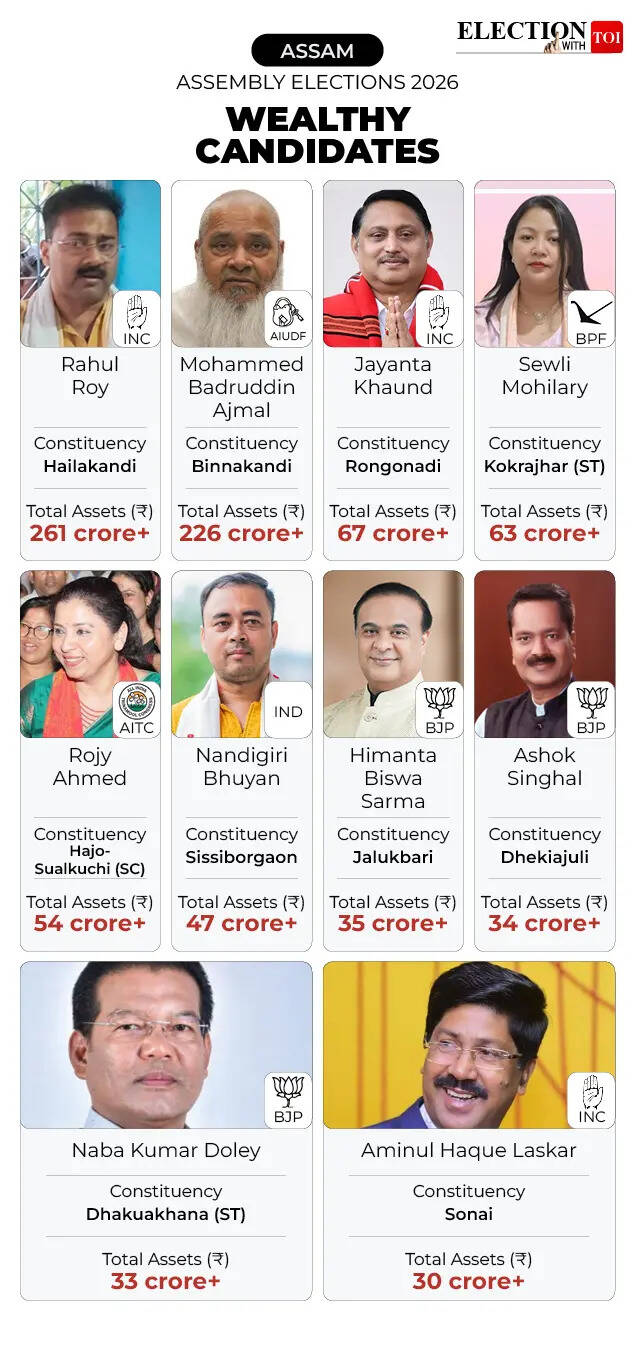
wealthy candidate

The transformation of AGP’s political journey

The journey of the Assom Ghana Assembly reflects the wider challenges facing regional parties. The AGP once positioned itself as the main defender of Assam’s national identity and led the government in 1985 and 1996. Today, however, it finds itself a junior ally in a BJP-led alliance.The party’s roots lie in the Assam Agitation (1979-1985), a mass movement led by the All Assam Students’ Union and supported by the All Assam Ghana Sangram Parishad. The unrest focused on demands to identify and deport “illegal immigrants” and sparked widespread protests, strikes and political mobilization across the state.The movement finally signed the Assam Accord on August 15, 1985, after then Prime Minister Rajiv Gandhi held talks with its leaders. The agreement lays out a framework for detecting and deporting illegal immigrants while promising political and economic security to the people of Assam.Soon after, movement leaders turned to electoral politics. In October 1985, at a convention held in Golaghat, several regional groups, including the Asom Jatiyatabadi Dal and the Purbanchaliya Loka Parishad, came together to form the Asom Gana Parishad.Building on the momentum of the Assam Accord and strong regional sentiment, the AGP contested the 1985 Assembly elections with a focus on protecting Assam’s identity, economic development and greater national autonomy. The party fielded 107 candidates, won 64 seats, and formed Assam’s first regional government. In 1996, it came to power again in a similar manner.Over the years, however, the party’s influence has waned.Highlighting the shift, retired academic Nava Kumar Mahanta said the party was now contesting in far fewer seats and had seen significant changes in its candidate profile.“What is even more worrying now is that 13 of this year’s 26 candidates are Muslims, many of whom speak Bengali, a group the AGP had earlier suspected of being illegal immigrants,” he said.He added that while the AGP has secular views, it has historically distanced itself from Bengali-speaking Muslims, a stance that appears to have changed in recent years.

parliamentary vote

The Rise of the “Himanta Brand”

The core of this parliamentary election is Himanta Biswa Sarmais seeking a second consecutive term as Chief Minister. In 2021, in a state historically defined by ‘Jatiyotabad’ and ethnic identity, the BJP leadership chose Brahmin Sarma over incumbent Sarbananda Sonowal, who hails from Assam’s indigenous community.Over the years, Sarma has cultivated a unique political persona, often referred to as “Brand Himanta” or even colloquially as “Mama” (uncle), blending aggressive rhetoric with welfare-driven governance. His campaign this time relies heavily on a combination of strong messaging and emotional appeals.When Hemanta sought re-election as CM, anti-palace tirades, no-holds-barred approach, strong welfare propaganda and jati, mati, bheti (identity, land, home) propaganda became key pillars of his campaign strategy.Apart from this, the BJP-led government has also emphasized on welfare schemes and infrastructure development to consolidate its support base. The ruling National Democratic Alliance (NDA), led by Himanta, consists of the Bharatiya Janata Party, Asom Gana Parishad, Bodoland People’s Front and Rabha-Hasong Joutha Mancha.For the BJP, the stakes are high. After forming governments in 2016 and 2021, the party is now aiming for a third consecutive term, this time aiming to gain a majority on its own.

congress The bank is at Gaurav Gogoi

On the other side of the political spectrum, the Congress party is trying to make a comeback by appointing Gaurav Gogoi as its chief ministerial spokesman.The party has launched an aggressive campaign against Sarma, targeting his record in power and ideological positioning. In a stinging attack earlier this year, Gogoi questioned the chief minister’s credibility on identity politics.“What is he trying to portray himself as? Does he believe he is a great Hindu leader or a great Kilungiya leader?” Gogoi asked on February 4, questioning Sarma’s assertion that he represented the interests of Assam’s indigenous people.He further pointed out that support for the Citizenship Amendment Act (CAA) is a controversial issue in Assam. By invoking the term “Khilonjiya” (referring to the “indigenous” indigenous community of Assam), Gogoi sought to reposition the Congress within an identity discourse that has traditionally favored regional and nationalist narratives.

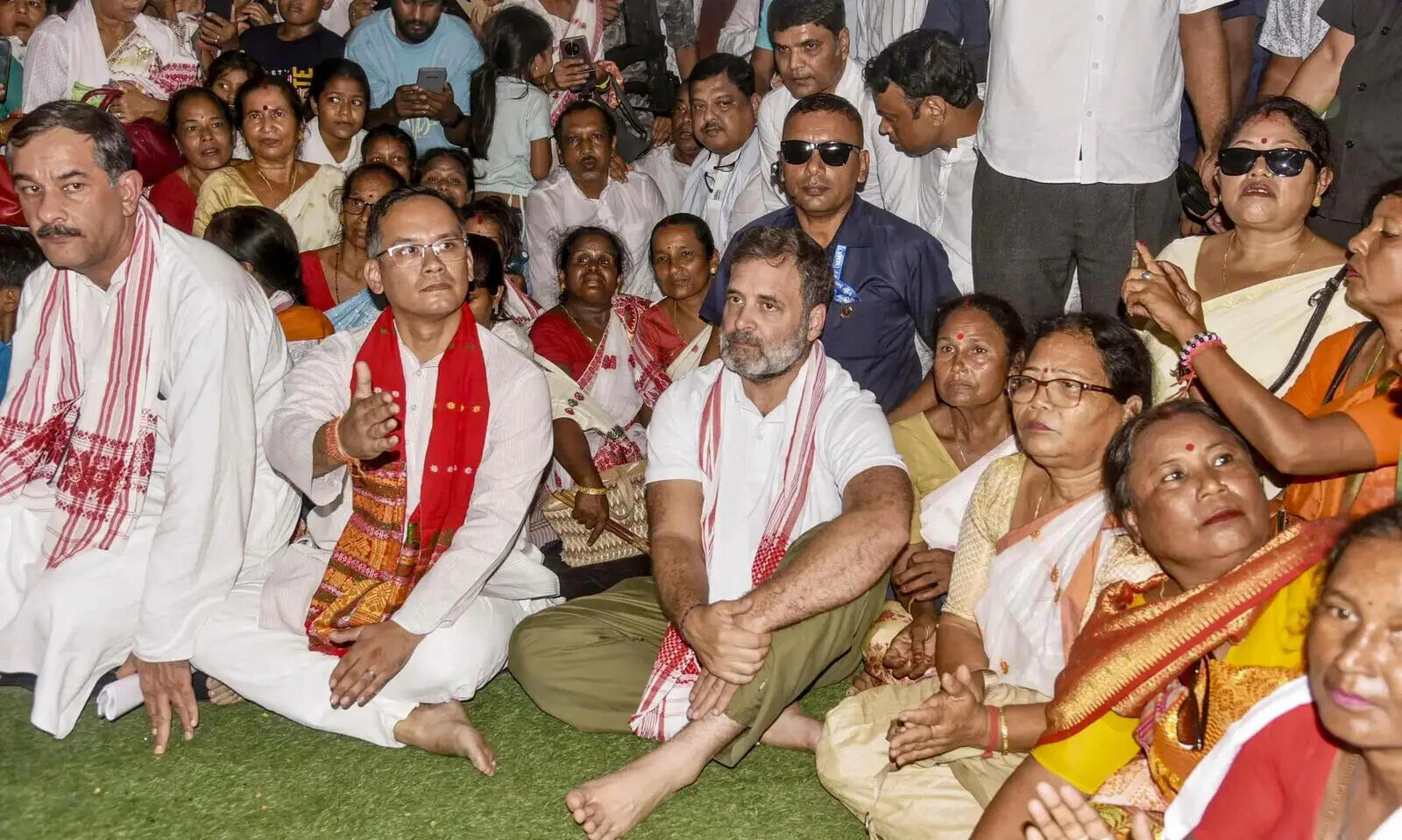
Rahul Gandhi paid tribute to late singer Zubin Garg in Guwahati.

opposition alliance

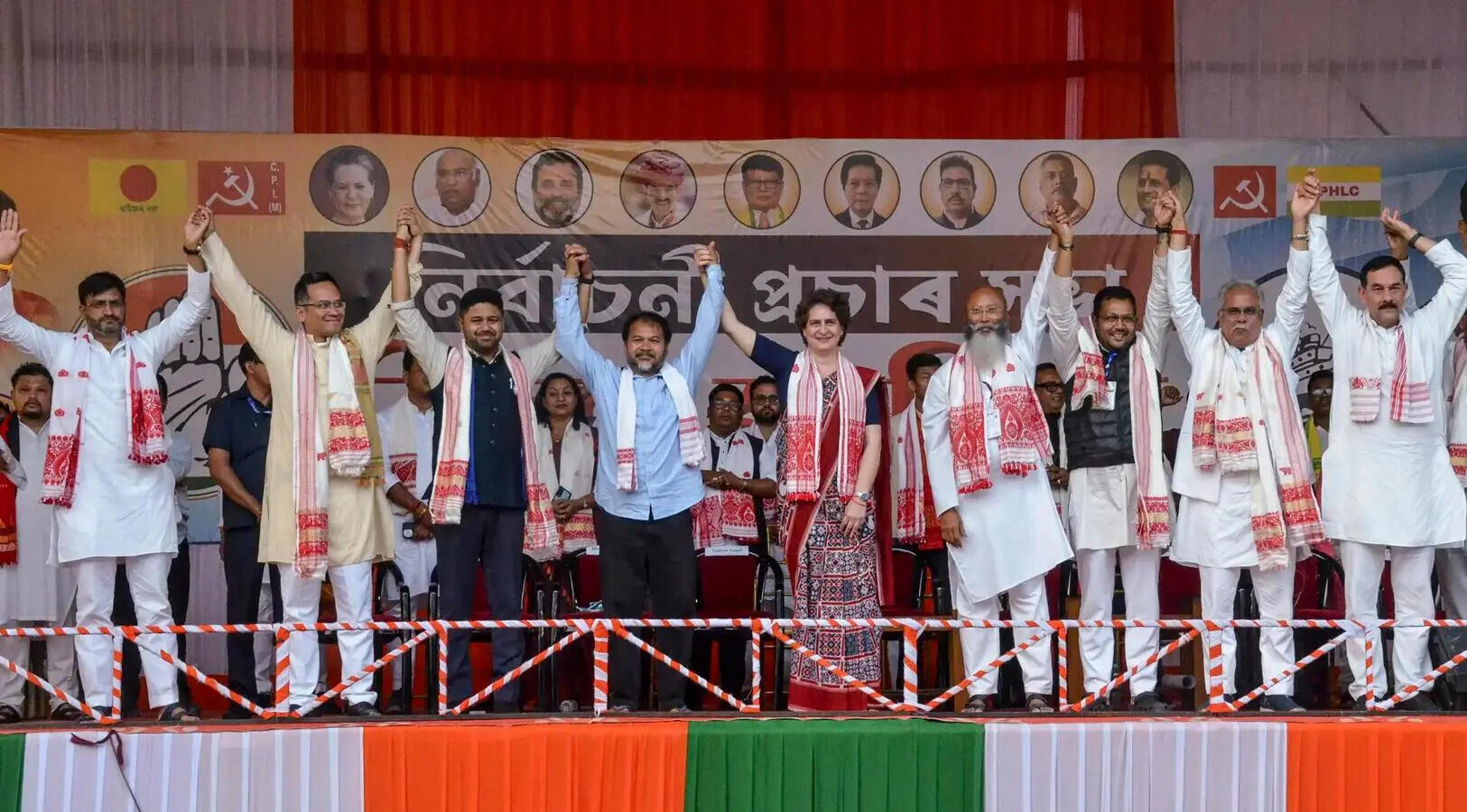
To counter the BJP’s electoral machinery, the Congress formed a broad six-party opposition alliance that included left and regional forces.The alliance includes the Communist Party of India (Marxist), Communist Party of India (Marxist-Leninist) Liberation Party, All Party Hill Leadership Conference, Assam People’s Party led by Lulin Jyoti Gogoi and Raijor Dal led by Akhil Gogoi. Together they work to solidify anti-incumbency sentiment and present a united front against the ruling coalition.The alliance has announced candidates for 122 of the 126 seats, with the Congress contesting most of the 94 constituencies. The Raijor Dal will contest 11 seats, including two “friendly fights” with the Congress.Akhil Gogoi, who won from Sivasagar in the last election but was jailed on sedition charges related to the anti-CAA protests, is again in the fray from the same constituency. Over the years, he has built a strong grassroots profile through sustained activism and mobilization.
.

Assam polls: 3G

The BJP has collectively targeted the parties even before they have officially come together, treating them as a de facto bloc.The BJP dubbed the trio “3G” and referred to them pejoratively as “Miya, Miya Pro and Miya Pro Max” in an apparent attempt to portray them as pro-Muslim. At the same time, it warned Lulin Jyoti Gogoi that allying with the Congress would be tantamount to betraying “Assamese nationalism”.Both Gogois belong to the Ahom community, a small but socially and politically influential community, especially in Upper Assam. The Ahom dynasty founded by Sukapa ruled the region for nearly 600 years until the arrival of British rule in the early 19th century, making the community’s political alignment critical in several constituencies.

Congress, BJP and the ‘Jatiyotabad’ narrative

Interestingly, both the Congress and the BJP have at different times tried to capitalize on the Assamese nationalist narrative.Analysts trace the shift to the former chief minister’s tenure Tarun Gogoithey have attempted to address identity issues through measures such as updating the National Register of Citizens (NRC). The BJP later expanded on this narrative with its “jati, mati, bheti” campaign, positioning itself as the leading defender of indigenous identity.This overlap blurs ideological boundaries and makes it difficult for regional parties to regain their original political space.

past election trends

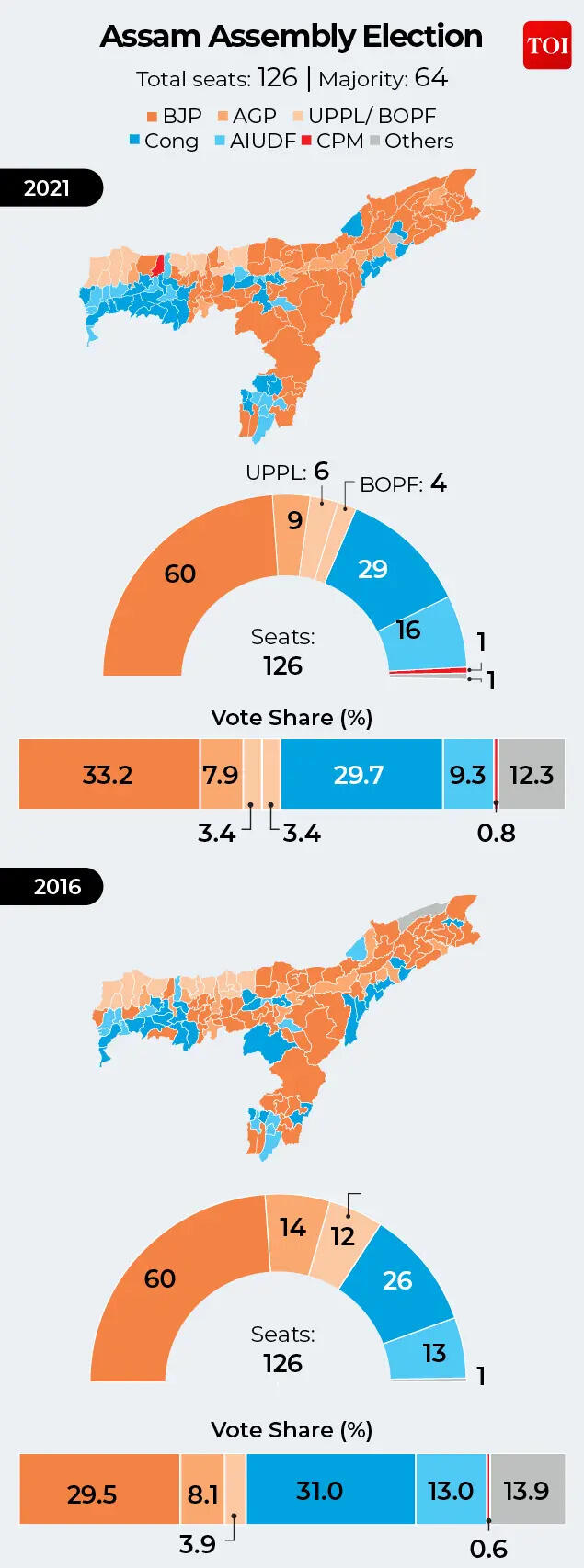
The rise of the BJP in Assam has been remarkable.The party, which had just five seats in 2011, surged to 60 seats in the 2016 assembly elections, ending 15 years of Congress rule under Tarun Gogoi. With the support of allies AGP and BPF, the NDA won 86 of the 126 seats and formed the government with Sarbananda Sonowal as chief minister.The momentum continued in 2021 when the BJP again won 60 seats and retained power, with Himanta Biswa Sarma taking over as the 15th chief minister of the state.Now, in 2026, the party is looking to further consolidate its position.

High-profile candidates and key contests

The 2026 elections are fiercely contested, with 722 candidates competing in 126 constituencies. Notable names include Himanta Biswa Sarma, Gaurav Gogoi, Badruddin Ajmal, Speaker of Parliament Biswajit Daimary, Leader of Opposition Debabrata Saikia, and senior ministers including Ranoj Pegu, Chandramohan Patowary, Atul Bora, Keshab Mahanta, Ajanta Neog and Ashok Singhal.Regional leaders like Akhil Gogoi and Lurinjyoti Gogoi are also major contenders.

faces to watch out for

bigger problem

As Assam heads into this crucial election, the race is not just about who forms the next government.Can the BJP transform its dominance into an independent majority? Can Congress mount a credible challenge with its broad coalition? Perhaps most importantly, can regional parties regain influence in a political landscape increasingly dominated by state forces?Despite its current limitations, analysts believe regional politics is far from dead.“The sentiment among Assamese voters and the public towards ‘Asomiya Jatiyotabad’ is very high. People understand that a strong regional voice can only safeguard it,” Press Trust of India (PTI) quoted Brojen Deka as saying.The 2026 Assam Assembly elections are in many ways a test of competing narratives. On one side is a powerful national party seeking to consolidate its dominance, and on the other is a fragmented but determined opposition trying to regain lost ground.In between lies the enduring question of Assamese identity, its meaning, its guardians and its future.

Why did New York disappear in 1977 under snow that never fell from the sky? world news

0

Why New York disappeared in 1977 under snow that never fell from the sky

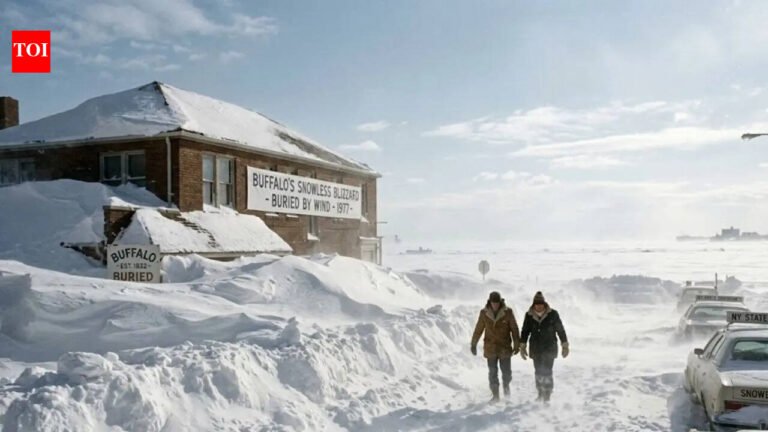
In late January 1977, New York State’s neurobiology was challenged by meteorology when a freak snowstorm, or surface blizzard, used sustained winds near hurricane speeds (69 miles per hour) to blow snow from Lake Erie into Buffalo. Usually, when it snows, clouds supply the snow that accumulates on the ground from the sky. In this case, winds brought snow totals to or above 45 feet in Buffalo and caused whiteouts or zero visibility in Buffalo. This event shows that because of the amount of snow already on the ground, snowstorms can occur even without the actual addition of new flakes. By demonstrating that snowfall can occur due to the use of strong winds to transport previously fallen or formed snow particles, this event further demonstrates that weather does not necessarily rely on new materials, but only on pre-existing materials in the moving environment.

How New York State disappeared beneath snow that never fell from the clouds

The 1977 winter storm in Buffalo, New York, was caused by an unusual weather event known as a “ground blizzard.” A weather system in which strong winds are responsible for transporting snow already on the ground rather than atmospheric precipitation.Prior to January 28, Buffalo had already seen record snowfall. Because Lake Erie is frozen and covered with a thick layer of loose powder, when the arctic cold front hits, high-speed winds with gusts in excess of 75 mph blow across the lake, causing large amounts of snow to be blown into the city of Buffalo, causing snow.The snow events caused by this storm were not due to precipitation as the weather was mostly clear with no precipitation. Otherwise, large amounts of blowing snow would consist only of recycled ice crystals, creating weather events that cannot be detected by traditional weather satellite precipitation sensors.

Why the frozen surface didn’t stop the storm

While most lake-effect snowstorms occur in open water when conditions allow enough moisture to form in the form of clouds, the 1977 event occurred after the entire lake surface was covered in ice. Snow left over from the previous month’s cold snap has left the remaining snow in the lake very light and dry, according to the National Oceanic and Atmospheric Administration. Weather-related wind speeds different from normal conditions, combined with extremely low temperatures, created the conditions necessary for prolonged periods of zero visibility. The situation left 17,000 people trapped in their cars and workplaces in western New York state and southern Ontario.

How the Army reopens Buffalo

The wind not only blows away the snow, but also compresses it, turning it into a hard, concrete-like substance. High wind speeds also compacted individual snow crystals, causing snow piles to exceed 30 feet in height and thus be too heavy to be removed with typical snow plowing equipment. president jimmy carter Issued his first federal “emergency” declaration due to the snowstorm and launched Operation Snow. The U.S. Army Corps of Engineers and National Guard deployed heavy industrial loaders and trenchers to carve roads through the ice.

Dianna Russini Net Worth: Do Dianna Russini and Kevin Goldschmidt have any kids?

0

Diana Russini The New York Times and New England Patriots head coach Mike Vrabel are currently facing backlash after photos surfaced of them taken at a luxury hotel.

Dianna Russini is married to Kevin Goldschmidt and they have two children. (Instagram/Diana Russini)

The two were seen enjoying each other’s company and embracing each other, leading fans to speculate about a romance. However, both Mike Vrabel and Diana Russini refuted these claims.

Diana is the wife of Kevin Goldschmidt, and the two began dating in 2015. However, the two kept their relationship private until they got engaged in July 2020.

Goldschmidt was born in New York He subsequently earned a bachelor’s degree in finance from Pennsylvania State University in 2007.

The couple tied the knot in 2020 amid the Covid-19 pandemic, opting for a low-key, socially distanced ceremony.

Celebrating their third wedding anniversary on September 26, 2023, Diana shared a wedding photo on Instagram with the caption: “2 babies. 1 new job. 0 regrets. Happy anniversary to my love.”

this pennsylvania state university Alumni are currently employed as senior managers at the well-known fast food restaurant Shake Shack.

Also read: Dianna Russini and Mike Vrabel shut down romance rumors after Sedona trip photos go viral

Dianna Russini and Kevin Goldschmidt Net Worth

Goldschmidt reportedly earns more than $105,000 a year, and some reports suggest the couple’s combined net worth is estimated to be around $5 million, according to Heightline.

Diana and Kevin Goldschmidt’s children

After getting married during the pandemic in 2020, the couple welcomed a son named Michael Andrew the following year.

Michael was born on August 8, 2021, weighing 7 pounds, 9 ounces and measuring 20 inches long.

The couple welcomed their second child in 2023.

Celebrating their second anniversary on September 26, Diana shared on social media: “Obviously, every year of marriage comes with a baby.”

“It’s like my mom loves to yell at us ‘You two need to stay away from each other and don’t even look in the same direction! Leave the kids alone!'”

A month later, on October 11, 2023, she announced the arrival of their new son, Joey: “We have another baby… again!”

Christians at a crossroads: Will the UDF hold on to its traditional foundations?

0

As Kerala’s April 9 assembly elections approach, the state’s political landscape is laser-focused on minorities, especially Christian voters. For decades, the United Democratic Front (UDF) has relied on Christian voters, especially Syrian Christians in central Kerala, to secure constituencies in key constituencies. By 2026, however, this traditional alliance is being tested by a combination of socioeconomic issues, political realignment, and perceptions of public favoritism, raising questions about whether the UDF can maintain its historical dominance.Central Kerala, spanning the districts of Kottayam, Idukki, Pathanamthitta, Ernakulam and Thrissur, has been a decisive battleground. The region’s Christian communities, while historically aligned with Congress, increasingly evaluate parties based on current governance, performance and minority welfare rather than long-term allegiances. Political defections have further complicated the problem, especially the Congress(M) in Kerala’s shift from the UDF to the Left Democratic Front (LDF) in 2020, which has reconfigured local power dynamics and eroded the UDF’s once reliable vote bank.This complexity is compounded by the report and recommendations of the JB Koshy Committee, which examined the socio-economic status of the Christian community in Kerala. The commission received more than 487,000 submissions, highlighting the perception that minority welfare benefits are disproportionately favored by Muslims, sparking political debate and influencing voter sentiment within Christian communities. Against this backdrop, the UDF faces the dual challenge of consolidating support among Christians and Muslims on the one hand, and dealing with the growing influence and influence of the LDF on the other. bjp in certain constituencies.

How influential are Christian groups?

According to the 2011 census, Christians make up approximately 18.38% of the population of Kerala, making them an important minority group with concentrated electoral power in central Kerala. Districts such as Kottayam, Idukki, Pathanamthitta, Ernakulam, Alappuzha, Thrissur and Wayanad have large Christian populations and often form decisive blocks in hotly contested constituencies. Their presence in rubber belt areas, plantations and coastal areas means that even small changes in voting preferences can tilt results, especially in swing seats like Thrissur and Arammulla.While the UDF has traditionally relied on the loyalty of Christians, the community increasingly evaluates the party’s governance, minority welfare and socioeconomic performance. This shift has created space for other parties, especially the BJP, to try their hand at outreach. Although its politics are dominated by its Hindu identity, emphasize Hindu nationalism, and historically alienate minority groups, the BJP has made clear efforts to attract Christian voters. In a recent move, showing sensitivity to Christian concerns, BJP leader K. Chandrasekhar demanded the release of two Kerala nuns arrested in Chhattisgarh on human trafficking charges. However, this outreach faces structural constraints: policies related to the central government, such as the Foreign Contributions (Regulation) Amendment Bill 2026, reinforce the anti-minority perception of the BJP, making it difficult for it to overcome historical distrust. The controversy over discrepancies in Chandrasekhar’s own election affidavit, while not fatal to his nomination, further complicates the party’s image among voters.The influence of Christians in Kerala exceeds their numbers. Their high literacy rates, active involvement in community organizations, and involvement in sociopolitical issues make them discerning voters. For the BJP, broadening that base will require not just symbolic gestures but a careful balancing act: appealing to Christian concerns while maintaining its core Hindutva-driven ideology. Meanwhile, the UDF and LDF continue to place the Christian vote at the heart of their electoral calculations, knowing that any reorganization of this community could decisively reshape the state’s political landscape.

-

Possible swing areas

Central Kerala remains the epicenter of political unpredictability, where small shifts in voter sentiment could turn the tide. Constituencies here are influenced by a combination of religious diversity, industrial development and local issues, creating a fluid political landscape.Kunnathunad in Ernakulam exemplifies this trend. Once dominated by agriculture, the area has developed into a commercial and industrial hub with rubber processing plants, rice mills, small factories and major facilities such as Kinfra and BPCL. These changes not only increase local revenue but also shift voter expectations toward tangible development results. Historically UDF and LDF have alternated, and with the rise of the Twenty20 (T20) in 2015, competition in this constituency has become more intense, attracting voters from both traditional fronts. The constituency’s population is approximately 40% Christian (mainly Jacobite) and 20-22% Muslim, illustrating the complexity of minority voting patterns. While the LDF emphasizes infrastructure and local development, corruption allegations and environmental issues such as industrial pollution affecting water bodies have created opportunities for opposition parties.Thrissur has long been an arena for three contests, making it one of the most watched constituencies in Kerala. The 2021 Assembly elections were decided by a slim margin: the CPM candidate won with just 34.25% of the vote, beating the Congress by a slim margin of 33.52%, while the BJP secured 31.30% of the vote. Actors-turned-politicians and other well-known figures join in Suresh Gopi The 2024 Lok Sabha elections and Congress leader Padmaja Venugopal’s candidacy against the BJP has added a new layer of unpredictability. Thrissur’s electorate is socially diverse, with large Christian, Hindu and Muslim populations, making coalition dynamics and community alliances crucial for any candidate. Local issues such as urban development, industrial growth and jobs dominate the campaign narrative, while historical loyalties are being tested by emerging politicians.Aranmula in Pathanamthitta district reflects the long history of electoral swings between the CPI(M) and the Congress. The constituency, currently represented by Minister Veena George, is undergoing changes driven by performance and issue-based voting. Alanmulla has a large Christian as well as Hindu and Muslim electorate, reflecting the fluidity of voters in central Kerala. The LDF’s focus on health care, education and infrastructure is balanced by the UDF’s criticism of corruption and governance, while the BJP, under the leadership of Kummanam Rajasekharan, seeks to consolidate Hindu votes. These dynamics allow small changes in voter sentiment to alter outcomes, especially when voter coalitions do not strictly adhere to neighborhood lines.Pathanamthitta is another important swing district, heavily influenced by Syrian Christian voters and plantation communities. Local concerns include agricultural plight, human-wildlife conflict and the implementation of welfare policies such as the Johor Bahru Kosi Commission recommendations for Christians. Electoral behavior in constituencies is shaped both by community-specific issues and by wider debates about development and governance. The UDF and LDF continue to compete for minority support, while the BJP’s presence remains limited, attempting token outreach but limited by the perception of a Hindutva-driven agenda.

What issues influence Christian voting behavior

Unlike in previous decades, when party loyalties often determined voting patterns, today’s Christian voters are more influenced by real issues. Human-wildlife conflict in hilly areas, land plight of rubber plantation owners and delays in implementation of the Johor Baru Kosi Committee recommendations are among the concerns of voters. These issues directly impact livelihoods and community welfare, often taking precedence over traditional political messaging or endorsement from church leadership.The Kosi Commission report, which aimed to assess the socio-economic status of Christians in Kerala, received widespread attention, with submissions pointing out disparities in minority welfare policies that favored Muslims over Christians. Community leaders such as Father Sabine Tumuliel of the Catholic Conference highlighted the growing unease among parts of the Church in Syro-Malabar. He acknowledged the historical loyalty of many Christian voters to Congress but stressed that more people now evaluate parties on governance, performance and delivery of welfare measures rather than long-term loyalty.Measures taken by the LDF, including EWS reservation, allocation of minority scholarships in proportion to population and active minority welfare initiatives, have resonated with some Christian voters and have the potential to shift support towards the UDF. A major concern among politically aware Christians is whether the United Democratic Front, if returned to power with FEI support, will faithfully implement minority welfare measures or continue what is seen as group appeasement.However, a key factor affecting the election was the lack of a unified Christian voice. Communities are divided not only by denomination (Syro-Malabar, Latin Catholic, Jacobite, Orthodox) but also by age, geography and socioeconomic priorities. Father Thumulli noted that while some voters remain loyal to the United Democratic Front, an increasing number are willing to cross party lines if they believe vigilantes or other options have better outcomes.

UDF’s high-stakes gamble

The UDF’s path to power in 2026 depends on securing Christian and Muslim votes. After two consecutive parliamentary defeats, the coalition cannot take any segment of the minority electorate for granted. The UDF must maximize support among Muslims without alienating Christian voters, who are increasingly willing to look elsewhere if their concerns are ignored.Concerns about the joint defense force taking a soft stance against groups such as Islamist Islam and lingering memories of the “fifth minister” controversy have exacerbated the challenges facing the alliance. The ‘fifth minister’ controversy refers to a political row that arose during the UDF government led by Kerala Chief Minister Oommen Chandy in 2012, when the fifth minister appointed by the UDF ally Indian Muslim League (IUML) was criticized for excessive appeasement. The UDF cabinet initially had four IUML ministers, but pressure mounted for a fifth post, which was appointed despite opposition from Congress; opponents called it a “capitulation to blackmail” that strained alliance unity.Analysts say even small missteps in addressing the concerns of Christian voters – particularly on welfare policy, representation and the implementation of the Coho Commission recommendations – can be costly in hotly contested constituencies.For the UDF, retaining its Christian base requires a nuanced approach to governance, minority welfare and socio-economic issues. The alliance must counter the appeal of LDF, which has made visible efforts to implement welfare measures, acknowledge community grievances and consolidate its support among economically minded Christians.

-

Political analysts have warned that the UDF cannot rely solely on historical loyalty or anti-BJP sentiment. Christian voters increasingly evaluate parties based on their performance, responsiveness and long-term commitment to minority welfare.The 2026 assembly elections will test whether the UDF can recalibrate its strategy to retain minority support, whether the LDF can consolidate its gains, and whether the BJP can make inroads in traditionally non-aligned constituencies.