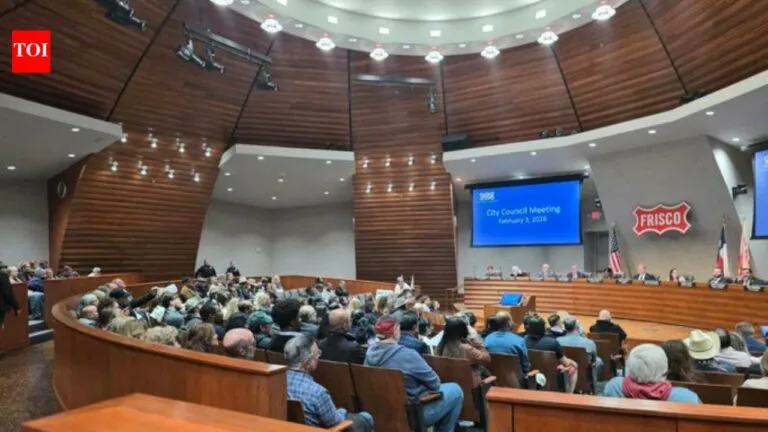
Tuesday’s Frisco City Council meeting turned heated over the H-1B issue and the “Indian takeover” of Texas, sparking a major social media debate. Many Frisco residents spoke of how blessed they were to live among Indian immigrants; some voices sounded extreme. MAGA influencer Kaylee Campbell took to social media to drum up support for the Frisco City Council meeting, slamming Pastor David Lessner for allegedly siding with Native Americans in a Facebook post. “I’m a white man who feels very safe and happy where I live. About 50% of our neighbors are of Indian (or similar) descent. If you don’t want to live in McKinney/Frisco because you feel uncomfortable with non-whites, I’m happy to eat your share of samosas and live in relative prosperity,” the pastor of Arlington United Methodist Church wrote. Later this post could not be found. Lesner called it blatantly racist, writing that if Frisco and McKinney were what “Indian Takeover” looked like, then “sign me up.” “For those who think immigration is a ‘liberal’ issue, Frisco and McKinney are two cities that conservatives can rely on with little to no campaigning,” Leisner said. The meeting became a focus for online commentators because a group of Weberos Scouts, several of whom are of Indian descent, led the meeting in the Pledge of Allegiance. Several speakers at the conference were of Indian origin Campbell also attacked Rep. Jared Patterson for rejecting hateful rhetoric toward Native American communities. “We, as a Frisco community, should firmly reject the outright racist rhetoric directed at our friends and neighbors in the Indian community both online and at tonight’s Frisco City Council meeting,” Patterson apparently wrote before the meeting. Bert Thakur, the first Indian-American member of the Frisco City Council, talked about the “Indian” issue at the meeting and said that Indians who came to the United States became Americans and contributed to the American dream.
Manipur violence: Police clash with mob during protests over deputy CM appointment India News
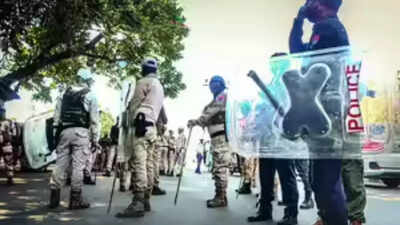
New Delhi: Clashes break out ManipurProtests broke out in Kuki-dominated Churachandpur district on Thursday night against MLA Nemcha Kipgen joining the BJP-led government as deputy chief minister.According to officials, protesters gathered near Tuibong Bazaar and burned a pile of discarded materials, including tires. They also raised slogans against Kipgen.The situation worsened when security forces tried to disperse the crowd. The protesters, who outnumbered the personnel deployed, began throwing stones. Security forces responded with batons. Officials said two people suffered minor injuries in the incident, news agency PTI reported.“The situation remains tense and additional troops have been urgently deployed to control the situation,” a senior official said.Tensions have been rising after Kipgen, who is from Kangpokpi, was sworn in as deputy chief minister on Wednesday night. Several groups on Friday called for a “total shutdown” in the Kuki-majority Churachandpur district.The BJP’s Yumnam Khemchand Singh on Wednesday was sworn in as chief minister of the restored NDA government in Manipur, with Kuki legislator Nemcha Kipgen and Naga MLA Losii Dikho as deputy, marking a new twist in shared governance in the multi-ethnic state divided by the Meitei-Kuki conflict.In May 2023, ethnic violence broke out between the Meitei and Kuki communities in Manipur. Presidential rule was imposed in the state in February last year following ongoing unrest.
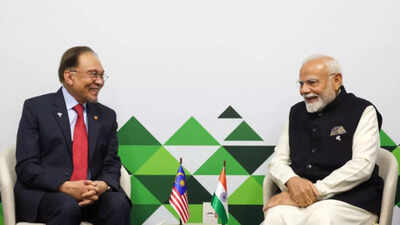
Prime Minister Modi visits Malaysia to strengthen strategic partnership – Highlights | India News
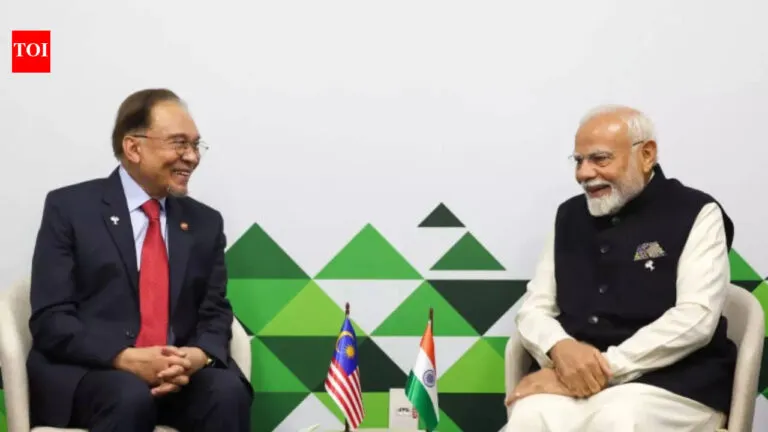
New Delhi: Prime Minister Narendra Modi will visit Malaysia from February 7 to 8 at the invitation of Malaysian Prime Minister Anwar Ibrahim, the Ministry of External Affairs (MEA) said.The prime minister last visited Malaysia in 2015, when the two countries upgraded their relationship to an enhanced strategic partnership. Recently, during Anwar Ibrahim’s visit to India in August 2024, relations between the two countries were further upgraded and the two sides agreed to establish a comprehensive strategic partnership.The MEA said the upcoming visit reflects India’s continued commitment to strengthening ties with Malaysia and expanding cross-sector cooperation. “Our two countries are working to further strengthen bilateral trade in a balanced and sustainable manner,” the MEA said.Prime Minister Modi is also expected to meet Malaysian leaders and address the country’s Indian community.
What to expect from this visit
- Prime Minister Narendra Modi will hold bilateral talks with Malaysian Prime Minister Anwar Ibrahim to review the progress of the Comprehensive Strategic Partnership.
- India and Malaysia are discussing a joint review of the India-Malaysia Comprehensive Economic Cooperation Agreement.
- Leaders will review cooperation in key areas including trade, investment, defence, security, semiconductors, digital technology, renewable energy, education and healthcare.
- The visit will also provide an opportunity to strengthen India’s engagement with the ASEAN region.
- During the visit, the 10th India-Malaysia CEO Forum meeting will be held in Kuala Lumpur.
- Prime Minister Modi will interact with leading CEOs of key industries in Malaysia to promote business and investment linkages.
- He will also deliver a speech
Indian community in Malaysia with a population of approximately 2.9 million people.
India-Malaysia relations: an overview
- Malaysia has a population of approximately 2.9 million Indians and has one of the largest Indian diaspora populations in the world.
- Bilateral trade between the two countries remains important, and economic exchanges have been close over the years.
- Relations between the two countries faced tensions in 2019 and 2020 due to disagreements over political issues and trade measures, including restrictions on palm oil imports.
- Relations between the two countries have improved in recent years, and during Malaysian Prime Minister Anwar Ibrahim’s visit to India in August 2024, the two countries signed nine agreements.
- The upgrade to a comprehensive strategic partnership marks an important step in cooperation between the two parties in economic, strategic, cultural and other fields.
‘Modi will dig your grave’: PM Modi accuses opposition of covering up hatred behind ‘Mohabbat ki dukaan’ India News
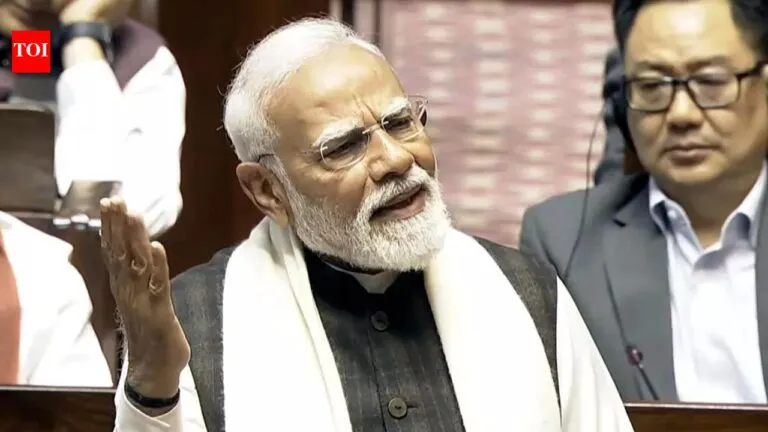
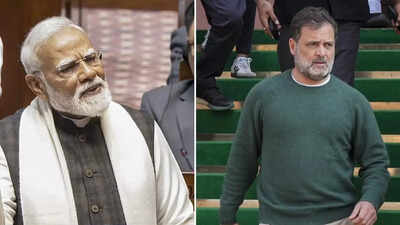
New Delhi: Prime Minister Narendra Modi India’s Lok Sabha on Thursday launched a blistering attack on the opposition, accusing it of masking hostility and divisive slogans with the rhetoric of “Mohabbat ki dukaan”, a phrase often used by opposition Lok Sabha leader Rahul Gandhi. However, he did not provide any evidence of slogans chanted by the opposition.“They chanted slogans of ‘Modi teri kabr khudegi’. They dreamed of this, talked about democracy. They put up signboards of ‘Mohabbat ki dukan’. Is there such hatred in public life?” Prime Minister Modi said in his motion of thanks.
“Congress has a deeper problem, they cannot digest how Modi got to this position and their concerns are growing… For them, there seemed to be only one way out: chanting “Modi, teri kabr khudegi (Modi, your grave will be dug)”. They (Congress) seem to think that democracy and the Constitution exist only for their benefit. They believe that the position of prime minister belongs to their family and is a matter of course. So, they are spreading slogans about digging Modi’s grave,” he added.He continued to attack the opposition, saying that unlike past governments run by “remote” governments, his power came directly from the mandate of 1.4 billion people.“Their government used to operate with a remote control. My government operated with a remote control. 1.4 billion people were my remote control,” he said.He further accused the opposition of weakening institutions, prioritizing political survival over governance and pursuing an agenda that undermines national security and public trust, accusing them of harboring illegal infiltrators and ignoring the aspirations of young people and the long-term interests of the country.“A large part of our energy is spent on righting the wrongs of the past. It will take a lot of efforts to undo the image that was created in the mind of the world during that period, which left things in such a damaged state. That is why we attach great importance to future-oriented policies. Today, the country is being governed on the basis of policies and strategies. Global trust in India is growing. Guided by the mantra of ‘Reform, Execute, Transform’, we have kept moving forward and the reality today is that the country has boarded the reform express.”His address comes a day after his speech in the Lok Sabha was canceled due to protests by the opposition in the House.
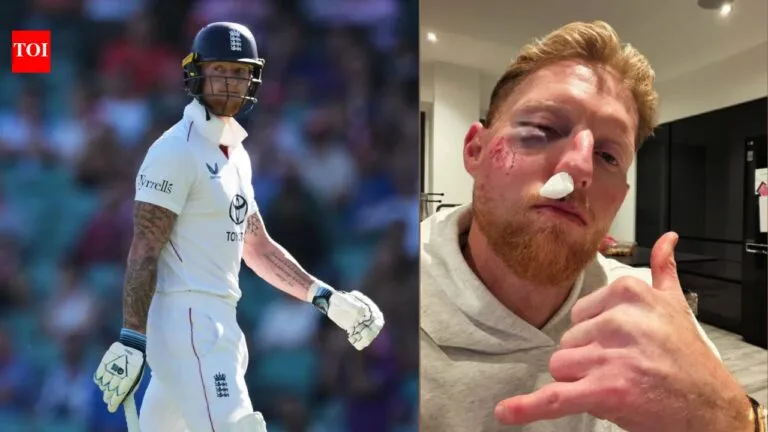
England Test captain Ben Stokes suffers serious facial injury, bleeding profusely Cricket News
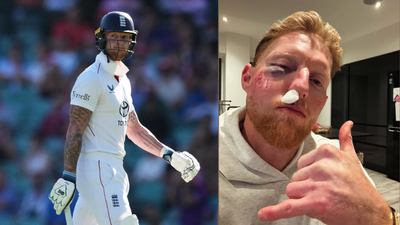
england test captain Ben Stokes The extent of his severe facial injuries after being hit in the face with a cricket ball during training has been revealed. The all-rounder shared a picture Instagram His right eye was severely bruised and swollen, there were cuts on his cheek and lip, and he had a bandage on his nose.

Ben Stokes Insta Story
Despite the serious blow, Stokes took the incident with good humor and wrote in the caption of the post: “You should see the state of cricket,” along with a laughing emoji.
Stokes is currently not involved in England’s white-ball plans and will miss the upcoming T20 World Cup. He is expected to return for England’s Test series against New Zealand in June. The incident occurred after England endured a difficult Ashes match, which ended with a 4-1 defeat by Australia. Expectations are high ahead of the tour, with England aiming to win the Ashes for the first time since 2010-11. However, defeats in the first three Tests meant Australia retained the title in 11 days. England registered a consolation win in the Boxing Day Test at the Melbourne Cricket Ground but lost the series final in Sydney. Stokes himself also endured a tough series with the bat, averaging just 18.40 in 10 innings. He was more efficient with the ball, taking 15 wickets at an average of 25.13. His leadership skills are also closely watched. Fast bowling legend James Anderson questioned Stokes’ public praise of his players after the loss and expressed surprise at the tone of the captain’s comments. “I had a Roy Keane moment when I saw Stokes come out and say, (Josh) Tongue and (Brayden) Carrers have been running around,” Anderson told BBC Radio. “I was like, that’s your job. If you’re not willing to run around all day for your team, then don’t bother. You are in the wrong sport. “ Stokes defended his team after the fifth Test, insisting effort and commitment were not issues. “We’ve dropped a lot of catches on this tour and that’s been very costly to the overall picture of the game. In terms of stepping up, I would never fault anyone for the commitment or energy they put into it. We didn’t perform well and we know that and we’ll stick with that. But no one should question the care and commitment of trying to get out there and do the best you can. It’s just due to a lack of execution,” he said. Stokes later admitted that he had made major mistakes as captain during the series. England’s tour has also been marred by off-field controversy, with the mid-series trip to Noosa raising eyebrows amid reports of a drinking culture within the camp. With Stokes recovering from a facial injury, focus now shifts to his return in the longest format, with England hoping for a fresh start after a bruising Ashes season on and off the field.
Tamil Nadu elections: How does the BJP plan to conduct the Bihar elections in the state, will it be enough? |India News
new delhi: as tamil nadu Preparing for parliamentary elections in a few months bjp is seeking to consolidate the opposition. The BJP, as an anti-DMK alliance, also seems to be trying to “make Bihar” in a state that has struggled to achieve results so far.Taking lessons from its recent Bihar assembly victory, the party is forming a social alliance representing all major castes in the state.
Earlier in the Bihar assembly elections, the BJP had a foolproof plan. the party and its confidentiality agreement The partners forged a social alliance representing the dominant castes, isolating the Janata Dal-led Mahagathbandhan and its Muslim Yadav voter base.The NDA’s five partners represent virtually every segment of society. Both LJP and HAM have Dalit faces like Union Ministers Chirag Paswan and Jitan Ram Manjhi. EBC and non-Yadav OBC castes are represented by the JD(U) and Rashtriya Lok Morcha. At the same time, the BJP has its vote bank among the upper caste and Baniya communities. This finely tuned caste alliance won an overwhelming majority for the NDA. The alliance won 202 seats in the 243-member Bihar assembly.Forging AllianceThe alliance dominated by Dravidian politics also plays a huge role in Tamil Nadu. In addition to peak DMK or Artificial Intelligence ADMKno single party can dominate parliament without a broad coalition.To prevent splitting the vote (which could favor the Democrats), the BJP is trying to instill a broader NDA in as many parties as possible. Contact is ongoing with former coalition partners and breakaway factions, including leaders who left earlier.After two years of split, the BJP and AIADMK came together in 2025 and announced that the NDA would contest the upcoming assembly elections under the leadership of former chief minister Edappadi K Palaniswami (EPS).The BJP’s alliance with the AIADMK is not just tactical and is seen in Delhi as the main tool to make a difference in the southern state. Yet the current BJP strategy, largely masterminded by Amit Shah, reflects this urgency. Moreover, the AIADMK also has a voter base among the Dalit community. This voter base represents almost 20% of the state’s population.Meanwhile, AIADMK leader O Panneerselvam (OPS) also announced that he is “ready” to reunite with the Edappadi K Palaniswami (EPS) AIADMK faction ahead of the 2026 Assembly elections in Tamil Nadu.At a press conference in Madurai, OPS issued a pointed challenge to EPS and AMMK general secretary TTV Dhinakaran, asking them whether they were ready to take such a step. “I’m ready. Are they ready?” He said it was possible the rival factions could form an alliance under the protection of confidentiality agreements.Pattali Makkal Katchi (PMK) also joined the NDA, giving it a symbolic boost. However, this is not without complications. Anbumani Ramadoss’ decision to align with the AIADMK-BJP front is aimed at strengthening the NDA’s influence in northern Tamil Nadu, where the PMK has traditionally enjoyed support from the Vaniya community. While this adds to the social breadth of the coalition at a time when consolidation is crucial, the MDP is far from united. Meanwhile, TVK’s Vijay was also reportedly approached by the BJP to join the NDA after he positioned him as an alternative political force in Tamil Nadu.Vijay comes from a Christian community, which makes up about 6% of the state’s population. Moreover, Vijay is also very popular among the youth. Unlike other movie star parties, Vijay’s supporters are well-organized and politically active.What political experts sayAccording to poll analysts, the caste equation has been at play in Tamil Nadu. However, they feel that the BJP’s efforts to put different castes on the same stage have not gained much support.Speaking to The Times of India, political analyst Kannan R said the saffron party does have some leaders from backward classes, but so far the party seems to be uniting Hindus as one.“Caste and money remain two important factors in electoral politics in TN and will continue to play a vital role. I don’t think the BJP is trying to bring different castes to the stage or, if so, it has not gained traction so far,” Kannan said.“The party does have some leaders from backward classes but so far the party seems to be uniting Hindus into one body and that is not working in the state,” he added.Another analyst, Shyam Shanmugaa, said elections in Tamil Nadu cannot be won on caste alone.“The caste equation has always existed in rural areas of Tamil Nadu. But in urban areas, it does not matter. Tamil Nadu is a highly urbanized state. Therefore, elections cannot be won purely on the caste equation. If a certain caste in a rural constituency is mobilized, counter-mobilization will occur. ” Shanmuga told the Times of India.“So, for a candidate who is caste-neutral and appeals to all castes, the chances of winning are there. The BJP is mostly seen as an upper-caste Brahminical party. It cannot mobilize a particular OBC caste. Even if a TN BJP leader from a particular dominant community is appointed as the state president, the BJP cannot win,” he added.Why caste matters in Tamil NaduDalitsDalits constitute about 19% to 21% of the state’s population. They are spread across the state, with larger populations in districts such as Cuddalore, Villupuram, Tiruvallur and Madurai.The larger Dravidian political movement, which has grown over two centuries and spawned political parties such as the Dravidian Party, DMK and AIADMK, has historically extended a helping hand to Dalits.TavarsConcentrated mainly in the southern districts of Tamil Nadu such as Madurai, Theni, Dindigul, Sivaganga and Ramanathapuram, the Taivars are a politically influential community and fall under the MBC category. Several prominent Thevar leaders are members of the AIADMK.Former chief minister J Jayalalithaa’s close aide VK Sasikala and rebel leader O Panneerselvam belong to this community.Tevar played a prominent political role during the British rule. Pasumpon Muthuramalinga Thevar was a respected leader and freedom fighter associated with the Indian National Congress and later the Forward Bloc. His birth anniversary is celebrated as ‘Thevar Jayanthi’. The community is also said to have actively participated in the armed struggle led by Subhas Chandra Bose.Thevar population is estimated to be around 10% to 12%.VanialsThe Vaniyas, who live mainly in northern Tamil Nadu, are the largest and most politically active Most Backward Class (MBC) in the state. Tamil Nadu divides OBC into BC group and MBC group. The Vanyas are primarily a farming community and have largely retained land ownership despite industrialization. Members of the community have often been named in connection with anti-Dalit violence in the state.Politically, the Vanniyars are represented by the Pattali Makkal Katchi (PMK), which is currently part of the Bharatiya Janata Party-led NDA. Founded and led by S Ramadoss, the party is influential due to the community’s numerical strength, organizational structure and sustained political mobilization. Ramadoss began organizing Vanniyar in the 1980s and is credited with improving educational outcomes within the community since the 1990s.It is estimated that the Vaniyas constitute about 12 to 15 per cent of the population of Tamil Nadu, with larger populations in Villupuram, Cuddalore, Tiruvannamalai and parts of Vellore, and smaller populations in Salem and Dindigul.NadalsNadar is a trading community with strong influence in business and politics. Their leaders cut across party lines and successfully translated economic power into political influence.In 1921, the community established The Nadar Bank Limited, which was renamed Tamilnad Mercantile Bank in 1962. In 1922, P Ayya Nadar and A Shanmuga Nadar went to Kolkata to learn the safety match manufacturing process and eventually established a handmade match production factory in Sivakasi under the brand “Bengal Lights”. The town remains a major center for firecracker manufacturing.The most famous Nadal leader in the political history of Tamil Nadu is K Kamaraj, a senior Congress leader and former chief minister. Apart from Hindu Nadars, Christian Nadars also occupy an important position in institutions and power structures.The population of this community is estimated to be around 4 to 6% and is mainly concentrated in southern districts of Tamil Nadu such as Kanyakumari, Tirunelveli, Thoothukudi and Virudhunagar.GondezGounders belong to the Backward Class (BC) category and constitute about 5% to 7% of the population of Tamil Nadu. They are mainly concentrated in western Tamil Nadu or Kongunad region, which includes districts like Coimbatore, Tirupur, Erode, Namakkal, Karur and Salem.The community relies primarily on the agricultural and allied sectors and is also known for its entrepreneurial presence and influence in regional industries. Notable figures include industrialist and philanthropist N Mahalingam, who was involved in several educational activities.After j Jayalatalatalita’s death, Edappadi k palaniswami (a subordinate) took over the aiadmk, marginalized the SICALAL family and O PANNEERSELVAM, and assigned important cabinet matters to community leaders.The Election Commission is expected to declare the Tamil Nadu Assembly elections in April-May this year. In the 2021 assembly elections, the DMK won 133 seats and the Congress won 18 seats. Meanwhile, AIADMK won 66 seats with 33.5% vote share; PMK won 5 seats with 3.8% vote share and VCK won 4 seats with 1% vote share.

‘They stole Mahatma Gandhi’s surname’: PM Modi mocks Gandhi, launches failed ‘start-up’ attack on Rahul India News
New Delhi: Prime Minister Narendra Modi In a speech in the Lok Sabha on Thursday, he took a sharp dig at the Congress and the Gandhi family, accusing them of being “habitual thieves” and even “thieves” mahatma gandhisurname.“For some, stealing is a family profession. It is shocking that those habitual thieves also stole the surname of Mahatma Gandhi, a Gujarati,” PM Modi said as opposition members shouted slogans and went on strike.Further ‘launch’ dig at Congress and Opposition Lok Sabha leaders Rahul GandhiThe Prime Minister claimed that the party never encouraged entrepreneurial culture and even mocked its leadership. “Congress has never promoted entrepreneurial culture… they cannot even promote entrepreneurship in their own houses,” he said, an apparent reference to Congress leader Rahul Gandhi.The Prime Minister also took aim at Rahul’s remarks in the House a day ago, calling him the “Yuvraj” of the Congress. “What happened yesterday – Congress ‘Yuraj’ who owns ‘Shathil Dimag’ called House members ‘traitors’. His arrogance has reached its peak,” PM Modi said.He claimed the comment was selectively targeted at Sikh MPs. “He did not call anyone who left the Congress a traitor. But he called a member of Congress a traitor because he is a Sikh. This is an insult to Sikhs, an insult to the Guru. This is an expression of hatred against Sikhs in the Congress,” the Prime Minister said.“He is a family member who sacrificed his life for the country, and he became a traitor just because he changed his political thoughts? This is no small matter. How can the country tolerate a citizen being called a traitor?” he added. The prime minister called the incident “very unfortunate,” adding, “People like this will destroy Parliament.”Also read: ‘I eat 2 kg of galis every day’: In a lighter moment during RS speech, PM Modi reveals ‘health secrets’
Beyond the Tricolor: Indian-origin captain for T20 World Cup 2026 | Cricket News
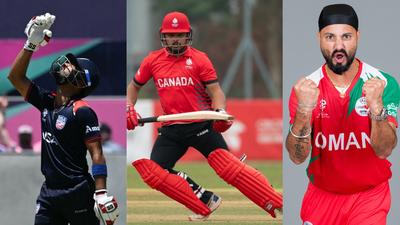
and Suryakumar Yadav Leading India into the 2026 T20 World Cup, attention will naturally be focused on the hosts. However, apart from India being the defending champions, the tournament also has another fascinating connection with India – several affiliated countries will be captained by players of Indian origin, adding an extra narrative to the global event. The 2026 World Cup is co-hosted by India and Sri Lanka and will be attended by prospective teams such as the Netherlands, United States, Nepal, Namibia, Oman, UAE and Canada with growing confidence and ambition. After going through a rigorous qualification pathway, these teams are no longer content to simply compete. They are committed to challenging the established teams and making a mark in the Championship.
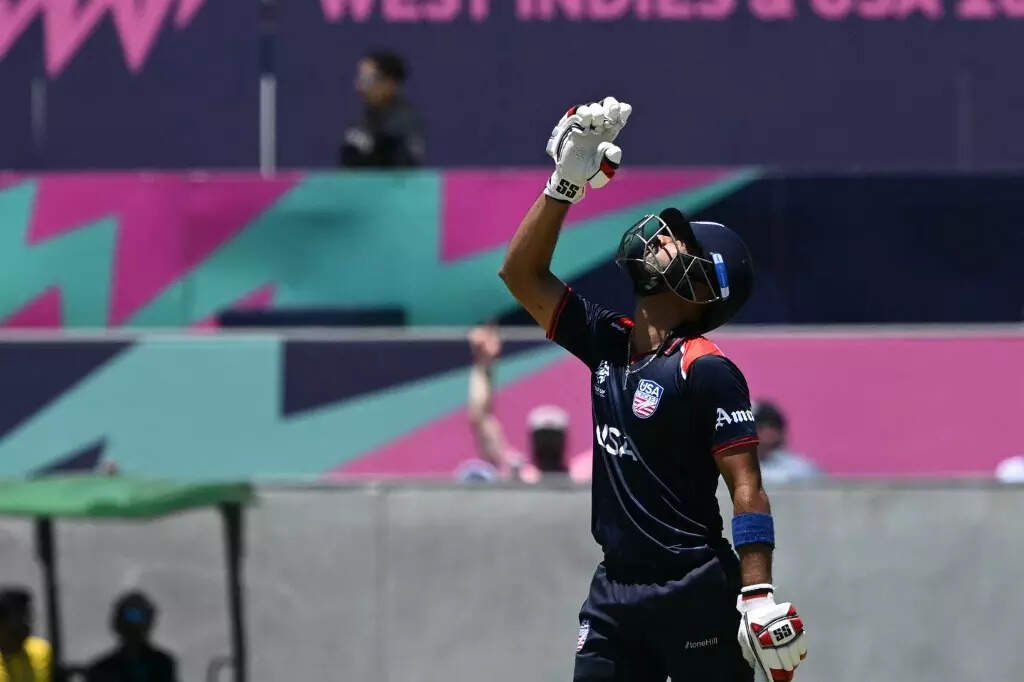
In recent years, the gap between associate team members and full members has been shrinking. Backed by a solid domestic system and a roster of county and franchise players, the Netherlands have repeatedly surprised people at the ICC. The United States and Canada benefit from an expanded domestic competition and increased international opportunities, while Nepal continues to draw strength from enthusiastic crowds and a strong spin culture. Namibia’s rise has been built on discipline and tactical clarity, while Oman and the UAE bring valuable experience from multiple ICC tournaments and the ability to handle pressure situations. For Indian fans, the presence of an Indian-origin captain leading the team adds another layer of intrigue – a leader eager to prove his credentials on the biggest stage.Monank Patel (USA) Monak Patel’s path to international leadership is unusual. Born in Anand, Gujarat on May 1, 1993, he progressed through India’s age-group system, representing Gujarat at the U-16 and U-19 levels, even playing against Jasprit Bumrah In his boyhood. Despite early promises, his path in Indian cricket has stalled.

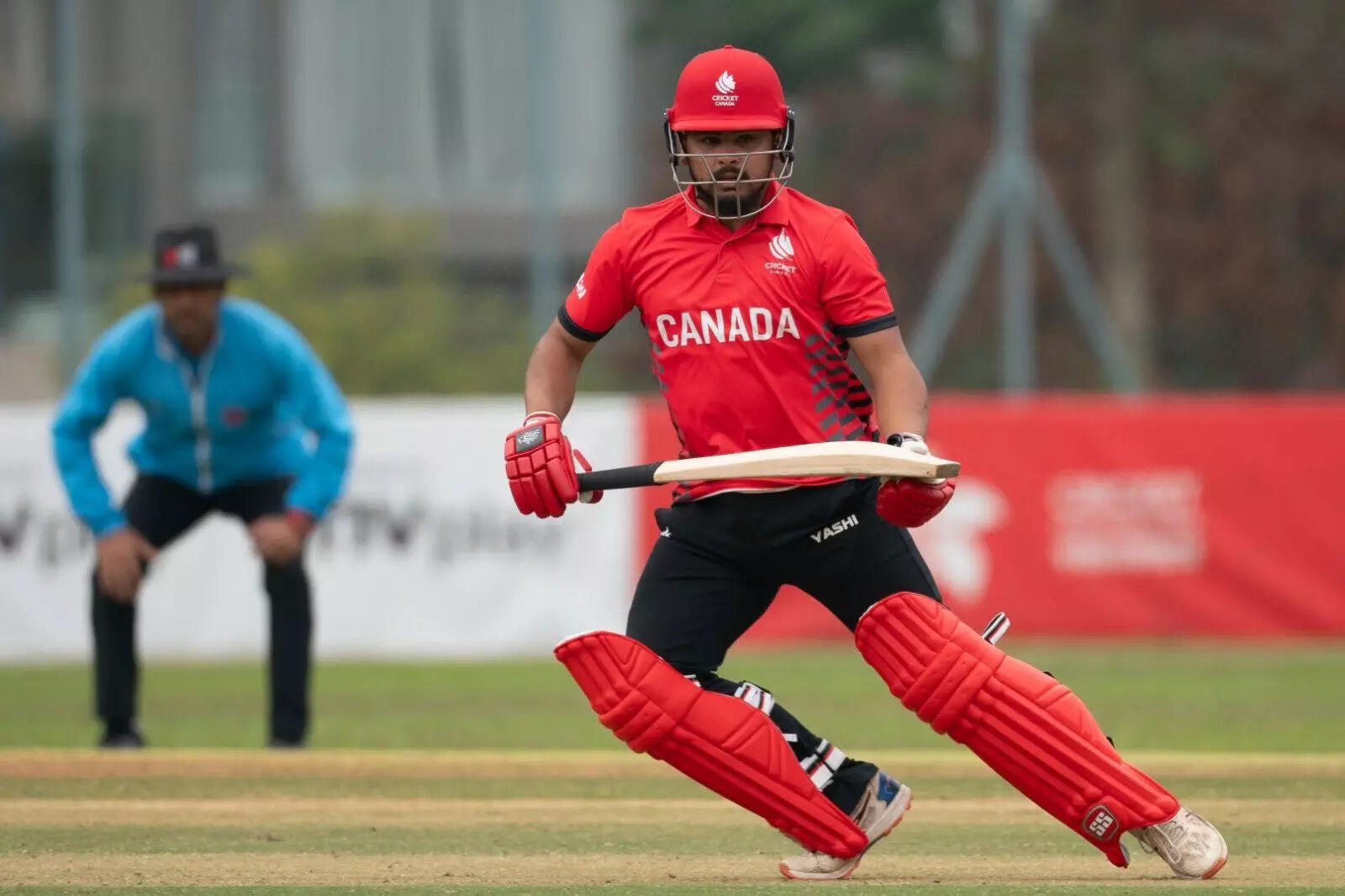
After receiving his green card in 2010, Monanke moved to the United States permanently in 2013. At one point he seriously considered quitting the sport altogether. Instead, he rebuilt his career from the ground up and made his international debut for the United States in 2019 in ODIs and T20Is. Since then, he has been the backbone of the US batting line-up, scoring 2,288 ODI runs at an average of 34.66 with three centuries and eighteen half-centuries. In T20Is, he also scored a century against the Bahamas. Monanke was named captain in 2021 and led the United States to a historic victory over Pakistan at the 2024 T20 World Cup, earning him the Man of the Match award. His performances in Major League Cricket for MI New York, including a career-best 93 runs in 2025, further highlighted his ability to perform in the big moments.Dilpreet Bajwa (Canada) Dilpreet Singh Bajwa has emerged as one of the most exciting young batsmen in cricket and now has the responsibility of leading Team Canada. Bajwa was born in Gurdaspur, Punjab, on January 26, 2003. His early cricket education took place in India. He trained under coach Rakesh Marshal at Government College and studied at Guru Arjun Dev School in Dhariwal, following the traditional age-group path and spending long hours at the nets.

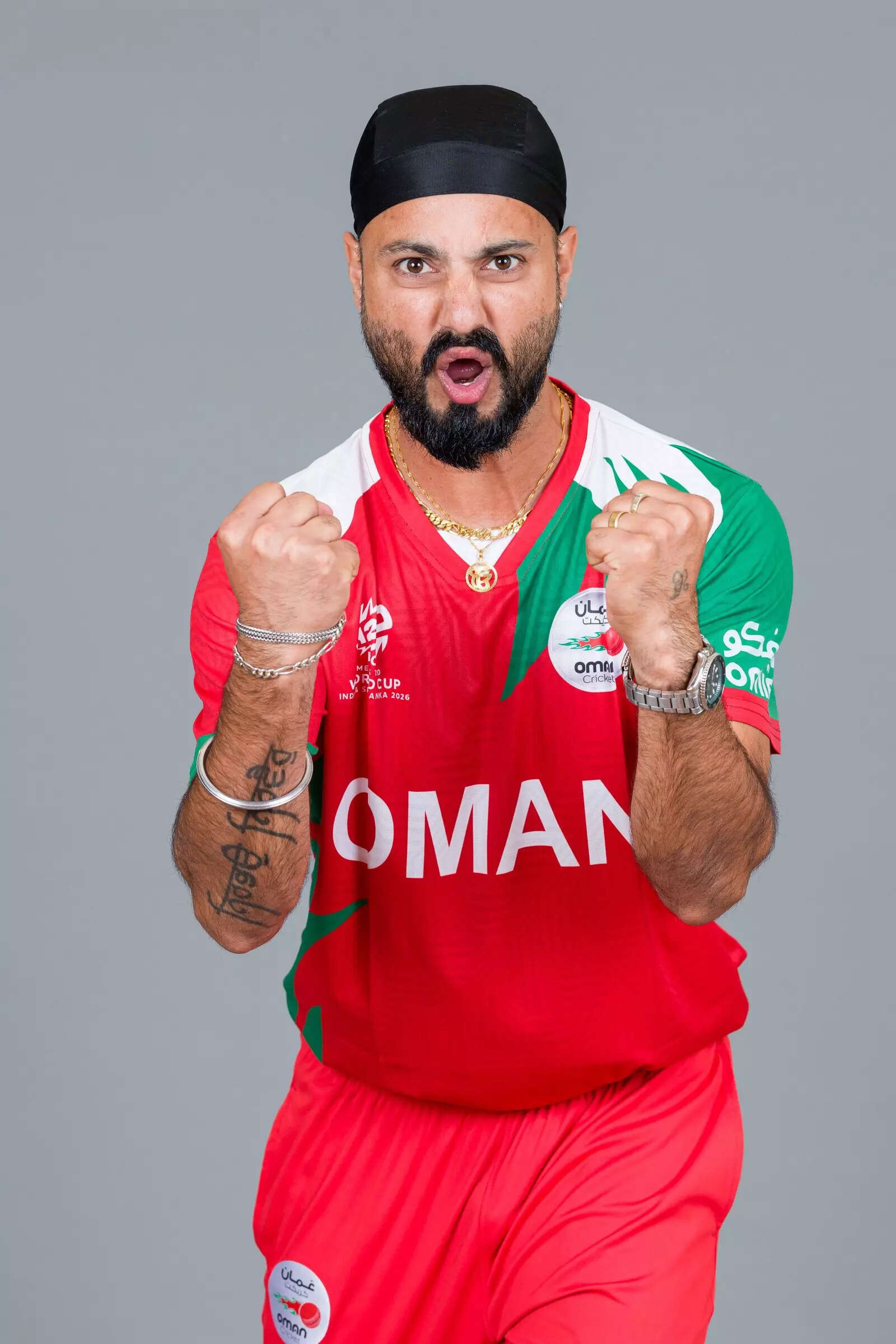
Before leaving India, Bajwa scored an impressive innings of 130 in a U-19 match against Patiala and it was widely expected that his efforts would see him selected for the Punjab U-19 squad. When that opportunity didn’t materialize, his family made a decisive move. In 2020, his family moved to Canada, where his father Harpreet Singh worked in the agriculture department and his mother Harleen Kaur worked as a public school teacher. Bajwa made his T20I debut in September 2023 against Bermuda and in February 2024 against Nepal. In T20Is, he has scored four half-centuries at a strike rate of 133.22. He also made Canadian Global T20 history by becoming the first Canadian to score a century and remained unbeaten with 100 off 55 balls. Bajwa, who was named captain for the 2026 T20 World Cup, is at the heart of Canada’s long-term ambitions.Jatinder Singh (Oman) Jatinder Singh’s rise was born of persistence, not privilege. Born in Ludhiana, Punjab on March 5, 1989, he moved to Oman at a very young age and began his cricketing journey without formal academy support. His early development was on concrete wickets, followed by Astro turf before moving to turf cricket in 2011 – a process that shaped his adaptability.

The initial inspiration came from Sachin Tendulkardiscipline, later developed by Virat KohliJatinder has made steady progress within Oman’s domestic structure. A right-handed top-order batsman, he made his T20I debut in 2015 and ODI debut in 2019, quickly becoming a mainstay for the national team. In ODIs, he has accumulated 1,704 runs, including four centuries and nine half-centuries, with a highest score of 118 against Papua New Guinea. In T20Is, he leads Oman’s run-run chart with 1,605 runs in 72 games. Jatinde was appointed captain in 2025 and led Oman to qualify for the Asian Cup for the first time, a landmark moment for both the player and the country. As the T20 World Cup unfolds, these leaders of Indian origin will not only carry the hopes of the team, but also embody the global spread and evolving depth of the modern game of football.
CM Rekha Gupta urges plastics industry to step up recycling to make Delhi cleaner, greener India News
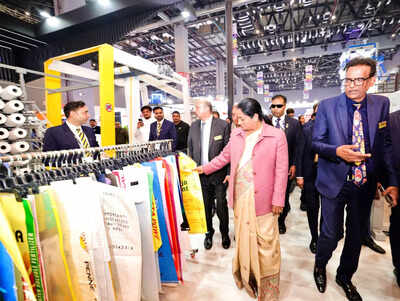
Delhi Chief Minister Rekha Gupta on Thursday said India is on the verge of becoming a global hub for plastics processing, opening up new avenues of growth for the country’s MSME sector. Gupta inaugurated PLASTINDIA 2026, a plastics exhibition that focuses on sustainability and industry growth, calling on the industry to pursue responsible growth. “India is on the threshold of becoming a global hub for plastics processing. The plastics industry is an important part of the micro, small and medium enterprises (MSME) sector and will have greater opportunities in the coming days,” she said. She urged the Indian plastics industry to innovate and develop new processes to manufacture eco-friendly products while working towards the ambitious goal of 100% plastic waste recycling. She stressed the need for responsible growth and said sustainability must be at the heart of the industry’s vision for the future.The chief minister highlighted Delhi’s growing plastic waste challenge and noted that plastic disposal remains a major issue in the national capital, a statement said.She added that she called on industry stakeholders to actively support Delhi’s journey to become a greener and cleaner city through enhanced recycling, circular economy practices and innovative material solutions.
Kuwait announces reduced working hours for government employees during Ramadan 2026 | World News
Kuwait has announced changes to working hours for government employees during Ramadan, introducing shorter daily schedules and flexible start times under a new framework approved by the Civil Service Commission. The move is aimed at ensuring the continuity of public services while meeting the needs of employees during the holy month of Ramadan.In a statement released today, the council confirmed that all government employees will work four and a half hours a day during Ramadan. The decision was issued pursuant to External Decision No. (1) of 2024 and applies uniformly to all government agencies.Under the revised system, employees will be allowed to start work any time between 8:30am and 10:30am, introducing official flexible working arrangements during Ramadan. The committee said this flexibility is intended to align working hours with the specific circumstances of the holy month, while also supporting efficiency and staff well-being.The statement clarified that the decision includes all necessary timelines, rules and operational provisions that must be implemented consistently across government agencies. The authorities stressed that adhering to these guidelines is crucial to maintaining a balanced workflow that respects the spiritual significance of Ramadan without disrupting official operations.The Civil Service Commission also noted that the framework will be applied annually during Ramadan to reinforce its commitment to providing a responsive and adaptable work environment for government employees across Kuwait.