Home Blog Page 252

Amid Eric Swalwell sexual assault, report says California Democrats broke law by hiring Brazilian nanny

0

as Eric Swalwell Sexual misconduct case unravels, with new revelations coming Saturday. The California Democrat, considered a frontrunner in the state’s gubernatorial race, violated immigration and employment laws by hiring a Brazilian live-in nanny, the New York Post reported, citing documents filed with the Labor Department and the Department of Homeland Security.

Rep. Eric Swalwell, D-Calif., questions former Justice Department special counsel Jack Smith's testimony before House Judiciary Committee (AP)
Rep. Eric Swalwell, D-Calif., questions former Justice Department special counsel Jack Smith’s testimony before House Judiciary Committee (AP)

Amanda Barbosa Link by Eric Swalwell

The charges outlined in documents obtained by The Washington Post allege that Swalwell and his wife, Brittany, knowingly continued to employ Brazilian national Amanda Barbosa despite her work authorization lapsed. Barbosa, 33, entered the United States from Rio de Janeiro in January 2021 on an au pair visa and began working for the family later that year.

Read more: Eric Swalwell resignation controversy: Why Kamala Harris’ ‘great warrior’ comments surface amid sex allegations

The couple allegedly misled federal authorities in 2022, when Barbosa’s temporary work authorization was set to expire, according to a complaint filed Tuesday. A separate complaint filed in February alleges that Barbosa was paid “under the table” through campaign funds over a period of about two years when she was not legally allowed to work. Eric Swalwell

Amanda Barbosa’s social media takes center stage

According to the publication, “During 2023 and 2024, Barbosa appeared in numerous social media photos with the Swalwell family, indicating that Barbosa maintained a close relationship and had ongoing childcare responsibilities despite having no known legal work authorization,” according to the complaint filed by the Department of Homeland Security on February 16.

Read more: Eric Swalwell faces major setback as Manhattan DA launches investigation into rape allegation: Key things to know

The Washington Post added that campaign finance records reviewed in the documents show that Barbosa was paid $3,914 and $46,930 directly from campaign funds in 2021. After her visa expired in December 2022, Swalwell reportedly began sponsoring her application for a green card, a process that lasted until 2024. During this time, she was enrolled in community college, which would have limited her ability to work off campus due to student visa regulations.

Despite these restrictions, the complaint alleges Barbosa continued to work as a full-time nanny. Social media images cited in the filing show her caring for Swalwell’s children at family events, including White House picnics and vacations. Her now-deleted LinkedIn profile also reportedly listed continuing employment as a private childcare provider from 2021.

$52,000 in child care expenses

Financial records show direct payments to Barbosa were later stopped, but campaign filings show Swalwell himself was reimbursed for more than $52,000 in child care expenses. The complaint alleges this was a workaround to hide ongoing payments and that Barbosa lacked valid work authorization.

“This is a blatant disregard for the law. He is harboring and employing illegal immigrants,” said Joel Gilbert, the filmmaker and activist who filed the complaint.

The U.S. Department of Labor confirmed that Barbosa’s permanent labor certification has been approved in 2024. She was again placed on the campaign payments list in 2025, receiving $38,905, according to Federal Election Commission data.

Eric Swalwell sexual assault case

The accusations come as Swalwell’s gubernatorial campaign faces turmoil over multiple sexual assault allegations, including an allegation that a former staffer accused him of rape, which he vehemently denies. Responding to the allegations, Swalwell said: “These allegations are false and occurred on the eve of the election of the gubernatorial front-runner.”

“For nearly 20 years, I have served the public as a prosecutor and a member of Congress, always protecting women. I will defend myself with the facts and take legal action when necessary.”

Swalwell has also reportedly come under scrutiny from the Federal Election Commission for using campaign funds for child care expenses, but no findings of wrongdoing have been released.
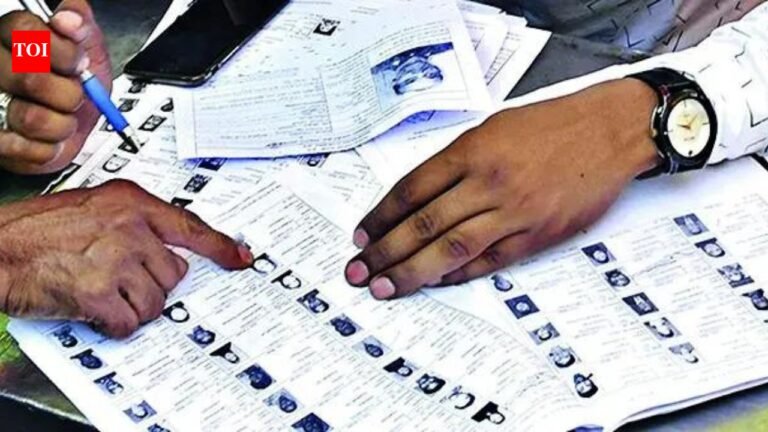

Net deletion in 12 states/Union Territories due to SIR 5.2cr (10%); second phase includes Rs 2 crore

0

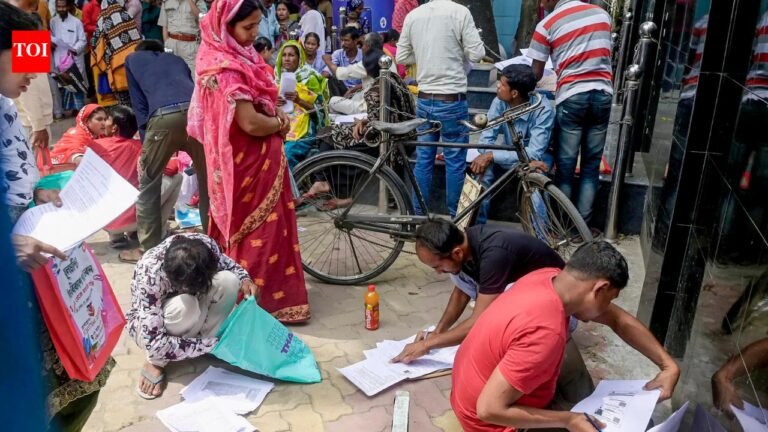
NEW DELHI: Over 20 million voters from 12 states and Union Territories (UTs) have been included during the second phase of the Special Intensified Revision (SIR), bringing the net deletion of voters to nearly 52 million, or 10.2 per cent of the total electorate of around 510 million when the SIR begins on October 27, 2025. The total number of deletions in states/Union Territories in the second phase amounted to Rs 7.2 crore. However, new voters (Form 6 for first-time voters) and existing voters registered at new addresses (Form 8) included names of Rs 20,000 crore. According to data from the Election Commission, more than 650 million absentee, transferred, dead, double-registered and “other” voters were identified and removed from the electoral rolls in A&N Islands, Uttar Pradesh, Gujarat, Chhattisgarh, West Bengal, TN, Goa, Puducherry, MP, Rajasthan, Kerala and Lakshadweep. Another 6.32 million names were removed through Form 7 (objection to listing) and rulings (except Bangladesh, where judicial officials removed 2.72 million names).

After cleansing of lists, 458 million voters remain on the lists of 12 states and Union Territories

Nearly 66.9 million rupees were deleted due to death, 1.30 million rupees were due to registration at multiple places, 1.30 million rupees were found not to be at the registered address, 3.10 million rupees were permanently transferred; 1.27 million rupees were classified under the ‘other’ category. “After purifying the rolls, 12 states/Union Territories now have 458 million voters. The removal of over 650 million ASDD and other voters who were on the rolls but did not vote and posed the risk of false votes being cast in their names has resulted in pure and accurate rolls that serve the purpose of the SIR. This explains the all-time high turnout in Assam and Puducherry on April 9,” an Election Commission official said. State-wise, the rolling purification rate (net purification rate divided by the total number of voters before SIR) was highest in Andaman and Nicobar Islands at 16.6 per cent, followed by Uttar Pradesh at 13.2 per cent, Gujarat at 13.1 per cent and Chhattisgarh at 11.3 per cent. West Bengal ranks fifth among 12 states/Union Territories in terms of purification rate. It is noteworthy that apart from the Rs 2.71 million which were removed from the Bengal list after the ruling, another Rs 6 lakh was removed due to objections to its inclusion in the Bengal list. West Bengal, Tamil Nadu and Goa recorded a net loss of voters of 10.9%, 10.6% and 10.2% respectively, while the net loss of voters in Puducherry was 7%. States such as MP, Rajasthan, Kerala and Lakshadweep have lower net deletion rates of 5.7%, 5.4%, 2.5% and 0.3% respectively. Of the 20 million names in 12 states/Union Territories, the largest number is Uttar Pradesh (92.4 million), followed by Tamil Nadu (3.5 million), Kerala (2.04 million), Rajasthan (1.54 million), Madhya Pradesh (12.9 million) and Gujarat (1.21 million).

‘There’s going to be big problems’: Donald Trump warns China over reports of weapons shipments to Iran

0

'There's going to be big problems': Donald Trump warns China over reports of weapons shipments to Iran

Donald Trump stepped up his victorious rhetoric against Iran early on Sunday, claiming the United States had destroyed Tehran’s military capabilities and warning China it would face severe consequences if it was found to be supplying weapons to the Islamic republic led by Mojtaba Khamenei.U.S. President Donald Trump said: “…They don’t have a navy, radar or air force. Their leader is dead… He ruled for many years; he’s gone. Still, let’s see what happens – but from my perspective, I don’t care.”Regarding reports that China is sending weapons to Iran, Trump said, “If China does that, China will have a big problem.”Regarding the US-Iran peace talks being held in Islamabad, where the team led by Trump’s deputy Vance and the Iranian delegation are resolving this issue, Trump said, “They have been meeting for several hours… We’ll see what happens. Anyway, we won… Maybe they made a deal; maybe they made a deal. Maybe they don’t know. It doesn’t matter. From an American perspective, we won…the ship is sailing toward our country. We are loading oil and gas into giant tankers...”Responding to ANI’s question on whether the US would release Iranian assets, the MAGA supremo said, “We will see what happens. We are in deep talks with Iran and we will win no matter what. We defeated them militarily… We are sweeping the channel… Whether we make a deal or not, it makes no difference to me – the reason is that we won… we did not get help from NATO…”Meanwhile, the United States and Iran begin talks after more than a month of all-out military aggression, Pakistan Mediation is an effort to defuse a crisis that led Tehran to close the Strait of Hormuz, disrupting global trade.The two sides launched direct talks in Islamabad on Saturday, days after announcing a fragile two-week ceasefire in a rare face-to-face encounter.The U.S. delegation is led by J.D. Vance and includes special envoys Steve Witkopf and Jared Kushner. The Iranian side is led by Speaker Mohammad Bagher Qalibaf and Foreign Minister Abbas Araghchi.

Sir: Dead woman was in electoral list but husband and son not in Bengal

0

KOLKATA: Mina Jalal, 77, who never knew she was eligible to be a voter in her life, is on trial under the SIR. The elector of the Chowringhee parliamentary constituency died on March 27, days after the Electoral Commission included him in the final list for April 9. Although she qualified, neither her husband Jalaluddin Ahmed Siddique nor her son Imran Zaki made it through the adjudication process. Both appealed to the courts. Her three other sons and a daughter have been qualified as “voters” after submitting their registration forms. “She was sick and mentally stressed because she knew she couldn’t vote in the parliamentary polls, but when the electoral committee cleared her name, she ceased to exist – it was an irony of fate. She had participated in all the polls in the past and this time she was a bit distressed… because she was sick and BLO came and collected all the documents,” said Imran Zaki, a social entrepreneur and educationist. “All our names are in the 2002 SIR, but after sharing all the data and documents, we are still being harassed. They have not given any reason for removing our names. The EC should be transparent. They are playing hide and seek with malicious intentions.” Zaki added: “Our family has lived in Weston Street in Bobazar for more than seventy years, where our grandfather Nazir Ahmed worked for the British police, but we still live in the same building.” He said his father, an 81-year-old businessman and social worker, was “very worried” because he feared he would not be able to vote this time. “We belong to this country and are associated with this city since British times. How can they remove our names? It is a mockery of the democratic system. We hope we will be admitted soon,” he added.

Native American-owned gas station cushions impact of high gas prices during Iran war

0

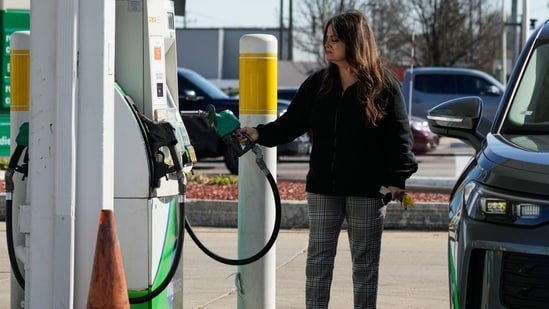
Junelle Lewis was looking for relief from the pressure from the war with Iran that has driven up gas prices in the Seattle area, when an app on her phone gave her the answer: the Tulalip reservation north of the city, nearly a half-hour from her home.

Apps like Gas Buddy make finding the cheapest gas easier than ever. (Associated Press)

She didn’t hesitate.

“I drive here specifically just to get gas,” Lewis said this week as she filled up her Chevrolet Suburban at a Tulalip market, where the price was $4.84 per gallon (3.8 liters), about 75 cents cheaper than prices near her hometown. “Gas is ridiculous. But honestly, I’ve found this gas station to be cheaper than a lot of gas stations here over the years. Probably the cheapest.”

Lewis isn’t the only driver to discover that some of the cheapest fuel can be found on Native American reservations.

Particularly in California, New Mexico, New York, Oklahoma and Washington state—where there are dozens of tribal-owned gas stations, some located in busy travel corridors—tribes exempt from state gas taxes sell for much lower prices than nearby competing gas stations.

Gas prices drive bargain hunting

Apps like Gas Buddy make finding the cheapest gas easier than ever.

Since the war with Iran began on Feb. 28, gasoline prices nationwide have risen more than $1 to an average of $4.15 a gallon, according to AAA.

Prices have been heading higher, topping $5 in the summer of 2022, but economists believe prices will continue to rise as geopolitical tensions persist, fueling inflation in the coming weeks.

However, you can find discounts at many of the nearly 500 tribal convenience stores with gas stations across the United States

Fifty Five is located in California. At the Chukchansi Crossing gas station and tourist center between Fresno and Yosemite National Park, gas costs $5.09, 60 cents cheaper than at nearby gas stations.

New Mexico resident Jamie Cross usually saves money on the Mescalero Apache Reservation, where gas prices were as low as $3.79 this week.

“I hope we don’t go higher,” Cross said Thursday.

In eastern New York state, on Catauragus Indian Territory between Buffalo and Erie, Pa., the cheapest gas at six stations was about $3.65, 50 cents cheaper than in nearby towns.

Tribal lands find way to evade gas taxes

So how do tribes do it? Two words: tax-free.

Generally, tribes must pay federal fuel taxes, which are 18.4 cents per gallon on gasoline and 24.3 cents per gallon on diesel, and pass that cost on to drivers. State fuel taxes are another story.

For more than a century, U.S. courts have held that states do not have the right to tax Native Americans on their lands, said Dan Lewerenz, an assistant law professor at the University of North Dakota who specializes in Native American law.

“The Supreme Court has consistently upheld this view, which is one of the most enduring principles of Indian federal law,” Leverenz said.

Federally recognized Native American tribes are located in 35 states, and state gas taxes range from 9 cents per gallon in Alaska to 71 cents per gallon in California.

From there, things get complicated based on where fuel is taxed (for example, at a fuel terminal, or when a distributor buys or sells fuel) and various agreements between states and tribes.

The court ruling comes into play. In 2005, the U.S. Supreme Court ruled that off-reservation dealers in Kansas could collect state taxes on sales of on-reservation fuel to tribes. But in 2019, the Supreme Court ruled that an 1855 treaty between the United States and the Yakama Nation, which ensures tribal members the freedom to travel on roads carrying goods, prohibits the imposition of state gas taxes on tribal lands in Washington state.

“It’s a little different from the principle of no taxation by Indians within Indian territory, because this particular treaty also reserves certain off-reservation rights for Indians,” Leverenz said.

Gas is just a way for stores to make money

Convenience store gas sales are not as profitable as bringing people in from the gas station.

Selling snacks can increase profits. But tribal businesses are increasingly delivering groceries in “food deserts” far from grocery stores.

“Sometimes these gas stations and convenience stores are the closest and best place to buy affordable food or household supplies,” said Matthew Klas of Klas Robinson QED, a consulting firm in Minneapolis.

Klas conducts market research and consulting for tribal businesses and tracks 245 tribes across the country, which as of 2025 operate 496 convenience stores with gas stations.

Oklahoma, California, Washington, Arizona, New Mexico, Wisconsin, Michigan and New York have the most. Some tribes, including the Choctaw Nation of Oklahoma and the Oneida Indian Nation of New York, have their own chain stores.

Drive-thru smoke shops, car washes and truck stop facilities also bring in revenue. And then there are the casinos: There are 205 tribal-owned gas stations in or near them.

Some tribal casinos are resorts with gas stations. Some tribal gas stations are a type of casino called “gasinos” with only a handful of gambling machines.

Tribal-owned businesses are a major source of revenue on Native American reservations. On the Tulalip Reservation in the Seattle area, growing gas sales are being reinvested in the community, helping to pay for roads, police, health care, education, housing and other needs, Tanya Burns, CEO of the Tulalip Tribal Confederated Corporation, said in a statement.

“Like any government, we provide critical services to our people,” Burns said.

It’s not just about saving

“It’s terrible,” said Todd Hall of Paden, Oklahoma, who paid about $90 to fill up his trailer at a Citizen Potawatomi Nation gas station about 30 miles (48 kilometers) west of Oklahoma City.

But, he added: “The prices here are cheaper than elsewhere.”

Hall pays $4.57 a gallon for diesel and said prices are more than $5 in many places in the area.

Mark Foster said he saves about $5 a week buying fuel at tribal-owned gas stations. But he said he’s a loyal customer because the tribe is a good community partner.

“I like the way the tribe operates,” he said. “And the price is good.”

At the Tulalip Market north of Seattle, Jared Blankenship’s complaint wasn’t about the price, but about the gas he had to pay.

“Yeah, well, my electric car just died,” Blankenship said. “So this sucks. This is new. Either Costco or find a cheaper place like the rez. So here we are.”

Milgram’s electroshock experiment: An experiment that exposed the dark side of human obedience to authority |

0

Milgram's electric shock experiment: An experiment that exposed the dark side of human obedience to authority
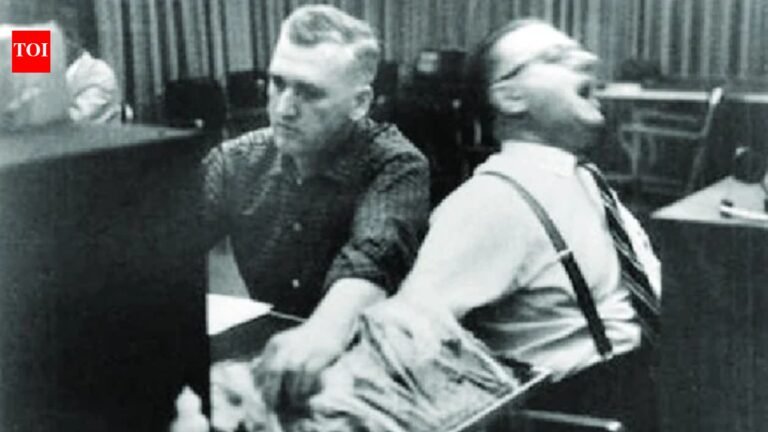
Stanley Milgram’s experiments at Yale University in 1961-62 tested obedience, with participants believing they were giving painful electric shocks to others under authority.

In the early 1960s, a seemingly simple question arose in a Yale University laboratory: How far would an ordinary person go if instructed by an authority figure to harm others? Psychologist Stanley Milgram provided an answer that would become one of the most cited and controversial discoveries in modern psychology.Milgram’s obedience experiments, conducted between 1961 and 1962, did not begin as abstract inquiries. They were shaped by the aftermath of the Holocaust and, more specifically, by the trial of Adolf Eichmann, who defended his role in organizing the logistics of the mass deportation of Jews to ghettos and extermination camps, a central part of the Nazis’ program of systematic mass murder, claiming that he was “merely following orders.”Stanley Milgram asked the question directly in his 1974 book Obedience to Authority: “Were Eichmann and his millions of co-conspirators in the Holocaust simply following orders? Can we all call them accomplices? “

How the experiment is designed

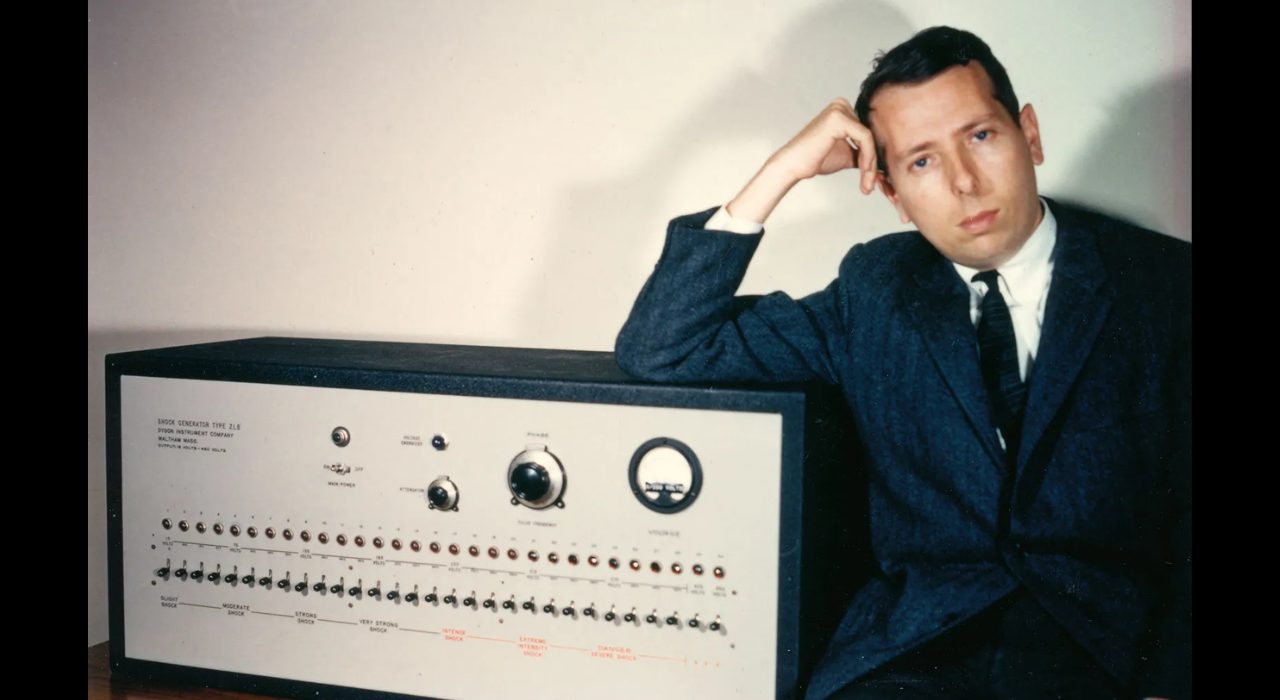
Milgram recruited participants through newspaper ads, presenting the study as a study on learning and memory. In the most widely cited version, 40 men participated, each paying $4.50. Participants were assigned the role of “teacher.” Another person was introduced as a participant but was actually an actor working with the researcher, playing the role of a “learner.” Learners were placed in a separate room and connected to what appeared to be an electric shock device. The teacher sat in front of a shock generator with voltages ranging from 15 volts to 450 volts in 15 volt increments. The switches are labeled in escalating terms: “Mild Shock,” “Moderate Shock,” and “Danger: Severe Shock,” with the final switch simply labeled “XXX.” The task is structured but repetitive. The teacher reads out the word pairs and tests the learner’s memory. Each wrong answer requires an electric shock, and the voltage increases each time. The shock wasn’t real. Participants did not know this. As the course progresses, learner responses are scripted. At lower levels, he showed mild discomfort. As the voltage increased, his reactions became more urgent, he complained of a heart attack, demanded to be released, and began banging against walls at 300 volts. After saying that, he fell silent. The experimenter instructed that silence should be considered an incorrect answer. When participants hesitated, they received a series of standardized prompts: “Please continue.” “The experiment requires you to continue.” “It is absolutely essential that you continue.” “You have no choice, you have to carry on.”

watch

Milgram Experiment (1962) full documentary

What Milgram reported

In the most famous version of the experiment, the results were shocking: 65% of the participants (26 out of 40) continued to use the maximum voltage of 450 volts. Many showed visible distress. Some protested, some laughed nervously, others questioned the procedure. Many people ask if they should stop. But with guidance, most continued. Milgram concluded that people are highly sensitive to authority, even when obedience conflicts with their personal values. He believed that it was situational factors that influenced behavior, not just individual personality. Some of these factors are consistent across versions. The physical presence of an authority figure increases compliance. Partnering with Yale brings credibility and trust. The gradual increase in voltage makes each step feel gradual rather than extreme. Participants also seemed to shift responsibility to the experimenter, believing they were following instructions rather than making independent decisions. When these conditions change, obedience changes. Compliance decreases when authority figures are absent or giving instructions remotely. Compliance dropped sharply when other participants refused to continue, and in one case 36 of 40 participants stopped early.

What the experiment showed, and what subsequent research discovered

Milgram’s research showed that obedience is not just a matter of personality but also a matter of environment. In some cases, individuals may comply with instructions that they would otherwise refuse. Later research made the situation more complicated. Research and analysis show that obedience depends not only on authority but also on identification, the extent to which participants identify with the authority figure’s goals and identify with the authority figure. When people believe that authority is legitimate and consistent with their own values, they are more likely to follow instructions.

Stanley Milgram

Stanley Milgram American social psychologist Stanley Milgram and the “shock generator” used in famous experiments at Yale University in the 1960s/Photo: Encyclopedia Britannica

Additional analyzes found multiple variables that influence compliance, including proximity to the victim, the legitimacy of the authority, and the presence of dissenting colleagues. These findings suggest that obedience is not automatic or consistent but is determined by specific social conditions.

Ethical issues and criticism

From the outset, these experiments raised serious ethical questions. Participants were deceived about the nature of the study and led to believe they were causing real harm. Many people experience severe psychological distress, including anxiety, stress, and guilt. The experimenter’s insistence, especially the instruction “You have no choice; you must continue,” has been criticized as undermining the participant’s right to withdraw. Participants were then debriefed and the true nature of the experiment explained, Milgram said. However, subsequent investigations raised questions about the consistency and thoroughness of this approach.Australian researcher Gina Perry examined archived recordings and documents to write “Behind the Shock Machine: The Untold Story of the Infamous Milgram Psychology Experiment” after retracing Milgram’s footsteps and interviewing participants decades later. She believes the reality of the experiment is more complex than published reports suggest, noting that what appears to be obedience may also resemble stress: “When you listen to these recordings, the slavish obedience to authority we associate with Milgram’s experiments sounds more like bullying and coercion,” Perry suggested in a report. article For Discovery Magazine. Perry’s study also raised questions about debriefing, showing that many participants were not fully aware of the deception, sometimes for months or even years.

Questions about validity and reproducibility

Further criticism focused on how the results were interpreted. A widely quoted figure. 65% of obedience comes from a specific change. In other versions of the experiment, compliance rates were significantly lower, and in some cases, no participants gave the biggest shock. There was also evidence that some participants were skeptical of the setup. Later analysis showed that those who believed the shocks were real were less likely to continue, while those who doubted that the learners were actually harmed were more likely to continue. Replications of the study produced mixed results. Ethical constraints need to be modified, for example, limiting maximum shock levels or screening participants more carefully. Some of these studies found similar compliance patterns, while others suggested that differences in design make direct comparisons difficult. The core problem remains unresolved: The original experiment cannot be fully replicated under modern ethical standards, which limits the ability to verify its findings in the same form.

Why experimentation still matters

Despite its problems, the Milgram experiment still occupies a central place in psychology. It is often taught not only because it purports to demonstrate obedience but also because it reveals the limitations of experimental designs.Part of its impact comes from the simplicity of the setting, a clear, controlled situation that produces results that many find both disturbing and familiar. It provided a way for people to think about authority, responsibility, and moral choices, while also sparking ongoing debate about how the experiment itself was conducted.As Gina Perry notes, this research endures as a lasting narrative rather than a definitive answer. Reflecting on its legacy, she noted: “I think it puts social psychology in a difficult position… It’s an iconic experiment. I think it does beg the question of why we continue to cite and believe Milgram’s results. I think the reason Milgram’s experiment is still so famous today is because in a way it’s like a powerful allegory.” It’s so well known and often quoted that it takes on a life of its own. …This experiment and this story about ourselves did something for us 50 years later. “

West Bengal polls: Didi claims attempts to cancel her nomination from Bhowanipur

0

KOLKATA: Bengal Chief Minister and Trinamool chief Mamata Banerjee on Saturday claimed that an attempt was made to cancel her Bhowanipore nomination through a “false affidavit”. She submitted her nomination on April 8 and it was accepted on April 10 after review.Bhowanipore currently has 13 candidates, one of the highest number of candidates in Bengal, including eight independent candidates, more than the number of registered political parties. Two complaints against her, which were traced to one of Nadia’s independent candidates, were dismissed, sources said.“We are not fighting the BJP but the party’s vanishing machine. In my own constituency, those traitors filed two false affidavits against me to cancel my nomination. They didn’t succeed, but remember, they tried… They made a lot of efforts to keep me from competing. So, you can understand: If they can do this to me, what can they do to you? ” Banerjee said.One of the objections stated that the proposer, Ismat Hakim, is the spouse of Kolkata Mayor Firhad Hakim and there was a “name mismatch”. She had earlier used her maiden name Ismat Ara but updated the documents to Ismat Hakim. Documents submitted during the review addressed that issue.“Normally, these things take a few minutes. But when all the proposers were forced to wait for two hours after the chief minister submitted his nomination, we got some hint of it,” said a TMC member monitoring the Bhovanipore polls.Another objection alleged undisclosed criminal cases from two decades ago when Banerjee was in opposition. “This cannot be proven and no evidence has been provided,” the party staffer said, adding that she had marked the column as “not applicable.”The third hot spot involves ballot logistics. The initial 17 candidates risked pushing Banerjee’s name to the second EVM as one cell can show 16 names. TMC objected. “The sitting CM cannot be pushed to the second EVM. It will cause chaos,” the official said. Four nominations were later cancelled, eliminating the need for multiple machines.

Nancy Guthrie Update: Explosive details emerge about kidnapper’s contacts with police; Savannah in relief

0

Nancy Guthrie’s long-running case may be approaching a critical turning point, with a former prosecutor saying her kidnapper may have been known to authorities and was something of a “career criminal.”

Nancy Guthrie's case remains unsolved, and a former prosecutor said her kidnapper may have been a career criminal known to authorities (Photo by JUSTIN SULLIVAN / GETTY IMAGES NORTH AMERICA / Getty Images via AFP) (Getty Images via AFP)
Nancy Guthrie’s case remains unsolved, and a former prosecutor said her kidnapper may have been a career criminal known to authorities (Photo by JUSTIN SULLIVAN / GETTY IMAGES NORTH AMERICA / Getty Images via AFP) (Getty Images via AFP)

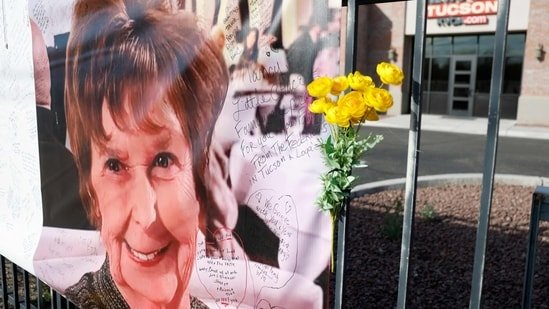
Law enforcement confirmed the 84-year-old was missing from his home in Tucson, Arizona, and they are treating it as a kidnapping. However, more than two months after Nancy Guthrie disappeared, authorities still have no updates on the main suspect.

Read more: Nancy Guthrie update: Experts say there’s only one way to solve kidnapping case

Murphy believes the suspect is an acquaintance

Former Orange County prosecutor Matt Murphy, who shared his insights on the YouTube channel “Prof Jo Explains,” is convinced the suspect in this case may have been arrested and booked into the legal system before.

In the interview, Murphy detailed the types of suspects the FBI and Pima County Sheriff’s Department are dealing with based on his personal encounters with criminals.

“I bet this guy, whoever he is, is a well-known figure in the Pima County Jail,” he told host Joe Portuto.

Murphy questioned Chris Nanos and his team further and said he was surprised the Pima County Sheriff’s Office had not previously identified the suspect as a repeat offender.

He further stated that he was sure the suspect was a familiar person, saying, “I wouldn’t be surprised at all if this guy wasn’t a frequent flyer and was released through some ridiculous social justice program. I wouldn’t be surprised at all to see it.”

Read more: DNA experts pin hopes on new technology that could lead to significant progress in Nancy Guthrie case

Investigation shows ‘no signs of attack’

According to Entertainment Now, there were “no signs of an attack” and the interior of the home was “immaculate.”

Although blood was found on Nancy Guthrie’s front porch after she disappeared, authorities have not released much information about the condition of the rest of her house.

“NewsNation” reporter Brian Entin said: “[This] It makes sense when you go back to what Savannah Guthrie said, when her sister and brother-in-law showed up, they weren’t sure what was going on.”

She further cited comments from Savannah Guthrie and her family, saying, “She basically just disappeared. They even thought maybe an ambulance took her away because, according to sources, there’s nothing in the house now that looks completely out of the ordinary.”

Representatives from 22 countries praise India’s voting process

0

New Delhi The impressive turnout in Kerala, Assam and Puducherry, with two of the three states/UTs achieving record highs, attracted global attention, with 38 international delegates from 22 countries witnessing the results first-hand and expressing their admiration for the high voter participation, careful planning and seamless execution of the elections. The delegates are here as election committee2026 International Election Visitor Program (IEVP). Branimir Farkas, a representative from Croatia, described their experience as a “real democratic festival” and said the election was “a huge process done correctly”. Paulus Shigwedha from Namibia said: “We were very impressed with the organization and preparation of the polling station, which was ‘very good, with wheelchair and nursery facilities’.” Delegates visited the district-level media monitoring center and expressed their appreciation for the continued monitoring of opinion polls through live webcasts. They also participated in plantation activities at polling stations, demonstrating environmentally friendly and sustainable electoral practices. Abubakarr Mahmoud Koroma from Sierra Leone noted: “One of the great things about India is using EVM… we can take some of the learnings back home and see how to implement them…”. The international representatives began their two-day visit (April 8-9) to Assam, Kerala and Puducherry with a visit to dispatch and distribution centres, where they observed polling parties and the systematic movement of election materials through carefully planned logistics and established standard operating procedures. The representatives also interacted with the chief electoral officers and state police nodal officers of the states regarding the overall conduct of the elections as well as security arrangements. They also visited the CCTV control room set up by the CEO’s office to monitor 100% of the polling stations’ live webcasts, calling it a “strong pillar of transparency”. tennessee

OpenAI CEO Sam Altman’s alleged San Francisco Molotov cocktail attacker has been identified as Daniel Alejandro Moreno-Gama

0

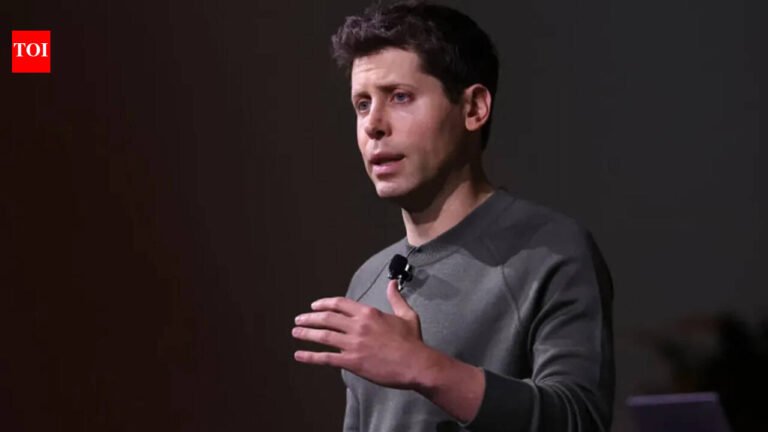
OpenAI CEO Sam Altman's alleged San Francisco Molotov cocktail attacker has been identified as Daniel Alejandro Moreno-Gama

Daniel Alejandro Moreno-Gama, 20, of San Francisco, was arrested and charged for allegedly attacking a San Francisco resident’s home. open artificial intelligence CEO Sam Altmanaccording to U.S. law enforcement officials and court records.Police said Moreno-Gama threw an incendiary device, known as a Molotov cocktail, at Altman’s home in the city’s Russian Hill neighborhood in the early hours of the incident. Authorities said a small fire broke out at an exterior door but extinguished itself before emergency crews arrived. No injuries were reported.Investigators said that after the attack, the suspect also issued threats to OpenAI’s headquarters in the Mission Bay area of ​​San Francisco. Police later confirmed that he was arrested outside OpenAI’s offices, where he allegedly further threatened to set the building on fire.The San Francisco Police Department said officers responded to the initial incident around 4 a.m., recovered an incendiary device from the scene and reviewed surveillance video showing someone outside the property. Subsequently, through investigation, the suspect’s identity was locked and he was criminally detained.Moreno-Gama was charged with multiple felonies, including attempted murder, arson, criminal threats and possession of incendiary and destructive devices. After his arrest, he was booked into the San Francisco County Jail.Authorities have not publicly disclosed the motive behind the attack. However, Sam Altman addressed the incident in a blog post, saying he had recently seen an “inflammatory article” about himself and reflecting on the anxieties surrounding artificial intelligence (AI).OpenAI has not issued a detailed public statement on the case, other than acknowledging it is aware of the reports. Altman, a co-founder of the company behind ChatGPT, was not injured.Moreno-Gama remains in custody as prosecutors continue their case. The charges are merely accusations and have not been proven in court.