Home Blog Page 220

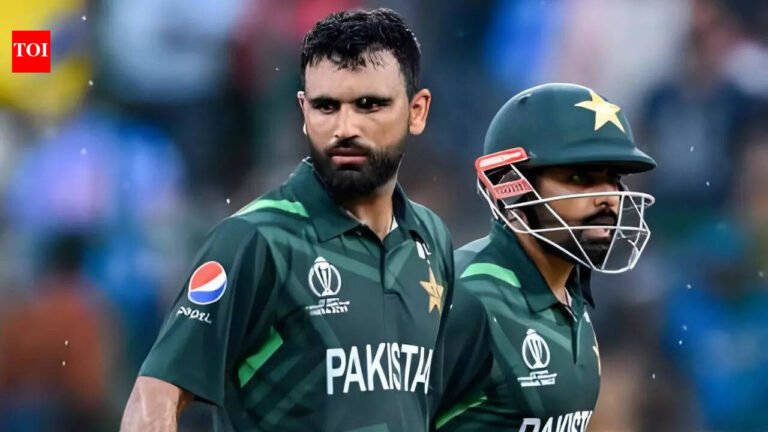
PCB to investigate Babar Azam, Fakhar Zaman after T20 World Cup exit

0

PCB to investigate Babar Azam, Fakhar Zaman after T20 World Cup exit
Farha Zaman and Babar Azam (AFP photo)

Pakistan Cricket Board to investigate star batsman’s injury Babar Azam and Farha Zaman There were concerns over their fitness after the recent ICC Men’s T20 World Cup.Pakistan selector and former fast bowler Aqib Javed It was revealed at a press conference that the selection committee has asked the PCB to investigate the reasons for the injuries to the two players and why the issue came to light only after the end of the match.

Selectors express concerns over injury update

Aaqib Javed, who spoke along with other selection committee members Misbah-ul-Haq, Sarfaraz Ahmed and Asad Shafiq, said the selectors were unaware of injuries sustained by Babar Azam and Fakhar Zaman during the World Cup.The selectors have now asked the PCB to review the injury and whether appropriate fitness updates were communicated during the match.“Fakhar is also injured, and we have also asked the Cricket Board to investigate. How can it be possible that Fakhar is also unwell and we only know after the World Cup?” Ajib said.“When you go to a World Cup, whatever health or injury issues you have, your manager and your team doctor should keep everyone updated. As selectors, we should know these things.”

Babar Azam ruled out of Bangladesh series

Aqib Javed also clarified why Babar Azam was not included in Pakistan’s squad for the ongoing ODI series against the Bangladesh national cricket team. According to selectors, the former Pakistan captain is currently dealing with an injury issue that has kept him out of the Bangladesh series and the domestic T20 Nations Cup.“Babar Azam is facing an injury and that’s why he didn’t play against Bangladesh. He also wanted to play in the National T20 Cup but his health did not allow him,” Aqib explained.“It doesn’t matter whether it’s visible to you or me. But if a player gets injured in training or in a game, it should be known how and when it happened.”Ajib even questioned whether the players would be declared fit if Pakistan progressed further in the tournament.“The situation today is that Babar Azam is not fit to play and Fakhar Zaman is not fit to play. If we get to the semi-finals, will they suddenly be fit again? That’s the problem. “

Young players get opportunities

Aqib also revealed that the team management has planned to field a young squad for the post-World Cup series in Bangladesh. The selection committee has been experimenting with emerging players in recent bilateral series, similar to the approach used during Pakistan’s 2024 tour of Zimbabwe.“We have decided before the World Cup that we will not field a full squad. We want to give opportunities to young players so that we have more options in the future,” he said.

Banner insert

Who is Edith Vinay Solomon? California man indicted for assaulting TSA worker, seriously injuring Dallas police officer

0

a man from california Federal charges for allegedly assaulting two Transportation Security Administration (TSA) officers and seriously injuring a police officer dallas at Dallas Love Field Airport, according to officials, Fox News reported.

A California man has been indicted on federal charges for assaulting a Transportation Security Administration officer at Love Field Airport and injuring a Dallas police officer. (Ministry of Justice)

Who is Edith Vinay Solomon?

Idress Vinay Solomon, 33, from AucklandIn California, he faces up to 20 years in prison for being charged with assaulting a federal officer and causing bodily harm.

Solomon carries a ticket Southwest Airlines flights The flight was bound for Oakland International Airport on March 10, according to the federal complaint filed Wednesday.

Prosecutors said Solomon arrived at the airport security checkpoint without identification and TSA officials directed him to go to an alternate lane to verify his identity through the agency’s “ConfirmID” program, Fox News reported.

When the process failed to identify Solomon, he allegedly became “verbally disorganized and aggressive,” according to the complaint.

Also read: Who is Samira Munshi? Only Muslim woman on Trump’s religious panel quits over US’ ‘illegal war’ in Iran

U.S. prosecutor issues statement on Solomon’s ‘violent behavior’

“The Northern District of Texas will not tolerate violence against TSA and law enforcement officers,” Ryan Raybould, U.S. Attorney for the Northern District of Texas, said in a statement. Texas“.

“We will prosecute these crimes to the fullest extent possible to bring justice to the victims here and deter others from engaging in offensive attacks on officers responsible for ensuring the safety of the traveling public.”

Solomon is accused of punching a TSA officer in the back of the neck after the officer requested supervision.

Solomon disobeyed orders

According to the complaint, dallas The police department was called to the scene and Solomon allegedly punched one of the officers several times in the face, causing the officer to suffer a severe orbital burst fracture of his left eye that required hospitalization.

After his arrest, Solomon was accused of intentionally “spitting” on the officer’s right arm as they tried to put him into a squad car, according to the indictment.

Prosecutors said Solomon failed to comply with lawful verbal commands and persisted in yelling and resisting officers.

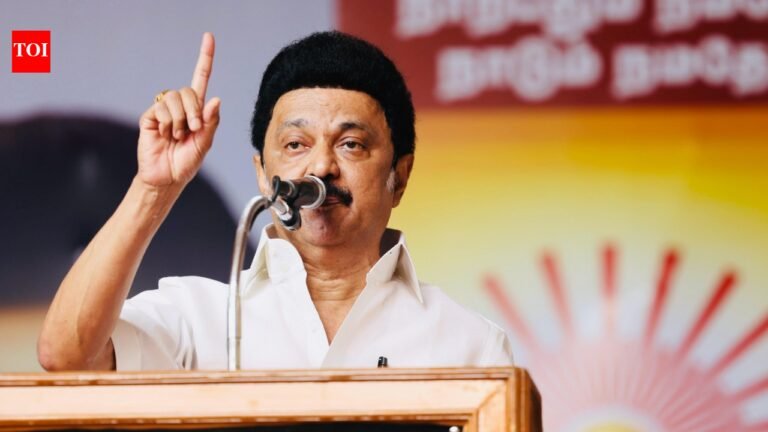
Tamil Nadu CM MK Stalin provides electricity subsidy of Rs 2 per unit to restaurants switching to LPG due to supply crisis

0

New Delhi: Tamil Nadu Chief Minister MK Stalin on Saturday announced a subsidy of Rs 2 per unit on additional electricity consumption by restaurants, tea shops, cloud kitchens and other food production units switching from LPG to electric stoves to address fuel shortages related to tensions in the Gulf region.The decision was taken at a Secretariat review meeting chaired by Stalin to assess the impact of LPG shortage on the industrial and food sectors and ensure that their operations continue smoothly.J Radhakrishnan, chairman and managing director of the Tamil Nadu Power Generation and Distribution Corporation, said the chaos began when the United States and Israel launched a joint military attack on Iran on February 28, following which Tehran blocked ships passing through the Strait of Hormuz.He said the move affected the Gulf region’s supply of crude oil and LPG to India.Under the new measures, restaurants that switch to electric cooking will be subsidized for the extra electricity they consume during the period when the central government imposes restrictions on the use of commercial LPG.To support micro, small and medium enterprises, the state government will also provide subsidized loans for the purchase of electrical equipment such as stoves and heaters. Under the Job Creation Scheme for Unemployed Youth, eligible entrepreneurs can get 25% subsidy up to a maximum of Rs 3.75 lakh. The Tamil Nadu Women Entrepreneurship Development Scheme will provide 25% subsidy on loans up to Rs 10 lakh, subject to a ceiling of Rs 2 lakh, to support women-led enterprises.For SC and ST entrepreneurs, the Annai Ambedkar Business Champions Scheme will provide higher capital subsidy of 35% up to Rs 1 Crore to promote the adoption of efficient motors.The government has also allowed industries to temporarily switch to alternative fuels such as kerosene, RDF, HSD and biomass instead of LPG and CNG. These units do not require fresh consent approval from the Tamil Nadu Pollution Control Board and only require advance notification to the authorities. This relaxation will remain in effect during the period of LPG and CNG restrictions.In Tamil Nadu, around 60,698 factories are operating with permission from the Pollution Control Board, using fuels such as LPG, CNG, diesel, furnace oil and firewood.The state also said the Avin cooperative will purchase excess milk produced by farmers without restrictions. Tamil Nadu has 9,300 primary milk producer cooperatives with a capacity to process about 5.5 million liters of milk per day.Farmers will also be allowed to sell vegetables and fruits freely at 194 Uzhavar Sandhais (farmers’ markets) across the state to ensure that their livelihoods are not affected if restaurants reduce operations due to LPG shortage.To monitor the distribution of LPG to commercial establishments, the government will set up a state-level monitoring committee headed by the chief secretary and district-level committees headed by district collectors and officials of petroleum distribution companies.The state has also supplied an additional 3,228 kiloliters of kerosene to ration card holders through the public distribution system this month.The state oil company coordinator said fuel stocks remained adequate and urged people not to panic.He said, “There is enough petrol and diesel in stock for one month and we will also make further arrangements. There is no need for the public to panic. Sales of petrol and diesel have doubled due to rumors. Cylinders in urban areas are usually supplied every 25 days and the stock can last up to one month. LPG supply will be given to hospitals, schools and college dormitories on priority.”The Chief Minister had earlier chaired a review meeting on LPG shortage on March 10 and directed the departments to take steps to address the constraints.Subsequently, the state food and civil supplies minister met industry representatives and hotel and restaurant associations on March 11 to discuss their concerns, while the chief secretary held review meetings with relevant department officials on March 9, 12 and 13.

Are you eligible for a $2,000 student loan settlement check? what to know

0

Thousands of former Confederates student loans Borrowers in the United States could soon receive settlement checks worth up to $2,000 following a legal case involving major loan servicer Navient.

The CFPB said eligible borrowers do not need to apply to receive the funds. (Associated Press)

According to Newsweek , the payment originated from Consumer Financial Protection Bureauaccused the company of improperly steering distressed borrowers into forbearance programs instead of directing them to more affordable repayment options.

Navient denied the allegations but agreed to a settlement that included refunding $100 million to borrowers and imposing a $20 million penalty.

Why a settlement was reached

The CFPB alleges that Navient placed borrowers in forbearance, a temporary pause in loan payments while interest continued to accrue, rather than helping them enroll in income-driven repayment plans that could lower monthly payments.

Also read: Wages of delinquent student loan borrowers could be garnished in 2026

The lawsuit also claims the company mishandled payments and caused credit harm to some borrowers, including disabled veterans.

Navient, one of the largest student loan servicers in the United States and formerly known as Sallie Mae, ultimately agreed to resolve the dispute without admitting wrongdoing.

Who is eligible for payment

Borrowers may be eligible for a settlement if their federal student loans were serviced by Navient or Sallie Mae before the companies were separated and were placed into forbearance in 2017 or earlier.

The CFPB said eligible borrowers do not need to apply to receive the funds. Checks will be automatically mailed to eligible individuals.

According to Newsweek, some borrower Payments ranging from about $50 to as much as $2,000 have been reported.

Experts say the impact may be limited

Financial experts say that while these payments can help some borrowers, the compensation may not fully offset the financial stress many are experiencing.

Also read: SBA Loan Update: Big changes for foreigners, green card holders coming; details

Kevin Thompson, CEO of 9i Capital Group, told Newsweek that borrowers whose loans are deferred could face years of financial consequences.

“If you had a loan before 2017 that was put on hold or otherwise mishandled by Sallie Mae (now Navient), you may be eligible for partial compensation,” Thompson said. However, he noted that the settlement did not admit fault and provided limited liability.

Alex Beene, a financial literacy lecturer at the University of Tennessee at Martin, said only a small percentage of borrowers tied to Navient are eligible for compensation.

What should borrowers do next?

The CFPB advises borrowers who think they may qualify but have not yet received a check to wait until after March 30 before contacting the agency.

Borrowers who unexpectedly drop payments can request a replacement through the settlement administrator listed on the CFPB website.

TMC and BJP supporters clash in Kolkata hours before PM Modi’s rally

0

New Delhi: Clashes broke out between supporters of the TMC and the Bharatiya Janata Party on Saturday near Girish Park in central Kolkata, about 5 km from the Brigade Parade Ground, where Prime Minister Narendra Modi is scheduled to address a rally later in the day. A policeman and a BJP leader were injured in the violence, officials said.The confrontation, which took place just half an hour before Modi’s rally, marked the culmination of the BJP’s state-wide “Parivartan Yatra” ahead of the West Bengal assembly elections.

TMC’s request to meet President Murmu snubbed by Rashtrapati Bhavan after deal controversy

Amid the violence, there were also allegations of stone-pelting at the residence of West Bengal Minister Shashi Panja in the Girish Park area.According to witnesses, supporters of the two parties threw stones at each other and shouted slogans during the clashes.BJP supporters claimed that the attack started when they went to a rally venue and raised slogans in support of the prime minister.

polling

Do you think political rallies can lead to public violence?

“They pelted stones at us without any provocation. They also abused us,” a BJP activist told a Bengali news channel.The BJP claimed that several vehicles were damaged in the clashes.Local TMC workers denied the allegation and said the BJP supporters first hurled abuses and started throwing stones. They also claimed that stones were pelted at the residence of a local TMC leader during the incident.A large number of police officers rushed to the scene and took control of the situation.During his visit to West Bengal, the Prime Minister is also scheduled to inaugurate and lay the foundation stones of development projects worth over Rs 18,000 crore.

Who is Samira Munshi? Only Muslim woman on Trump’s religious panel quits over US’ ‘illegal war’ in Iran

0

the only muslim woman in the world White House The resignation of the religious freedom committee comes two weeks after the United States and Israel launched an unprovoked conflict over Iran.

Sameerah Munshi resigned from the White House Council on Religious Freedom, condemning the Trump administration's military actions in Iran and the ouster of Commissioner Carrie Prejean Boller. (X/Sameerah Munshi)
Sameerah Munshi resigned from the White House Council on Religious Freedom, condemning the Trump administration’s military actions in Iran and the ouster of Commissioner Carrie Prejean Boller. (X/Sameerah Munshi)

Sameerah Munshi, by trump card In 2025, she announced her resignation due to the “injustice and atrocities” committed by the Trump administration domestically and internationally.

She said her move was to express dissent over the firing of Commissioner Carrie Prejean Boller, who was ousted last month after using an anti-Semitism hearing to elaborate on her criticism of Israel and Israel. zionism.

“In this country, people of faith are denied their freedom of expression and even put their lives at risk because of their deeply held beliefs. Palestineall for the Zionist political agenda,” Munshi said in his resignation letter posted on Substack.

“The removal of a Catholic commissioner for expressing faith-based dissent is an affront to the very freedoms of speech and religion that I speak out against.”

Also read: Iran Targeting US and Israeli Banks in the Middle East? Dubai begins evacuations after ‘painful reaction’ warning

Sameerah Munshi resigns in protest of Carrie Prejean Boller’s ouster

Munshi posted his resignation letter on the X website late Thursday, just hours after an attacker rammed a car into a car. michigan The synagogue when the kindergarten is open. She did not mention the incident in her letter, but said her resignation coincided with Trump’s formal removal of committee member Carrie Prejean Boller from the board.

Boller, Miss Form california The United States was expelled from the committee in February. Dan Patrick, the Texas lieutenant governor and chairman of the committee, said Boehler was trying to “hijack” a hearing intended to focus on anti-Semitism. She faces charges of advancing a “personal and political agenda.”

Sameerah Munshi expresses anger over US’ ‘illegal war’ on Iran

She expressed deep concern about the U.S. government’s “illegal war” against the United States Iran. She argued that the military intervention began without the necessary approval of the U.S. Constitution or authorization from Congress.

“My name is Sameerah Munshi. I am an advisor appointed by the President as White House Religious Liberty Commission. Today, I resign due to the injustice and brutality committed by this administration at home and abroad,” she wrote in a statement.

Munshi strongly condemned the Trump administration’s actions in Iran. She blamed the government for the deaths of civilians, including children, caused by military operations. Furthermore, she claims these actions are in support of Israel, which she calls a “genocidal state.”

She wrote: “I am not resigning because of fear or intimidation from anyone on the committee, government or any interest group. I am resigning because I have witnessed firsthand the injustice perpetrated by members of this committee and I no longer want to be associated with it.”

Global Village Dubai: UAE News: Dubai Global Village cancels Eid fireworks show, remains closed until further notice | World News

0

UAE News: Dubai Global Village cancels Eid fireworks, remains closed until further notice
Dubai Global Village remains closed; Eid firework celebrations canceled / Picture: File

Global Village, Dubai’s popular cultural attraction, will not host its traditional Eid celebrations this year as the destination remains closed until further notice amid precautionary safety measures announced by authorities.The news comes just days before the expected Eid al-Fitr holiday, disappointing many residents and tourists who usually gather at the site to watch the spectacular fireworks display marking the end of Ramadan. Officials said the decision was made in compliance with government directives limiting fireworks and drone displays nationwide as part of broader safety precautions.Global Village, one of Dubai’s most popular seasonal attractions, has been closed for more than two weeks and will remain closed until further notice as authorities continue to monitor the evolving regional situation.

Dubai Global Village 2026 Eid Fireworks Show Canceled

All planned Eid fireworks and drone displays have been canceled this year, organizers confirmed. This popular open-air attraction usually hosts large fireworks displays during major holidays, attracting thousands of visitors every night.However, the venue said it was adhering to official government guidance, which has temporarily banned fireworks and drone entertainment across the country.The cancellation marks a major change for the festive period, as fireworks have long been a highlight of Eid celebrations. In previous seasons, the colorful display lit up Dubai’s skyline and visitors enjoyed shopping, dining and live performances.

Why is Global Village closed during Ramadan 2026?

The extended closure has been linked to heightened tensions in the Middle East, prompting authorities to take extra safety precautions in key public spaces. Ongoing regional conflicts involving the United States, Israel and Iran have led Gulf governments to reassess public events and gatherings as a precaution.There are reports that the UAE recently intercepted a number of ballistic missiles and drones launched from Iran, highlighting the seriousness of the situation and the need for vigilance. As a result, several major attractions across the UAE, including Dubai Parks and Resorts and Al Ain Dubai, are also temporarily closed while authorities assess the security situation.

What visitors should know

Eid al-Fitr in the UAE is expected to start around March 19, 2026, depending on the appearance of the new moon.With the festival less than a week away, officials advise residents and visitors to stay informed about announcements about reopenings or changes to scheduled events through Global Village’s official website and social media channels.Known for its international pavilions, street food, shopping stalls and cultural performances representing more than 90 countries, this popular attraction typically attracts millions of visitors each season.While the cancellation of fireworks may affect some Eid celebrations, authorities say security remains a top priority as the region grapples with current geopolitical tensions.

‘I apologize’: Trump aide Laura Loomer apologizes for ‘anti-India’ social media posts

0

New Delhi: American far-right activist and staunch supporter of US President Donald TrumpLaura Loomer on Saturday apologized for some of her previous “anti-India” posts on social media that sparked an online backlash for being racist and derogatory.Speaking at the India Today Conclave, Loomer responded to criticism of several of his posts on social media platform X. When asked about the controversy, she admitted “I shouldn’t have said some of the things I wrote in my tweets.”

Iran mocks US, says White House now pleads with India to buy Russian oil after trade and tariff pressure

“I apologize if my comments offended people. I am in India this week and will be spending a few days in the country and traveling around the country,” she added.

,

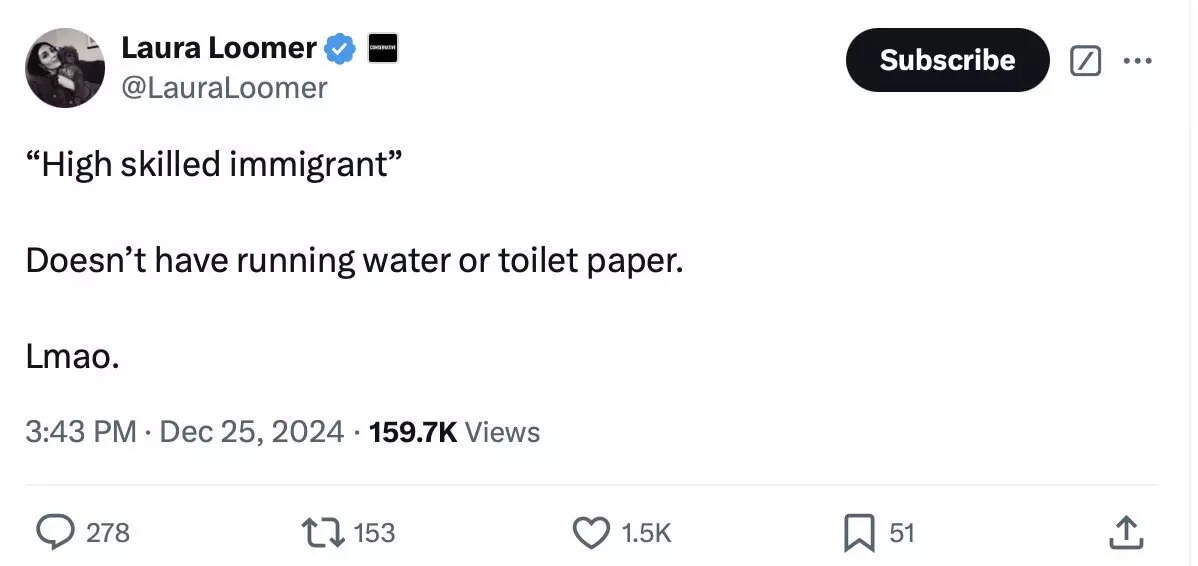
However, Loomer claimed that she would not apologize for her stance against the U.S. H-1B visa program.“I will not apologize for opposing the H-1B visa program because my job is to protect American interests. Our immigration and labor laws have been exploited and abused. I will continue to fight for American workers who are struggling to find jobs,” she said.Controversy erupted after Loomer arrived in India for a conclave, with some social media users highlighting her previous posts, which included vulgar stereotypes and derogatory remarks about Indians, including comments about hygiene and intelligence.When she posted about her arrival, the comments resurfaced and quickly went viral, sparking widespread criticism.Clarifying her position, Loomer said she was not hostile to India or Hindus. “I have no hatred in my heart for India or Hindu people,” she said.“I don’t come from a place of hate; my comments come from a place of love for my people and my country,” she added.Loomer also criticized Pakistan, accusing it of supporting extremist networks. “Pakistan’s biggest export to the world is Islamic terrorism, and I don’t think the United States should be courting the Pakistani government at all,” she said.“Pakistan is an openly jihadi and pro-Sharia country, and when you look at many of the Islamist terror attacks around the world, there is often some link to Pakistan,” she added.

Did Nancy Guthrie say she was “hacked” before her kidnapping? Old post reappears

0

old social media posts Nancy Guthrie As investigators continue to look into her disappearance, she has resurfaced online and authorities believe it was a kidnapping.

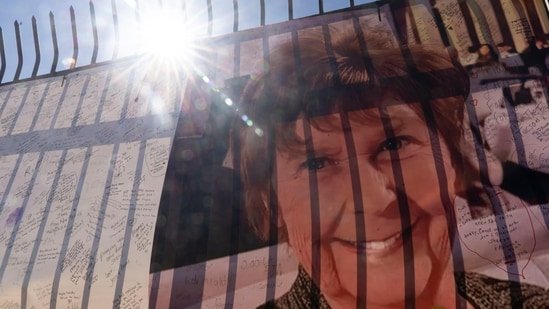
The banner contained messages from hundreds of well-wishers and photos of missing mother Nancy Guthrie "today" Host Savannah Guthrie outside the KVOA newsroom in Tucson, Arizona. (Associated Press)
A banner hanging outside the KVOA newsroom in Tucson, Arizona, contained messages from hundreds of well-wishers and a photo of “Today” host Savannah Guthrie’s missing mother, Nancy Guthrie. (Associated Press)

The 84-year-old claimed her Facebook Messenger account had been hacked, a concern she had publicly expressed years before her disappearance, the Mirror reported.

Nancy Guthrie, mother Savannah GuthrieShe was reported missing in the early hours of February 1 after being taken from her home. The investigation into her disappearance is approaching its seventh week, and authorities are still trying to determine exactly what happened.

Old Facebook post raises new questions

The resurfaced message was posted on Guthrie’s personal Facebook account on August 26, 2021. In the post, she expressed concern that her messaging account had been compromised.

“This is the second time I’ve been hacked in FB MESSENGER. How do I fix it?” Guthrie wrote at the time.

One of her friends responded to the message with a suggestion that she change her Facebook password.

Also read: Nancy Guthrie update: Expert defends Savannah’s family, raises questions about ransom

The post recently recirculated online, bringing renewed scrutiny to her past social media activity while investigators look for clues about the circumstances surrounding her disappear.

Active on social media before disappearance

Guthrie was an active Facebook user before his disappearance. She frequently posts photos and videos of her grandchildren and shares updates about her family, including her children Savannah, Cameron, and Annie.

She also shares everyday moments from her life, including photos of baked goods like pies and pineapple upside-down cake.

In addition to family posts, Guthrie sometimes uses her account to express political views. She occasionally retweeted posts critical of Donald Trump and U.S. Immigration and Customs Enforcement.

Also read: Nancy Guthrie Update: Why is the FBI questioning the cafe filmed in the ‘Today’ segment? New details emerge

Investigation continues

Guthrie’s last Facebook activity before her disappearance was reported to have been on January 27, just days before her disappearance. The post retweeted a video honoring Alex Pretty at the Veterans Administration Memorial Hospital following his death.

Meanwhile, Brian Entin recently criticized the way some parts of the FBI’s investigation were conducted. Entin said it was a “waste” of authorities’ time to focus on one of Guthrie’s concerned neighbors, the Mirror reported.

Officials have not publicly disclosed major developments in the case, and the investigation into Nancy Guthrie’s disappearance remains ongoing.

India’s Nobel Prize paradox: A long gap for laureates and why Mahatma Gandhi remains the most famous non-winner

0

Almost 130 years after Alfred Nobel’s death, the prize named after him continues to be among the world’s most coveted honours, recognising extraordinary achievements in fields such as physics, chemistry, medicine, literature, peace, and economic sciences.A widely recounted, though sometimes disputed, story about the Swedish businessman, chemist, and inventor of dynamite suggests that the idea of the Nobel Prize may have been born out of an unusual moment of introspection. In 1888, a French newspaper mistakenly published Alfred Nobel’s obituary, confusing him with his deceased brother, and reportedly described him as the “merchant of death” who had made a fortune “by finding ways to kill more people faster than ever before.” Disturbed by the prospect of leaving behind such a legacy, Nobel is believed to have reconsidered how he wished to be remembered.When Alfred Nobel died in 1896 in San Remo, Italy, his will directed that the bulk of his fortune be used to establish prizes for those who had “conferred the greatest benefit to humankind.” Since 1901, the Nobel Prizes have been awarded annually by institutions such as the Royal Swedish Academy of Sciences, the Karolinska Institute, the Swedish Academy, and the Norwegian Nobel Committee.Yet, despite its long and celebrated association with intellectual excellence, India has seen relatively few Nobel laureates in recent decades. While individuals of Indian origin continue to appear on the global stage, the country itself has experienced long gaps between Nobel recognitions.

India’s history at Nobel stage

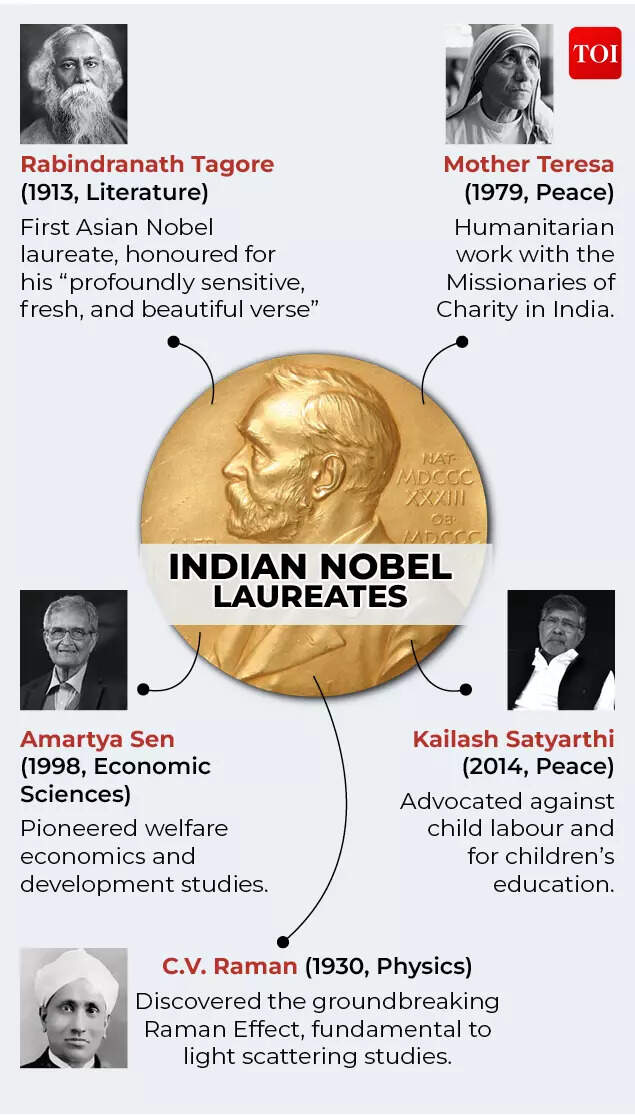
India’s first Nobel Prize was awarded in 1913 to Rabindranath Tagore for Literature. Rabindranath Tagore became the first Asian Nobel laureate, honoured for his “profoundly sensitive, fresh, and beautiful verse.” In science, C.V. Raman won the Physics Nobel Prize in 1930 for discovering the Raman Effect, a groundbreaking insight into light scattering.

Indian Nobel laureates

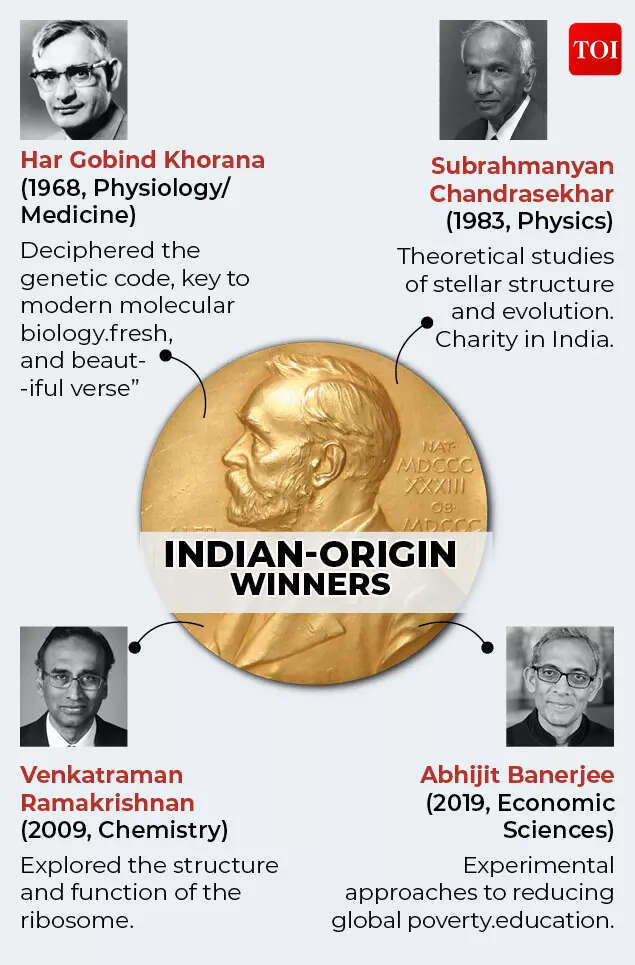
Hargobind Khorana (Physiology/Medicine, 1968), Venkatraman Ramakrishnan (Chemistry, 2009), and Kailash Satyarthi (Peace, 2014) are among other laureates who have brought global recognition to India. In addition, several Indian-origin scholars like Amartya Sen (Economics, 1998) and V.S. Naipaul (Literature, 2001) have been honoured for their contributions while affiliated abroad. Together, these achievements highlight India’s rich intellectual tradition.However, the intervals between such recognitions have often been long, prompting debate about the country’s research ecosystem, institutional support for fellowship, and the pathways through which groundbreaking work gains global visibility.
Nobel prize-Gfx2 (1) (1)

.

India’s last Nobel Prize in a science category was C.V. Raman in Physics, 1930. From 1930 to 2026, that makes it 96 years without a Nobel in Physics, Chemistry, or Physiology/Medicine.

Why Mahatma Gandhi remained the missing laureate – A case study

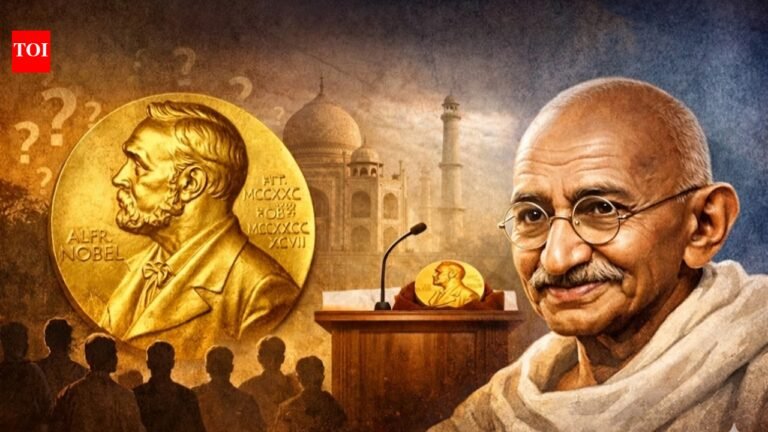
However, the prize seems to hold complex layers beyond recognizing achievement alone, as the story of Mahatma Gandhi illustrates. Widely revered as the most powerful symbol of non-violence in the 20th century, Gandhi pioneered satyagraha, a philosophy of peaceful resistance, first in South Africa and later during India’s struggle for independence.Mahatma Gandhi, affectionately known as Bapu, was nominated for the Nobel Peace Prize five times- in 1937, 1938, 1939, 1947, and shortly before his death in January 1948. Yet he was never selected for the recognition. Historians and Nobel scholars point to several reasons. Committee members admired him personally, but they were cautious about awarding the prize amid complex political conflicts, particularly the communal violence surrounding India’s partition. Some advisers questioned whether Gandhi’s efforts were primarily nationalist rather than universally applicable, while others interpreted statements he made in 1947 as less than strictly pacifist. Up to 1960, the Nobel Peace Prize was awarded almost exclusively to Europeans and Americans, and Mahatma Gandhi did not fit the traditional profile of laureates of that era.After his assassination, the Nobel Committee seriously considered a posthumous award, which was allowed under the rules at the time, but ultimately decided against it, citing that there was “no suitable living candidate.” Øyvind Tønnesson, Peace Editor from 1998–2000, wrote in his piece “Mahatma Gandhi: The Missing Laureate” that nobody had ever been awarded the Nobel Peace Prize posthumously. However, according to the statutes of the Nobel Foundation in force at that time, the prizes could, under certain circumstances, be awarded posthumously. This means it would have been possible to give Gandhi the prize.Mahatma Gandhi left no organization, property, or will, which complicated the practicalities of awarding the prize. Later, members of the committee publicly regretted his omission, and his legacy has often been invoked as a moral benchmark. When the Dalai Lama was awarded the Peace Prize in 1989, the committee chairman described it as “in part a tribute to the memory of Mahatma Gandhi.” Nelson Mandela also referred to Gandhi’s ideals as a guiding force in his own struggle against apartheid.

Why has India not produced frequent Nobel winners?

It is important to note that the absence of frequent Nobel wins does not necessarily translate into a lack of scientific or literary excellence or merit. However, it does raise a deeper and important question: why do some countries consistently produce Nobel laureates while others, despite immense intellectual potential, experience prolonged gaps?

How Someone Actually Wins a Nobel Prize | The Secret Selection Process Explained

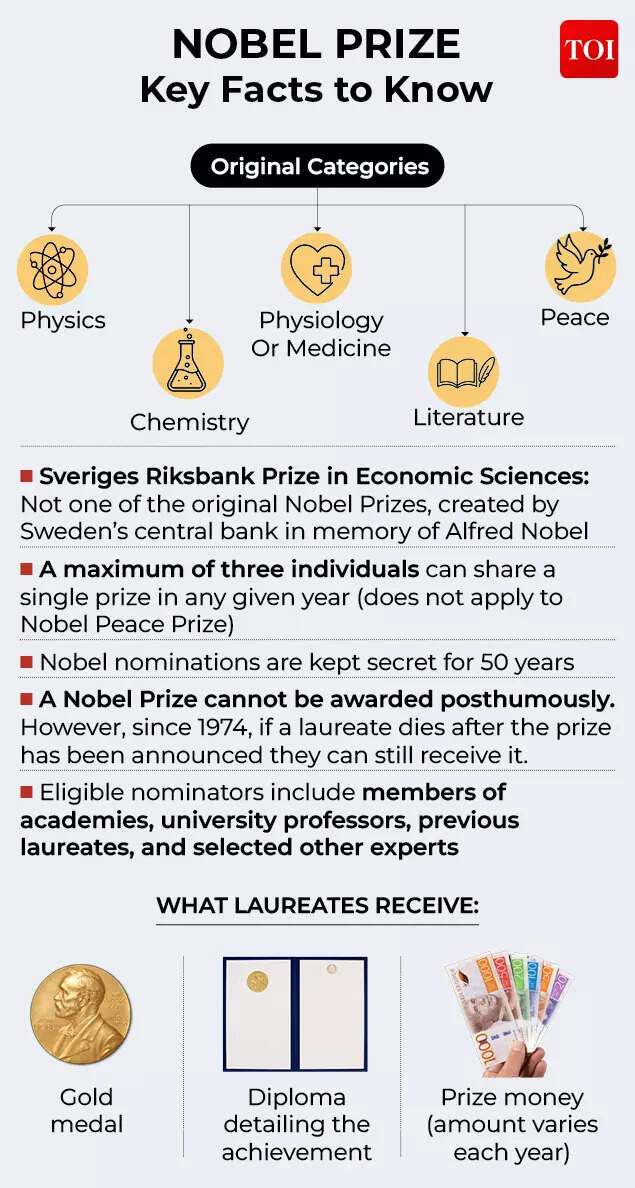
To understand this pattern, it is worth examining the structural, institutional, and cultural factors that may shape the journey from promising research to Nobel-winning discovery and external factors that might be at play. Nobel nominations are kept secret for years – The Norwegian Nobel Committee keeps all nominations confidential for 50 years, including details about who nominated them, how many people, and the names of all who were shortlisted. This means we often don’t know who was proposed or considered, making it impossible to judge how close India’s scholars or leaders came to winning in many cases. Mahatma Gandhi, for instance, was nominated multiple times before his death, but the public only came to know the details decades later from archival research.The Rule of Three – A Nobel Prize can be shared by up to three individuals, which excludes research teams, laboratories, or entire collaborative groups. Many groundbreaking discoveries can be the result of large team efforts, making it difficult to single out a few individuals as having made the highest contribution. As a result, many achievements by large research groups or think tanks may remain underrepresented. This is one reason why some major contributions from India or Indian-origin scientists may not have led to a Nobel Prize despite their significance. However, this rule does not apply to the Nobel Peace prize.
Nobel prize-Gfx3 (1)

Brain drain – According to a 2024 study by A. Shaji George and Dr. T. Baskar on brain drain in India, many skilled professionals are leaving the country due to limited opportunities and better prospects abroad. India has seen a steady exodus of talented researchers and scientists, many leaving in search of better funding, modern labs, and opportunities to collaborate internationally. With R&D investment at only ~0.64% of GDP and a limited number of academic positions, talented individuals often face difficult choices between pursuing their research dreams or seeking stability abroad. Overseas institutions appear to provide greater resources, better fellowships, access to global networks, and recognition, which can be felt to some as hard to achieve at home. Strengthening domestic research support and infrastructure could help retain this talent, allowing India’s brightest minds to thrive while boosting the country’s global scientific impact.The social safety with conventional career options – Choosing research as a career in India often comes with institutional and social concerns. PhD scholars have reported facing limited job opportunities, uncertain career paths, and modest funding or fellowships. In addition, parental or societal pressure for more stable employment can weigh heavily. Researchers also experience pressure to publish for placement rather than long-term innovation, which can compromise the pursuit of groundbreaking work. These challenges create a perception of instability, influencing career choices and sometimes prompting talented individuals to pursue more conventional or secure paths in other fields.Historical trend: Euro-American dominanceUp to 1960, most Nobel Prizes were awarded to Europeans and Americans. Early breakthroughs in physics, chemistry, medicine, and literature were concentrated in Western institutions, while research from countries like India had limited access to international networks and global visibility. The Nobel Peace Prize during this period was almost exclusively awarded to Western laureates, frequently raising questions about whether the horizon of the Norwegian Nobel Committee was too narrow to recognize contributions from non-Western and post-colonial nations.Excessive focus on publicationsDespite being globally ranked 3rd in research publications, it is paradoxical that India has seen a long gap in Nobel recognitions. PhD scholars in India often report that the work culture prioritizes publications, particularly in high-impact journals, over long-term innovation. As Bhargav Jyoti Bora and Anshid, two PhD scholars in chemistry, told TOI:“Here, the work is mainly focused on the publication. People are looking for better impact factor journals so that they can get jobs. Otherwise, there is no option for placement.”This pressure to publish for career survival can limit the pursuit of novel or risky ideas, which are often the foundation of globally recognized research. He contrasts this with the approach of many Nobel laureates:“If you look at people who have got the Nobel Prize, their entire career is based on one topic, or several aspects of one topic. All their students work on similar topics, which helps them create novel or Nobel-worthy ideas” they added.This focus on immediate career needs often limits deep, long-term exploration of a single research area.Limited funding and R&D expenditureLimited funding and infrastructure remain major bottlenecks. Tushar Goyal, a JRF researcher at Jawaharlal Nehru University, said while speaking to TOI that these challenges continue to hinder high-quality research.“Without financial support, many scholars become dependent on part-time jobs and gigs to meet their basic needs. It hampers their academic focus and research quality. India’s R&D expenditure is approximately 0.64% of GDP, significantly lower than in many research-intensive economies.The Non-NET fellowship, which provides Rs 8,000 per month for PhD students in central universities, was last revised in 2012. Despite significant increases in the cost of living, the fellowship amount has remained unchanged for the last 14 years,” he added.Another factor contributing to India’s relatively low R&D spending is the limited participation of the private sector. According to a written reply to a parliamentary question in the Rajya Sabha in 2025 by Jitendra Singh, minister of state (independent charge) for science and technology, the private sector accounts for only about 36% of India’s Gross Expenditure on Research and Development (GERD), whereas in several advanced economies, private industry contributes over 70% of total R&D spending.Anshid, a PhD scholar in chemistry, adds that “It is very difficult for faculties, especially new ones, to get funding. The research infrastructure is minimal in universities or institutes. Students have to struggle to get access to instruments or labs, wasting valuable research time.”Other students often face similar frustrations, making it harder to complete ambitious projects or pursue high-impact research.Collaboration often driven by resourcesAnother issue that emerged from conversations with researchers is the nature of research collaborations. They further highlighted how research-based collaborations, which should ideally foster shared knowledge and innovation, are often pursued for material support instead. Bhargav Bora observes:“Most collaborations are not for knowledge or field similarity, or even for gaining insights. The main purpose is access to instruments and funding. Ideally, collaboration should help in better understanding the field, then it will be beneficial for a better idea.”This practical approach can limit intellectual exchange, which is often essential for groundbreaking discoveries.Career uncertainty and societal pressureResearch in India can often feel like a precarious career choice. Limited job opportunities and uncertain career paths make it difficult for young researchers to plan long-term.PhD scholars also opened up on the societal and parental expectations that favour more stable professions. “There is pressure to choose a secure job,” one scholar said, adding that many researchers feel compelled to prioritise publications for placements rather than pursuing long-term innovative work.Together, these factors contribute to a sense of instability within the research ecosystem, shaping career choices and sometimes pushing talented individuals toward more conventional career paths.Cinema, often called the mirror of society, has also explored how the lives of scientists intersect with institutional and social pressures. Films like Ek Doctor Ki Maut (1990), a masterpiece of parallel cinema, directed by Tapan Sinha, portray how groundbreaking research can be met with apathy, indifference, and sheer skepticism. The film follows Dr. Dipankar Roy (played by Pankaj Kapur), who discovers a cure for leprosy but is ridiculed by the medical association and the scientific community for his claim that, as a side effect, the vaccine could treat women’s infertility. Bureaucratic hurdles further stall his work, and his passionate devotion to the discovery comes at the cost of neglecting other aspects of his life. In the film, he has set up a lab within his own home, highlighting his obsessive devotion to research and how such dedication can blur the line between professional pursuit and personal life and how bureaucratic, social, and institutional pressures can stifle scientific inquiry and groundbreaking discoveries.Outdated coursework and limited global exposure Many PhD programs in India still rely on outdated coursework, which may not fully align with current global debates or modern research methodologies. Tushar Goyal, JRF researcher at JNU and media educator, highlights another challenge, “Limited opportunities for international exposure and collaborations restrict integration into global academic networks. Without such exposure, even high-quality research can remain under-recognized internationally.Updating curricula and creating more pathways for international collaboration could help researchers gain skills, perspectives, and networks essential for achieving global visibility.The role of translation in global recognitionDitsa Mandal, a research scholar in Liberal Arts at IIT Hyderabad, observes that translation infrastructure also plays a crucial role in determining whether literary works gain global recognition. She notes, “Translation infrastructures are the most important criteria determining a work’s capability to travel—publishers willing to invest in certain kinds of works and languages, the presence of skilled translators, grants, representation in international book fairs, and academic promotion abroad all affect visibility. Literary works with limited translation funding may remain locally visible but not globally celebrated.”This insight underscores how structural support, not just literary merit, shapes the reach and recognition of works on the international stage.

Global recognition: How awards reflect research ecosystems

Awards like the Nobel Prize not only honor individual scholars but also signal the strength of a country’s research ecosystem. Tushar Goyal notes that such recognition lends credibility to both the researcher and their institution, reflecting long-term support, funding, and intellectual freedom. Factors like media coverage, translation, and international collaborations also play a critical role. Research published in widely accessible languages or circulated through global networks is more likely to be cited, discussed, and nominated for prestigious awards, highlighting the importance of international exposure and academic partnerships.

The road ahead

Who receives a Nobel Prize, and who does not, often remains a matter of speculation, as the Nobel Committee keeps nominations confidential for 50 years and many factors may shape the final decision. The decisions are complex and not always predictable. India’s journey with the Nobel Prize reflects a complex interplay of history, institutional structures, and global visibility. Yet it is not a story of failure; intellectual excellence continues to thrive through persistent inquiry, innovation, and resilience. From the literary contributions of Rabindranath Tagore to C. V. Raman’s discoveries on the scattering of light, India has produced thinkers whose work has had global impact. The country has long produced minds that have shaped global thought. Strengthening research ecosystems, maintaining robust scientific infrastructure, fostering meaningful collaboration, and valuing long-term dedication can help ensure that future Nobel-worthy discoveries reflect not only individual brilliance but also the country’s systemic strength on the global stage.