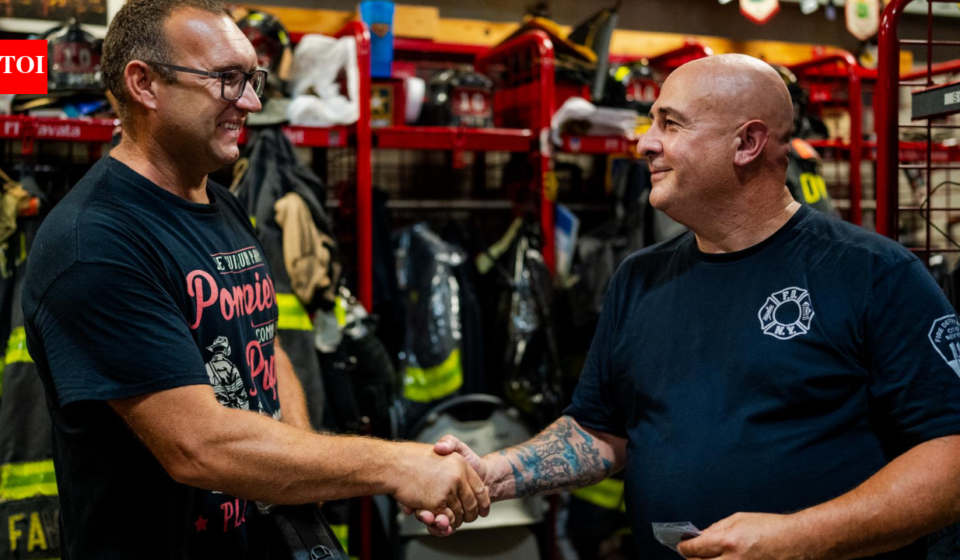
On 9/11, New York’s Ten House was among the first firehouses to respond; 25 years later, 65-year-old Sal Argano is its last active member from that day

Nearly 25 years after the September 11 attacksa small firehouse across from the World Trade Center site has become more than a place where firefighters begin and end their shifts. For 65-year-old Sal Argano, it is also a living link to a generation of firefighters whose lives were changed forever that morning. According to the Associated Press and the Los Angeles Times, Argano is now the last firefighter still working at FDNY’s Engine 10 and Ladder 10, known as “Ten House,” who was assigned there in 2001. He survived 9/11 partly because he happened to be working at another Brooklyn station that morning. That coincidence has stayed with him for a quarter of a century. He later returned to find his firehouse badly damaged and six of its members among the 343 FDNY firefighters killed in the attacks.
The morning that changed Ten House forever
Ten House sits just across an intersection from the World Trade Center. On September 11, 2001, its firefighters were among the first to respond after the hijacked planes struck the towers. The 9/11 Memorial & Museum records that Engine 10 and Ladder 10, located just south of the World Trade Center, responded immediately after the attack. The firehouse was badly damaged during the collapses, while six of its firefighters were killed.Argano was not there when the first plane struck. He had been temporarily assigned to another station in Brooklyn. Once he learned what had happened, he rushed downtown. He arrived to find his firehouse still standing but surrounded by destruction, and later learned that six colleagues had died. For Argano, the knowledge that a routine work assignment had placed him elsewhere that morning has never felt like a simple stroke of luck. It has remained one of the defining facts of his life.
From firehouse to living memorial
The physical landscape outside Ten House has changed dramatically. The towers are gone. In their place stand the twin memorial pools, the 9/11 Memorial Museum and the skyscrapers of a rebuilt Lower Manhattan. But the firehouse remains. Every day, tourists pass its doors on their way to the memorial. Some stop at the bronze memorial wall bearing the names of firefighters who died. Others photograph the Engine 10 and Ladder 10 trucks inside the station. The 9/11 Memorial & Museum itself describes Ten House as a continuing point of connection for people who visit Ground Zero. For the firefighters working there, however, it remains an operating firehouse first.They still answer emergency calls. They train, eat lunch and maintain their equipment. But they also find themselves answering questions from visitors who want to understand what happened there 25 years ago. Argano has taken that responsibility particularly seriously.
‘I’m going to keep telling them’
The challenge is increasingly generational. Many of the younger firefighters now working at Ten House were children, or were not yet born, when the towers fell. For them, September 11 is history. For Argano, it is something he remembers personally: the colleagues who did not come home, the damaged station and the years of watching Lower Manhattan rebuild.That is why he believes his presence matters. As firefighters who were there in 2001 retire, fewer people remain who can describe the firehouse from firsthand experience. Another Ten House firefighter, Robert Favata, who joined the company in 2008, has spoken about learning the story of 9/11 directly from the older firefighters who worked there. Argano, meanwhile, has no immediate plans to leave.At 65, he continues to work and says he wants to remain at Ten House for as long as he can, not simply to answer calls, but to preserve what he remembers. Because eventually, the last person who can say I was there will have to leave, too. Until then, Ten House still has one.