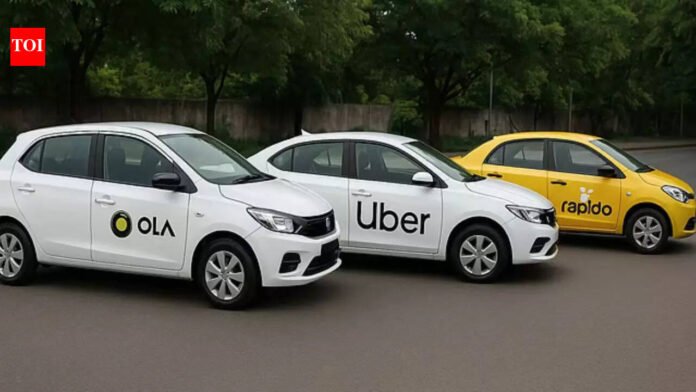

NEW DELHI: An India-wide collapse was observed among app-based transport workers on February 7 after unions representing gig drivers and delivery workers called for a nationwide shutdown to protest falling revenue, rising costs and what they said was increasing exploitation by platform companies.The protest, initiated by the Telangana Gig and Platform Workers Union and the Indian App-Based Transport Workers Federation, involves drivers and delivery workers associated with major platforms such as Ola, Uber, Rapido, Porter and other app-based transportation services. The union said the agitation was aimed at forcing the Center and state governments to implement minimum basic fares as per the Motor Vehicle Aggregation Guidelines 2025.The union said the failure to notify base fares allowed aggregation companies to continue to set prices unilaterally, forcing workers to work longer hours due to reduced incomes and taking on operational risks without protections.Shaik Salauddin, founder of TGPWU and co-founder and national secretary of IFAT, said the lack of action by the government has led to the worsening of working conditions for gig workers.“The Aggregation Guidelines 2025 clearly require consultation with recognized trade unions before setting prices. However, the government’s failure to act has allowed platforms to deepen exploitation,” Salauddin said.The shutdown coincides with the Maharashtra Kamgar Sabha calling for a one-day nationwide strike by app-based taxi and autorickshaw drivers to raise demands, including action against what they call illegal bike taxi services, and over grievances related to the mandatory installation of panic buttons.The union said in a statement that drivers face financial burdens due to repeated changes in emergency button approvals.“While there are 140 panic button equipment providers approved by the central government, the state government has declared nearly 70 per cent of them unauthorized. As a result, taxi drivers are forced to dismantle previously installed equipment and unnecessarily install new equipment at a cost of around Rs 12,000, causing severe financial hardship,” the statement said.Speaking to PTI, Maharashtra Kamgar Sabha chief Dr Keshav Kshirsagar said the strike started in Maharashtra and other parts of the country in the morning and was supported by a majority of autorickshaw and taxi drivers. However, despite calls to ban the vehicles from the roads, taxis and auto-rickshaws are still available in some areas on app-based platforms such as Uber, Ola and Rapido.The union also expressed concern over the loss of revenue due to the increase in the number of autorickshaws under the open license policy and claimed that victims of illegal bike taxi accidents were denied insurance benefits.The February 7 protests followed earlier nationwide gig worker strikes, including a shutdown by platform delivery workers on December 31, when unions warned of disruptions to peak-hour services due to low wages, long hours and a lack of social protection.“Today, Swiggy Zomato delivery boys, Blinkit Zepto riders, Ola Uber drivers are the workforce that make these big companies unicorns; they are valued in billions of dollars. In this entire ecosystem that has been created, if there is one group of people who are oppressed and under immense pressure, it is gig workers,” an AAP MP said while talking to ANI.Amid nationwide agitation, a delegation of transport and delivery workers met Opposition Leader Rahul Gandhi in Lok Sabha in New Delhi on Friday to urge the Center to enact legislation and better implementation of regulations at the state level.Shakh Salauddin said the delegation raised long-standing concerns during the meeting. “This delegation includes drivers and delivery workers from the App-based Transport Workers Federation of India. In Congress-ruled states and even in places where we are the opposition party, the electoral promises made to these workers are being implemented. At the central level, the government is providing social security schemes but this is not a substitute for statutory law,” he said.Saladin also praised the Karnataka government for bringing in legislation for gig workers. “Detailed discussions took place. The delegation described their issues one by one for about half an hour. We appeal to the Congress governments in states where implementation has stalled to take swift action. We once again congratulate Karnataka for being the first state to introduce a comprehensive law,” he added.Union leaders say the protests will continue unless the government takes action to enforce fare regulations and provide statutory protections for gig workers in the app-based transport and delivery sectors.