
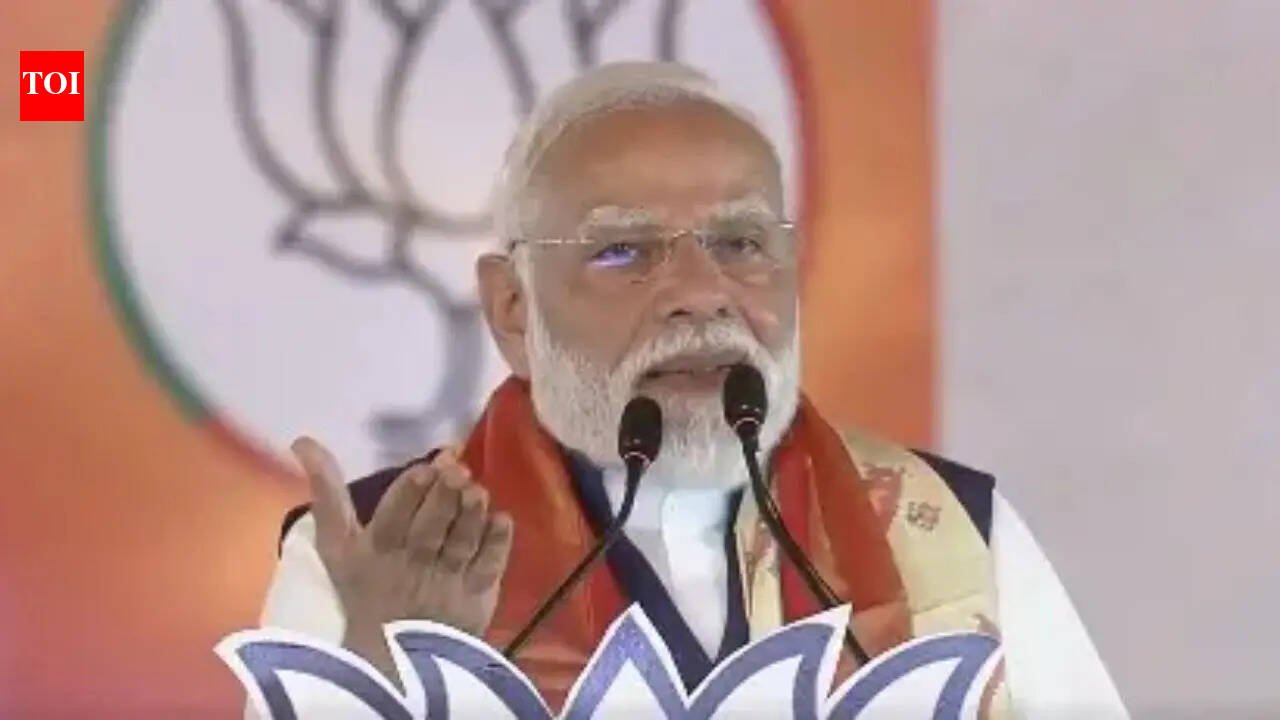
New Delhi: A day after Prime Minister Modi The government, which has drawn up a series of “resolutions” to save fuel and save foreign exchange, on Monday urged people to remain calm and avoid panic, saying the country had ample oil supplies and was taking concrete steps to prevent shortages and supply chain disruptions.“The government’s primary focus is to ensure uninterrupted energy flows, economic stability and security of maritime trade routes,” Defense Minister Rajnath Singh said while chairing a meeting of the Informal Group of Ministers (IGoM) on developments in West Asia.At the annual meeting of the Confederation of Indian Industry, Petroleum Minister Neeraj Mittal said there was no need for fuel rationing or panic buying, even as he urged people to follow the prime minister’s guidelines.Modi doubled down on his appeal on Monday and suggested that schools consider moving classes online for the time being. “First there was Covid-19, then there were global economic challenges and now rising tensions in West Asia. The impact of these situations continues to be felt across the world and India is certainly not immune,” he said in Vadodara. “We must do everything possible to reduce the consumption of imported products and avoid personal activities involving foreign exchange expenditures.”
“Conservation works to build long-term capacity”
Responding to the message, Mittal said, “In times of crisis, we need to remind ourselves that these fuels are expensive. If we can save these fuels, it saves dollars. The money can be used for some development projects that are productive for the country instead of going to waste.”He added, “Supply is adequate. No rationing. This is not going to happen. India has always been an oasis of comfort.”Mittal said India’s large refining base would help cushion supply shocks, meet domestic demand and allow exports of refined petroleum products.Intergovernmental organizations attended by several ministers were informed that there are surpluses of basic commodities and that ongoing protection efforts are aimed at long-term capacity building in case the crisis continues. “India has 60 days of crude oil, 60 days of natural gas and 45 days of LPG rolling stock. Foreign exchange reserves are as high as US$703 billion. India is the world’s third largest oil refiner and the fourth largest exporter of petroleum products, exporting to more than 150 countries, fully meeting domestic demand.” But as international crude oil prices continue to remain at very high levels, the country has endured huge costs. Saving fuel can alleviate this burden,” a government press release said.