New evidence suggests early humans built vast ocean network in Philippines 40,000 years ago World News

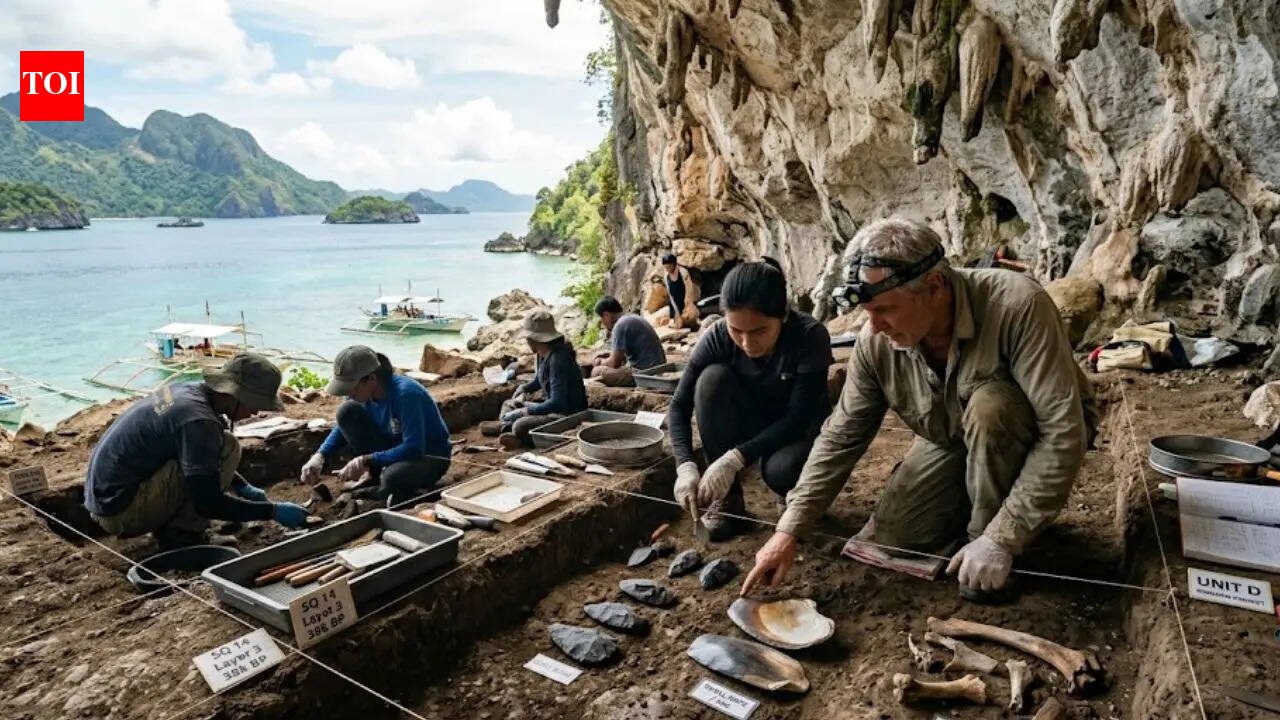
Recent archaeological discoveries have reshaped our understanding of Southeast Asian prehistory. The early peoples of the Philippines are now considered to be pioneers and innovators of navigation rather than an isolated group of humans who inhabited the islands. Research based on evidence from Mindoro shows that more than 40,000 years ago, people navigated the high seas corridor; engaged in distant-water fishing and created complex and interconnected communities and technologies around the waters. Contrary to long-held belief, the islands were arrived by chance and remoteness while drifting at sea. Evidence found on the archipelago includes the use of more advanced shellfish tool-making methods, as well as evidence of pelagic fish traveling far from land, suggesting that people were willing to travel multiple times between landmasses, Modern Science reported. By mapping records of previous interactions between communities around the world, researchers found that one of the main areas where communities interacted was through navigation and use of the waters around the Philippines and the establishment of strong trade and cultural exchange networks.
Study finds humans created network of islands across Philippines
Data from the Mindoro Archeology Project suggest that these early societies used caves and rock shelters within a broader and interdependent system of sites that could be called integrated settlements; researchers found evidence of more than 35,000 years of continued human activity in these isolated communities, suggesting that these places were part of a broader system of sharing knowledge, materials, and culture among communities spread over hundreds of miles of water, as noted in a study by Ateneo de Manila University.
Study finds evidence of advanced ships and deep-sea fishing
The fact that the islands were not connected by land during the Ice Age meant that reaching them required an organized maritime effort. According to research published by the Ateneo de Manila University, microscopic studies of stone tools suggest that these early settlers could make ropes and nets from plant fibers to build boats and fishing gear needed for deep-sea fishing and access the many available marine resources, such as tuna and sharks found in archaeological records.
How coastal innovation connects isolated island populations
By exploiting the coastal environment and available resources, early island residents were able to demonstrate their ability to adapt and find solutions to environmental constraints. Adzes (a carpentry tool) were created from giant clam shells, allowing the wood to be shaped into oars, shelters, and ship parts. Through the use of the adze’s ability to shape wood, maritime networks were created and maintained that transported physical and intangible materials over long distances, literally connecting the island’s inhabitants in ways that challenged traditional paradigms of primitive isolation.