

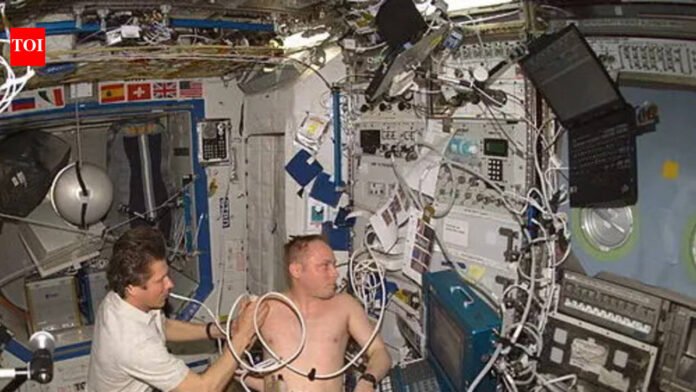
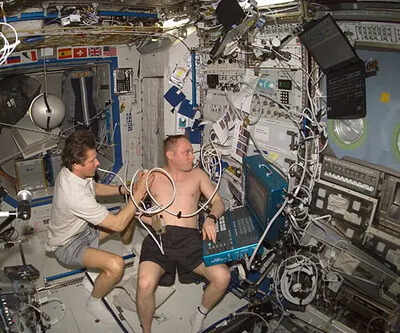
As most of us think of space, it’s a quiet and peaceful place, but for those who live and work aboard the International Space Station (ISS), it can also be a place full of physiological surprises. A recent incident in which veteran NASA astronaut Michael Fink told The Associated Press that he had apparently lost the ability to speak has brought renewed attention to the profound effects of space on the human body. While this may sound like a scary prospect, scientists are quick to assure us that this scenario, while not entirely expected, is not entirely unforeseeable either. The truth is, our bodies are designed to operate within specific gravitational fields, and in space, even simple actions like speaking may not always work as expected. Although the cause is unknown, scientists are working to understand what’s behind this phenomenon.
How Microgravity Affects Speech and the Human Body
One of the first things astronauts notice in space is the flow of bodily fluids to their upper body and head. On Earth, gravity ensures even distribution of body fluids. In space, however, this is no longer the case. according to NASAthis is called “fluid shift” and can cause nasal congestion.This affects not only the appearance of the astronauts, but also the way they communicate. Speech is a complex process in which sounds are coordinated with airflow and resonance in the mouth and nose. Head pressure can cause an astronaut’s voice to sound different. In fact, astronauts have noticed that their voices sound different in space. They may sound softer or nasal.In most cases, these effects are minor. However, this is an example of how minor physical changes can affect an astronaut’s ability to communicate in space.
Possible causes of temporary aphasia
This inability to speak may be caused by a combination of neurological and physical factors. Space travel is known to affect the central nervous system, including the way the brain communicates and transmits signals to the muscles needed for speech.A study by KTH Institute of TechnologySwedish neuroscience has proven that microgravity affects motor control and coordination, especially in the early stages of adaptation.Speaking requires a high degree of coordination. It requires precise coordination of breathing, vibrations of the vocal cords, and movements of the tongue and lips. If any of these are compromised, even for a short period of time, it can cause difficulty speaking.Another factor to consider is psychological. Astronauts work in confined spaces and are required to perform a high level of responsibility. This can lead to difficulty speaking, as it can happen to anyone on the planet.
What space research tells us about such events
NASA’s Human Research Program (HRP) There has been interest in understanding the effects of space travel on the human body over time. Research has consistently shown that many of the changes that occur in space, whether in muscle control, balance or perception, are part of the adaptation process. The human brain also needs to relearn and understand how to react in space, which is weightless. This can temporarily affect coordination and reactions. However, it’s also important to note that most changes are reversible. The human body will adapt to space and return to normal after returning to Earth. There is also no evidence that temporary speech problems in space cause damage.
A glimpse into the complexities of life in space
This unusual event is a reminder that space is not only a technological challenge, but also a biological one. The human body is closely connected to the earth, and even small changes in environmental conditions can have unintended consequences.While the exact cause of the temporary inability to speak is unknown, it is a reminder that further research is needed as space missions become longer and more complex. As we prepare for missions to the Moon and even Mars, we need to understand these subtle but important effects.In this sense, events like this remind us what space exploration is all about—not just reaching other planets, but also understanding how we, as humans, survive in space.


, it can als.)