
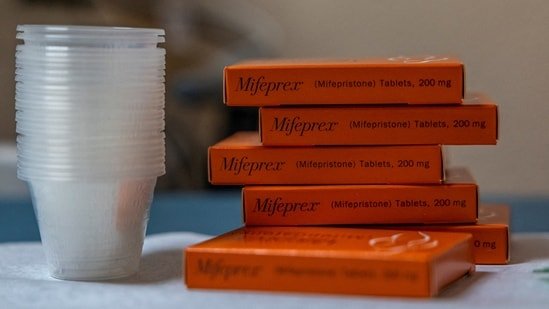
this us The Supreme Court on Monday temporarily lifted a lower court’s ban on mailing widely used abortion pills mifepristone.

The Supreme Court order restores mail-in service until at least May 11 for mifepristone, which is used in most abortions in the United States.
A three-judge panel of the 5th Circuit Court of Appeals on Friday halted nationwide mailings of mifepristone in a lawsuit against the U.S. Food and Drug Administration in the southern state of Louisiana, which has some of the nation’s strictest anti-abortion laws.
Danco Laboratories, which makes mifepristone, asked the Supreme Court to suspend enforcement of the Court of Appeal order for a week while it prepares to file an emergency case with the Supreme Court.
The Supreme Court agreed to block the appeals court ruling at least until May 11, when the parties file legal briefs, but offered no explanation.
Julia Kaye, Attorney American The Civil Liberties Union welcomed the move.
“While this is a positive short-term development, no one can rest easy while our ability to obtain this safe, effective medication for abortion and miscarriage care remains up in the air,” Kay said in a statement.
“The Supreme Court needs to end this baseless attack on our reproductive freedoms once and for all.”
The 5th Circuit ruling will require women seeking abortions anywhere in the United States to obtain mifepristone in person from a medical clinic and prohibit delivery by mail or pharmacy after using telemedicine.
The conservative-led appeals court overturned a lower court ruling that allowed mifepristone to continue being delivered by mail while the FDA reviewed its regulations surrounding the drug.
– Roy v. Wade –
- Mifepristone has been FDA-approved since 2000 and is also routinely used to treat early pregnancy loss.
- However, anti-abortion activists have raised questions about the drug’s safety, with some citing a study by a conservative think tank that has never been formally peer-reviewed.
- In the United States, mifepristone, which prevents pregnancy progression, and misoprostol, which empties the uterus, are approved for termination of pregnancies up to 70 days old.
- About 20 states have banned or restricted abortion since the Supreme Court overturned the landmark Roe v. Wade decision in June 2022, which enshrined the constitutional right to abortion for half a century.
- Polls show that a majority of Americans support continued safe abortion, even as conservative groups push for restrictions on the procedure or an outright ban.
In 2024, the U.S. Supreme Court rejected a request to restrict mifepristone, ruling that anti-abortion groups and doctors who questioned the drug lacked legal standing to sue.