Mexico City is slowly sinking: NASA radar reveals hidden land collapse caused by groundwater loss and growing water crisis | World News

Mexico City has received considerable attention recently for its worrying behavior that cannot be explained by usual urban factors. According to recent observations using satellites, some areas of Mexico City have begun to sink at an alarming rate. Although no catastrophic subsidence processes occurred in Mexico City, the phenomenon became more severe and pronounced in certain areas. There is no doubt that this process is related to the existing water problem that is affecting millions of people in Mexico City.The subsidence process in Mexico City will not have immediate catastrophic consequences. Nonetheless, the city has begun to change gradually and irrevocably. Satellite images provide a better understanding of movement on urban surfaces. However, they also show how complex the interactions between Mexico City’s water and geological processes have become.Scientists claim that effectively addressing the problem will require new water management policies and sustainable urban development plans. If changes don’t happen soon, Mexico City will experience further subsidence.
How an ancient lake still influences Mexico City today
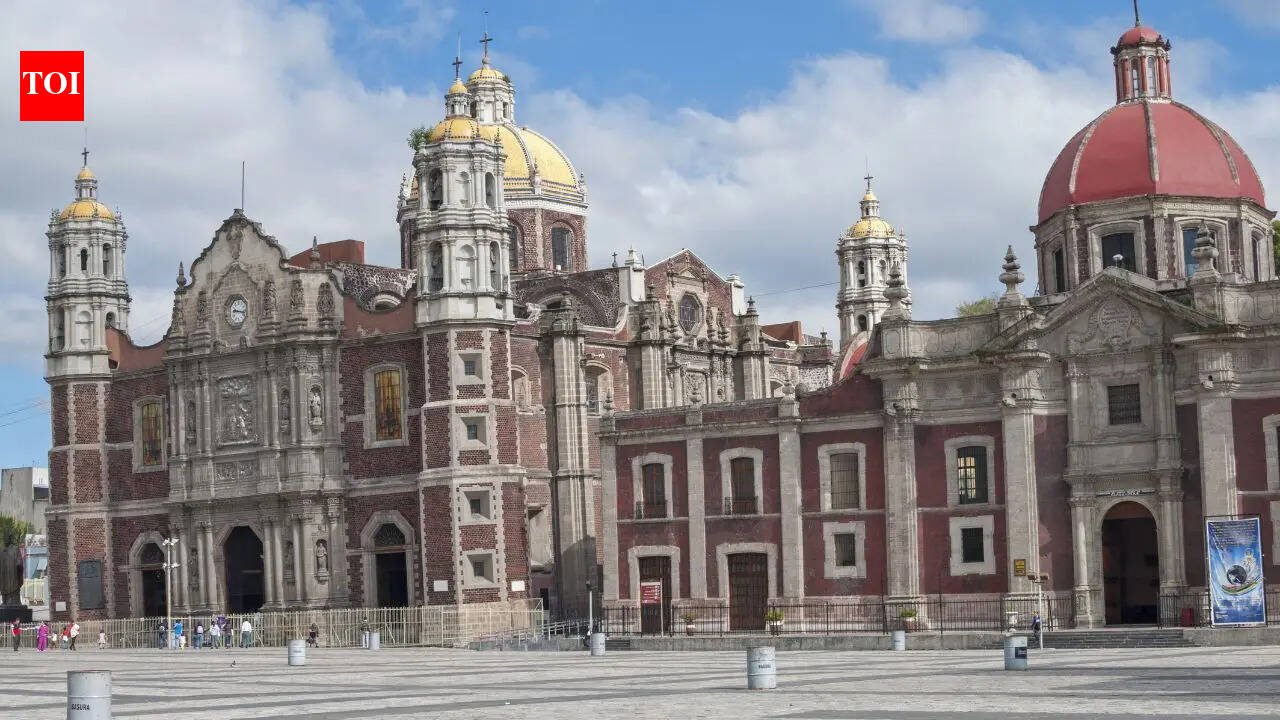
Mexico City was originally built on an ancient lake basin; thus, this is the reason for most of its current holes. The soil in this area is made up of very loose and compacted layers of clay, which can become brittle once pressure changes. Over time, the area became susceptible to groundwater extraction due to this inherent characteristic.This is because water is removed from underground aquifers, leaving vacant spaces vulnerable to collapse, causing the surface to sink. This won’t affect the entire region, just certain neighborhoods. Some believe this will put additional stress on buildings and structures.
NASA radar display sinking of mexico city in detail
Advanced satellite technology makes it possible to observe these changes with stunning precision. Radar instruments used in Earth monitoring missions can detect millimeter-level ground motions. This allows scientists to track how cities change over time, rather than just relying on superficial damage reports.According to reports, recent data shows that parts of Mexico City may be sinking at a rate of nearly 0.8 inches per month. This may not sound dramatic in the short term, but over a year it adds up significantly. These changes are often invisible day to day, but they accumulate in ways that can affect entire communities.Experts say this kind of monitoring is important because it reveals patterns that go unnoticed until the damage becomes severe.
Why Mexico City’s water system faces pressure from below
At the heart of the problem is the city’s dependence on groundwater. Much of Mexico City’s drinking water comes from ancient aquifer systems that lie beneath the surface. For decades, this resource was heavily used to support the city’s growing population.However, continued mining has created an imbalance underground. As water is lost faster than it can be replenished naturally, the soil’s supporting structure weakens. This causes compaction, causing the land above to sink.
Significant effects of cracks, tilts and ground subsidence
The impact of subsidence is becoming more and more obvious in daily life. In some places, roads are no longer smooth and cracks appear on the ground. Some structures become slightly tilted due to settlement as they react to the changing ground.Infrastructure is also under pressure, with underground pipes, transportation and drainage systems having to constantly adapt to changes in the ground. In some cases, maintenance may be required more frequently than in other large cities.Benito Juárez International Airport is one of the areas that is watching closely for any signs of change. Since airport runways must be perfectly flat, even small changes in the ground can cause problems.
How Mexico City’s water demand is exacerbating the problem
This problem is directly related to Mexico City’s water shortage. With more than 20 million inhabitants, the city’s demand for water is very high. As groundwater resources continue to be depleted, concerns about the sustainability of water resources are growing.Warnings about so-called “zero days” have been issued. This involves reaching a critical point of water shortage, which means that water will stop flowing from the taps of some parts of the population. Although it does not appear to be an imminent danger, it is often cited as a result of current trends.It becomes even more complicated as it relates to water issues. The extraction of groundwater causes land subsidence, which makes water distribution more difficult.