

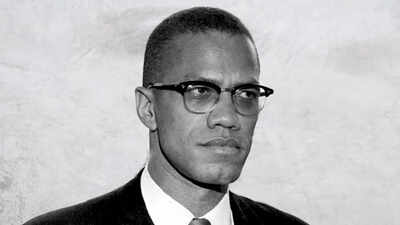
In 1964, during a televised discussion about the civil rights movement, a rival panelist attempted to challenge Malcolm X by using complex legal language to defend segregation. Rather than trying to compete with the speaker’s academic style, Malcolm X calmly responded with humor and poignant analogies that exposed the weaknesses of the argument. In front of a live audience, he completely destroyed his opponent’s position. He shows that a person with true knowledge can change his style and appearance when needed, while a person with only outward intelligence cannot create true understanding.Malcolm X’s observation embodies this idea: “A wise man can play the clown, but a clown cannot play the wise man.” This quote explains the difference between true intelligence and simple manifestations of intelligence. Wisdom allows a person to be flexible, humble, and even naughty when the situation calls for it. A truly smart person can lower themselves, use humor, or appear simple without losing their actual knowledge. A person without true understanding may use complex words, wear expensive clothes, or appear confident, but they cannot replicate the judgment, calmness, and critical thinking that define true intelligence.
Lomax interview 1964
In 1964, Malcolm X shared this idea during a lengthy interview with journalist Louis E. Lomax. This period was an important phase in Malcolm X’s public life. After leaving the Nation of Islam, he began a broader international campaign, meeting with global leaders and appearing on major U.S. television programs to debate politicians, journalists and intellectuals.In a conversation with Lomax, Malcolm X discusses how American media and politicians often try to portray him as an angry and uneducated extremist. He understands that his opponents want him to lose control in public so they can use his reactions to bolster their image of him. Instead, Malcolm X used humor, criticism, and careful communication to explain his ideas while exposing the weaknesses of those who challenged him.By explaining that wise men can play the role of clowns, Malcolm X describes his own style of communication. He knows he has what it takes to challenge his opponents, which allows him to connect with ordinary people using simple language, humor and storytelling. Those who underestimate him often fail because they confuse his approachable style with a lack of intelligence.
The cognitive architecture of false wisdom
From a psychological perspective, this idea is related to the Dunning-Kruger effect, a bias in which people with limited abilities often overestimate their knowledge. People who lack understanding may not realize what true wisdom actually requires. They confuse confidence with competence, speaking loudly with authority, appearance with true ability. Because their perception of intelligence is based solely on appearance, their attempts to replicate intelligence often fail when they are faced with serious challenges.This is different from the view of French philosopher Michel de Montaigne, who believed that true education comes from the ability to transcend oneself. Montaigne believed that intelligence was flexible. Wise people can modify their behavior based on the situation, explain difficult ideas simply, and use humor or self-deprecation without losing respect.A smart person communicates in many ways. They can choose to clown as a way to connect with others, reduce tension, or make lessons more accessible. Their confidence comes from real knowledge, so they have nothing to lose by appearing simple for the time being. True wisdom is not compromised by humor because it does not depend on appearing serious all the time.
Role in the digital environment
In 2026, this idea becomes even more important, as modern society is shaped by online images, videos, and public figures. Social media has turned communication into an ongoing performance in which leaders, professionals, and public figures create images of themselves for others to see. In this environment, the ability to appear interesting, relatable, or unconventional can be a powerful advantage.Many successful business leaders and technology founders use humor, unusual personalities, and online trends to make themselves appear more approachable. They may appear casual or playful in public, but behind this image are complex systems, careful planning, and serious decision-making. They understand how to leverage public figures while maintaining real expertise behind them.However, the opposite problem also exists: some leaders are successful because they are good at appearing smart rather than actually being capable. They use business jargon, impressive presentations, and a confident image to create the appearance of expertise. But when serious problems arise, their weaknesses are exposed. Without real knowledge, they struggle to solve complex challenges and rely on stronger marketing rather than actual solutions.In a world obsessed with appearances, Malcolm X’s insights remain valuable. It teaches us that leaders, thinkers, and professionals are not judged by the seriousness of their images but by how they respond to pressure and complexity. True authority is flexible, confident, and never afraid to show humor.