
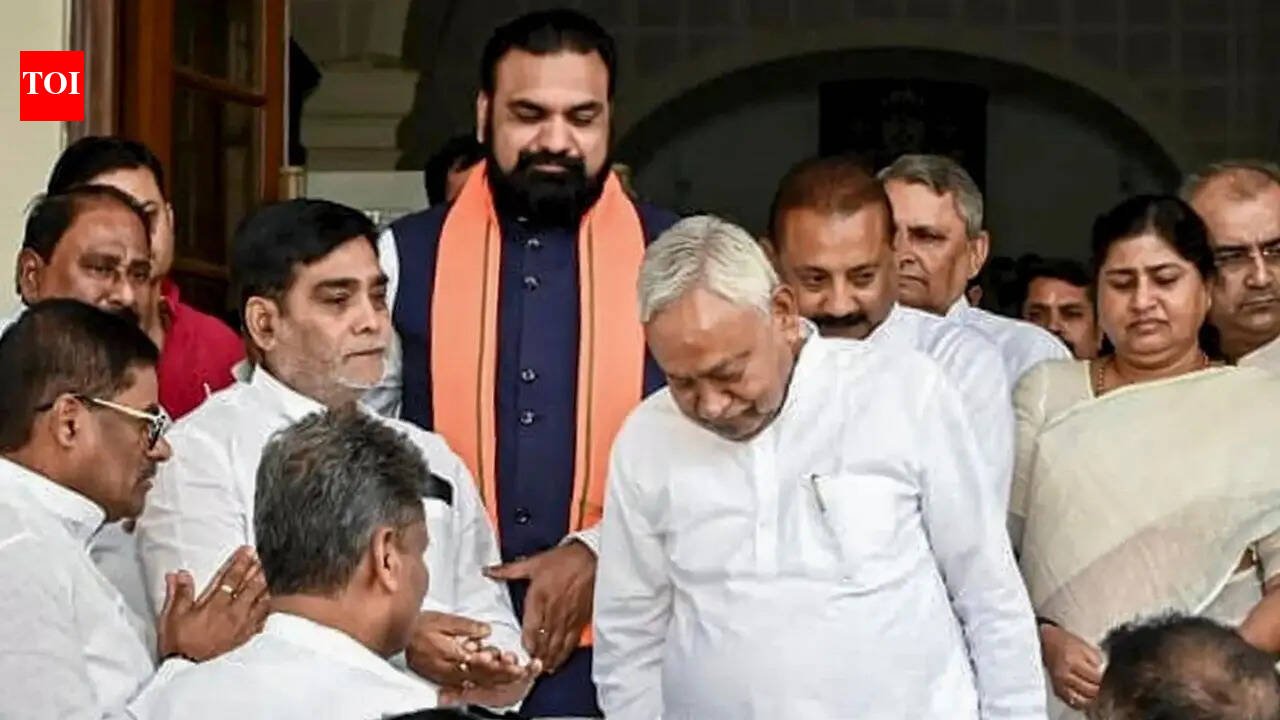
With Nitish Kumar stepping down, the political transition in Bihar has unfolded as expected since he announced his move to the Union House. Once Nitish signals his exit from state politics, the BJP will promote Samrat Choudhary to lead the government. However, Magadh’s landmark transformation had its own twists and turns, coupled with Nitish’s flip-flop. The man who once tied saffron Muresa Nitish, who had publicly pledged to oust Nitish, has now taken over the chair that the JD(U) chief had held for two decades. Samrat Choudhary’s long and dramatic vow has come full circle, not through confrontation but through a force in politics that, given the right timing, almost always delivers results. patience. Samrat Choudhary, who was unanimously elected as the leader of the NDA Legislature, now emerges as the new face of power in Bihar and the first BJP leader to lead the state government. His rise marked a defining moment not only for the BJP’s expansion in Bihar but also for a politician whose career was built on reinvention, ambition and sharp political instincts.
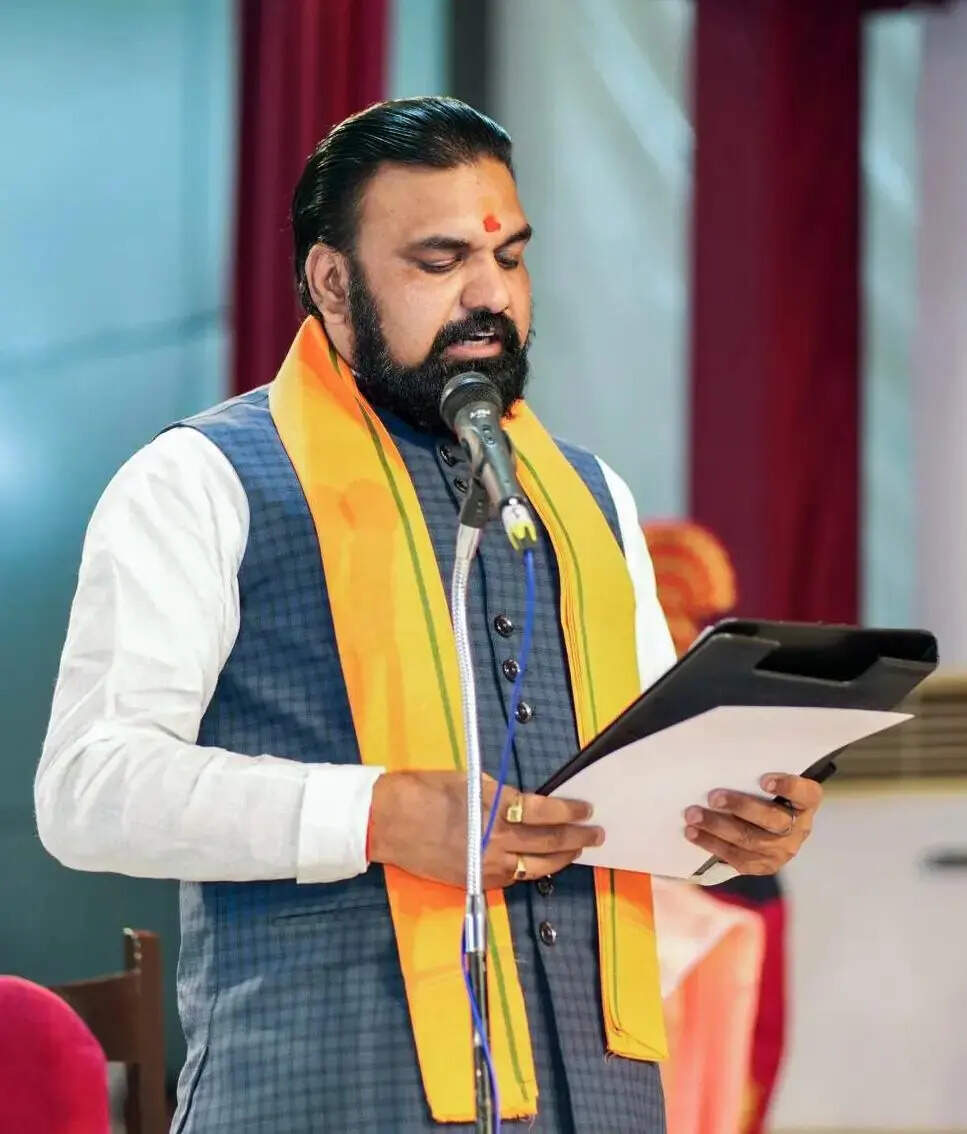
Bharatiya Janata Party leader and newly appointed Bihar Chief Minister Samrat Choudhary attended the oath-taking ceremony held at Lok Bhavan in Patna on Wednesday, presided over by Bihar Governor Syed Ata Hasnain (not seen).
political arch of samrat
Chaudhry’s journey to the top has hardly followed the traditional path of the BJP. Unlike many of the leaders developed within the Sangh ecosystem, he came from outside the Sangh ecosystem. His father is veteran politician Shakuni Choudhary, a founding member of the Samata Party and a contemporary of Nitish Kumar and Lalu Prasad Yadav. Samrat himself started serving in the Janata Party in the 1990s and entered the government early as a minister under Rabri Devi. He moved between various political camps over the years, working for a while with the JD(U) before finally joining the BJP. This transition changed his career. His rise since joining the party has been rapid and steep. In less than a decade, he rose from latecomer to state president, then deputy chief minister and now chief minister.
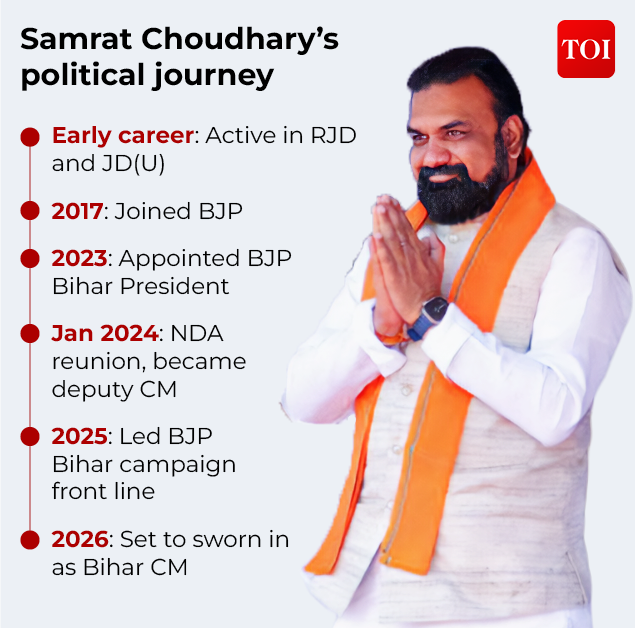
Samrat Chaudhry’s political career
The intertwined rise of Samrat and the BJP
The rise of the BJP in Bihar has been gradual, but there is no doubt about it. In the 2015 assembly elections, it emerged as the largest party with 25% of votes and 53 seats, but still fell out of power as the RJD and JD(U), with 80 and 71 seats respectively, merged to form the government under the leadership of the Mahagathbandhan. When Nitish Kumar returned to the NDA in 2017, the balance within the alliance had begun to change. This shift became even more pronounced in the 2020 elections, when the BJP outperformed the JD(U), winning 74 seats compared to its ally’s 43 seats. Nitish Kumar continues to be chief minister, but the BJP has firmly established itself as the stronger force in the alliance.By the time of the 2025 elections, this transformation will be complete. While the NDA once again fought hard under the leadership of Nitish Kumar, the BJP emerged as the main partner with 89 seats, ahead of the JD(U)’s 85 seats. Although Nitish retained his post as chief minister, the BJP tightened its grip on the government by ensuring the security of key ministries such as the home ministry. Within a year, this growing dominance culminated in the party’s appointment of Samrat Choudhary as Bihar’s first BJP chief minister.
Muresa’s Oath
The turning point came in 2022 when Nitish Kumar broke with the NDA and once again joined hands with the RJD. In response, the BJP handed over control of the Bihar unit to Chaudhry. It was then that he made the vow that would define his political profile. He wears a mureta in every public appearance and has declared that he will not take it off until Nitish Kumar ceases to be the chief minister.The image is stuck. The hijab has become both a political symbol and a personal brand. That makes him Nitish’s most high-profile challenger in nearly two years. Then the irony struck.When Nitish returned to the NDA in 2024 and Chaudhry himself became deputy chief minister of the new alliance, the old rivalry gave way to partnership.Soon after, Chaudhry put an end to this symbolism in Ayodhya.After performing prayers and immersing himself in Saryu, he took off his muleta and dedicated it to the temple, declaring the fulfillment of his vow. At that time, Nitish was still in office. Now, with Nitish leaving Bihar and moving to the Union House, the deeper meaning of this oath seems to have finally come true.
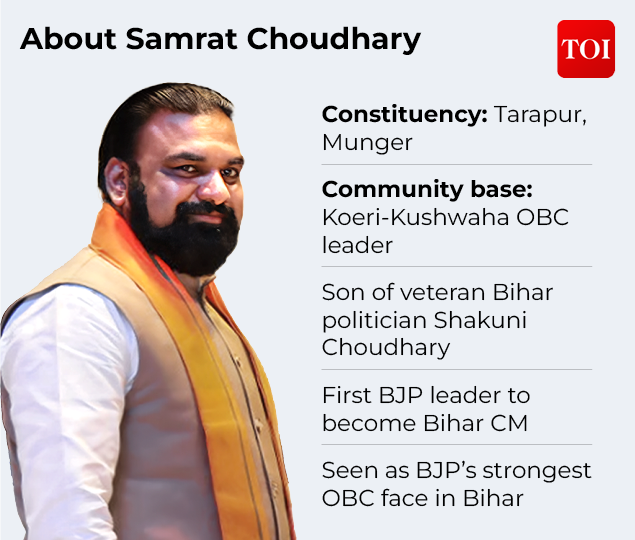
About Samrat Chaudhry
Why BJP supports Samrat
For the BJP, Chaudhry checked several strategic boxes. He is one of the party’s strongest OBC rivals in Bihar and belongs to the Kushwaha or Koeri community, a politically influential group that forms a significant part of the state’s electorate. Together with the Kurmi base, which has long been associated with Nitish Kumar, this gives the BJP a stronger social alliance among backward caste voters.
How caste arithmetic will work
By making Chaudhry, a prominent Kushwahar leader, as chief minister, the BJP is directly wooing Koli-Kushwahar votes, a politically influential group in the non-Yadav OBC lineage in Bihar. The Kushwahar community alone accounts for about 4.2% of the state’s population and is an important part of the 12.86% non-Yadav OBC voters that the BJP has aggressively wooed in recent years.
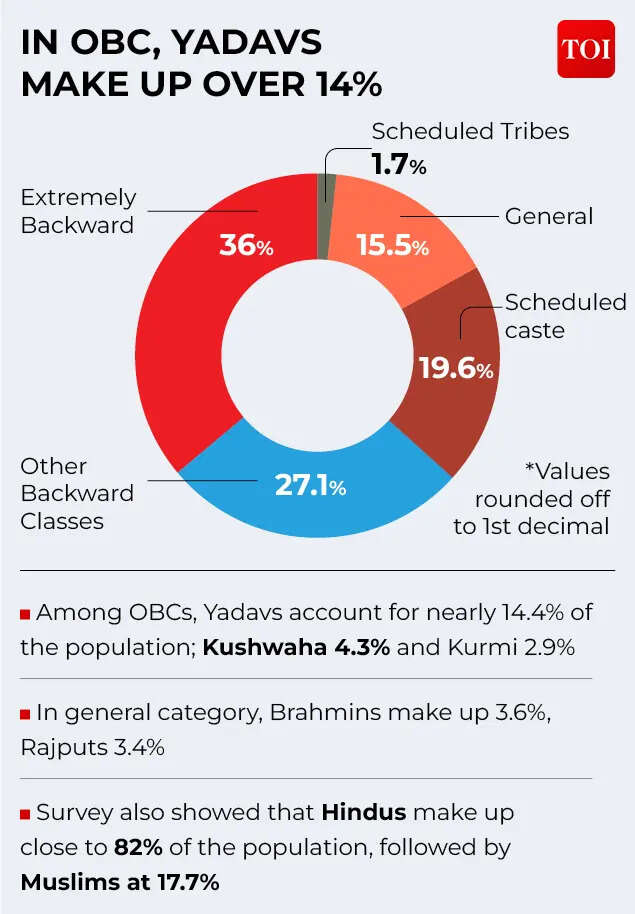
Caste arithmetic in Bihar
The move also allows the BJP to partially inherit Nitish Kumar’s backward caste arithmetic while reducing its dependence on him. Nitish’s power has long relied on the Extremely Backward Classes (EBC), who constitute 36.01% of Bihar’s population. While the EBC’s 113 castes operate in silos, a sizeable non-Muslim EBC section, plus Kurmi and Koeri voters, have historically united behind him. With Nitish stepping down, the BJP is trying to prevent the group from drifting by projecting Chaudhry as a backward caste leader who can unite parts of his support base. The BJP has retained its traditional upper caste base of Brahmins, Rajputs, Bhumihars and Kayasthas, while steadily expanding among non-Yadav OBCs and EBCs.
beyond caste
The appeal of Samrat is not just caste arithmetic. Chaudhry has been active in Bihar politics since 1990 and has witnessed every major political phase in the state, from the turbulence of the Mandal era to alliance reorganization and the expansion of the BJP. The long experience, coupled with his administrative experience in key ministries such as finance, urban development and panchayat, makes him more than a token appointment.His rise has often been compared to that of Assam Chief Minister Himanta Biswa Sarma. Like Sarma, Chaudhry entered the BJP from outside, carrying the baggage of an early political background, but became one of the most trusted regional leaders of Prime Minister Narendra Modi and Union Home Minister Amit Shah. There were also controversies along the way. His name emerged in a 1995 murder case, although he has always denied wrongdoing and said no charges have been brought against him. In 1999, he resigned from his position as minister due to age issues. Political opponents have also questioned his education disclosures. However, none of these events slowed his ascent. What made his appointment politically influential were the layers of irony it entailed. The man who had recently campaigned against Nitish Kumar only inherited Bihar after becoming an ally of Nitish. The challengers have become the heirs. In Maggard, where political memory is deeply ingrained and symbolism is significant, this arc gives the transformation unusual weight. Bihar now has a new Chaudhry, whose muleta oath was once viewed as a dramatic gesture, but as the prophecy has come true, it is essentially over.