Monday’s Bundestag election will do more than just fill a handful of vacancies in the upper house. They tell a familiar political story in a new context, in which numbers, not noise, determine outcomes.The absence of Bihar legislators deprived the opposition of seats it would have won. The cross-poll in Odisha rewrote the established arithmetic. In Haryana, invalid votes and defections turned an otherwise straightforward campaign into a midnight suspense.Individually, these may appear as state-specific outages. Taken together, they underscore a deeper, more enduring pattern. The Bharatiya Janata Party (BJP) is increasingly taking control of the numbers game in the House of Commons, while the opposition has been unable to hold on to its ground when it matters most.This is not a new story. It has been unfolding quietly but decisively since 2014.
House of Lords Paradox
When the BJP secured a decisive majority in the Lok Sabha in 2014, it did not carry that dominance into the Union House. By design, the House of Lords is immune to electoral waves. Its members are elected by state parliaments for staggered terms to ensure continuity and prevent sudden changes.This means that despite the BJP’s strength in the Lok Sabha, it has remained a minority in the Upper House for many years. This imbalance is important!
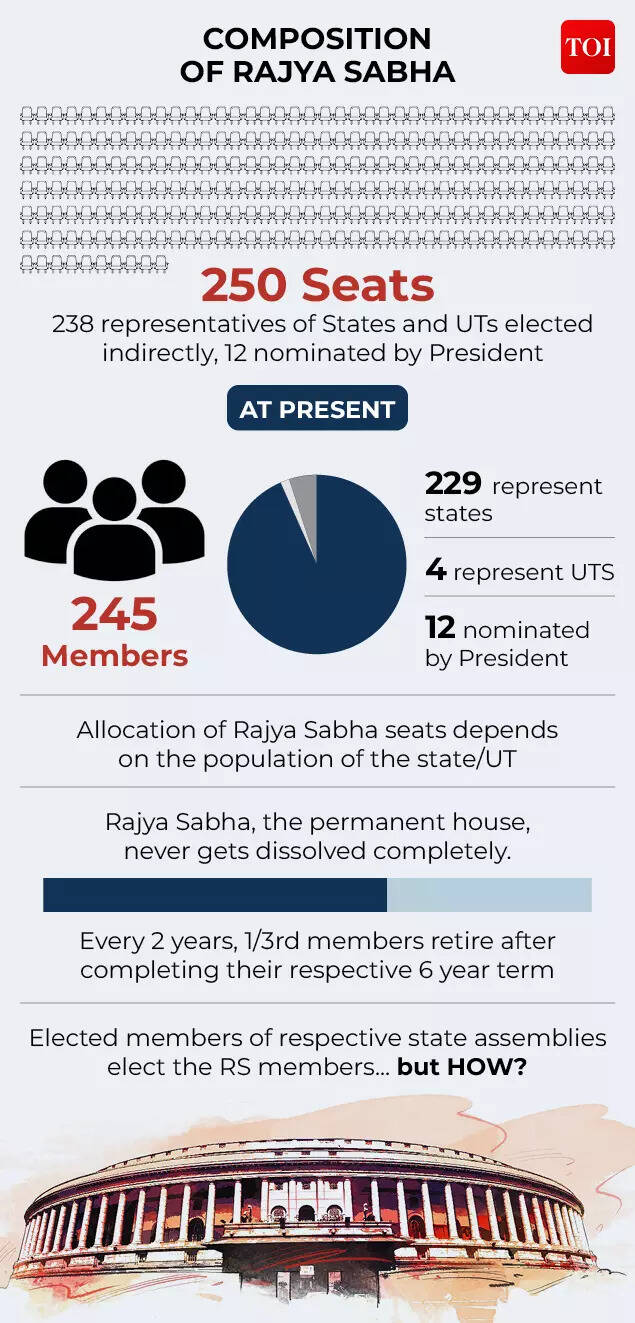
Composition of the Federal Council
Unlike the House of Commons, where a majority can push legislation through with relative ease, the House of Federation requires negotiation, persuasion and sometimes political acumen. For the BJP, this is both a constraint and an opportunity. This is a limitation, because it cannot legislate unilaterally, and an opportunity, because it forces the Communist Party to develop a different political strategy.
slow climb
Since 2014, the Bharatiya Janata Party has steadily climbed up the House of Federation through electoral expansion and strategic positioning. Over time, each state election victory translates into incremental gains for the House of Lords.Uttar Pradesh, Maharashtra, Assam and later parts of the Northeast were crucial to this expansion. But no state illustrates this mechanism better than Uttar Pradesh.Uttar Pradesh, with 403 MLAs, is the largest contributor to the Union House, sending 31 MLAs. After its landslide victory in the 2017 assembly elections, the BJP has significantly increased its upper house seats in successive election cycles.This is the central mechanism of the Bundestag, which empowers political parties to control state parliaments and, over time, leads to a reshaping of the composition of the upper house in favor of the party with the most seats in state parliaments.However, despite the BJP’s improved support, it has not always been able to break through to a majority on its own. Still, the legislation continues to advance.
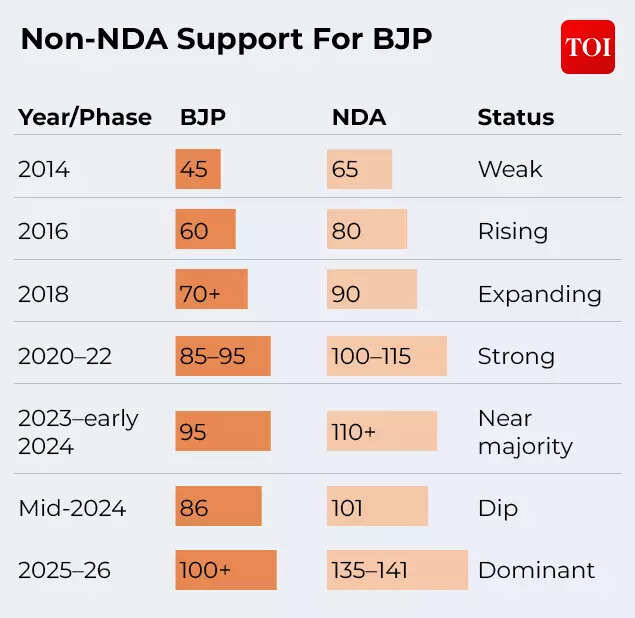
NDA support for BJP
How federal elections work
Federal elections are not direct elections. Provincial councilors vote using proportional representation through the Single Transferable Vote (STV) system.
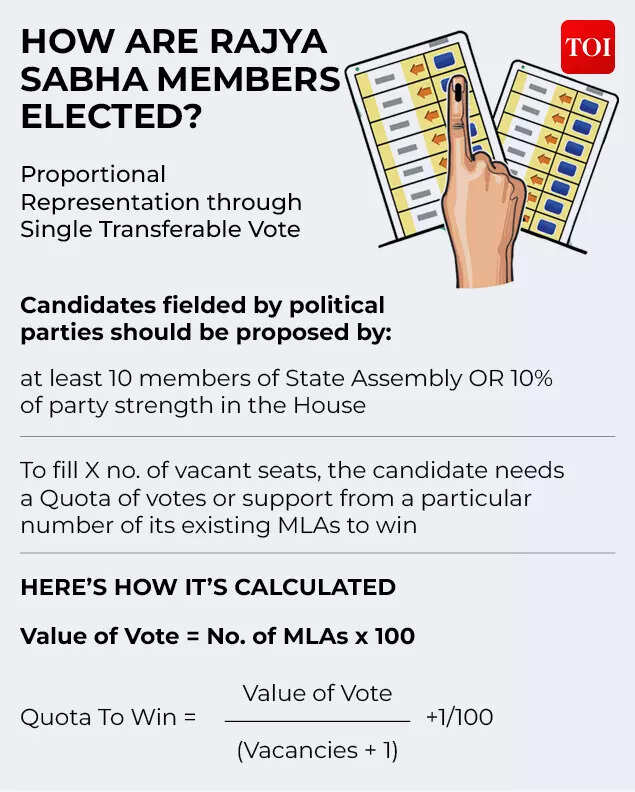
federal council formula
This is where the system becomes politically sensitive.A small amount of cross-voting, a handful of abstentions, or even mismarked ballots could change the outcome. Events this week in Bihar, Odisha and Haryana show how fragile and unstable these calculations are.At the heart of this system lies a deceptively simple formula.Example from Uttar Pradesh:
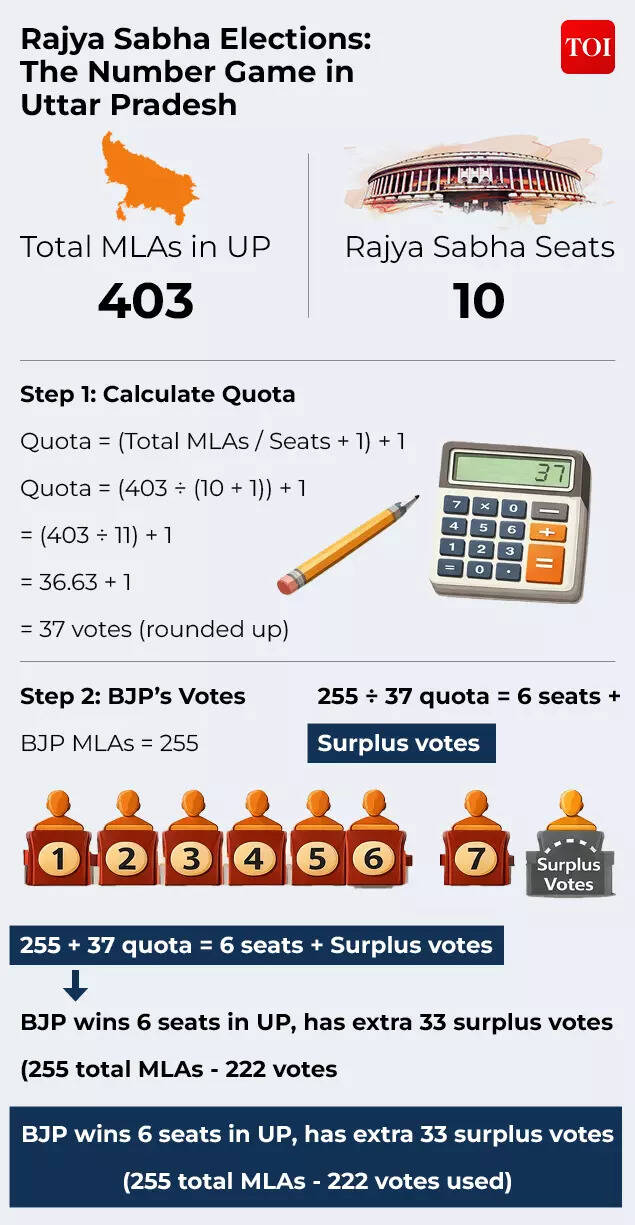
How votes are counted in Rajya Sabha
Managing the numbers: The BJP’s strategy
Over the past decade, the BJP has shown a consistent ability to navigate the complex numbers game of the House of Commons, relying not on a single strategy but on a “combination of approaches” that work together to create a working majority, even in the absence of a formal approach. A key pillar of this is the steady broadening of its electoral base, with victories in state parliaments translating over time into incremental gains in the upper house. Where it fell short, the party forged tactical, often issue-based understandings with regional players such as the Biju Janata Dal (BJD), YSR Congress Party (YSRCP) and AIADMK, whose support, though not always formal, proved decisive in key polls.
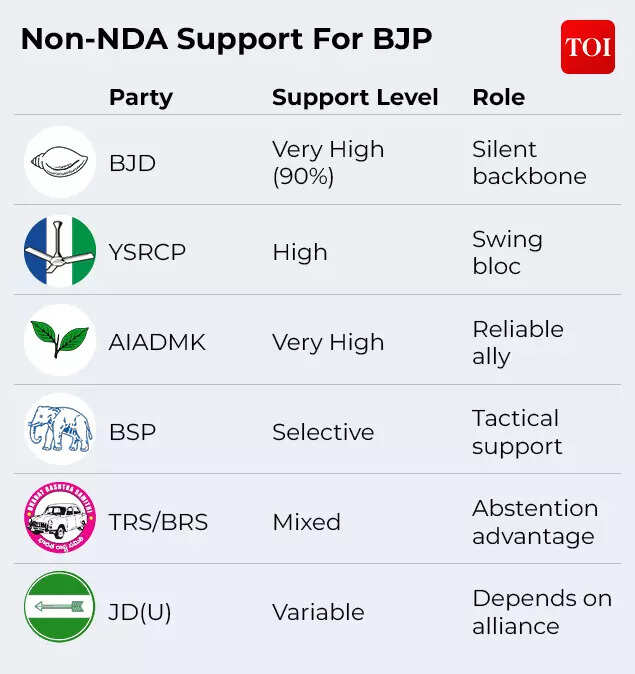
NDA support for BJP
At the same time, the BJP benefits from cross-voting and dissent within the opposition, a recurring feature in Lok Sabha elections that tilts results in its favour, as seen in the recent Odisha contest. The party has also shown flexibility in its candidate selection, sometimes supporting independents or accommodating allies to maximize its chances, while supplementing those efforts with careful management within the House. By timing the introduction of key legislation, ensuring attendance at meetings when important and keeping a close eye on arithmetic to steer debates, the BJP has repeatedly succeeded in ensuring bills are passed despite its own lack of a clear majority.
Pass laws “without a majority”
Over the past decade, the BJP has successfully secured the passage of several key pieces of legislation through a finely tuned mix of political support, timing, and procedural tactics. This often involves the support of non-NDA regional parties, abstentions and walkouts by parts of the opposition, and carefully orchestrated debates when the numbers are favourable. For example, during the passage of the Muslim Women (Protection of Rights on Marriage) Bill, 2019, the government itself did not have the required numbers, but the abstention of parties such as JD(U), AIADMK and TRS weakened the effective strength of the House, allowing the bill to be passed easily. Similarly, the Jammu and Kashmir Reorganization Bill 2019, which paves the way for the abrogation of Article 370, has the active support of political parties such as Biju Janata Dal, YSR Congress and AIADMK, although they are not in formal alliance with the BJP. The Citizenship Amendment Act (CAA) 2019 followed a similar pattern, with regional parties backing the government and helping it secure a majority in a hotly contested poll. In other cases, procedural tools have come into play, as seen when the 2020 farm laws were passed, where voice voting was used where the opposition demanded partition, effectively sidestepping potentially uncertain numbers. Strikes also often lower voting thresholds, turning a close race into one that the government can control. Taken together, these examples highlight a recurring paradox, reflecting that governments without a formal majority in the House of Lords rarely find their legislative agenda hampered, largely due to a combination of opposition fragmentation and strategic floor management.
Opposition’s missed moment
If the story of the BJP is one of adaptation and strategy, the story of the opposition is one of missed opportunities.For much of the past decade, the opposition had, at least in numbers, the ability to influence legislation in the Bundestag. It may require deeper scrutiny, negotiating amendments or even shelving controversial bills. This potential often goes unrealized.The reasons are structural and political:
- Splits in regional and national parties
- Factional struggles within the party
- Coordination failure at critical moments
- Strategic mistakes such as strikes and absences
The events in Haryana are particularly instructive. Despite the numbers, Congress’s advantage shrank sharply due to cross-voting and invalid votes, turning an easy victory into a narrow escape.In Bihar, absence requires a seat. In Odisha, cross voting overturned the arithmetic. These are not isolated failures, but recurring patterns.
Cross-voting: Symptom of a deeper problem
Cross-voting has long been a part of Indian politics, but its recurring impact in Lok Sabha elections points to deeper issues of party discipline and internal cohesion.In a hotly contested election, even a handful of defector votes could change the outcome. For the BJP, such moments often translate into unexpected gains. For the opposition, they exposed organizational weaknesses.Recent elections have once again highlighted how fragile opposition unity is under pressure.
Why the Bundestag still matters
In public discourse, the Lok Sabha often dominates. But the Union House remains crucial to India’s parliamentary system.What it does is:
- Legislative constraints on administrative agencies
- Forum representing national interests
- Continuing institutions that ensure institutional stability
In theory, it aims to deepen debate and refine legislation. Indeed, its effectiveness depends on how political actors engage.
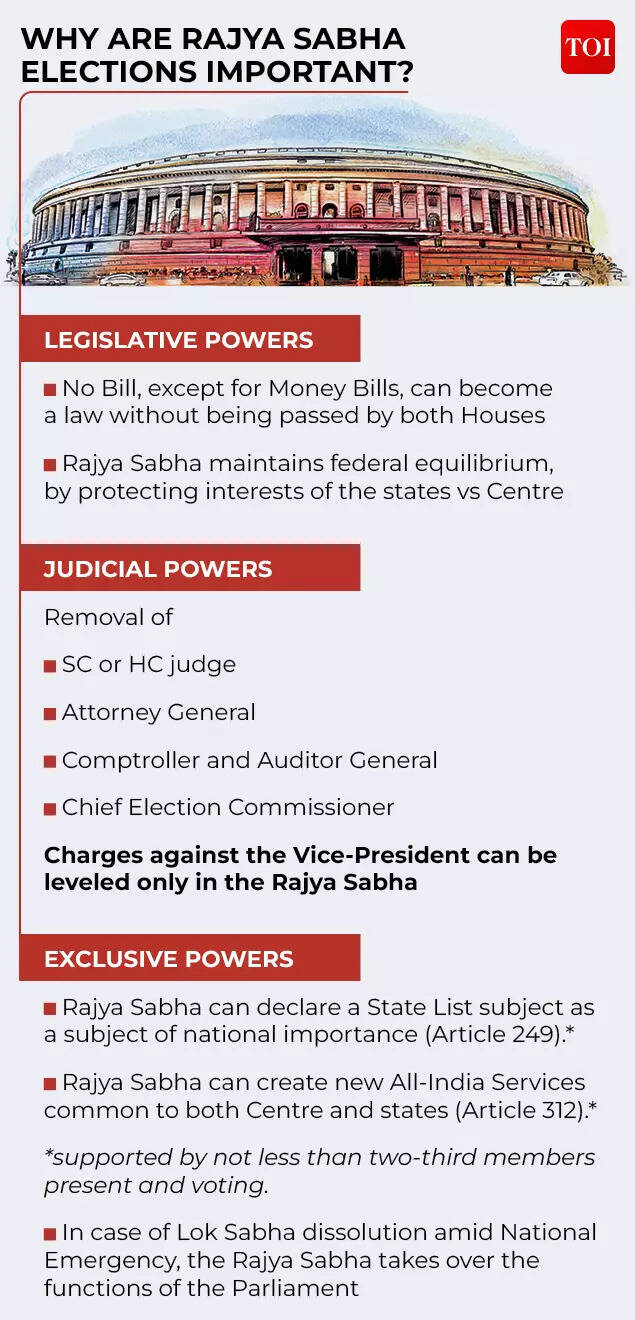
Why federal elections are important
The power beyond numbers
The BJP’s experience in the Lok Sabha over the past decade provides a broader perspective on how parliamentary politics operates beyond simple arithmetic. The power of the House of Lords depends not just on numbers, but on how those numbers are mobilized, negotiated and sometimes how dispersed the parties are. The BJP, despite being numerically disadvantaged from the outset, used issue-based support, timing and venue coordination to advance its legislative agenda. At the same time, this phase also highlights the challenges facing the opposition. While opposition parties often possess the combined strength to influence or slow down legislation, differences in political priorities, regional considerations and coordination gaps limit their ability to act as a cohesive group. In some cases, this has either resulted in the support of non-NDA parties or reduced resistance through abstention, thereby shaping an outcome in favor of the government. The overall trend therefore reflects not only the ruling party’s strategy but also the opposition’s efforts to convert its numerical advantage into sustained parliamentary influence.Some MLAs from Bihar were absent. Some cross polling in Odisha. Invalid votes and factional divisions in Haryana. Each episode reinforces the same basic fact: in the arithmetic of the Bundestag, discipline and coordination are as important as numbers.The Bundestag was conceived as a check and balance, a chamber that tests legislation through debate and consensus. Over the past decade, it has become a space where strategy often determines outcomes as much as structure.For most of this period, the BJP may not have had a majority in the upper house. But it has repeatedly found ways to create one when it matters.As recent events have shown, the difference between victory and defeat in the House of Representatives is often not a sweeping mandate but a handful of votes that stayed, a vote that was lost, or a vote that didn’t show up at all!