
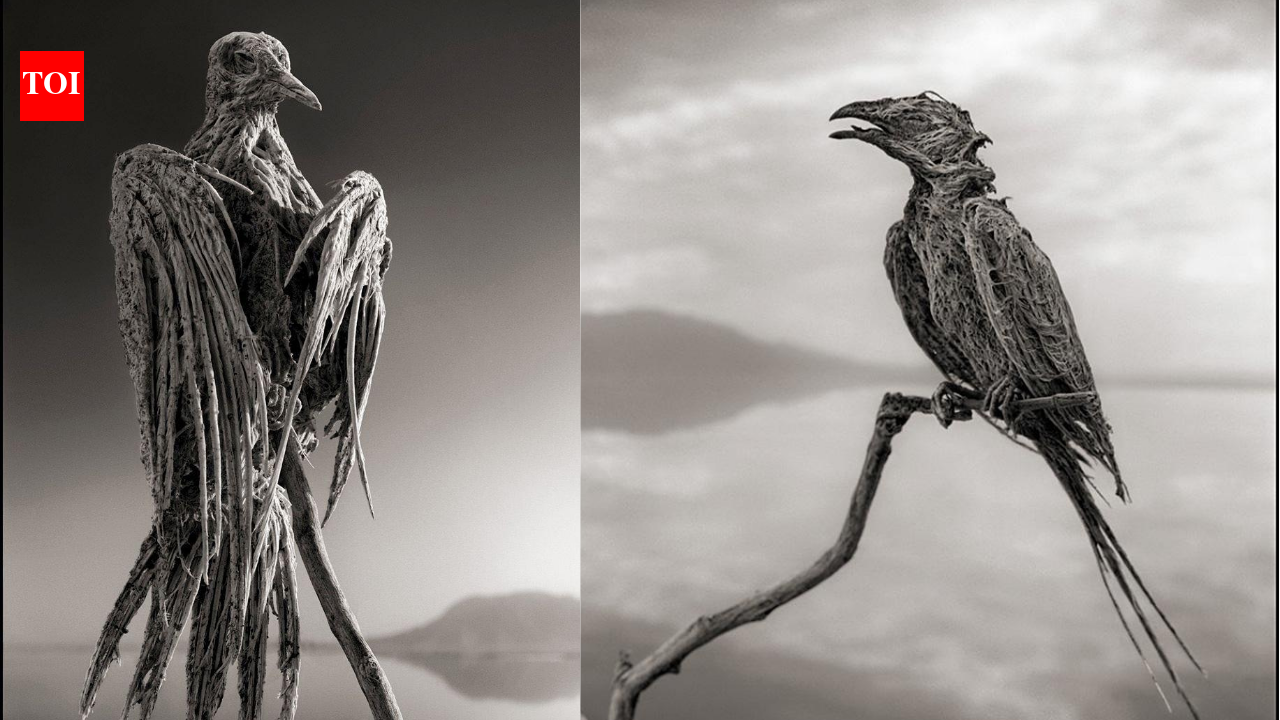
At first glance, these animals look like they are frozen in time. A bird appears to be stuck mid-flight. A bat hangs stiffly from a branch, wings spread like a Gothic sculpture. Their bodies seemed to be carved from stone rather than flesh, as if some invisible force had transformed living creatures into lifeless statues. These haunting photos by British photographer Nick Brandt have shocked the internet and sparked one of nature’s strangest myths: a lake in Tanzania can turn animals to stone. The truth behind Lake Natron is less supernatural, but just as extraordinary.
Dead lake hidden in northern Tanzania
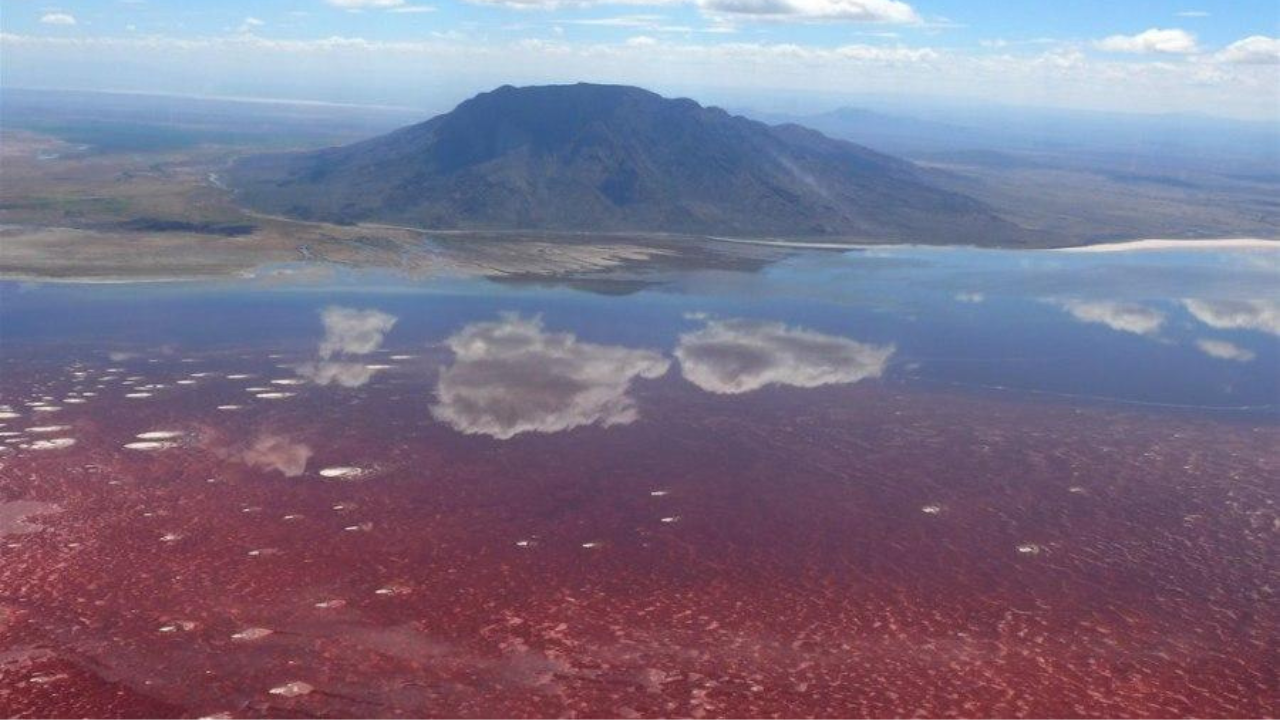
Lake Natron is located in northern Tanzania, close to the Kenyan border, deep in the Great Rift Valley. Viewed from above, the lake’s water often appears blood red or bright orange, giving it an almost alien feel.Unlike ordinary freshwater lakes, Lake Natron is extremely alkaline. Its waters contain high concentrations of sodium carbonate and other minerals, raising the pH to around 10.5, making it almost as corrosive as ammonia. During the hotter months, water temperatures can rise to nearly 60°C (140°F).The lake’s unusual chemistry comes in part from nearby Ol Doinyo Lengai, an active volcano known for releasing rare carbonatite lava rich in sodium and potassium minerals.
Why do animals turn to stone?
The claim that Lake Natron instantly petrified animals is not scientifically accurate. The creatures in the lake don’t magically turn to stone the moment they come into contact with the water.What actually happens is a form of nature conservation.Birds and bats occasionally die near the lake, either by hitting its reflective surface or becoming trapped in the harsh environment. Over time, the lake’s mineral-rich salts covered and preserved the bodies, drying them in stunning detail.The results are gruesome. The animals appear to be calcified, fossilized, or carved from rock, although the process is closer to natural mummification than true petrification.Extreme alkalinity slowed decomposition and salt deposits built up around the remains, preserving feathers, wings and body shape in unusually clear ways, scientists say.
Photos that shocked the internet
The lake became world-famous after photographer Nick Brandt published his haunting black-and-white images in his 2013 book “Across the Torn Land.”Brandt found well-preserved animal remains along the shoreline, then carefully placed them on tree branches and rocks before taking dramatic photos of them.Brandt writes in the preface to the book:“I was surprised to find these creatures – all kinds of birds and bats – washing up along the shoreline of Lake Natron.”
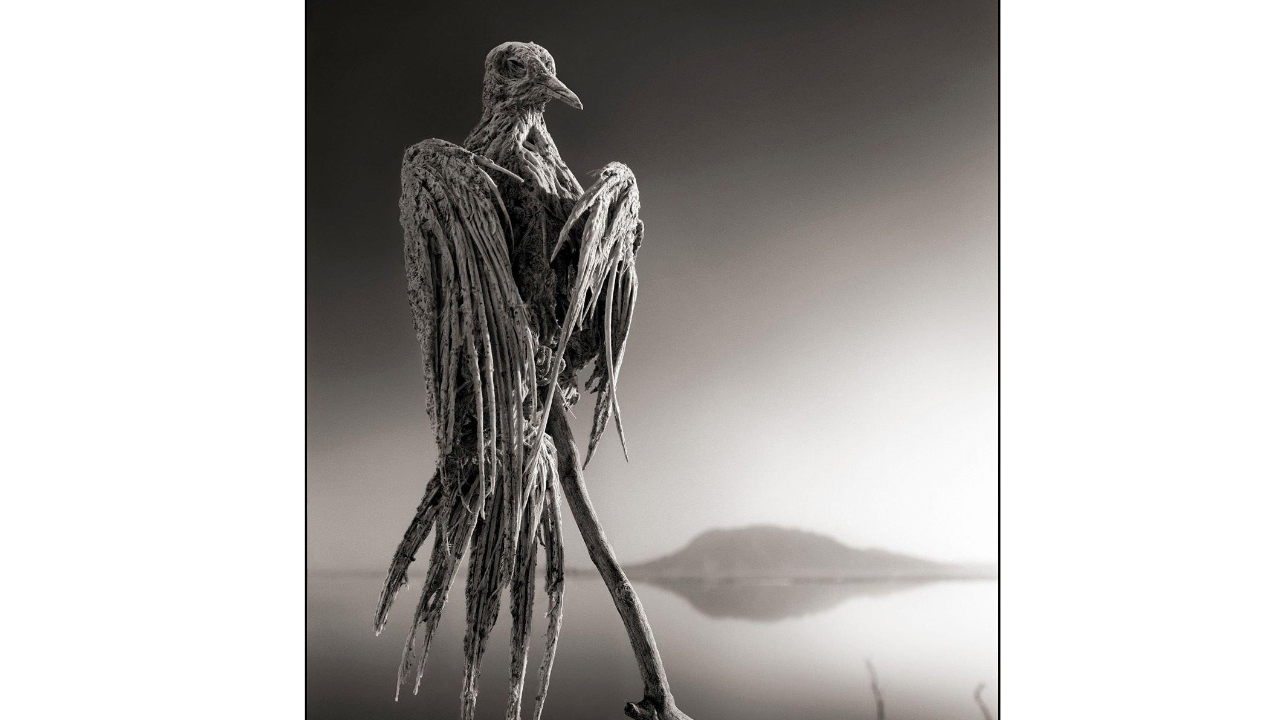
He added that no one knew for sure how the animals died, although the reflective nature of the lake’s water could disorient the birds and lead to collisions.The images quickly spread online, often accompanied by exaggerated claims that the lake’s water would instantly “turn animals to stone.” In fact, the photos show naturally preserved remains that have dried up due to the harsh mineral conditions of the lake.
Deadly for some, paradise for flamingos
Despite Lake Natron’s fearsome reputation, it’s not lifeless.In fact, it is one of the most important lesser flamingo breeding sites in the world. Millions of flamingos nest around the lake because the harsh alkaline conditions keep most predators away.The birds feed on cyanobacteria and salt-loving algae that thrive in the lake’s extreme environment. These microorganisms also give the lake its eye-catching red and pink colors.For flamingos, this dangerous lake is almost like a natural fortress.
Volcanoes provide water for lakes
Much of Lake Natron’s chemical composition was shaped by the Ol Doinyo Lengai volcano, one of the strangest volcanoes on Earth.Unlike most volcanoes that erupt silica-rich lava, Ol Doinyo Lengai produces rare carbonatite lava, which contains large amounts of sodium and potassium carbonate minerals.These minerals are eventually washed into the surrounding basin, causing the lake to become extremely alkaline.Combined with high evaporation rates and high temperatures, volcanic minerals create one of the harshest lake environments on Earth.
Why does lake water look red from space?
Satellite photos of Lake Natron often show stunning shades of crimson, orange and pink stretching across the water.These colors are produced by halophilic microorganisms and cyanobacteria that are specifically adapted to survive in high-salt conditions. Many of these organisms produce red pigments, especially during dry seasons when salt concentrations become more intense.Surreal colors make Lake Natron one of Africa’s most visually striking natural landmarks.
The Myth About the “Dead Lake”
Over time, Internet stories transformed Lake Natron into something almost mythical. Some online posts falsely claim that animals that come into contact with water will die immediately and turn to stone within minutes.Scientists strongly dispute these claims.The lake is certainly hostile to many life forms due to its alkalinity and heat, but it does not immediately calcify living animals. The preserved remains photographed by Nick Brandt are of animals that had died and were later covered by mineral deposits.The real science behind this phenomenon is slower, quieter, and arguably more fascinating than the myth itself.
Nature is the most beautiful and cruelest
Lake Natron exists at a strange intersection of death and survival.For some animals, it’s an unforgiving environment that preserves haunting details of their remains. For flamingos and specialized microorganisms, it’s a thriving sanctuary protected by its own extreme chemicals.The contrast continues to fascinate scientists, photographers and internet users around the world.A lake may not literally turn living things to stone, but under the right conditions, it can preserve them so perfectly that they appear frozen somewhere between life, death, and fossils.