
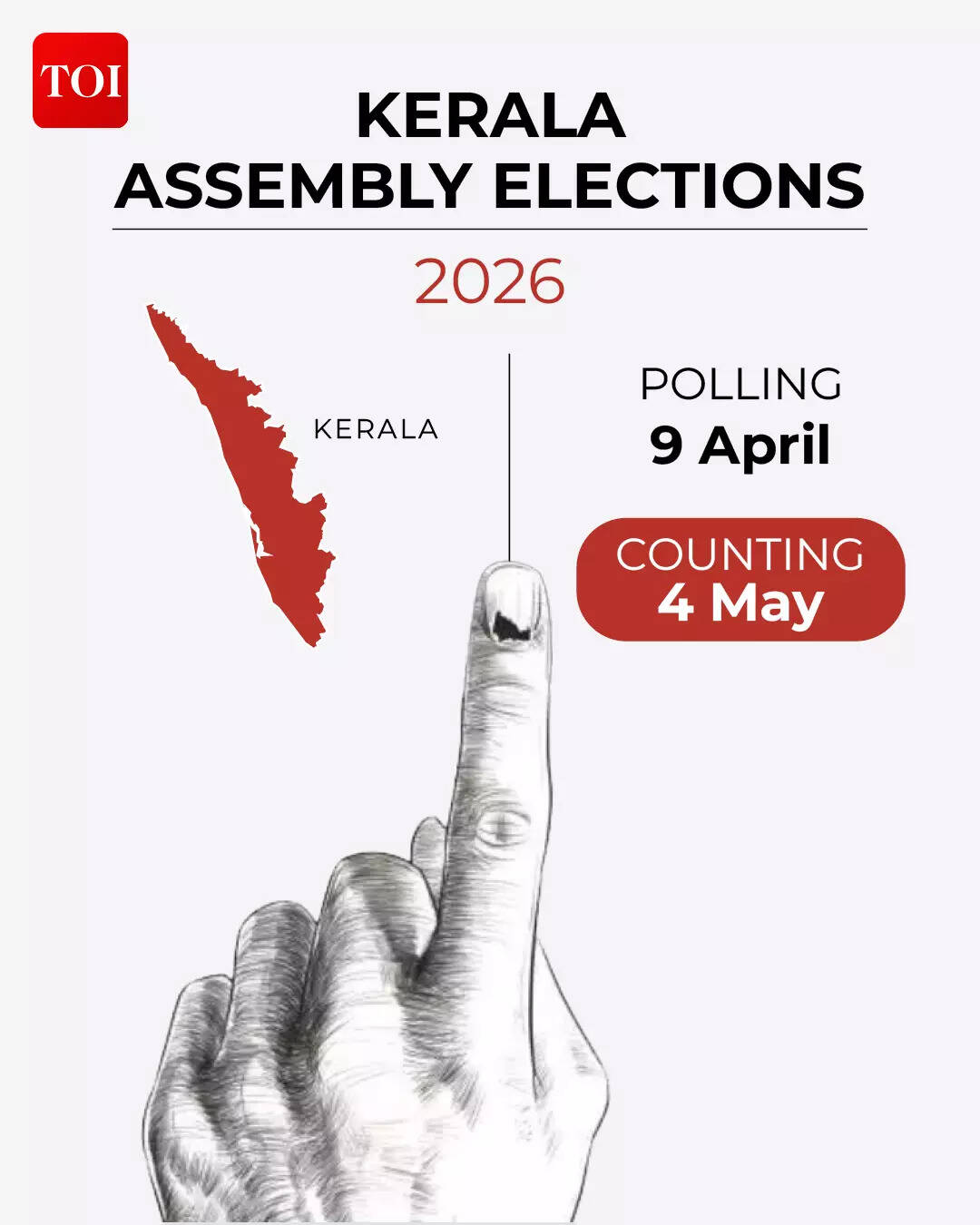
As Kerala approaches the 2026 Assembly elections, data from the 2021 polls suggest that the state remains extremely competitive, with slim margins of victory, scattered vote shares and a small but steady presence of NOTA influencing the political landscape.
According to analysis by Association for Democratic Reforms (ADR) and Kerala Election Watch, NOTA (None of the Above) polling in 2021 stood at 0.47 per cent, with 97,695 voters opting for it out of over 2.08 million votes cast. The figure was little changed from 0.5% in 2016, indicating that protest voting continued but was limited and had not yet affected the election outcome.
Meanwhile, district-level data shows that most victories in 2021 are far from decisive. The winning candidate’s average vote share was 47.98%, and only 39 of the 140 provincial councilors received more than 50% of the vote. The majority (101 winners) was elected with less than half the vote, reflecting the impact of a multi-corner competition involving Left Democratic Front (LDF), United Democratic Front (UDF), NDA candidates and independents. Win percentage further illustrates competitiveness. Two constituencies had fewer than 500 votes, and a large number of seats were separated by less than 10%. Only five constituencies had support above 30%, making a landslide victory extremely rare. Nearly 46 per cent of re-elected MLAs won by margins of less than 10 per cent, suggesting the incumbent’s advantage is limited.The ADR assessment emphasizes that such sub-50% victories are a structural feature of Kerala’s electoral system rather than an exception. In several districts, the margin between the runner-up candidates remained narrow, suggesting that small changes in vote share could alter the outcome.The use of NOTA, although limited, showed variation across constituencies. Thalassery had the highest number of NOTA votes with 2,313 votes, while Kalamassery had nearly 0.97% votes cast for NOTA. Other constituencies such as Chittur, Manjeri, Sulthan Bathery, Vallikunnu, Paravur, Thripunitura and Alappuzha also crossed 1,000 NOTA votes. However, NOTA did not affect the outcome in any seat.Wider electoral patterns from 2021 will add to the complexity. ADR data showed that 77 winning candidates were chorepatis, while 99 MLAs declared criminal cases. Only 11 women have been elected to parliament. Despite these factors, voters have largely continued to support candidates based on party strength and local dynamics, rather than turning to protest voting.Subsequent trends in the 2025 local body elections indicate that changes may occur by 2026. While the LDF retained nearly 40 per cent vote share, it lost seats significantly in both rural and urban bodies. The UDF secured 43.21 per cent of the votes, while the BJP-led NDA remained at around 16 per cent, with its growth helped by better seat switching. Looking at the parliamentary segment, the UDF is leading in 81 constituencies while the LDF is leading in 57, with the margin in several seats being razor-thin.In at least 32 constituencies, the LDF lost by between 1,000 and 10,000 votes, underscoring the importance of micro-level swings. The data also show that triangular competition and fragility are more intense in urban areas.Taken together, these figures suggest that elections in Kerala were driven less by a blanket mandate and more by tight contests. As the state’s 2026 polls approach, even small changes in vote share, including any rise in NOTA from the 0.47% baseline, could become significant in hotly contested constituencies.(Based on input from each agency)