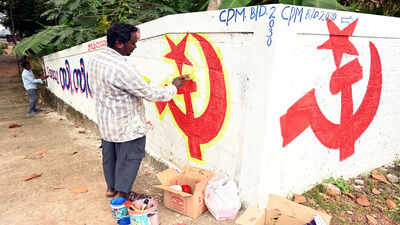
New Delhi: The 2026 Assembly elections in Kerala are set to end in a tight contest with the counting day expected to provide clear results after weeks of intense campaigning and high voter participation.Counting will begin at 8am on May 4 across all 140 constituencies, with early trends likely to emerge within hours. Live updates will be available on the Election Commission website, along with live coverage, analysis and seat tally from The Times of India.Follow comprehensive election coverage here The electoral polling was held in one phase and the voter turnout remained strong, in line with Kerala’s tradition of high electoral participation.What the exit polls predictedExit polls showed a tight race between the Left Democratic Front and the United Democratic Front, with a narrow margin between the two alliances.According to opinion polls, the Congress-led Democratic Alliance is expected to win about 72 seats, more than a majority, in the 140-member parliament, while the LDF is expected to follow with about 63 seats. However, forecasts vary widely between pollsters. My India Axis said the UDF has the greater advantage and expects the opposition alliance to get 83 seats and the ruling front 55 seats. In contrast, PMARQ exit polls predicted the LDF would win a majority of about 75 seats, underscoring the uncertainty about the final outcome. A test for Kerala’s political landscapeKerala’s electoral history has been largely determined by the alternating pattern between the LDF and UDF. However, the LDF wins consecutively in 2021 under the leadership of the Chief Minister Pinarayi Vijayan Breaking that trend, the 2026 election becomes a key test of whether the country returns to its traditional cycle or remains in power.For the UDF, the election is an opportunity to capitalize on anti-incumbency sentiment and return to power. For the Liberal Democrats, it’s an opportunity to solidify its governance record and maintain its position as the most important stronghold of the country’s left.campaign narrativeOver time, the focus of the campaign changed. The early stages were dominated by issues such as corruption allegations, economic concerns, backdoor appointments, Sabarimala gold heist controversy and reconstruction challenges after the Wayanad landslide. As the campaign intensified, that narrative evolved into more pointed political exchanges, including accusations of secret alliances, debate over polarizing communities and direct attacks among senior leaders.The LDF views the election as a referendum on the “Pinarai model”, which emphasizes welfare expansion, infrastructure development and administrative centralization, while promising to further expand welfare programs.In contrast, the UDF advances an accountability-focused narrative that questions the efficiency and fiscal sustainability of government policies while seeking to exploit voter fatigue and economic concerns.what happensWith forecasts showing a narrow margin, the final outcome could depend on hotly contested districts and late swings in voter preferences. As counting begins, the verdict in Kerala will not only determine the next government but also whether its long-standing electoral pattern will be re-established or undergo a tectonic shift.