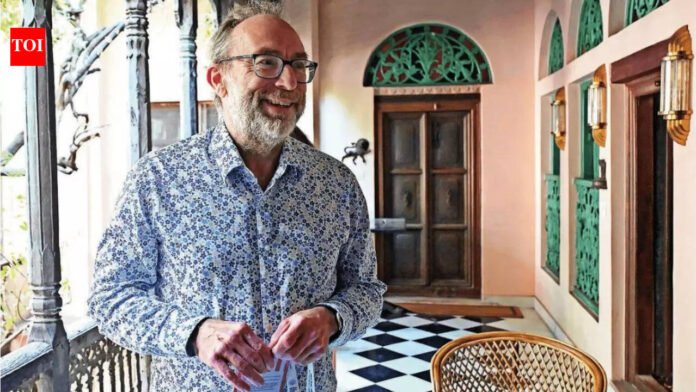

Artificial intelligence is rapidly changing how information is created and shared, but speed and scale don’t necessarily mean trustworthiness. Jimmy Wales Co-Founder Wikipedia — which harnessed the wisdom of the crowd to upend traditional encyclopedias like the Encyclopedia Britannica and became the internet’s default reference point — now finds it at the center of a new debate about trust, including Elon Musk’s attacks on alleged bias. Speaking to Rohit Saran and Saikat Dasgupta on the sidelines of the AI Impact Summit in Delhi, Wales reflects on the opportunities and risks presented by AI, why neutrality is non-negotiable, and why trust is more important than everFor centuries, humans have found themselves caught between the hopes and dangers of tomorrow when talking about the future. Socrates died worried because he believed that writing would stifle the pursuit of knowledge. Now the same is true for artificial intelligence. What are your thoughts on this?■ John Philip Sousa (one of America’s most famous composers) believed that when music began to be recorded, people would stop singing. Even though the best chess players in the world are no longer human, chess as a game is more popular than ever. That doesn’t stop people from saying, “Oh, but we really like playing chess!” About artificial intelligence, because the technology is so new and so accessible, I don’t know. You ask a computer a question and it can answer it, which is incredible. But we also know it’s flawed. And then, there’s this crazy speculation that it’s going to destroy all jobs, or no one will have to work anymore because we’re going to be so rich. As always, the answer is probably somewhere in between. Artificial intelligence is clearly going to have a huge impact. It’s hard to predict what will happen now.Broadly speaking, the Internet makes information a “commodity.” Do you think artificial intelligence will make intelligence a commodity?■ What I can say is that now, when we work on large language models – and I use them a lot, I’m a programmer, but not a very good one because I like to create things – it’s very helpful and very interesting. But it can also make things up and create hallucinations. What I’m most interested in right now is, is there a way we can leverage this technology to support the community? Is there anything I can do well? Many discussions on Wikipedia are very long. You can let AI summarize it. But there is a key point here, I want to read the original work. This is very useful. Another example is if you load a Wikipedia article and all the sources, and ask the sources if there’s anything in the sources that should be on Wikipedia but isn’t, or if there’s anything that the sources don’t support. I did this and thought it might be useful to the community. Then say I want to write about a Bollywood movie that is not globally famous on Wikipedia and I just want to know some basic facts about it. But I can’t read Hindi. Maybe artificial intelligence can help me a little.
.
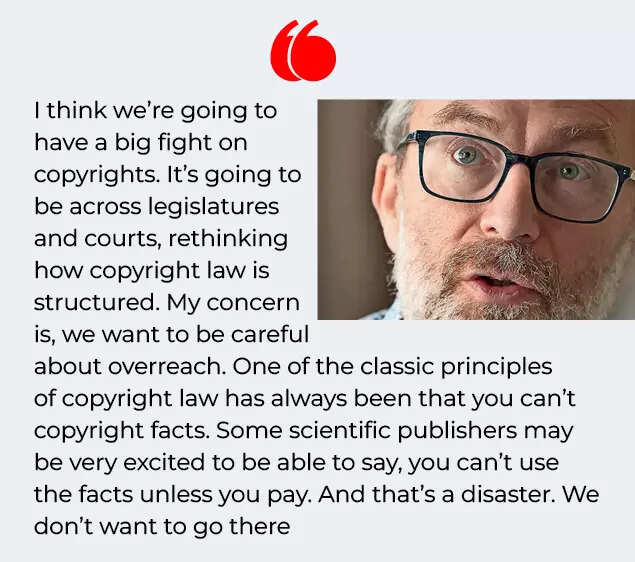
Wikis power a vast number of Google search answers and are now becoming the source layer for artificial intelligence. Is LLM both a threat and an opportunity to the future of wikis?■ What we really focus on is the human element, human curated knowledge and judgment. Machine translation may be grammatical translation, but if you think about the cultural background of the reader, what they need to understand, what they might know and what you need to explain to them, it’s more than text. My example is, who is the most famous cricketer? Today, that man could be India’s Virat Kohli. But if you’re writing for a global audience, you need to add some words to explain who he is and put it in context. Machine translation cannot do this. But humans can.You are indeed providing justification for human review of the information. Do you think that’s the biggest problem with AI managing information, a wall that AI can’t break through?■ So, Gary Marcus is an AI researcher who is considered an AI skeptic, although I would say he’s not really an AI skeptic, but he thinks that large language models have hit a roadblock – we’re not seeing any improvement on a lot of key problems like hallucinations. He believes that some more fundamental breakthroughs are needed. For a while, scale seemed to play a big role. But there are other equally reputable experts who disagree with them. I think, looking at this, maybe we’ll take a little bit of a break for a few years until more breakthroughs come out and be like, “Okay, we’ve got this amazing tool, but maybe we’re not that close to the next step.”Just like Google Search in the past, artificial intelligence companies and news media also have a frenemy relationship – for example, the New York Times sued OpenAI. If AI systems increasingly cite original sources, should they be required to backlink and share revenue or traffic?■ I think we’re going to have a big fight over copyright. Legislatures and courts will rethink the structure of copyright law. My concern is that we need to be careful about excess. One of the classic tenets of copyright law has always been that you cannot copyright facts. Some scientific publishers may get very excited and say that you can’t use these facts unless you pay. That was a disaster. We don’t want to go there. This harms Wikipedia and our ability to say that on this day this happened. Here are the sources, five different newspapers. And the newspapers didn’t want to go there. One of the bigger, deeper problems is the destruction of local journalism. This happened long before artificial intelligence. This is a big problem for society. I’m from Huntsville, Alabama, a city that’s not big but not small either – a quarter of a million people. When I was a child, I was a paper boy. I rode my bike and threw newspapers into the house. The value of being a Wikipedian is that if I want to write about the history of Huntsville or the 1978 mayoral election, I have a lot of good content to draw from. But what if I want to write about the recent election? The content is very thin. Because now there is only one afternoon newspaper published three times a week, published from 100 miles away. This means that the first draft of history, journalism, has not yet been written. Therefore, the second draft of history, Wikipedia, became more difficult.
.
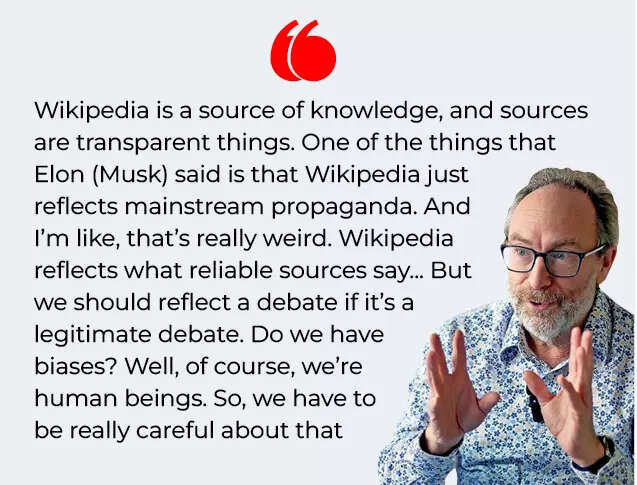
How do we solve this problem?■ I wish I had an answer to this question. In some cases, if there’s some way to allow one or two reporters to do more in a useful way, AI might be able to help, and that could be a good thing. Clearly, there are many positives to changes in the information ecosystem, but there are also some negatives. So keep testing.Wikipedia has debates between deletionists and inclusivists. Which side are you on?■ Our active intellectual dialogue helps strengthen Wikipedia. I always say that I am a finalist, which is to say, we may make a lot of mistakes, but in the end we will get it right. The health of the Wikipedia community is important to us. Does the community have active discussions, is it having fun, and is it well behaved? Are we thoughtful about what we do? I’m perfectly fine with these debates, as long as they don’t just turn into angry screaming matches. Tell us about your Indian community and volunteer groups. You told us that there is a perception or misconception that Indian pages are not that strict. ■ I find that the Wikipedia community in India is very similar to Wikipedia communities around the world. Many nerds are not necessarily professionals in this field. There is a man in the international community nicknamed Hurricane Hank who is a weather expert but not a professional meteorologist. Unfortunately, there are more men than women in this community. This is always something we talk about. We want to improve this around the world. This is my third trip to India in a month and a half. On one of these trips, I was in Kerala and met with the local Wikipedia group. Among them was a couple, both Wikipedia editors, with their children. Regarding the second part of your question, I haven’t heard anything about the India page. I do think this might be the case with smaller language versions of Wikipedia. Obviously, these pages will usually be shorter, less content, and less rigorous because there are fewer people doing it.How do you react when people say “Wikipedia is broken because it’s biased”? What are your thoughts on AI-first competitors like Grokipedia?■ See, Wikipedia is a source of knowledge, and sources are transparent things. One thing Elon (Musk) has said is that Wikipedia simply reflects mainstream propaganda. I thought, this is really weird. Wikipedia reflects claims from reliable sources. We can’t be on the weird side and say, ‘Well, we’re going to go against all scientific wisdom,’ right? But if the debate is legitimate, we should reflect on it. Are we biased? Well, of course, we’re human. So, we have to be very careful. Maintaining neutrality is one of the core values of the community. There is no dispute about this. But do we always get it right? Maybe not. An old saying I like is that if you ask a fish about water, the fish will say, “What water?” They live in it. They know nothing about it. Many times, our biases are simply because we don’t know.How important is tone neutrality to credibility? ■ Amartya Sen commented in the introduction to his book 10 Indians, 12 Opinions. That’s literally all of humanity – 10 people, 12 opinions. Neutral tone is very important for Wikipedia and newspapers. I live in London and read two newspapers: The Guardian and The Telegraph. The Guardian is a sort of centre-left, the Telegraph is a centre-right. They are all quality newspapers. I have an electric car, not a Tesla. I love electric cars, so I read a lot about them. If you removed the headlines from these two newspapers, I could probably filter out 90% of the information accurately, because the Guardian loves electric cars and the Telegraph hates them. But because of the tone, I don’t really trust either of them because it feels like they’re both campaigning. This is a problem because it reduces trust, not just with people who disagree, but even with people who agree with the tone.You launched WikiTribune to address issues of neutrality in public discourse. Why not continue?■ The Tribune is an experiment to see if there is a way for journalists and community members to collaborate. The things that journalists can do, like you come to the center of Delhi and chat with me, or go report on something, or attend a press conference, or talk to politicians, are almost impossible to do as a volunteer. So we explored some good collaborations. Then we look at traffic statistics every day. We had a story with a very click-worthy title, but I didn’t like it. To make it a commercial success, we need more headline bait. I don’t want to do that. That’s when I realized the problem wasn’t journalism, but the model, the broader ecosystem. Newspapers always love a good, interesting headline. There’s nothing wrong with that. But if algorithms provide people with the satisfaction of keeping them around for as long as possible, then more of the same behavior will be encouraged, and so on. So that changed my focus and was like, okay, good experiment.