
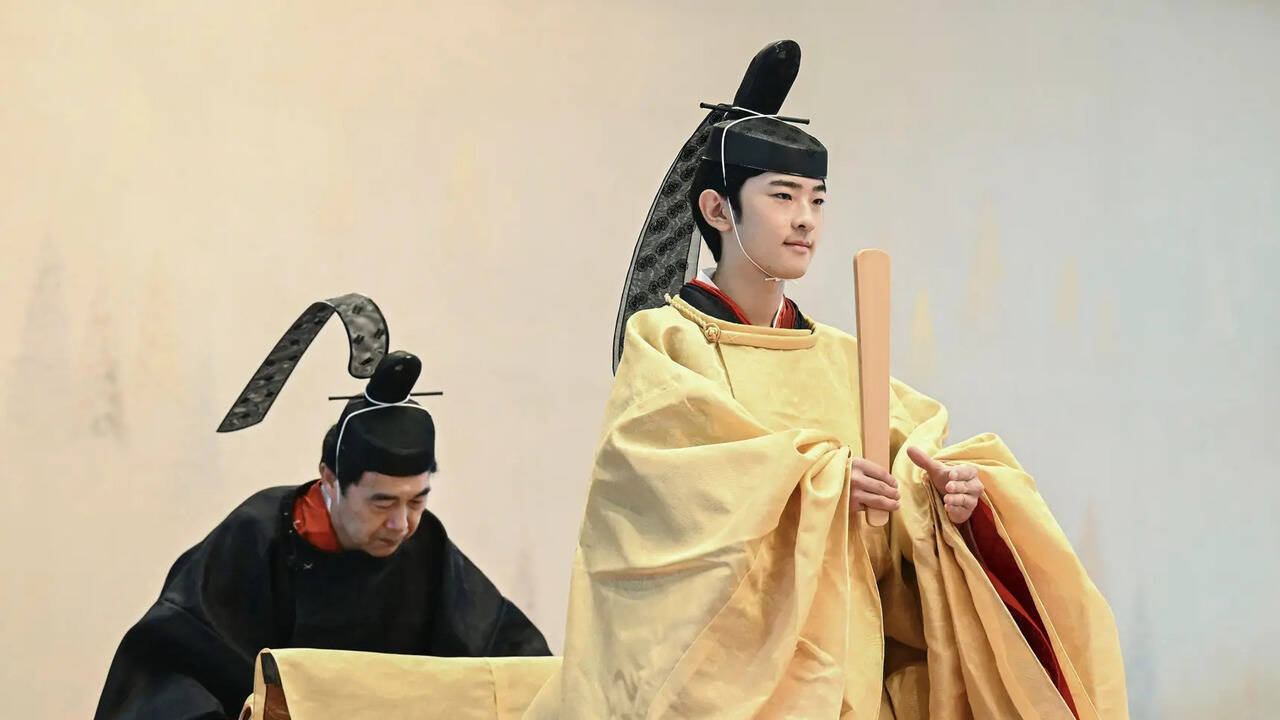
Japan’s parliament on Friday approved changes to the country’s imperial succession law, introducing measures aimed at protecting the dwindling royal family but not allowing a woman to inherit the Chrysanthemum Throne, despite strong public support for the change.Passed by a majority in the House of Lords, the bill allows unmarried male descendants of former royal branches to be adopted back into the royal family. It also allows female members of the royal family to retain royal status if they marry a commoner, a privilege already enjoyed by male royals.However, the revised law retains the core provision of the 1947 Imperial Household Affairs Act, which allows only men of male descent to become emperor.With so few male heirs to Japan’s imperial family, the issue has become increasingly pressing. The future of the monarchy currently depends on Prince Hisahito, Naruhito’s 19-year-old nephew and the only young male eligible to inherit the throne.If Prince Hisahito has no son, current succession rules will leave Japan without a future heir, raising concerns about the long-term survival of the emperor’s lineage.The law also means Emperor Naruhito’s 24-year-old daughter Princess Aiko and Prince Hisahito’s two sisters are barred from inheriting the throne despite their royal bloodline.The bill was approved after lengthy discussions within the ruling conservative party led by Prime Minister Takaichi Sanae, who opposes allowing female inheritance.Not everyone in the ruling camp supports this position. After the bill passed the House of Representatives on July 10, senior Liberal Democratic Party leader Seiichiro Murakami criticized the restriction, saying it was “completely outrageous” that Princess Aiko could not be considered for the throne.The proposal to bring back distant male relatives also drew criticism from former members of Japan’s royal family. Former royal Asahiro Kuni, whose family withdrew from the imperial rolls after World War II, questioned whether the move was practical.“By the age of 15, a person has grown up in the air of freedom,” Liuhe told the Asahi Shimbun.“I think it would be difficult to adjust to life as a royal.”“There may be people who want to join the Royal Family, but if they knew the hardships of life as a Royal, they might not say such things,” he added.There are currently 16 members of the Japanese imperial family, only 5 of whom are male. They are retired Emperor Akihito, his younger brother, Emperor Naruhito, Naruhito’s younger brother and Prince Hisahito.However, public opinion appears to support reform. An Asahi Shimbun survey in May found that 72% of respondents supported changing the law to allow a woman to ascend the throne.