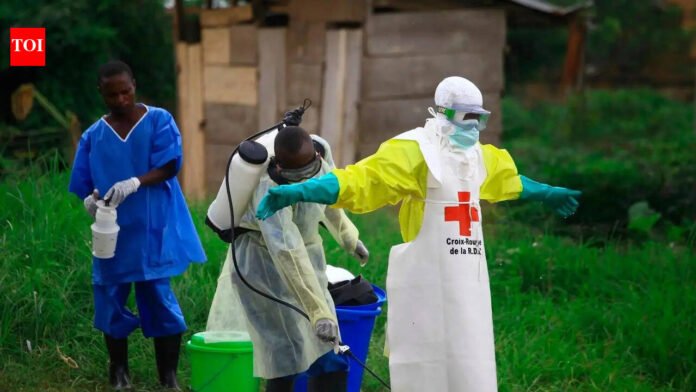
The Africa Centers for Disease Control and Prevention (Africa CDC) said preliminary laboratory tests at the National Institute of Biomedical Research in Kinshasa had confirmed the virus in 13 of 20 samples, while further testing was underway to identify the strain. Of the reported deaths, four were confirmed cases.
More suspected infections were reported in the provincial capital Bunia. Health officials have warned that there is a high risk of further spread of the virus due to population movements, the urban environment in affected areas and mining activities, the BBC reported.
Uganda also confirmed an imported case of Ebola linked to the Democratic Republic of Congo on Friday. A 59-year-old Congolese man who was admitted to a Kampala hospital on Monday and died in the intensive care unit on Thursday tested positive for Ebola, Uganda’s health ministry said. Authorities say no local transmission has been detected so far.
Dr. Jean Kasea, executive director of the Africa Centers for Disease Control and Prevention, said “significant population movements” between affected areas and neighboring countries make regional coordination crucial. The agency called for joint action with the Democratic Republic of Congo, Uganda, South Sudan and other partners to strengthen surveillance and response measures.
The Congolese government has not officially declared an outbreak, but is expected to hold a press conference. It is also consulting with neighboring countries and international partners on containment strategies.
Ebola, first discovered in 1976 in what is now the Democratic Republic of Congo, is believed to have originated in bats and is spread through direct contact with body fluids. The disease causes severe bleeding, organ failure and an average mortality rate of about 50%, according to the World Health Organization.
Early symptoms include fever, fatigue, muscle pain, headache and sore throat, followed by vomiting, diarrhea, rash and internal or external bleeding. Although supportive care can improve chances of survival, there is no effective cure.
The situation in Ituri province remains volatile, with military rule imposed in 2021 and long-term activity by armed groups, including the Islamic State-linked ADF.
There have been 17 Ebola outbreaks in the Democratic Republic of Congo since the virus was first discovered. The country’s worst Ebola outbreak between 2018 and 2020 killed nearly 2,300 people, and another outbreak in Kasai province last year killed 45 people. Over the past 50 years, approximately 15,000 people have died from Ebola across Africa.


, with 246 cas.)