
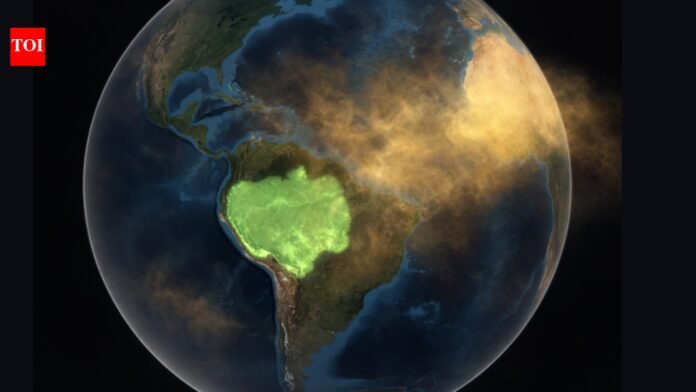
In 2015, scientists reported evidence that large amounts of dust from the Sahara help replenish phosphorus in the Amazon rainforest, connecting the world’s largest desert to its largest rainforest through what researchers say is one of the most important natural nutrient transfers on Earth. The research result is Detailed introduction in the paper Led by Hongbin Yu, an atmospheric scientist at the Earth System Science Interdisciplinary Center (ESSIC) at the University of Maryland, with NASAGoddard Space Flight Center in Greenbelt, Maryland. The results were published in Geophysical Research Letters and in a related study Environmental remote sensing.
Ten Thousand Miles of Atmospheric River
Scientists have known for decades that large masses of Saharan dust travel thousands of miles across the Atlantic Ocean, forming giant tan clouds visible from space, before settling over South America. In April 2015, NASA described the connection as a “10,000-mile-long intermittent river of atmospheric dust” connecting Africa and Africa. Amazon basin. Usage data comes from NASA’s cloud-aerosol lidar and infrared Pathfinder satellitesWith CALIPSO, launched in 2006, Yu and colleagues were the first to quantify the amount of dust that made the transatlantic journey. The team said an average of 182 million tons of dust leaves the Sahara every year. Of this, 27.7 million tons (approximately 15%) are deposited in the Amazon Basin every year. Another analysis reported that 28.8 million tons arrived in the region. NASA equates this to approximately 689,290 semi-trucks of dust leaving the desert each year, and 104,908 dust-filled semi-trucks being dumped into the Amazon River.
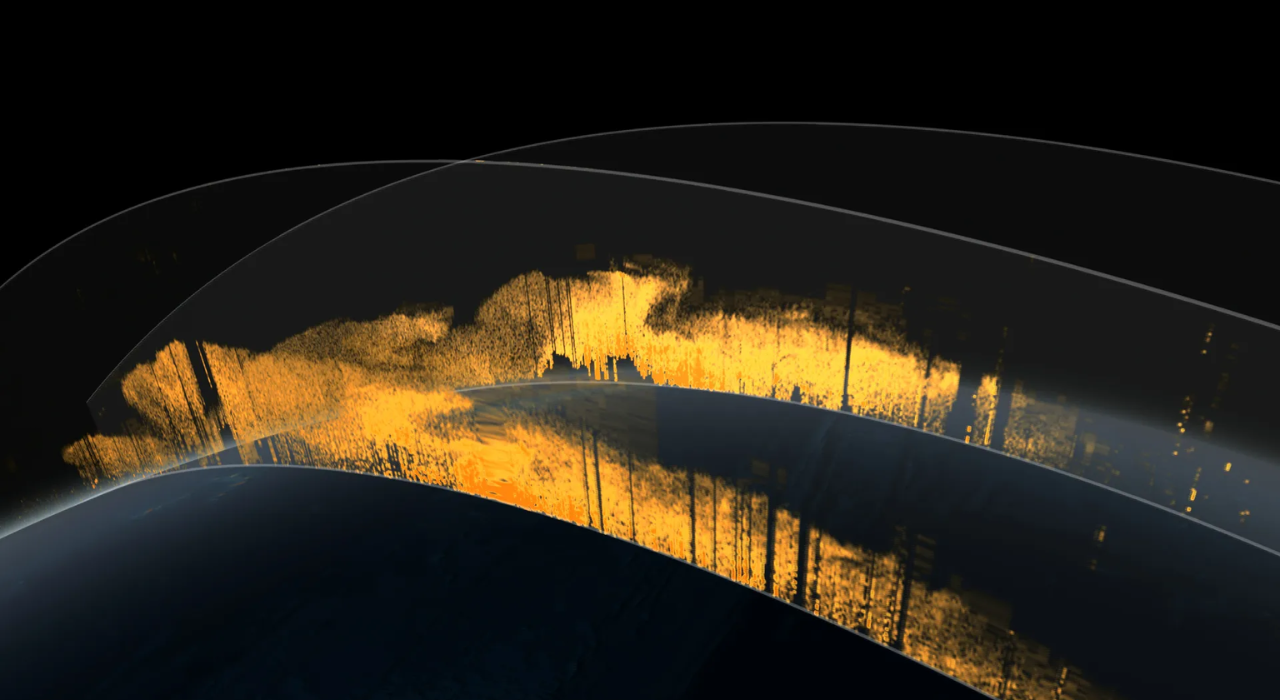
The lidar instrument on the CALIPSO satellite emits pulses of light that are reflected by particles in the atmosphere and returned to the satellite. It distinguishes dust from other particles based on optical properties. Image source: Scientific Visualization Studio, NASA Goddard Space Flight Center
CALIPSO, short for Cloud Aerosol Lidar and Infrared Pathfinder Satellite Observations, used a laser-based lidar instrument to scan the atmosphere and measure the vertical distribution of dust and other aerosols, enabling three-dimensional tracking of the Saharan-Amazon plume between 2007 and 2013.
Phosphorus: A missing nutrient
The Amazon rainforest is famous for its biodiversity, but its soil is also characterized by nutrient poverty. About 90% of soil in the Amazon basin is deficient in phosphorus, an essential nutrient for plant growth. Each year, heavy rains and river systems wash tens of thousands of tons of nutrients, including phosphorus and nitrogen, out of the basin. Across the Atlantic, the Sahara contains vast deposits of phosphate, particularly in Chad’s Baudelaire Depression, an ancient lake bed rich in the remains of long-dead microorganisms. Frequent dust storms in the region bring phosphorus-rich particles into the atmosphere. In a 2015 paper Geophysical Research LettersYu and colleagues provided the first satellite-based estimates of phosphorus transport in dust. After analyzing CALIPSO data and dust samples collected from research stations in Chad, Barbados and Miami, the team concluded that approximately 22,000 tons of phosphorus reach the Amazon from the Sahara Desert each year.

An aerial view of a Caju Una community fishing boat fishing in Porto Creek, Marajo Island, Pará state, Brazil, Saturday, November 1, 2025. (AP Photo/Eraldo Peres)
This number matches closely with estimates of the amount of phosphorus the rainforest loses each year through hydrological processes. “It’s a small world and we’re all connected,” Yu said at the time. “This suggests that African dust may have an important impact on maintaining the health of the Amazon rainforest in the long term,” the researchers wrote in their paper. “Without phosphorus inputs from African dust, hydrological losses would significantly deplete soil phosphorus pools over timescales of decades or centuries and affect the health and productivity of the Amazon rainforest.” However, they cautioned that uncertainties remain, noting that they still do not know “the amount of dust required to provide sufficient phosphorus to maintain the productivity of the Amazon rainforest.”
Extreme changes and the Sahel connection
The researchers also found that the amount of dust transported across the Atlantic fluctuates significantly from year to year. Between 2007 and 2011, there was an 86% difference between the largest dust plume recorded in 2007 and the smallest dust plume recorded in 2011. Yu and his colleagues discovered a potential link between rainfall and dust transport in the Sahel, a semi-arid region south of the Sahara. When there is more rainfall in the Sahel, less dust moves across the Atlantic.

Dust and sand blowing in from the Sahara covered parts of Europe, turning the sky and snow orange.
The exact mechanism remains uncertain. Yu said increased rainfall could boost vegetation growth in the Sahel and reduce the amount of exposed soil exposed to wind erosion. Alternatively, rainfall patterns may be related to wind systems that lift dust into the upper atmosphere, which serves as a transport corridor to the Americas. “We know that dust is important in many complex ways,” Yu said. “Dust affects climate, and climate change affects dust.” He added: “As researchers, we ask ourselves two basic questions: ‘How much dust is transported? And how does climate change affect the amount of dust moving across the Atlantic?'”
Global Earth System Connection
Each individual dust grain is only a fraction of the width of a human hair, but together they make up one of the largest intercontinental transfers of material on Earth. The work of Yu and colleagues highlights the extent to which distant ecosystems remain interconnected through atmospheric processes. By quantifying total dust flux and its phosphorus content, the 2015 study provides evidence that the Sahara plays a measurable role in maintaining the Amazon rainforest’s long-term nutrient balance, although scientists continue to study how climate change affects delicate transatlantic exchanges.