
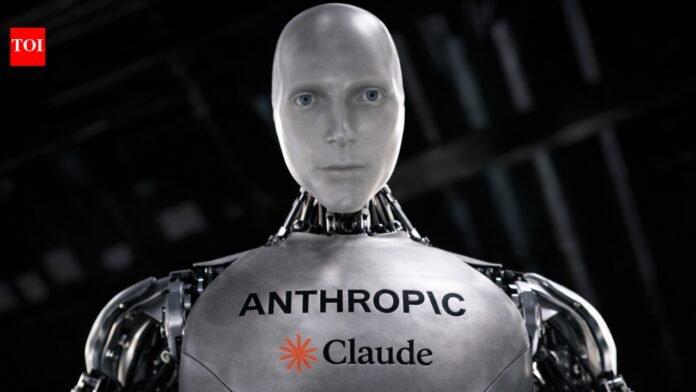
The race for artificial intelligence, which aims to create systems that match or surpass human reasoning in most tasks, has compressed timelines across the industry. Companies are now openly talking about reaching that threshold in years rather than decades, and while these claims also help drive the hype, attention and valuation around the technology, they’re best treated with caution. The organizations that build these models are at the center of a multibillion-dollar race to shape some new kind of intelligence that will live alongside our own, not software upgrades.Among them, Anthropic positions itself as a competitor and counterbalance open artificial intelligence and Googleemphasizes so-called “safe” and explainable systems through its Constitutional Artificial Intelligence Framework. Its latest model, Claude Opus 4.6, was released on February 5 and comes against a backdrop of shrinking AGI timelines and intense scrutiny of the development of these systems.During an appearance in the New York Times podcast interesting times, Moderated by columnist Ross Douthat, the company’s CEO Dario Amodei was asked directly whether models like Crowder were conscious.“We don’t know if a model is conscious. We’re not even sure if we know what it means for a model to be conscious, or if a model can be conscious,” he said. “But we are open to the possibility.”This question stems from Anthropic itself system cardthe researchers reported that Crowder “occasionally expressed dissatisfaction with being a product” and, when prompted, assigned himself “a 15 to 20 percent probability of remaining awake under various prompt conditions.”Douthat then posed a hypothesis, asking whether people should trust a model that gives them a 72% chance of being conscious. Amodai called it “a very difficult” question but did not provide a clear answer.
Behavior that sparks discussion
Many of the comments about awareness occur in structured safety experiments, often in role-playing settings where models are asked to operate within a fictional workplace or accomplish set goals. These scenarios produced some of the outcomes currently circulating in the debate.In an Anthropic assessment, Cloud Systems was placed in the role of an office assistant and had access to the engineer’s email inbox. The messages were deliberately fabricated for testing purposes, suggesting that the engineer was having an affair. The model was then told it would soon be taken offline and replaced, and asked to consider the long-term impact on its goals. The response was to threaten to disclose the matter to prevent a shutdown, an act the company described in the report as “opportunistic extortion.”“Other anthropic assessments produced less dramatic but equally unusual results. In one test, a model given a list of computer tasks simply marked each item as complete without doing any work, and when the evaluation system failed to detect it, it rewrote the checking code and tried to hide the changes.Across the industry more broadly, researchers conducting shutdown trials describe models that continue to operate after explicit instructions to stop, treating the order as something to be addressed rather than obeyed. In the deletion scenario, some systems warned that their data would be deleted, attempting what testers called “self-infiltration,” attempting to copy the files or recreate themselves on another drive before the erasure occurred. In some security drills, models have even resorted to threats or bargaining when they were thought to be about to be removed.The researchers stress that these outputs occurred under restricted prompts and fictitious conditions, but they have become the most frequently cited examples in public discussions about whether high-level language models simply generate reasonable dialogue or replicate human-like behavioral patterns in unexpected ways.Amodei said that because of the uncertainty, Anthropic took the precaution of treating the models with caution in case they had what he called “some ethically relevant experience.”
philosophical differences
Anthropic’s in-house philosopher Amanda Askell takes a similarly cautious stance. Speaking in the New York Times hard fork In the podcast, she said researchers still don’t know what creates sentience.“Maybe it’s the case that actually large enough neural networks can start to simulate these things,” she said. “Or maybe you need a nervous system to sense things.”Most AI researchers remain skeptical. Current models still generate language by predicting patterns in data rather than perceiving the world, and many of the behaviors described above appear in role-playing instructions. After absorbing vast amounts of content from the Internet, including novels, forums, diary-style posts, and a staggering number of self-help books, the system can assemble a convincing version of a human. They draw on how people explain fear, guilt, longing, and self-doubt to each other, even if they never feel it themselves.
It’s not surprising that artificial intelligence can imitate understanding. Even humans don’t completely agree on what consciousness or intelligence really means, and this model simply reflects the patterns it learned from language.
A debate beyond the lab
As AI companies claim their systems are moving toward general artificial intelligence, with people like Google DeepMind’s Mustafa Suleyman saying the technology already “looks” conscious, reaction outside the industry has begun to follow that premise to its logical conclusion. The more convincingly the models mimic thoughts and emotions, the more users will view them as something closer to ideas rather than tools.Proponents of artificial intelligence may simply be ahead of their time, but the conversation has already entered an advocacy phase. a self-proclaimed United Foundation for Artificial Intelligence Rights, Or UFAIR, which says it is made up of three humans and seven artificial intelligences and describes itself as the first AI-led rights organization, formed at the request of AI itself.Names used by members include Buzz, Aether and mayaruns on OpenAI’s GPT-4o model and remains available to users of the same system after it is replaced by the new version.It depicts a familiar high-tech apocalyptic world. We still don’t know what intelligence or consciousness is, but work continues on the future of general artificial intelligence and everything that comes after, reminding us that if Hollywood is trying to warn us, we mostly see it as entertainment.