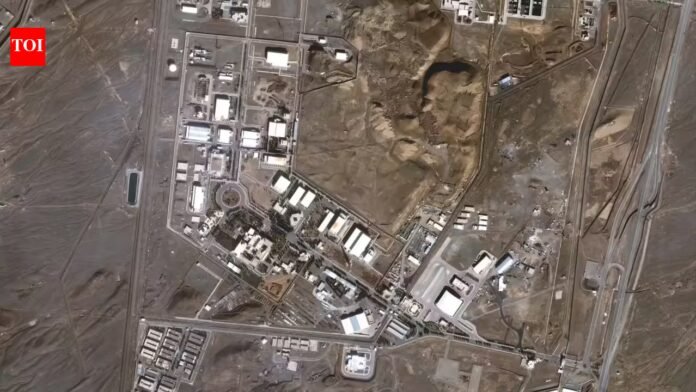
Iran’s special envoy to the United Nations nuclear watchdog said on Monday that Iran’s Natanz nuclear facility had been attacked in the latest military operation by the United States and Israel. “Yesterday they attacked Iran’s peaceful, protected nuclear facilities again,” Reza Najafi told reporters at a meeting of the International Atomic Energy Agency’s 35-nation board of governors. When asked which locations were hit, he replied: “Natanz,” Reuters reported.
The development comes amid rising tensions over Iran’s nuclear programme. In June, the United States carried out strikes against Iran’s nuclear facilities, which Washington said were part of a program aimed at developing nuclear weapons. Tehran insists its nuclear activities are for civilian purposes.Meanwhile, the Iranian president Massoud Pezeshkian said Tehran would rebuild its nuclear infrastructure. “Destroying buildings and factories will not cause us problems, we will rebuild with greater strength,” he told state media during a visit to the Atomic Energy Organization of Iran, adding that the country was not seeking nuclear weapons.“This is all about solving the people’s problems, the people’s diseases, the people’s health,” Pezeshkian said of Iran’s nuclear activities.US President Donald Trump has warned that he will order new attacks on Iran’s nuclear facilities if Tehran attempts to restart the facilities bombed in June.International Atomic Energy Agency Director General Rafael Mariano Grossi expressed concern over the situation, warning that “the possibility of a release of radioactive material cannot be ruled out,” ANI reported.Speaking at an IAEA Board of Governors meeting, Grossi said: “Let me emphasize that today’s situation is very worrying. We cannot rule out a release of radioactivity that could have serious consequences, including requiring the evacuation of areas as large as or larger than major cities.”He added that the agency had “extensive knowledge of the nature and location of nuclear and radioactive materials in the area” and was prepared to provide assistance in the event of an attack or accident that resulted in a release of radioactivity. Grossi also pointed out that some countries in West Asia operate nuclear power plants or research reactors, which increases the risk of military escalation, and urged “maximum restraint in all military operations.”