
Iran using cluster bomb warheads in ongoing conflict: Israeli military
New Delhi: The Israeli military has revealed that Iran has recently launched multiple ballistic missiles carrying cluster bomb warheads towards Israel, scattering small bombs indiscriminately across large areas of the country.Cluster bombs, or cluster munitions, are weapons that release large numbers of small explosive submunitions over a wide area and are designed to target people and vehicles. According to the Israel Defense Forces (IDF), the warheads of such missiles open upon descent and disperse approximately 20 smaller munitions containing approximately 2.5 kilograms of explosives within a radius of approximately 8 kilometers.
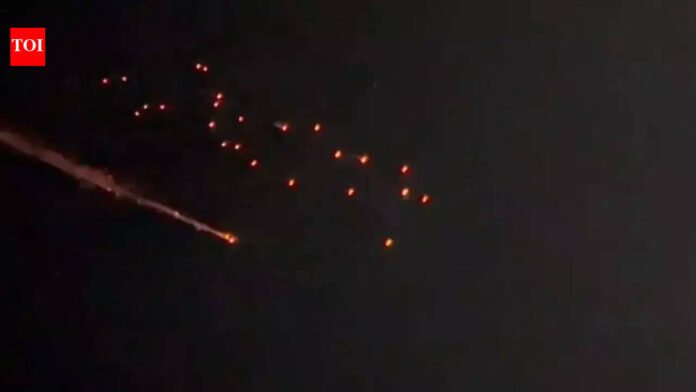
Military analysts have warned that the introduction of these weapons would change the dynamics of the conflict. Instead of a single explosion at one location, cluster warheads can spread many smaller bombs over a large area, increasing civilian casualties and causing greater infrastructure damage.The Israel Defense Forces confirmed that during the current conflict and the war in June 2025, Iran repeatedly launched ballistic missiles carrying cluster bomb warheads at Israel. Last year, Iran-backed Houthi rebels in Yemen also launched multiple missiles with cluster bomb warheads at Israel.Submunitions from cluster bomb warheads hit multiple locations in central Israel last Tuesday, wounding 12 people, Israeli medics said. Video on Sunday also showed two dozen fragments streaking across the sky after a cluster bomb warhead dropped bombs in central Israel.Israeli experts say Iran may have received help from outside sources for the deadly missiles. There is speculation that Russia or China may transfer military technology.Some submunitions do not explode when they hit the ground, but can still be dangerous to people. The IDF Home Front Command therefore warns people not to approach any missile debris that may be found on the ground, which can actually act as landmines.To date, a total of 123 countries have committed to achieving the goals of the 2008 Convention banning cluster munitions. Countries including the United States, Russia, China, India, Israel, Pakistan and North Korea have not signed the convention. The text of the 2008 convention says cluster bombs “kill or maim civilians, including women and children, impede economic and social development… hinder post-conflict recovery and reconstruction (and) delay or prevent the return of refugees and internally displaced persons… for many years after use”.“