Steven ErlangerThe Islamic Republic of Iran’s first priority is survival. To do this, its leaders will want to raise the cost of President Trump’s war — including American casualties, costs and inflation — to try to persuade him to declare victory and go home. Analysts say that Iran is working hard to expand the battlefield from its own territory to a wider area in the face of overwhelming firepower from the United States and Israel. The goal is to disrupt neighboring countries’ oil and gas infrastructure, close shipping in the Strait of Hormuz and restrict air traffic – all in an effort to disrupt the Persian Gulf economy and drive up global energy prices and inflation. Iran will also try to exhaust the number of expensive missile interceptors its enemies possess.
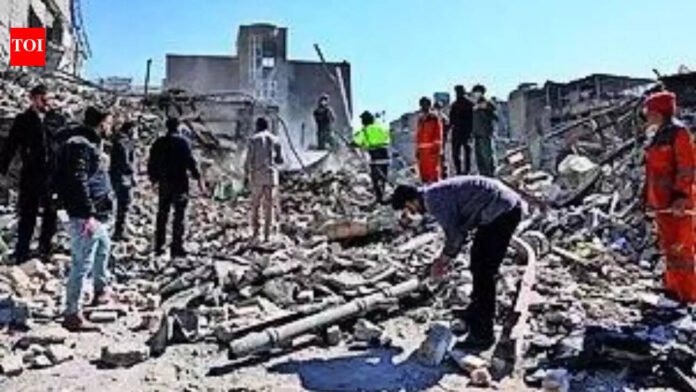
“War has become a test of will and endurance,” said Wali Nasr of the Johns Hopkins School of Advanced International Studies. “Iran faces a qualitatively superior military, so the strategy is to test their will by expanding the battlefield, complicating the war, and increasing the danger to the world economy.” The strategy is not complicated.“The Iranians want to spread as much pain as possible, regardless of the cost to themselves, regardless of the deterioration of relations with their neighbors, in the hope of building enough opposition to the war to force President Trump to back down,” said Ali Vaez, Iran director of the International Crisis Group, a Brussels-based think tank. “For the Islamic Republic,” he added, “survival is victory, even if the price is high.” The plan, known as “asymmetric endurance,” accepts initial damage to maintain the ability to escalate if Israeli, U.S. and Persian Gulf air defenses are stretched thin. Bases and embassies in the United States and even some Europe have been attacked, six US troops were killed and three planes were shot down. Hezbollah has entered the war, Persian Gulf states are anxious, and they have run out of expensive interceptors to deal with Iranian drones. Saudi and Qatari energy facilities were attacked. Oil and gas prices have soared, and shipping in the Strait of Hormuz has all but come to a halt.Ali Larijani, secretary of Iran’s National Security Council, claimed on social media on Monday that Iran “unlike the United States, is ready for a long-term war,” including plans to gradually escalate and expand the battlefield.Military analyst Franz-Stefan Gadi called the conflict “a race against time.” He said that Israel, the United States and their allies are trying to destroy missiles, launchers and communication nodes as quickly as possible so that Iran’s advanced missiles cannot be easily launched.Even heavily armed Israel had to limit the use of interceptors toward the end of its 12-day war with Iran in June, allowing some Iranian missiles to land without getting close to key locations or cities. If Iran’s strategy is clear, so are the risks. These have entered people’s field of vision.Analysts say the United States is encouraging Iran’s ethnic minorities, such as the Kurds and Baluchis, to rise up against the government, bombing police and army positions in those areas in the hope of at least triggering a popular uprising. Despite Iran’s attacks on Persian Gulf states, Tehran has so far failed to drive a wedge between those countries and Washington.Ellie Geranmaye, an Iran expert at the European Council on Foreign Relations research group, said that as always, it is difficult to know what Trump is thinking. “Trump has eliminated Khamenei, something no other president would dare to do,” she said. “He has an off-ramp if he wants to.”Former U.S. Department of Defense official Matthew Kroenig agreed. He said Trump was “sceptical of protracted military operations” and was pleased with many of the results, including the Venezuela model. “They’ve achieved several goals.”