
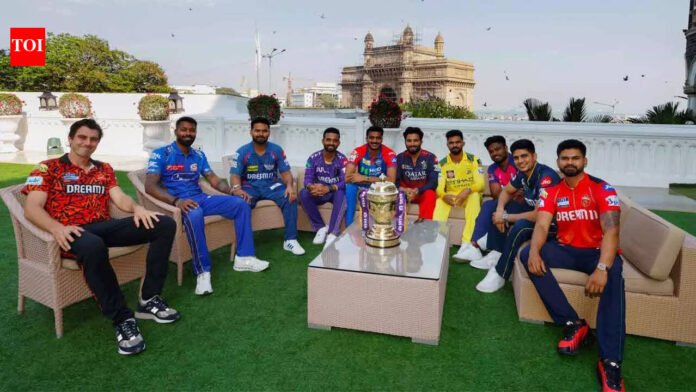

captain of all intense pulsed light The team will meet officials from the Board of Control for Cricket in India (BCCI) on March 25 to discuss a range of key issues, including the Influence Player Rules and Code of Conduct. However, the main focus is expected to be clarification on the two bouncer rule, bat inspections, ball changes, use of saliva and retirement clauses. The IPL 2026 captains’ meeting will be held at the BCCI headquarters in Mumbai.According to a BCCI communiqué issued to franchisees on Tuesday, Cricbuzz, Javagal Srinath and Nitin Menon – The BCCI match referee and the head of the officiating panel will address the captain separately. The meeting is scheduled for Wednesday (March 25) from 4:30 pm to 6 pm.
What’s the agenda?
The BCCI recently shared the playing conditions for this season with teams, highlighting the key changes in Rules 4.4 (change of ball in second innings); 5.8.3 (batch inspection); 18.5.1 and 18.5.2 (intentional short runs); 19.5.2 (fielder grounding out of bounds); 28.7.6 (fielder position restrictions); and Appendix D-3.9 (umpire review combined with player review).Looking at this website, there are no obvious changes to the playing conditions for the new season, but the rules regarding ball changes have been spelled out in detail – something that was not in last year’s playing conditions. Rule 4.4 in the latest competition conditions is as follows:Ball replacement rules in IPL matchesIf a ball is lost during play, cannot be recovered or is deemed unfit for use due to normal wear and tear, the umpire will replace it with another ball of similar wear and tear. Once replaced, the umpire will notify the batsman and fielding captain.Rules for changing balls in the second gameIn evening games, the second bowling team can request a change of ball after the 10th over. This request can only be made by the bowling captain and must be made at the end of an over (not during one). This rule only applies once in the second inning, and the replacement ball will have similar wear and tear to the previous ball regardless of dew conditions.In addition, the referee reserves the right to change the ball at any time during the game.
Key scene explanations
Scene one: If the umpire changes the ball before the 10th over because it is wet, damaged, lost or deformed, the fielding captain still reserves the right to require the ball to be changed after the 10th over. In this case, the referee must approve the request.Scenario 2: If the captain calls for a change of ball after the 10th over (e.g. In the 11th over) the umpire changed the ball due to wet conditions: any further request for a change of ball later in the innings would be at the umpire’s discretion and not mandatory.Scene 3: If the captain requests a ball change during the 11th over due to damage or shape issues and the umpire agrees: The team can still make a mandatory request after the 10th over (for example, due to dew later) and the umpire must approve the request.There are other items such as team sheets, throws, broadcast media commitments and awards, for which no details were given. The meeting will begin with an introduction by Hemang Aming, Chief Operating Officer of IPL.


 on March 25 to discuss a range of k.)