
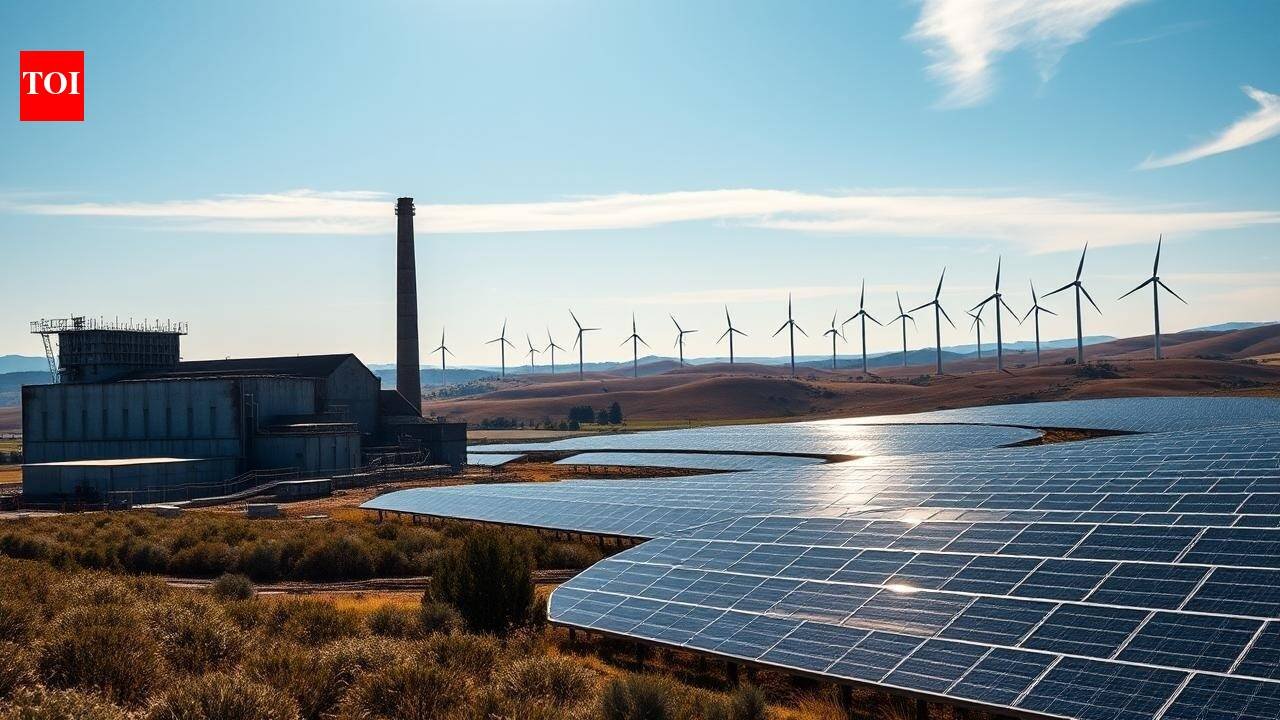
New Delhi: Fossil fuel power generation in India, the US, Turkey, South Africa, Germany and the Netherlands fell in March following the closure of the Strait of Hormuz due to military conflict in West Asia and energy supply disruptions, the Center for Research on Energy and Clean Air (CREA) said in its latest report on Wednesday.It added that the decline in power generation was offset by a significant increase in solar and wind power generation. The dataset covers 87% of global coal-fired generation and more than 60% of gas-fired generation for countries that disclose near-real-time data.According to the report, the total global fossil fuel power generation fell by 1% year-on-year, with China being an exception, which increased by 2%. “In countries with real-time electricity data, coal-fired power generation fell by 3.5% in March and gas-fired power generation fell by 4.0%,” the report said.“This was due to increases in solar (14%) and wind (8%) generation. Hydropower also saw a small increase (2%), but this was offset by a decline in nuclear generation,” it added.The think tank noted that the data contradicted widespread expectations that coal power generation would increase amid tensions in energy supplies due to conflict. It also observed that seaborne coal shipments fell 3% in March to their lowest level since 2021.“Record global growth in clean power generation, particularly solar and wind, is helping to mitigate the impact of the recent fossil fuel crisis. Growth in clean power has offset the decline in gas-fired generation following the Hormuz blockade, preventing a significant increase in coal-fired generation,” said Lauri Myllyvirta, chief analyst at CREA. “To mitigate the impact of the current crisis and make this recurring global emergency a thing of the past, this moment must be used to accelerate the global energy transition.”“The report points out that in the United States and India, the growth of solar power is the largest driver of decline in fossil fuel power generation. India added 55.3 GW of renewable energy installed capacity in the 2025-26 fiscal year, rising to third place in the world, behind China and the United States.