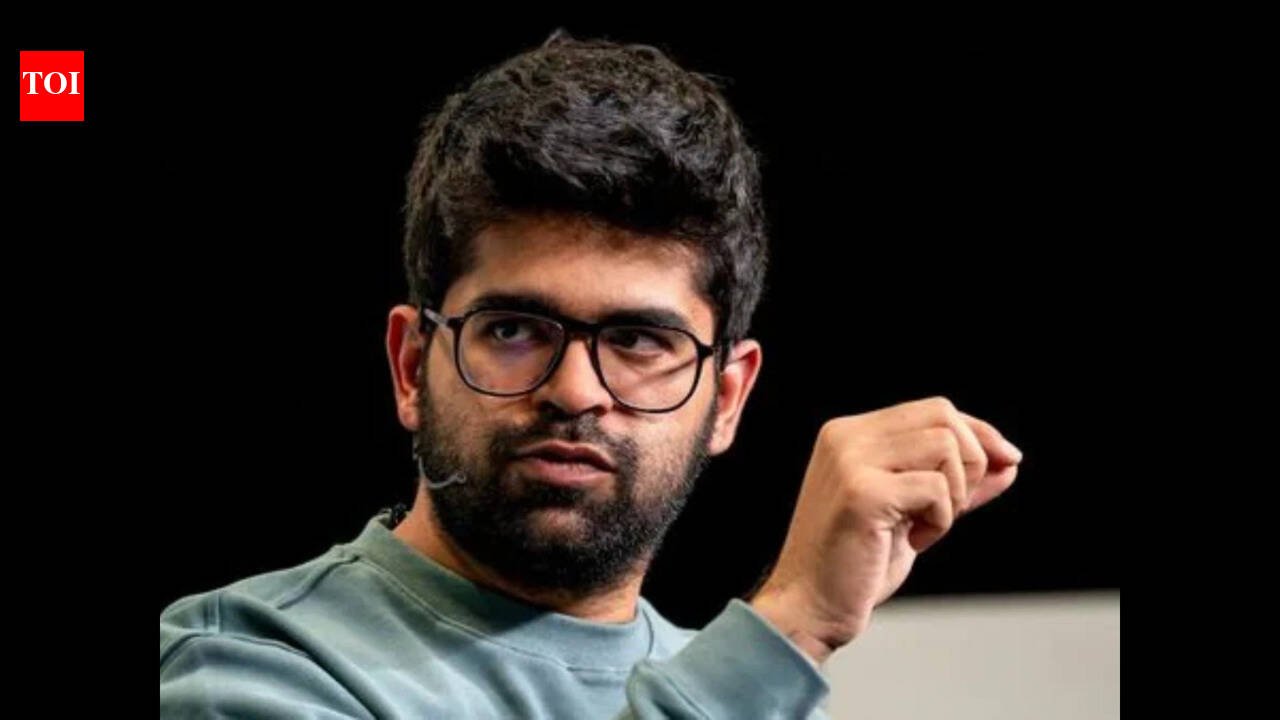
Indian-origin CEO Aravind Srinivas’ AI missteps spark confusion: Layoffs are okay because people hate their jobs


Aravind Srinivas, CEO of artificial intelligence startup Perplexity, said there is nothing wrong with AI-induced job losses because people hate their jobs anyway.
Perplexity AI’s Indian-origin CEO Aravind Srinivas has been embroiled in major controversy after he defended AI-induced layoffs and said people don’t love their jobs anyway. Srinivas, who studied at the Indian Institute of Technology Madras and later received his PhD from the University of California, Berkeley, said in the podcast that unemployment will open many new doors and provide new opportunities for people to do what they love. “The reality is that most people don’t like their jobs. Suddenly there’s a new possibility… to use these tools, learn them, and start your own small business… Even if you have to deal with temporary job displacement, this glorious future is what we should look forward to,” Srinivas said, making layoffs look desirable. The comments were heavily criticized as social media users called for his deportation. As Oracle laid off 30,000 people worldwide, the comment took on greater significance as people took to social media to lament being blindsided and received an email at 6 a.m. that March 31 would be their last day at Oracle after decades. A multimillion-dollar man just told a single mother who lost her job that she should be grateful because now she can start a business using his product and called her unemployment a glorious future,” one commenter wrote on X. “This is what happens when you don’t need a paycheck to live on.Perplexity reacted to the controversy, with a spokesperson defending Srinivas’ comments, citing data from the New York Post. “Since Perplexity launched in December 2022, Americans have submitted 16 million new business applications, helping to reverse 40 years of decline and proving once again that breakthrough technology does not eliminate opportunity, but creates it,” the spokesperson said. “When you’re at the top of building AI, disruption looks like opportunity. For millions of workers facing real uncertainty, the view from the ground up is very different. Are these AI technology leaders—predicting grand futures for humanity while detached from day-to-day impacts—out of touch with reality? Or do they see things that others haven’t faced yet?” one wrote.