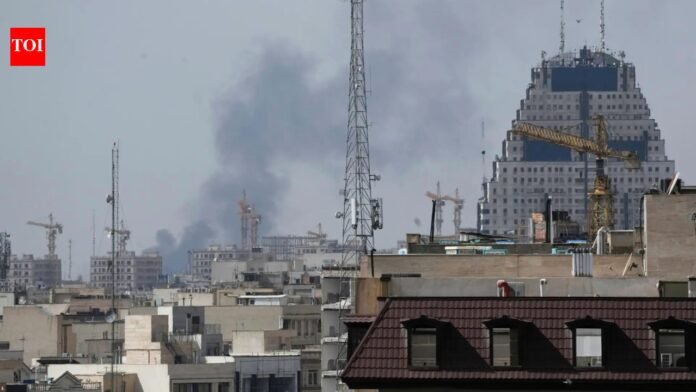
New Delhi: India is deeply concerned about recent developments in Iran and the Gulf region, the government said on Saturday, hours after the United States and Israel launched joint military operations against Iran and targeted Gulf states where Washington has military assets in retaliation. While seeking security for civilians in a region home to nearly ten million Indian expatriates, the Indian government, in its tough balancing act, has stressed the need to protect the sovereignty and territorial integrity of all countries.External Affairs Minister S Jaishankar held separate phone calls with his Iranian and Israeli counterparts Seyyed Abbas Araghchi and Gideon Sarr, expressing deep concern and reiterated India’s call for de-escalation of tensions through dialogue and diplomacy. During the evening, Jaishankar also spoke to his counterparts in the UAE, Qatar, Kuwait and Bahrain, seeking their cooperation to ensure the well-being of the Indian community.
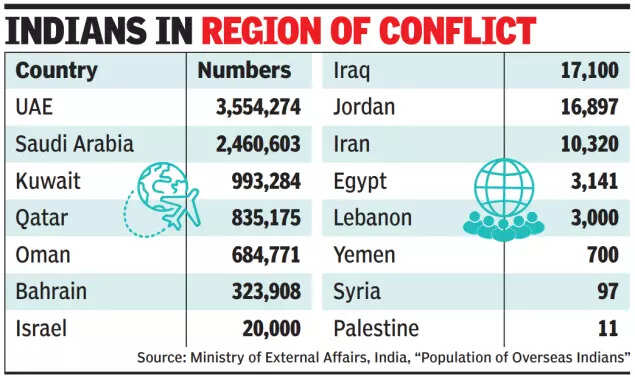
India’s Ministry of External Affairs’ response in the form of a statement was carefully calibrated, saying dialogue and diplomacy should be pursued to de-escalate tensions and resolve underlying issues. “We urge all parties to exercise restraint, avoid escalation and prioritize the safety and security of civilians,” the MEA said, adding that Indian missions in the Gulf are in touch with Indian nationals and have issued appropriate advisories asking them to remain vigilant and adhere to local security guidance. There are nearly 40,000 Indian citizens in Israel and 6,000 to 10,000 in Iran.As the United States and Israel reportedly try to broker regime change in Iran, India is once again forced to walk a diplomatic tightrope between a stable relationship with Iran based on shared regional interests and clear signs of improvement in India’s key relationship with the United States after a period of extreme turmoil.The attack on Iran also came less than 48 hours after Indian Prime Minister Narendra Modi and Israeli Prime Minister Benjamin Netanyahu held a bilateral meeting in Israel, where the two leaders discussed US-Iran tensions, with Modi expressing India’s support for any efforts to resolve the issue peacefully if necessary. It is worth noting that during his visit at a time of intensified friction between the United States and Iran, Modi stated in his media speech that peace and security in West Asia are directly related to India’s security interests.The Gulf region is also one of India’s most important and reliable sources of oil and gas. The welfare of the diaspora is a top priority for the government and is one of the largest sources of remittances in India. The GCC countries – Bahrain, Kuwait, Oman, Qatar, Saudi Arabia and the United Arab Emirates – are also India’s largest trading partner group.While India has deepened its strategic partnership with Israel over the past decade, its relations with the Gulf countries have also undergone a complete transformation during this period. In fact, India now has strategic partnerships with five of the six GCC countries, moving away from the traditional energy buying and selling relationship to other areas such as defense and security, investment, connectivity and technology.India will be concerned about the impact a full-scale regional war could have on the India-Middle East-Europe Economic Corridor (IMEEC) project, which has been delayed by instability in West Asia. During his visit to Israel, Modi said that the two countries will promote initiatives such as IMEEC and India-Israel-UAE-US (I2U2) with new momentum to promote regional connectivity.For India, Iran remains an important regional partner, one that New Delhi has not abandoned despite President Donald Trump’s resumption of maximum pressure on Iran. In January, India joined China, Pakistan and four other countries in voting against a United Nations Human Rights Council resolution that strongly condemned the crackdown on protests in Iran and extended the mandate of a fact-finding mission in the country.Indian authorities say it is in India’s interest to maintain functional relations with Iran, especially because of its strategic position chabahar port India is helping countries develop access to Central Asia and Afghanistan, bypassing Pakistan – although the U.S. decision last year to revoke sanctions exemptions for the port, expected to take effect in late April, has made the situation even more confusing.