India condemns Pakistan at UN for ‘fabricated’ Islamophobic rhetoric, points to Ahmadi crackdown and Afghanistan bombings
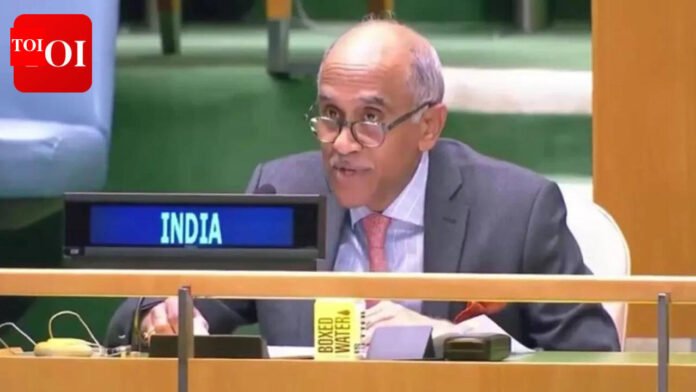
India on Monday strongly condemned Pakistan at the United Nations, saying it habitually “fabricated” Islamophobic rhetoric against its neighbor, while questioning Islamabad’s own record on its treatment of minorities during Ramzan and its actions against Afghanistan.Addressing the United Nations General Assembly to mark the International Day to Combat Islamophobia, India’s Permanent Representative to the United Nations Ambassador Parvatarani Harish issued a sharp rebuttal to Pakistan and the Organization of Islamic Cooperation while urging the United Nations to avoid formulating a framework that focuses only on one faith rather than addressing all forms of religious discrimination.
‘India’s Western neighbors’ spin Islamophobic narratives
“India’s western neighbors are a perfect example of imaginative stories of Islamophobia being created in their neighbourhoods,” Harish said.In a stinging attack, he added: “One wonders what will be called the brutal crackdown on Ahmadiyya in this country, or the massive deportation of helpless Afghans or the airstrikes during this holy month of Ramadan?”Harish’s response comes against the backdrop of Pakistan’s repeated attempts to level accusations against India in multilateral forums under the banner of Islamophobia.He also said the OIC “is systematically attempted by our Western neighbors to weaponize it against India” and has repeatedly made “false and baseless accusations” against the country.
India warns against weaponizing religion at UN
Harish stressed that the United Nations must take note of “the growing trend and danger of state and non-state actors weaponizing and exploiting religious identities to serve narrow political ends.”He warned that politicizing religion would not resolve grievances but risk legitimizing “selective, polarizing narratives” that would deepen divisions, the Press Trust of India news agency reported.“The United Nations is considered an institution that transcends religion, culture and politics. Its credibility depends on universality and impartiality,” he said.He further urges “to be wary of frameworks that focus solely on one faith without addressing all manifestations of broader religious phobia.”India also stressed that the 1981 Declaration on the Elimination of All Forms of Intolerance and of Discrimination Based on Religion or Belief remains a balanced and durable instrument as it protects followers of all faiths without privileging any one religion.
India highlights its Muslim population, Kashmiri representation
Emphasizing the diverse character of India, Harish said that India has more than 200 million Muslims and is one of the countries with the largest Muslim population in the world.He said Muslims in India, including those in Jammu and Kashmir, elect their own representatives to speak for them.“The only ‘phobia’ evident here seems to be against multiculturalism and peaceful coexistence enjoyed by all communities in India, including the Muslim community,” he said.He added that such claims were contrary to India’s “fundamental ethos” and instead reflected “the sectarian and terrorist mentality that has existed in this country since its inception.”
Afghan reference adds sharp edges
Harish’s reference to “air strikes in this holy month of Ramadan” comes amid rising tensions between Pakistan and Afghanistan.Afghanistan claimed that an airstrike on the Omid Addiction Treatment Hospital in Kabul late Monday killed about 400 people and injured about 250 others, with a Taliban spokesman blaming Pakistan. However, Pakistani media Sama quoted security sources as denying the allegation and calling the suggestion that the drug treatment hospital was attacked “ridiculous.”Pakistani authorities insisted the attacks targeted Taliban-linked military infrastructure in Kabul and Nangarhar and caused “no collateral damage.”