
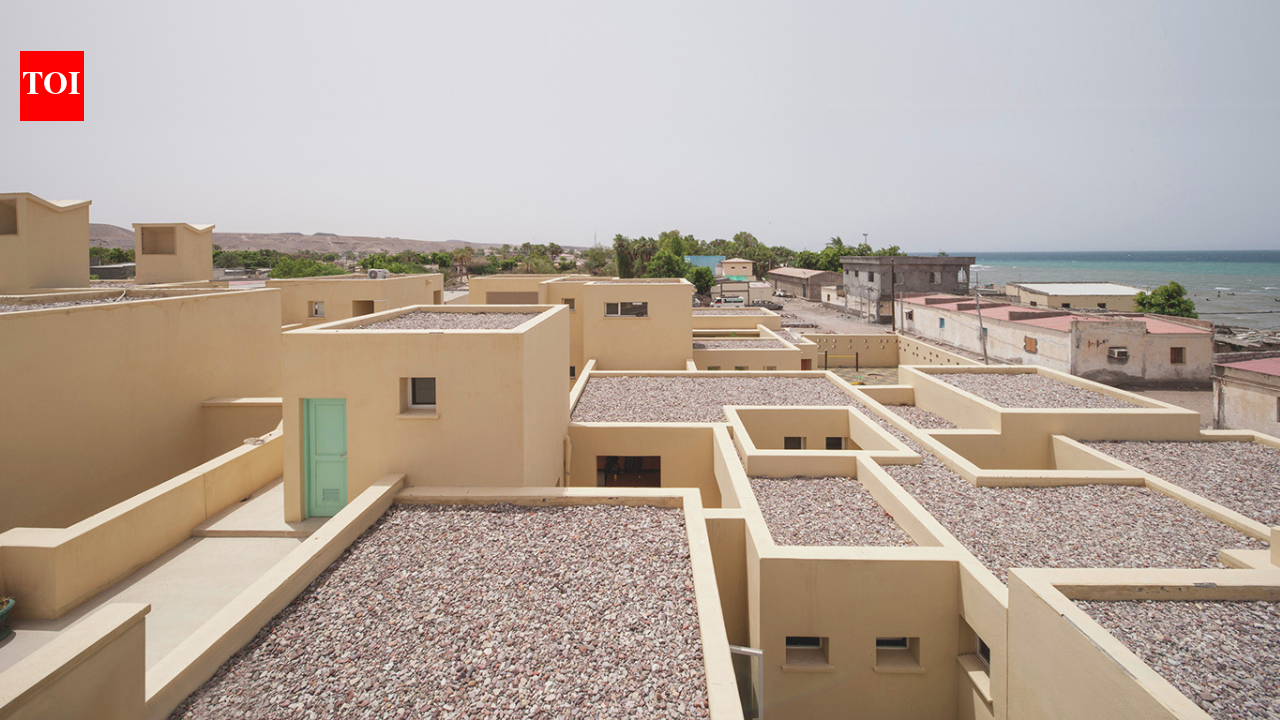
In the coastal city of Tadjoura in Djibouti, which is subject to extremely hot and dry desert conditions for much of the year, architects have designed a children’s village that does not require traditional air conditioning. The project is called SOS Children’s Village Tadjourah and was created by Urko Sanchez Architects for SOS Children’s Villages International. Rather than relying on glass towers, sealed interiors and energy-intensive cooling systems, the architects turned to centuries-old climate-responsive design principles used in North Africa and the Middle East. Narrow shaded streets, wind-catching towers, reflective surfaces, vegetation and carefully planned airflows work together to keep the settlement naturally cool. The result is a rare modern project in which the building itself acts as a climate control system.
How this children’s village keeps cool in the heat
SOS Children’s Village is located in Tadjoura, a port city in Djibouti, Horn of Africa. The region experiences extremely high temperatures, intense sunlight and little rainfall for much of the year, making cooling one of the country’s biggest construction challenges.Rather than introducing Western-style climate systems designed for temperate environments, the architects studied how traditional settlements in hot desert areas survived for centuries before the advent of modern air conditioning. This became the basis for the design concept of the project.Completed in 2014, the village was developed for SOS Children’s Villages International, an organization that provides housing and support to disadvantaged children and families.Urco Sanchez Architects describes the project as a “medina for children”. The design draws heavily on the historic medinas of parts of North Africa and the Middle East, where dense urban layouts naturally reduce thermal exposure.The traditional medina is built around narrow alleys and closely packed buildings that shade each other throughout the day. Rather than exposing the building directly to the sun, this layout creates cool pedestrian corridors where airflow is concentrated.The architects recreated this concept within the village using a maze-like arrangement of paths, courtyards and public spaces. Small public plazas have been added throughout the complex to encourage social interaction while also improving air circulation between buildings.The result is that shading and ventilation are integrated directly into the layout, rather than being added later to the environment via mechanical systems.
How villages cool down naturally
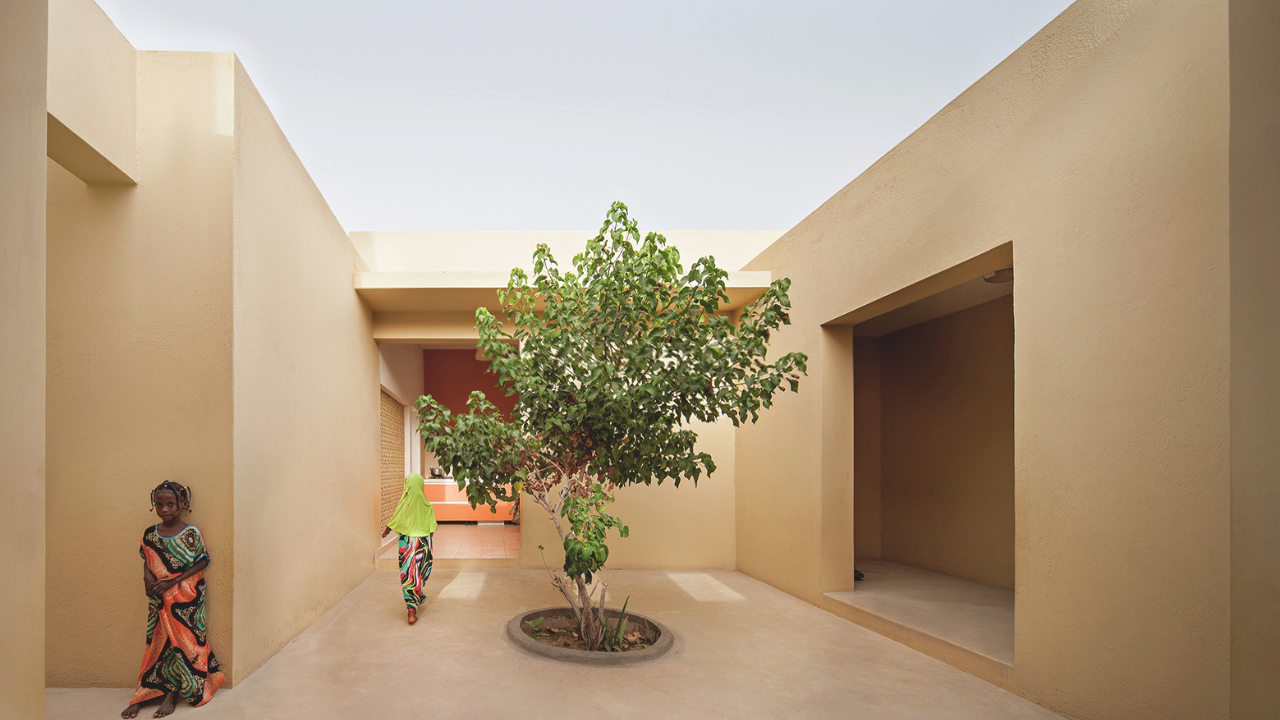
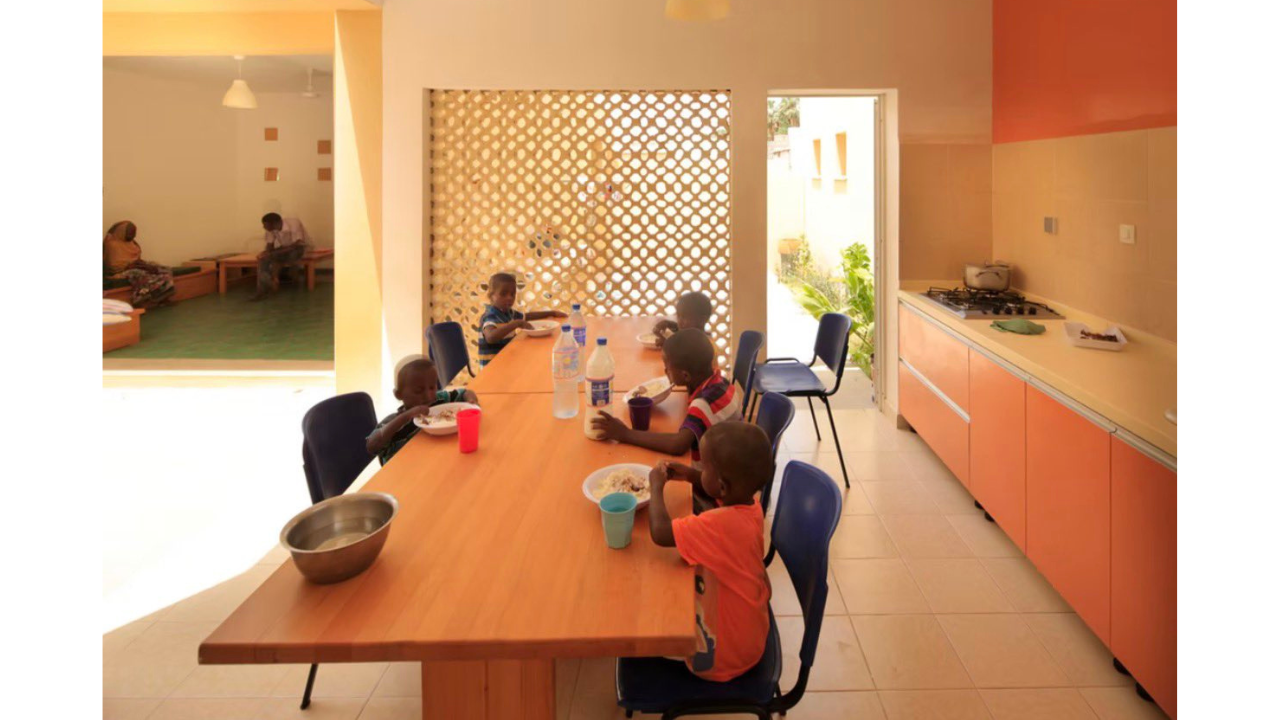
One of the most important features of the project is its passive cooling system. Passive cooling refers to building methods that reduce heat without relying heavily on electrical or mechanical refrigeration.The village uses wind-capture towers raised above roof level to direct flowing air downwards into the living spaces. Similar structures have existed for centuries in traditional Persian and Middle Eastern architecture.The direction of streets and openings has also been carefully planned to accelerate airflow through the settlement. As wind passes through narrow passages, its speed increases, improving ventilation and helping to remove trapped heat.Many openings in buildings use mashrabiya-style screening systems rather than sealed glass windows. These patterned screens allow air to pass freely while blocking direct sunlight and reducing heat gain.The buildings feature light earth tones that reflect rather than absorb sunlight. In extremely hot climates, darker surfaces can trap heat and continue to radiate it long after sunset, while reflective finishes help keep temperatures cooler.
Why people rely so little on modern air conditioners
Unlike many modern buildings in hot climates, the Village was not designed around heavy machinery cooling infrastructure. The architects intentionally avoided energy-intensive climate systems wherever possible.Instead, the project relies on thermal mass, shading, airflow and reflective materials to maintain a more stable indoor temperature. Thick walls made of precast cement blocks and reinforced concrete slowly absorb heat during the day and gradually release it at night.This approach reduces sudden increases in indoor temperatures and allows many areas of the village to remain much cooler than the outside environment without constant artificial cooling. It also reduces long-term operating costs, which is particularly important in areas with limited or expensive power infrastructure.
The role of vegetation and microclimate
Even though Djibouti is an arid country, vegetation still plays an important role in the project. Trees and planting areas are integrated throughout the settlement, gradually creating a shady microclimate over time.As plants grow, they lower the surrounding temperature through shading and evapotranspiration, the process by which water released by their leaves cools the surrounding air. Even a relatively small amount of green space can significantly improve thermal conditions in a hot environment.The landscaping also aims to create quieter public spaces and enhance the social atmosphere of the village.
Choose materials based on climate, not appearance
The materials used in the village are intentionally simple and relevant to the local context. The architects avoided using imported glass-dominated architectural styles, which often perform poorly in desert climates and are not energy intensive.Instead, the project relied primarily on reinforced concrete, precast cement blocks and textured plaster finishes. The materials are selected for durability, thermal performance and ease of maintenance in extreme environmental conditions.The focus is not on futuristic aesthetics but on long-term climate adaptation, using technologies that have been proven in hot regions for generations.
A car-free environment designed around children
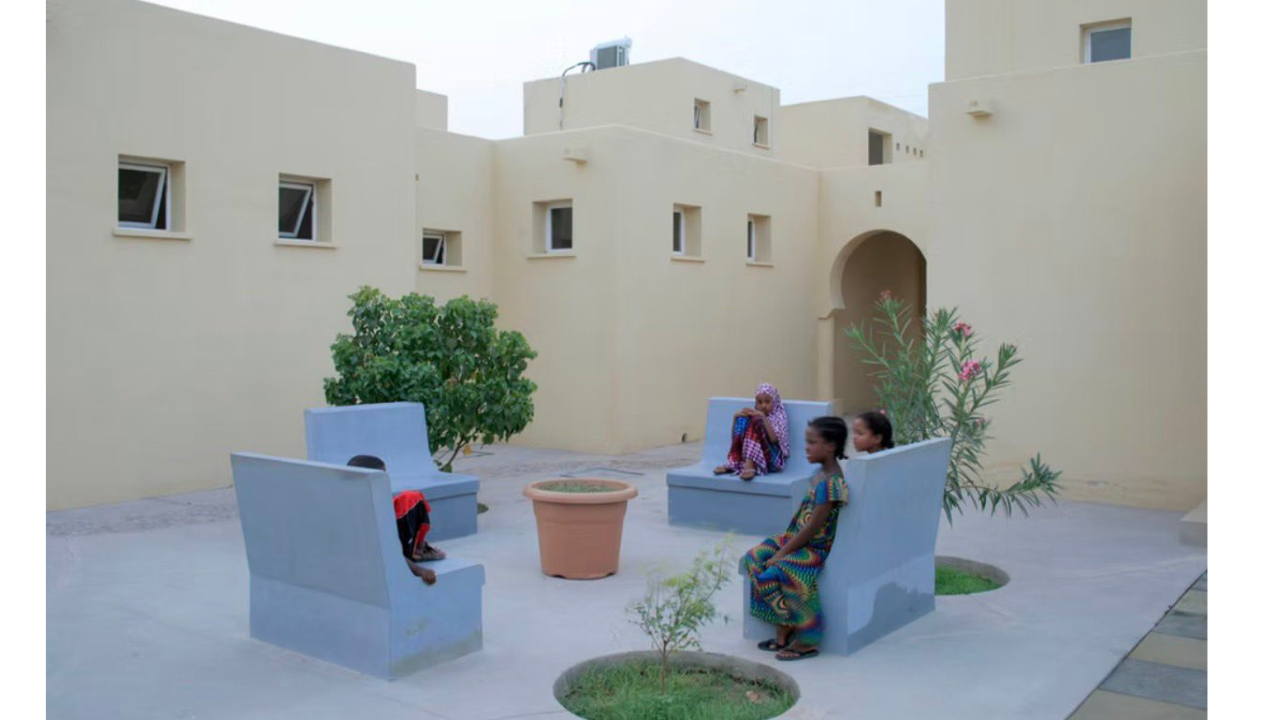
The village is designed as a pedestrian-first environment. Cars are largely excluded from the interior layout, allowing children to move safely through interconnected alleyways and shared courtyards.The narrow streets serve not only as cool corridors but also as social spaces for children to play and interact. This creates a stronger sense of community than the isolated layouts often found in modern residential developments.The architects said the space was designed to simultaneously balance safety, social interaction and climate responsiveness.Such projects are increasingly important in an era of growing electricity demand, climate change and overheating cities. Rather than treating architecture and climate control as separate systems, the village merges them into an integrated design.