
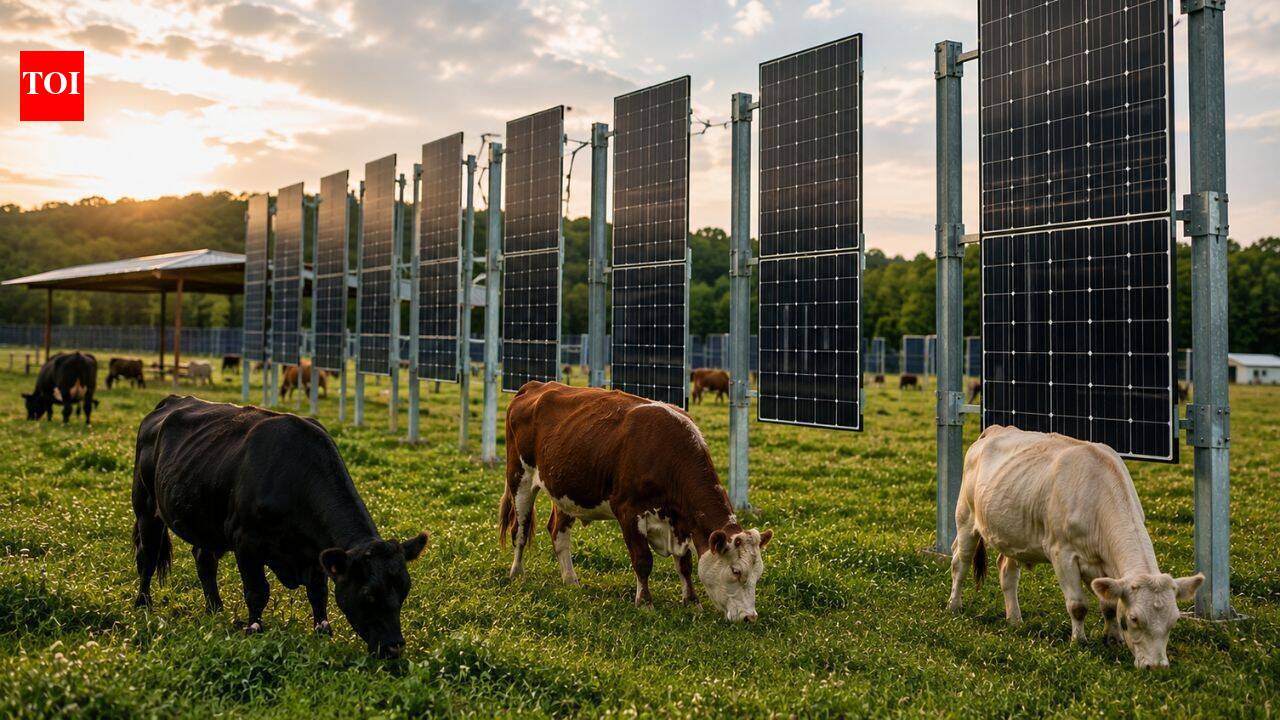
In New Jersey, farmland is helping researchers explore whether livestock farming and solar power can successfully share the same land. At the center of the project is a small herd of beef cattle grazing between rows of vertical solar panels, which were installed without replacing the grass beneath them. While the cows continue to eat, rest and move around the fields normally, scientists are monitoring how the panels affect the animals and fields.According to the New Jersey Agricultural Experiment Station: Rutgers Agrivoltaics Project, the project tracks where cows choose to graze, rest and shade, while measuring the quality of pasture in hopes of understanding whether the land can continue to support healthy livestock without giving up its role in producing renewable energy.
How New Jersey’s cows prove farmland can produce food and power
The project is part of Rutgers’ agrivoltaics research program, which explores ways to use agricultural land for food production and solar power generation.Unlike the tilted solar arrays commonly seen along roadsides or at purpose-built solar farms, these panels stand vertically. They are also double-sided, meaning they collect sunlight from both sides. This arrangement leaves wide pastures between each row, providing space for cattle to graze while allowing farm machinery to continue operating.Rather than looking at livestock as a barrier to renewable energy, the trial asked whether grazing animals could continue to be a common part of solar farms.
How Blossom, Misty and Flurry are helping scientists study cow behavior
The cattle involved were part of Rutgers University’s teaching herd, where they are already used for undergraduate agricultural education. Four Angus cows: Ideal, Queen, Fizzle and Blossom grazed alongside two Hereford cows, Misty and Flurry.To researchers, the daily habits of cows are as important as the grass beneath their feet. Cameras positioned around the site take photos every five minutes, documenting in detail where each animal moves. This allowed the research team to compare whether cattle preferred areas close to solar panels, stayed in open pasture, or congregated under purpose-built awnings.The study also looked at whether different layouts affected behavior. Some rows of panels are arranged closer together than others, and the gaps beneath the panels vary from site to site. These subtle design differences can affect how freely cattle can move around in pasture.
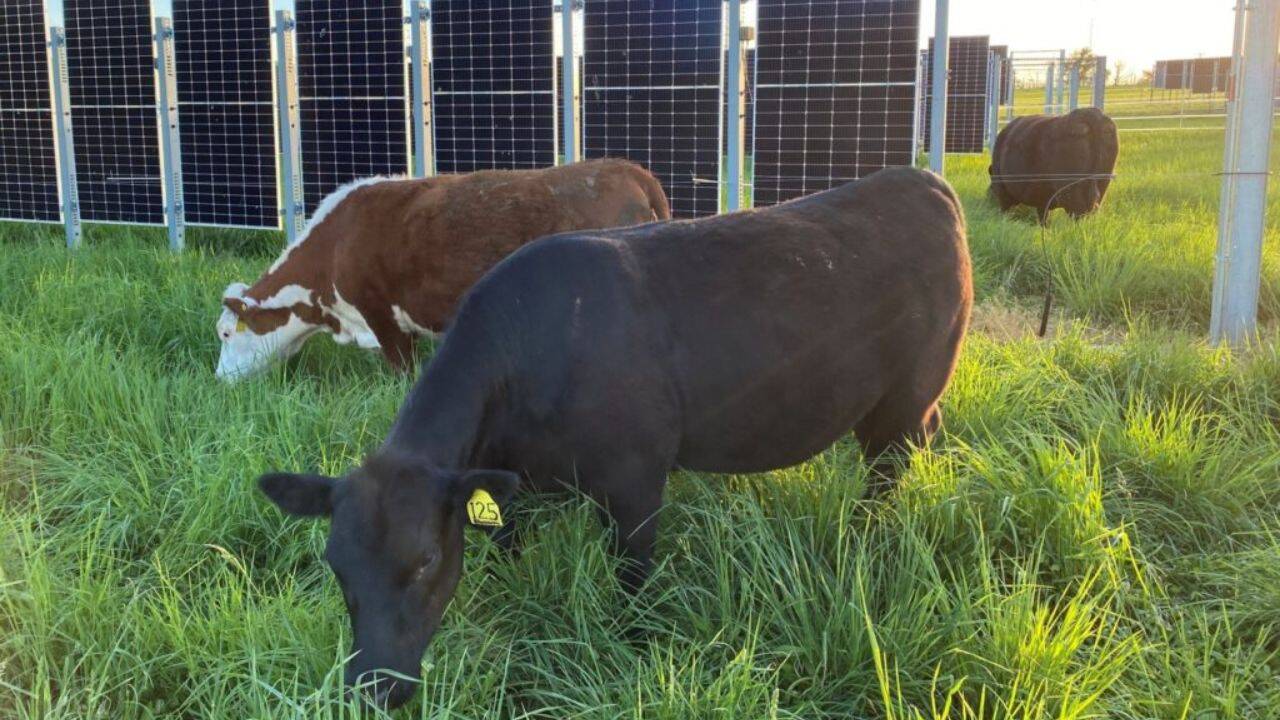
PC: Rutgers University Agrivoltaics Project
Can pastures under solar panels remain productive?
This research isn’t limited to animals. The grass itself is being closely watched.Vertical solar panels cast ever-changing bands of shadow as the sun moves across the sky, causing small differences in temperature, humidity and light levels. These changes may alter the growth rate of the feed or affect its nutritional value to grazing livestock.If pasture quality remains good under these conditions, farmers may be able to continue raising cattle without sacrificing productive pasture to build energy infrastructure. The answer is unlikely to be the same in every location, which is why detailed measurements throughout the growing season are just as important as the power generated above the field.
How one field can produce both food and renewable energy
The experimental site was carefully organized so that different solar layouts could be compared under similar conditions.Three separate replica blocks contain multiple panel configurations, alongside control pastures without any solar panels. In each configuration, row spacing and ground clearance vary, allowing comparisons of how design choices affect vegetation and livestock behavior.Repeated versions of each arrangement also enhance the statistical reliability of the study results, reducing the possibility that differences are simply due to weather or natural variations between pastures. The trial reflects wider issues facing agriculture as demand for renewable energy continues to grow. Solar development often competes with farmland, especially in areas with limited land for productive agriculture.Agrivoltaics offers a different approach, asking whether the same field can serve multiple purposes. If grazing remains healthy and power production continues to be effective, farmers may have another option to utilize their land without giving up livestock production.For now, Blossom, Misty, Flurry and the rest of the herd are just following a familiar routine of grazing, resting, drinking and walking around the pasture. These ordinary behaviors provide researchers with the evidence they need to understand whether carefully designed solar arrays can become a practical part of everyday agriculture, rather than replacing it.