
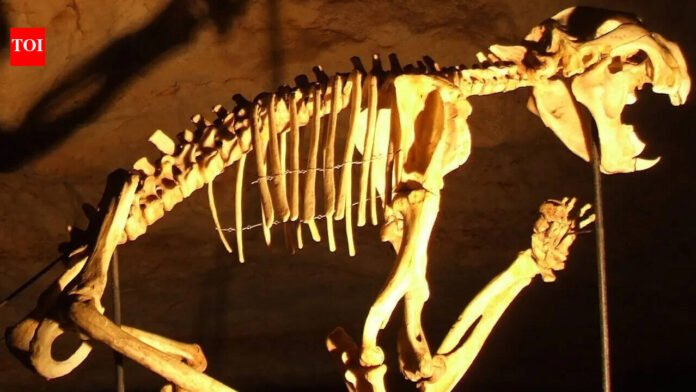
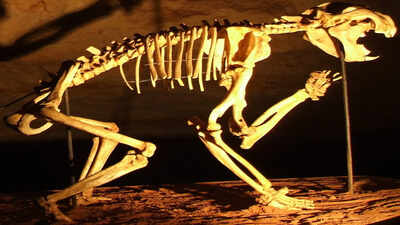
The experience on the Nullarbor Plain in southern Australia is like stepping into another world. The area is known for its inhospitable terrain, with barely any trees and the relentless desert sun breaking down any organic matter within weeks. But beneath the feet of unsuspecting travelers, the limestone caves tell an entirely different story.In 2002, while scanning the desolate landscape for hidden underground openings, a group of enthusiastic spelunkers squeezed through a narrow crack and dropped to a completely undisturbed cave floor. They shine their headlamps into the inky darkness, hoping to find ordinary rocks or seasonal sediments.Instead, the light from their torches revealed near-perfect skeletal structures lying peacefully in the dust. It was soon discovered that this skeletal structure had some unique features, including an unusually strong structure and extremely advanced jaws. It was entirely by chance that the cavers discovered the bones of a marsupial lion, which has been extinct on Earth for tens of thousands of years and is considered the absolute apex predator.The underground chamber contains an unimaginably long deep timeThe unusual condition of the bones immediately caught the attention of geologists, as organic structures typically do not last long on the surface. This is based on an important geological researchtitled The antiquity of Nullarbor Cave and its impact on the karst paleoclimate archive.It is important to note here that the geological history of the area has created a highly arid and stable underground ecosystem with no air movement at all and very little water infiltration. The outside world experiences climate and weather changes and erosion, completely cut off from this environment.
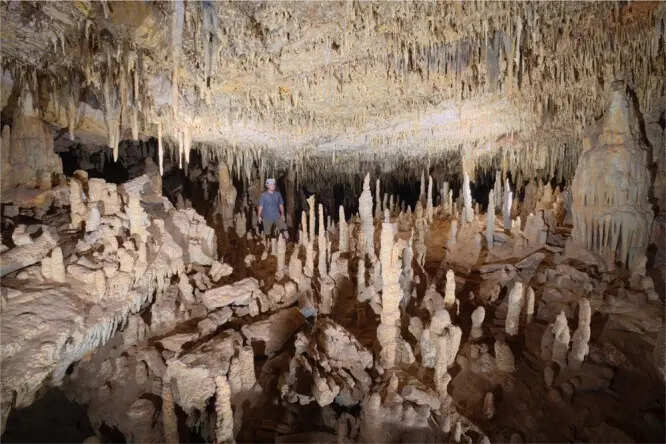
Explorers have discovered an ancient marsupial lion skeleton in a cave on the Nullarbor Plain. The discovery provides a unique perspective on the extinction of life. The cave’s stable environment preserved fossils for millions of years. Image source: The antiquity of Nullarbor cave fossils and their impact on karst paleoclimate archives Figure 2
Using cutting-edge dating methods to date the surrounding minerals, researchers found that the caves had not been touched by humans for more than four million years. Such amazing geological stability allows the delicate fossilized skeletons of ancient creatures to be completely exposed to the bare ground without turning into piles of dust or being moved by scavengers.Unlocking the habitat of a long-extinct apex predatorThe discovery provides biologists with a unique opportunity to study the continent’s extinct ecosystem. as Paper report Titled Drought-adapted Mid-Pleistocene vertebrate fauna from south-central AustraliaWriting in the scientific journal Nature, the discovery turns out to be more than just an interesting anomaly.The study details how a unique cave system successfully protected an entire community of extinct megafauna, including several previously unknown species of giant tree kangaroos. By analyzing the well-preserved marsupial lion bones found in this ecosystem, researchers were able to specifically study its bone density, predatory bite force, and climbing mechanics.In fact, these underground caves today are a clear reminder that the Earth manages to hide its memories in the most unusual places. Although we gaze upon these seemingly barren lands and take their lack of life for granted, beneath their feet lies an entire world of mystery. They show that all it takes is a little curiosity to unlock fascinating stories from long ago.Even though people of today’s generation have been driving down highways in empty land for decades, it’s a truly shocking thought to have the remains of horrific prehistoric creatures lying silently beneath them.