In 1990, mining stopped at a 55-metre-deep Swedish limestone quarry; a year later, an opera singer discovered its remarkable natural sound, and it became Dalhalla, now drawing 100,000+ visitors each summer

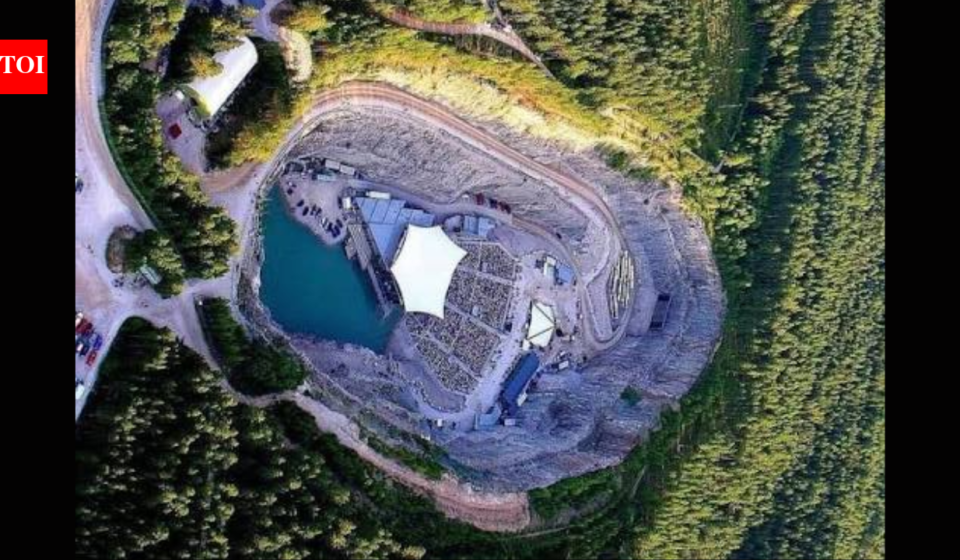
When mining stopped at an isolated limestone quarry in central Sweden in 1990, the local area was left with a 55-metre-deep industrial pit cut into the pine forests outside Rättvik. Just a year later, a former opera singer discovered that the abandoned quarry had remarkable natural acoustics. Today, the former mining site has become Dalhalla, an internationally known open-air concert venue that attracts more than 100,000 music fans to Dalarna every summer.
A geological crater shaped by an ancient impact
According to geological information about the area, the site that became Dalhalla was shaped by a huge meteorite impact around 360 million years ago. A meteorite about four kilometres wide struck the Earth and created the geological formation now known as the Siljan Ring. The impact changed the local rock formations, bringing ancient layers of limestone closer to the surface. According to historical accounts of the quarry, commercial mining began at the Dräggängarna site in the 1940s, with companies removing millions of tonnes of limestone over several decades. When mining finally stopped in 1990, workers had created a huge natural bowl about 400 metres long, 175 metres wide, and 55 metres deep. According to information about the site, underground springs had also begun filling the bottom of the quarry, creating a bright turquoise lake. The colour comes from dissolved calcium carbonate in the water, which reflects the northern sunlight.
The Whitsun walk that sparked a vision
The quarry might have remained an abandoned industrial site if not for a walk taken during Pentecost in 1991. According to accounts of Dalhalla’s history, Margareta Dellefors, a former Swedish opera singer and radio producer, was searching for an outdoor location for a new summer music festival. When Dellefors reached the edge of the abandoned quarry, she looked across the huge open space and tested its acoustics by calling her voice across the pit. She was surprised by how clear and powerful the sound was. According to accounts of the discovery, the quarry produced strong natural resonance without creating harsh echoes. Dellefors quickly saw the potential for a concert venue. The shape of the quarry was also considered suitable for an outdoor theatre, while its limestone walls helped spread and soften sound across the basin. The venue was eventually named Dalhalla. According to the venue’s history, the name combines Dalarna, the region where it is located, with Valhalla, the great hall from Norse mythology that also became famous through Richard Wagner’s operas.
From acoustic test to national landmark
Turning an abandoned quarry into a working concert venue required major construction and engineering work. According to Dalhalla’s history, Dellefors worked with local authorities to remove debris, create access routes down the quarry walls, and build a permanent stage beside the lake. In June 1993, organisers held a test concert for invited journalists, acoustics experts, and local residents. The performance showed that classical music could be heard clearly throughout the quarry, confirming the site’s unusual acoustic qualities. The venue officially opened to the public on June 21, 1995, with a major opera performance that was broadcast nationally by Swedish Television. According to historical accounts, the television broadcast introduced Dalhalla to a much wider Swedish audience and helped establish the former quarry as an important cultural destination.
Overcoming environmental and staging challenges
Running a large outdoor venue inside a 55-metre-deep quarry creates several practical challenges. According to information from Dalhalla, the stage is located well below the surrounding forest. Performers, equipment, and other supplies therefore have to be moved through steep access routes built into the rock. The quarry also has its own small-scale climate conditions. Its deep walls help protect the performance area from strong winds and outside noise, but changes in temperature and humidity can affect how sound moves through the air. To protect the site and improve the visitor experience, managers installed systems to control the level of the central lake. Electrical equipment was also placed carefully along the rock face. According to descriptions of the venue, this allows modern lighting systems to illuminate the limestone walls during evening shows while keeping the natural appearance of the quarry.
A wide range of music attracts visitors from around the world
Dalhalla was originally created mainly for opera and classical music. However, according to the venue’s programme history, its schedule gradually expanded to include many different styles of music. Over the past three decades, the amphitheatre has hosted symphony orchestras, ballet groups, jazz performers, and major pop and rock artists. International performers have appeared in front of the illuminated limestone walls, with many praising the unusual setting and atmosphere. The summer season, which runs from late spring into early autumn, includes dozens of performances. According to information about the venue, these events attract large crowds and provide important tourism income for nearby communities. More than 30 years after Dellefors first discovered its potential, the former Dräggängarna quarry remains a striking example of how an industrial site can be given a new purpose.