
eid al-fitr In 2026, it is expected to be around March 19-20, depending on lunar observation conditions, and is currently being observed in some areas middle East in regional conflicts, security alerts and humanitarian crises. The holiday is usually associated with collective prayers, family gatherings and public celebrations, but in some countries it is celebrated amid heightened security, displacement and ongoing violence.Across the region, authorities issued security warnings and humanitarian groups warned of worsening conditions, and communities in conflict zones celebrated the holiday in a low-key manner.
Saudi Arabia : Enhanced security during Eid prayers
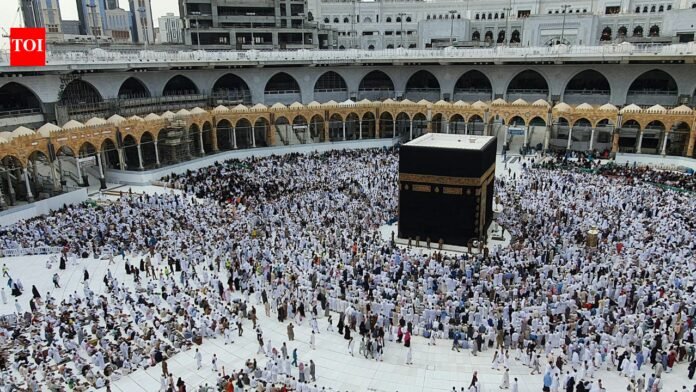
In Saudi Arabia, authorities stepped up security precautions during the Eid al-Fitr holiday amid concerns about missile and drone threats linked to wider regional tensions. During the festival, worshipers are advised to exercise caution in crowded public places and markets, Arab News reported.Despite the heightened security environment, Mecca’s Grand Mosque continued to receive large numbers of worshipers during Ramadan and Eid al-Fitr, with authorities imposing extensive security and surveillance measures around key locations. The Saudi royal family said air defense systems in strategic locations remained on alert amid a wider regional confrontation.Saudi officials have stressed maintaining normal religious rituals while ensuring security at major gathering points, especially during large Eid prayers at mosques across the country.
United Arab Emirates: Reduce celebrations and disrupt travel
Public celebrations in the United Arab Emirates, particularly in Dubai and Abu Dhabi, have been affected by regional instability. Some major Eid-related entertainment events have been scaled back, including fireworks displays at Dubai’s Global Village, The Nation and Khaleej Times reported.Air travel disruptions related to regional tensions are also complicating holiday travel plans. Flight instability and airspace issues have affected some travelers passing through Gulf hubs, and authorities are assisting travelers facing delays and disruptions, The National reported.The UAE government declared March 19 to 22 a public holiday, but security agencies stepped up surveillance of public places during Eid al-Fitr, Khaleej Times reported.
Gulf States: Caution required for gatherings across the region
Eid celebrations in Qatar, Kuwait, Bahrain and Oman come amid regional tensions. Security authorities across the GCC countries have taken precautionary measures in major public gathering areas and transport hubs.Travel disruptions and heightened security checks affected travel in some areas during the holidays, Travel World reported.Oman continues diplomatic outreach aimed at easing tensions in the region, according to the kingdom, while humanitarian coordination efforts are also reportedly underway among Gulf states as the conflict affects several neighboring countries.
Lebanon: Eid faces displacement and humanitarian crisis
In Lebanon, Eid al-Fitr coincides with one of the region’s worst humanitarian crises. The WHO Relief Network reports that more than 820 people have died and about 1 million people have been displaced, accounting for nearly a fifth of the country’s population.The WHO Relief Network reported that at least 25 attacks on medical facilities have resulted in 16 deaths, 29 injuries, and the closure of 48 clinics and 5 hospitals. Therefore, for many families, Eid is celebrated in displaced persons shelters or damaged neighborhoods rather than in traditional homes.
Iran : A celebration of casualties and restraint
As regional tensions continue to escalate, Iran has also faced heavy casualties. WHO ReliefWeb reports that the strikes have killed more than 1,200 people, injured more than 15,000 people, and displaced about 100,000 people.Health care facilities are directly affected by the conflict. WHO monitoring records show that there have been at least 18 attacks on health facilities, resulting in eight deaths, and medical services have been further strained during the crisis.Fearing further escalation, many families are choosing to celebrate Ramadan and Eid al-Fitr in more private settings rather than large public gatherings. According to the Saudi royal family, Iran’s leadership has rejected negotiations as tensions continue to escalate.
Gaza and the West Bank: Eid al-Fitr during the ongoing war
In the Palestinian territories, Eid al-Fitr comes amid the ongoing war between Israel and Hamas, where the humanitarian situation remains dire. Access restrictions, ongoing fighting and damaged infrastructure complicate aid delivery and emergency services.The WHO Relief Network reports that ambulance movements and medical services are disrupted, while the risk of famine and mass displacement continue to affect many communities.Instead of holding holiday gatherings, many families celebrate the holiday by praying and remembering loved ones lost in the conflict. Wartime celebrations in Gaza have previously been described as a “sad Eid”, with people praying amid the sound of bombings, Al Jazeera reported.
Regional solidarity beyond conflict zones
The impact of the conflict is also evident in Eid celebrations outside the immediate war zone. In Türkiye, mosques in Istanbul displayed Palestinian flags and messages of unity during Eid prayers, The Times of Israel reported.Religious leaders in Nairobi, Kenya, also used Eid sermons to call for solidarity and humanitarian support for civilians affected by the war in Gaza, The Times of Israel reported.Meanwhile, Iraq’s emergency services are facing operational challenges, including the blockade of ambulance routes amid escalating tensions in the region. The WHO Relief Network reports that wider regional attacks have also worsened humanitarian conditions in countries such as Yemen and Syria, although detailed reporting on Eid al-Fitr from these countries remains limited.As a result, Eid al-Fitr 2026 is taking place in a very different context than traditional celebrations across much of the Middle East. Security warnings, travel disruptions, displacement and ongoing fighting have changed the way the holiday is celebrated.