How do mangroves, Earth’s “blue forests,” protect coastlines, support wildlife and store four times more carbon than tropical rainforests?

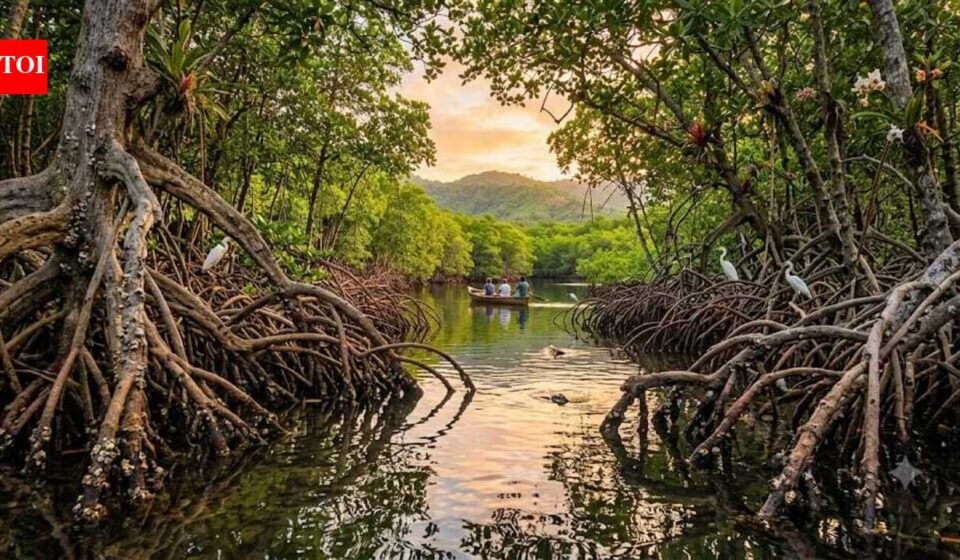
Mangroves occupy only a small portion of the Earth’s land surface, but they are one of the most valuable ecosystems on Earth. These salt-tolerant trees grow where land meets sea, forming dense coastal forests that protect coastlines from storms, provide nurseries for marine life, and lock away vast amounts of carbon. Their remarkable ability to capture and store carbon has earned them the nickname “blue carbon forests,” making them one of nature’s most powerful allies in the fight against climate change. scientific research from University of Queensland Research shows that mangrove ecosystems sequester about four times the amount of carbon than terrestrial forests. As the world marks World Mangrove Day, scientists are renewing the focus on these remarkable ecosystems, whose ecological importance extends far beyond the coastlines they inhabit, supporting biodiversity, protecting coastal communities and playing a key role in regulating the Earth’s climate.
Why mangroves are some of the planet’s most powerful natural climate defenders
Mangroves are one of the world’s most effective natural coastal defenses because they simultaneously reduce flood risk, stabilize coastlines and store large amounts of carbon. Their dense network of aerial roots dissipates wave energy, traps sediment and slows storm surges before reaching inland communities, while their waterlogged soils accumulate vast amounts of organic carbon over centuries. Studies have found that mangroves prevent more than $65 billion in flood damage each year and protect more than 15 million people from coastal flooding. The study also shows that clearing existing mangroves would increase annual flooding by approximately 29% of land area, 28% of population and 9% of property, highlighting that these “blue forests” are not only biodiversity hotspots but also critical natural infrastructure for climate adaptation and disaster risk reduction.
Earth’s most powerful carbon sink: Science explained
Although mangroves make up less than one percent of the world’s tropical forests, they store vast amounts of carbon. Unlike most terrestrial forests, mangroves capture carbon not only in their trunks and branches, but also deep in oxygen-starved coastal soils, where organic matter can remain buried for centuries or even millennia.a study’Global flood protection benefits of mangrovesResearch published in Scientific Reports found that mangrove ecosystems represent some of the most efficient long-term carbon sinks on Earth. By slowing the decomposition of organic matter in waterlogged soil, they store three to four times more carbon per unit area than many tropical forests, making their protection critical for limiting greenhouse gas emissions.The study, conducted by Daniel Murdiyarso, J. Boone Kauffman, Matthew Warren, Sigit Sasmito, Donato C. Donato, Shuichi Manuri, Heri Purnomo and Sonia Kurnianto, highlights how protecting mangroves can bring climate benefits far beyond coastal areas.
A lifeline for wildlife and coastal communities
Mangroves are not just carbon sinks, they are biodiversity hotspots. Their tangled roots provide shelter for juvenile fish, crabs and shrimp, many of which later thrive in offshore reefs and fisheries. Many birds, reptiles and mammals also rely on mangrove habitats at different stages of their lives.Globally, mangrove ecosystems support many threatened species, while their dense root networks serve as a natural barrier against storm surges, coastal flooding and erosion. By absorbing wave energy before it reaches land, mangroves can reduce the impact of tropical cyclones and help protect millions of people living in vulnerable coastal areas.For many coastal communities, healthy mangroves also support local economies by sustaining fisheries, supporting ecotourism and improving water quality.
Protecting one of the most valuable ecosystems on Earth
Despite their immense ecological and economic value, mangroves continue to disappear due to coastal development, aquaculture, pollution and climate change. according to United Nations Environment Program (UNEP)More than half of the mangroves in many parts of the world have been lost or degraded, threatening biodiversity, fisheries and the natural protection these forests provide against storms and rising sea levels. The Environment Agency stresses that protecting existing mangroves is far more effective than trying to rebuild them after they have been destroyed, as mature forests take decades to regain their full ecological functions. In addition to restoration projects, protecting remaining mangrove habitats through sustainable coastal planning and community-led conservation is considered one of the most cost-effective nature-based solutions that can enhance climate resilience, support livelihoods and protect fragile coastlines for future generations.