Hidden Army Camp in Virginia: Lost for 200 Years: Virginia dig uncovers hidden military camp of America’s first soldiers | World News

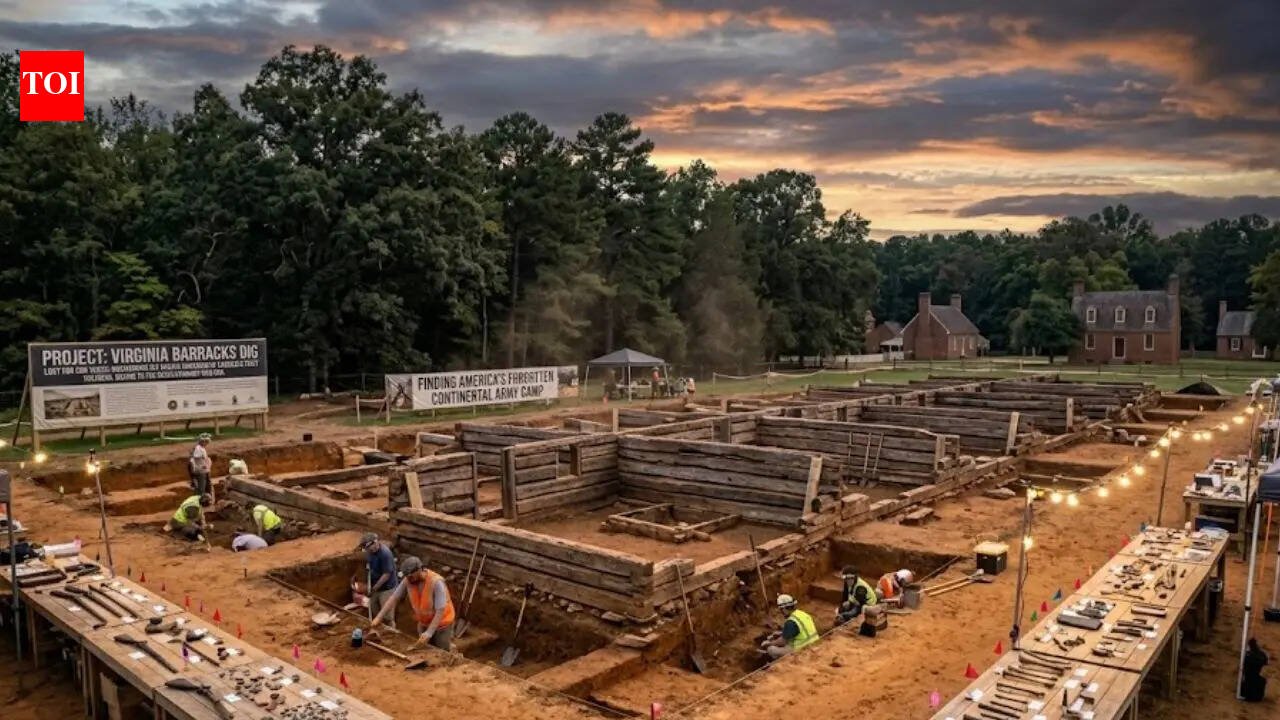
Archaeologists at Colonial Williamsburg, Virginia, have finally discovered a long-lost Revolutionary War camp, providing an up-close and personal look into the daily lives of Continental Army soldiers at the time. According to Fox News, the camp was built in August 1776 by order of the Commonwealth of Virginia and could accommodate 2,000 soldiers and 100 horses. Although historical maps indicate the location of the military camp, its remains were covered up for nearly 200 years until the well-preserved foundations were discovered during routine excavations. This is a significant discovery because the barracks were only used from 1777 to 1781; they represent an undisturbed, local snapshot of military life during this important period of the American Revolution.
Construction project in Virginia uncovers remains of America’s first missing soldiers
A team led by the Colonial Williamsburg Foundation excavated the remains of a Revolutionary War military camp and found evidence of the living conditions and daily routines of the soldiers. Artifacts recovered from the site include chimney bases, military belt buckles, rifle bullets and coins, among others. Because of the single purpose of these buildings, barracks provide a more accurate and detailed representation of how soldiers lived and trained than other sites with multiple uses. Archaeologists also discovered that such a high degree of preservation was possible due to a bizarre catastrophic fire.
How the Fires of the Revolutionary War Preserved History
Dr. Jack Gary, executive director of archeology at the Colonial Williamsburg Foundation, said the site’s preservation was paradoxically preserved by its destruction. In 1781, British troops under General Cornwallis set fire to the barracks as they advanced toward the decisive Battle of Yorktown, triggering a “catastrophic event” that sealed off the site, preventing subsequent riots and agricultural development, allowing archaeologists to map soil patterns and find artifacts such as lead bullets with tooth indentations, suggesting that soldiers chewed the lead for its sweet taste.
What everyday artifacts reveal about the revolution
Discoveries associated with the site convey important details about how people were affected by war in the past and how this affects their lives today. Scholars have demonstrated that many historical records focus primarily on important military actions (the Great War) or on the important political decisions that led to these actions (political maneuvers); however, the archaeological evidence discovered from the site conveys not only information related to the logistics of military service (such as housing and supply chains), but also the personal aspects of military service. According to Fox News, artifacts recovered from the site range from everyday items (ceramic and glass buttons) to weapons and other specialized military equipment that help preserve and record the history of the early U.S. military. The foundation will use the findings to educate the public beyond simply telling the history of soldiers during the Revolutionary War.