
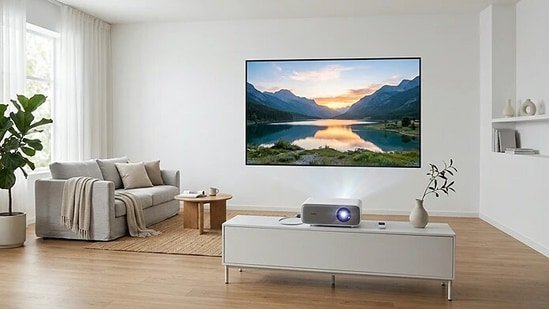
Big-screen entertainment is no longer a luxury; now you can pick up a beautiful and affordable 4k projector for your home and enjoy movies with a wide field of view. Technology is constantly improving, and features that were previously part of advanced setups are now available at budget prices. One of these features is 4K resolution. 4K resolution is very common in smart TVs and projectors and is now easily available to affordable buyers.


But the question is, do you really need 4k resolution? Is it necessary? I’ll break it down for you so you don’t have to confuse FHD and 4K resolution on your projector. In the end, you should feel confident that you’ve chosen a projector that’s right for your room and your long-term needs.
Who should consider a 4K projector?
4K projectors are for viewers who want a big screen, immersive experience. Movie lovers building a home theater will benefit from the depth and detail of Ultra HD content. Console gamers with systems like the PlayStation 5 or Xbox Series X can enjoy vast visuals that are more engaging than standard TVs.
Projectors also work well in apartments where a wall-mounted TV might not be ideal. However, they are not suitable for all environments. If your room has a lot of daylight and you have limited control over curtains or blinds, brightness performance becomes critical. Understanding your space is the first step before browsing your options.
Check out these 4K projectors
True 4K vs. Pixel Shift: What You Need to Know
Not all “4K” projectors offer native 3840 × 2160 resolution. The native 4K model uses an imaging chip that physically contains a full 8.3 million pixels. These generally provide sharper detail and better definition in fine textures, especially on very large screens.
Pixel-shift projectors are often marketed as 4K-enhanced, using fast-shifting technology to simulate higher resolutions. At normal viewing distances, many users may notice subtle differences, especially with streaming content. However, native 4K delivers sharper edges and improved detail for high-bitrate movies and games.
The key is to understand your viewing habits and budget. Native 4K generally costs more, but pixel-shifted models can still deliver impressive performance for most homes.
Check out these portable projectors
Brightness and room conditions
Brightness is measured in lumens, but numbers alone don’t tell the whole story. For a dark home theater room, 1500 to 2000 lumens is enough. If your space has moderate ambient lighting, aim for 2,500 to 3,000 lumens. Living rooms with lots of daylight typically require 3,000 lumens or more to get a clear image.
Contrast also plays an important role in perceived quality. A projector with a strong contrast ratio will display deeper blacks and a more three-dimensional image. Keep in mind that manufacturer’s brightness ratings may reflect ideal testing environments rather than real-world conditions. When evaluating brightness suitability, always consider screen size, wall color, and lighting controls.
Gaming and sports performance
If gaming is the priority, input lag becomes critical. For competitive or fast-paced games, make sure the input lag is below 20 milliseconds. Many modern projectors support 4K at 60Hz, while some offer 120Hz compatibility for smoother motion.
HDMI 2.1 support enhances compatibility with newer game consoles and high refresh rate content. Motion smoothing features can make motion look smooth, although some viewers prefer to disable them in movies to maintain a cinematic quality.
Gamers using consoles like the PlayStation 5 should verify supported resolutions and refresh rates before purchasing to avoid performance limitations.
Audio, connectivity and smart features
Most projectors include built-in speakers, but these are usually designed for convenience rather than immersive sound. For a true cinematic experience, pairing the projector with a soundbar or AV receiver is highly recommended.
If you plan to route audio through an external system, check for HDMI ARC or eARC support. Wi-Fi connectivity and built-in streaming apps simplify use and reduce the need for additional equipment. The Bluetooth output is useful for wireless headphones or speakers, especially in shared living spaces.
Connectivity flexibility ensures your projector remains relevant as your entertainment setup evolves.
long term cost of ownership
In addition to the purchase price, there are ongoing costs to consider. The lamp life of a traditional lamp projector is usually 3000 to 5000 hours, after which it needs to be replaced. Over time, replacing light bulbs can become a significant expense.
Laser projectors typically provide up to 20,000 hours of use and require less maintenance, but their initial cost is usually higher. Be sure to check the warranty coverage and confirm the availability of an authorized service center. Reliable after-sales support is critical to designing products that will perform for many years.
Installation and planning
Before buying, evaluate the throw ratio and throw distance. Some models require a lot of space to produce large images, while short throw projectors can create large screens at a shorter distance.
Ceiling mounting provides a clean, dedicated look, while table placement provides flexibility. Optical zoom is better than extensive digital keystone correction, as excessive keystone correction can reduce image sharpness.
Finally, consider long-term maintenance, warranty coverage, and installation practicality. A well-chosen projector can transform your viewing experience for years. Take the time to compare specs carefully and choose based on performance suitability rather than price alone.
Recommend similar articles for you
HDTVs with modern features in August 2025: 8 picks with vibrant picture and sound
LED Multimedia Projectors for a Cinematic Home Experience: Top 10 Choices for Stunning Image Quality
Disclaimer: At Hindustan Times, we help you stay updated with the latest trends and products. Hindustan Times has affiliate partnerships, so we may get a share of the revenue when you make a purchase. We are not responsible for any claims relating to the products under applicable law (including but not limited to the Consumer Protection Act 2019). The products listed in this article are in no particular order of preference.