
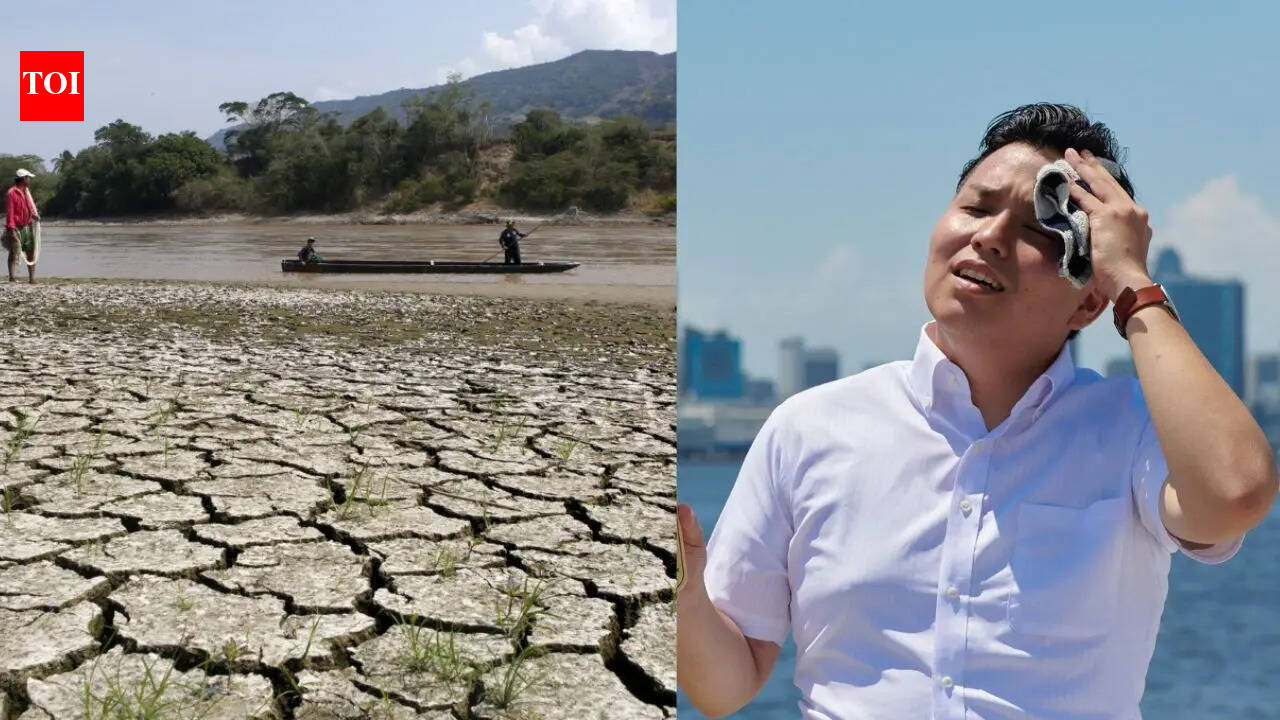
A small area of the Pacific Ocean is quietly warming again, catching the attention of meteorologists who are spending their time observing patterns that most people would never have thought of. The signals themselves are unremarkable: a few degrees here, a change in sea surface temperature there, winds behaving slightly differently than expected. But these small changes tend to stick. El Niño is a recurring system that begins far offshore and then merges with weather thousands of kilometers away, sometimes in uneven and unpredictable ways. The National Oceanic and Atmospheric Administration (NOAA) reports that El Niño and high-tide flooding in 2026 could deliver a “double whammy” to coastal communities. The National Weather Service predicts that El Niño may develop in July 2026 and continue throughout the winter, increasing the risk of coastal flooding in many areas. El Niño is part of the ENSO cycle, a natural climate pattern in the tropical Pacific that changes between warm, cool and neutral phases. During El Niño, weakened trade winds increase sea surface temperatures and sea levels, affecting global weather patterns. On the U.S. coast, that could mean higher tides, stronger storm surges and heavier rainfall. Combined with long-term sea level rise, high-tide flooding could become more frequent and severe, especially when El Niño peaks in 2026, experts warn.
El Niño 2026 : Understand its uneven weather effects
The onset of El Niño feels a little different to those who track it. Warm water accumulates in the central and eastern Pacific Ocean, disrupting the normal flow of air and rain in the tropics. This shift could redraw rainfall patterns across continents.According to recent observations, seawater temperatures in parts of the Pacific Ocean have been well above average during the latest cycle, making it the strongest in recent decades. Forecasts broadly reflect global conditions, but not all regional outcomes follow exactly the expected path. California, for example, has not experienced the steady winter rainfall typically associated with El Niño, while other parts of the country have experienced persistent heavy rainfall. Climate models are built on patterns, but the atmosphere rarely moves in straight lines. Small changes in the jet stream can send a storm system hundreds of kilometers off course. That’s what’s happening on the U.S. West Coast, where rainfall ends up being concentrated further north than many forecasts indicate.Scientists have been re-examining why some results differed so much from expectations. Part of the difficulty lies in how multiple systems interact simultaneously: ocean temperatures, wind patterns and long-term warming trends all overlap. Even recognized El Niño signals can be distorted or diluted by these competing forces, leaving a gap between predictions and reality.
What ‘Godzilla El Niño’ Really Means in Climate Science
The term “Godzilla El Niño” is informal, but it has been used in public discussion to describe the most intense version of the phenomenon. During these events, sea surface temperatures are several degrees above normal and the global effects become more pronounced.Past intense events in the early 1980s, late 1990s, and mid-2010s were associated with severe droughts, flooding in unexpected areas, and massive wildfires in parts of Southeast Asia and South America. Some researchers have also drawn attention to possible links between stronger El Niño cycles and broader climate change, although this relationship is not straightforward and remains controversial.Academics have also been discussing whether solar activity (such as sunspot cycles) may have some impact on ocean-atmosphere behavior. The evidence is not conclusive, and most climate scientists view it as an open question rather than a clear driver.
Farms, power grids and slow heat stress
For agricultural regions, impacts rarely occur immediately in one dramatic moment. It often comes in adjustments: seeds planted later than usual, crop selections quietly changed due to uncertain rainfall, irrigation systems stretched further than planned.When rainfall weakens, reservoirs are replenished more slowly and reliance on groundwater becomes greater. In cities, water supply pressure increases gradually rather than suddenly, and the consequences can be felt. As hot weather forces homes and businesses to cool down, energy demand tends to rise at the same time.According to the PIB report, India’s peak power demand levels have exceeded 250 gigawatts in recent years, a figure that highlights the extent to which the power system tracks temperature changes. During hotter-than-average seasons, this demand is likely to climb even further, adding pressure to an infrastructure already balancing multiple pressures.
Looking back at historical climate echoes
El Niño isn’t just a modern forecasting challenge. Historical records show that it has been shaping weather-related damage for centuries. Some periods marked by unusually intense events have been associated with widespread crop failures and social instability in different parts of the world.There are mentions of severe El Niño events in the historical record coinciding with the famine years of the late 19th century, including an unusually strong event in the 1870s, whose global effects are frequently discussed in the climate literature. While exact casualty figures are difficult to determine, the scale of destruction described in archival materials makes this period one to watch closely.Recent decades have shown clearer patterns of economic and environmental impacts, from forest fires to disrupted fisheries and altered storm tracks.
Feeling uncertain about what will happen next
Forecast centers continue to keep a close eye on the Pacific Ocean. Some forecasts suggest that a stronger El Niño could occur in the coming years, but the timing and intensity remain uncertain. What’s clearer are the background conditions: Earth’s warming may affect how these cycles behave and how their effects affect different regions.