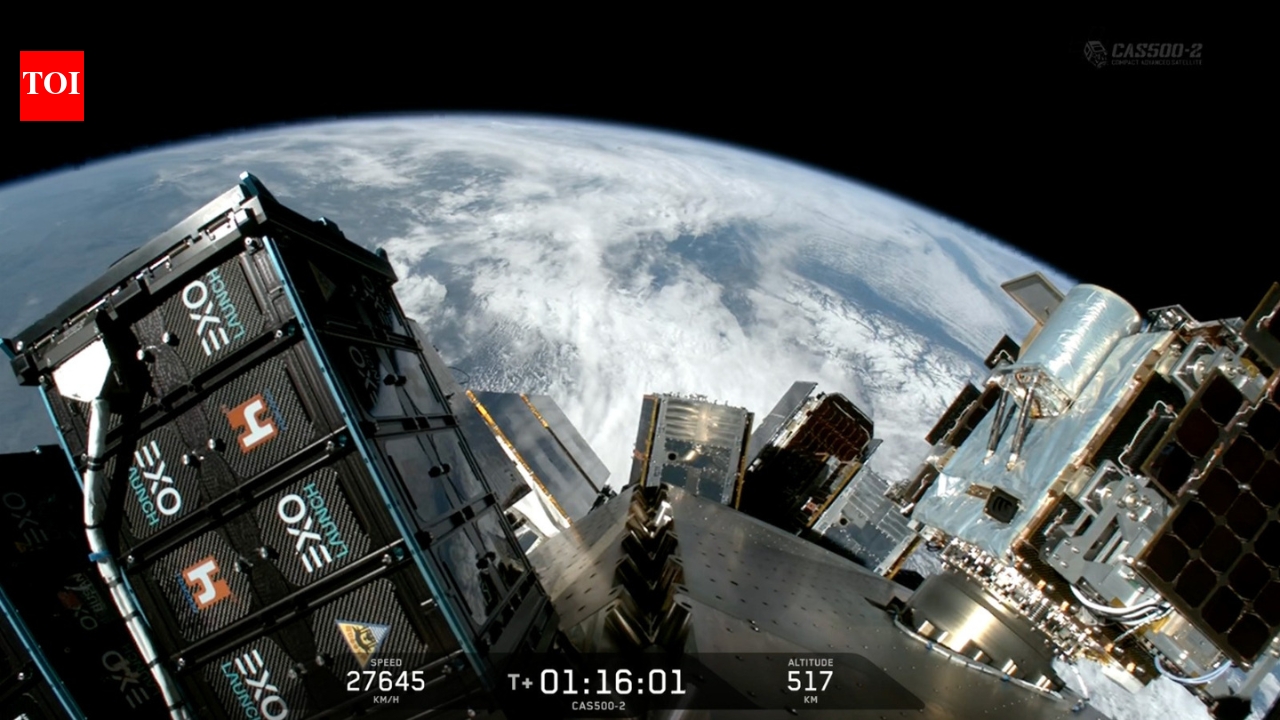

Bengaluru: Bengaluru-based space startup GalaxEye on Sunday launched its first commercial satellite Drishti into orbit aboard a SpaceX Falcon-9 rocket. Calling it the “world’s first OptoSAR satellite”, the company said the launch is a milestone in the advancement of Earth observation technology and enhances India’s growing capabilities in the global space sector.“Weighing 190 kg, Mission Drishti is India’s largest privately developed Earth observation satellite. It is the world’s first satellite to integrate electro-optical (EO) and synthetic aperture radar (SAR) sensors into a single operating platform, with all-weather, day and night imaging capabilities,” the company said.Drishti can “see” through clouds, darkness and inclement weather while capturing traditional optical images, and it carries what the company calls “SyncFused OptoSAR” payload, which combines electro-optical imaging and synthetic aperture radar (SAR) on a single platform. Optical satellites provide traditional high-resolution images, but are affected by clouds and darkness. Radar satellites, on the other hand, can operate day and night and penetrate clouds, smoke and rain, although their images are more difficult to interpret.
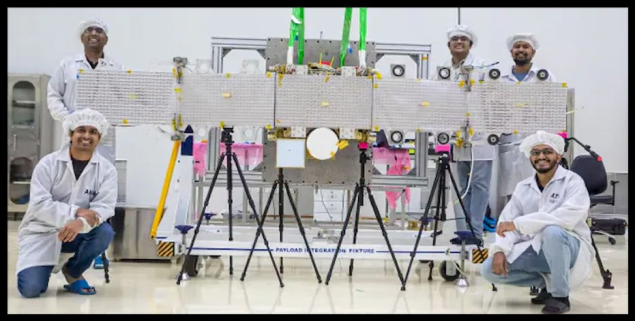
GalaxEye says that by synchronizing and combining the two data streams, the satellite can produce more consistent and usable imagery for ground users.The spacecraft is expected to support applications ranging from border surveillance and defense monitoring to disaster response, agriculture, infrastructure planning and insurance assessments. For example, during floods, tornadoes or landslides, radar imaging can continue to be useful even if cloud cover prevents optical satellites from capturing images.“Another key feature on board is artificial intelligence processing powered by Nvidia’s Jetson Orin computing platform. Some of the processing will take place directly in orbit, rather than transmitting large volumes of raw images back to Earth for analysis. The idea is to reduce the time required to convert satellite imagery into actionable information, GalaxEye co-founder and CEO Suyash Singh told TOI.GalaxEye said the satellite can provide imagery with a resolution of 1.5 meters and revisit global locations every seven to 10 days. The spacecraft is about the size of a compact refrigerator and also carries a deployable antenna that spans about three and a half meters.The company had earlier tested its imaging system through nearly 500 aerial sorties involving UAVs, Cessna aircraft and high-altitude platforms, besides flying early payloads on the Isro PSLV mission under the POEM platform.Defense and civilian agencies have already expressed interest in the project. The company said it has held discussions with various Indian government departments, including the Ministry of Defense and Agriculture, while agencies such as the Defense Space Agency, Indian Air Force, Army and Navy have been tracking the plan.GalaxEye has also signed distribution partnerships in more than 20 countries. After Drishti launches, the startup plans to build a larger constellation of eight to 12 satellites over the next four years, with future versions aiming to provide clearer images.