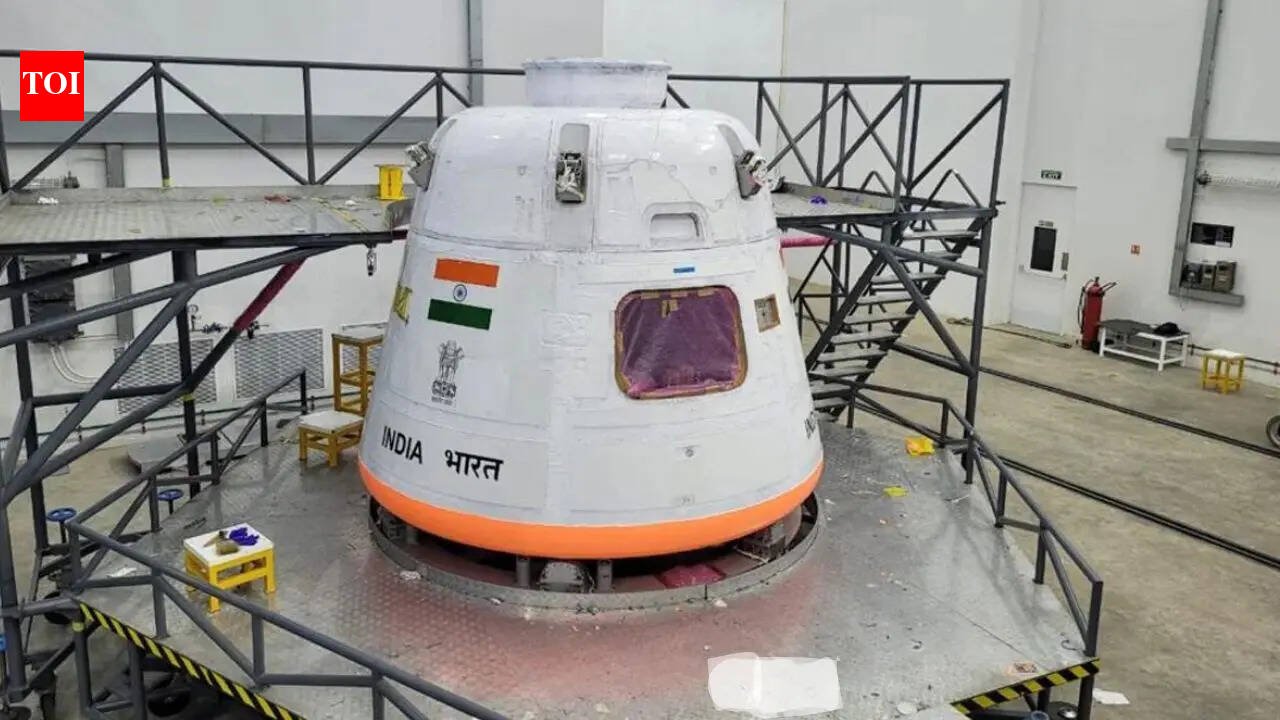
Gaganyanan: ISRO completes critical IADT-02 test – what does this mean for India’s manned space mission

BENGALURU: After consecutive launch failures and a lull for several months, PSLV Indian Space Research Organization (Yisro) may have tasted success in key tests conducted as part of preparations will be like this.While the space agency is yet to make an official statement on the second Integrated Airdrop Test (IADT-02), Union Minister Jitendra Singh announced the news through a congratulatory letter. “Congratulations to ISRO on the successful completion of the second Integrated Air Drop Test (IADT-02) of the Gaganyan mission, India’s first manned space flight scheduled for next year. The second Integrated Air Drop Test (IADT-02) was successfully conducted at the Satish Dhawan Space Station in Sriharikota. This marks an important milestone in the readiness of the Gaganyan mission,” Singh said on Friday.IADT-02 is a follow-up test to IADT-01 conducted nearly eight months ago, on August 24, 2025, and is expected to be conducted earlier. But like most aspects related to the Gaganyaan mission, ISRO is facing delays.On April 8, Indian Space Research Organization Chairman V Narayanan did not give a specific reply on the IADT (ie Gaganyaan) issue. He said only that the space agency was studying the issue.While ISRO has not made public the specific parameters of the test at the time of writing and did not respond to calls, IADT-02 is expected to involve a simulated crew capsule with a mass of approximately 5 tons, maintained in a similar external configuration to the flight, and dropped from a high altitude to verify the parachute system.In actual missions, these parachutes will eventually bring back the astronauts safely under the Gaganyaan mission. According to ISRO’s preliminary plan, seven IADTs will have to be conducted. However, multiple sources confirmed to TOI that this number may change and the space agency may reduce the number of tests.During IADT-01, the simulated crew capsule was air-dropped from an altitude of 3.1 km using an Indian Air Force (IAF) Chinook helicopter. The test was a joint effort between the Indian Space Research Organization, the Indian Air Force, the Defense Research and Development Organization, the Indian Navy and the Indian Coast Guard.According to the plan, the parachute was carried out over the Bay of Bengal and lasted about an hour from takeoff to recovery, but the final parachute deployment process was completed in only 2-3 minutes.While Singh announced in his post that the Gaganyan mission will take place next year, ISRO is not expected to meet the timeline and the organization has been battling delays. There are several key technologies that need to be proven before India can send humans into space.